10 Danish Furniture Brands Every Interior Designer Should Know

 6
6
 0
0Summary
Danish furniture brands grew out of a culture that valued craftsmanship, collaboration, and everyday use. The ten brands listed here continue that tradition through long-term production, careful material choices, and furniture designed to live comfortably alongside architecture. For interior designers, they offer reliability, clarity, and pieces that age well over time.
Reflection Questions
When specifying furniture, how often do durability and long-term wear factor into your decision-making compared to visual impact alone?
Are there areas in your projects where historically rooted designs could solve functional issues more effectively than newer alternatives?
Which of these brands align most closely with how your clients actually live, rather than how they imagine living?
Journal Prompt
Think about a recent project where furniture selections felt harder than expected. Was the challenge about style, scale, budget, or longevity? Write through how the outcome might have shifted if the priority had been long-term use rather than immediate visual cohesion.
Danish furniture design is unique in that it sits in a space between craft tradition and industrial production, between architecture and domestic life. The style many of us adore (coined “Danish Modernism”) emerged slowly and was shaped by cabinetmakers, architects, and manufacturers who treated furniture as part of everyday culture rather than a luxury object.
For interior designers inspired by the craftsmanship and vision of creators like Arne Jacobsen and Hans Wegner, selecting Danish furniture brands for their projects is usually less about statement making and more about dependability. Even though these designs are iconic, they’re not fussy or overly abstract. They wouldn’t be Danish design if they were.
Scale is appropriate for actual human use. Materials age predictably and beautifully. Pieces coexist easily with architecture instead of competing against it. Scandinavian interior design and furnishings grew out of a particular set of conditions in Denmark during the early to mid century, including strong craft guilds, close collaboration between designers and makers, and a public appetite for well-made domestic goods.
While some are more contemporary than Danish Modern, the brands below continue to carry that lineage forward. Some lean heavily on history. Others push into contemporary furniture production. Yet every collection is uniquely Danish. Enjoy our round-up of ten Danish furniture brands that continue to wow the world, one lounge chair at a time!
10 Danish Brands Every Interior Designer Should Know (and Shop)
Carl Hansen & Søn
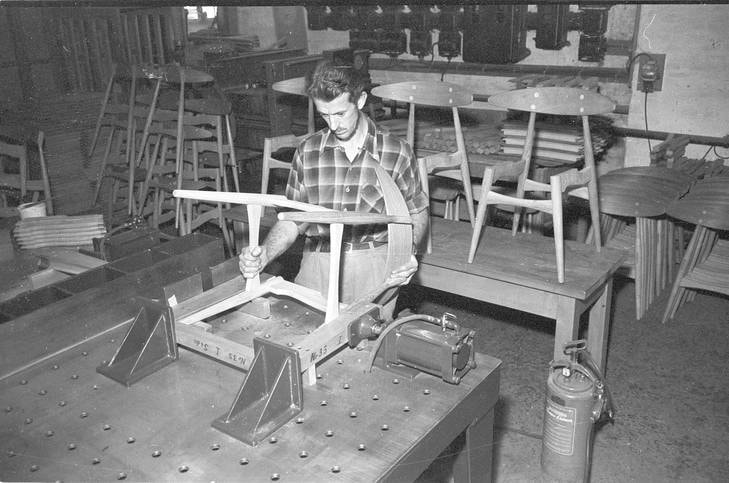
Founded in 1908 in Odense, Carl Hansen & Søn began as a traditional cabinetmaking workshop. The company’s international reputation was established in the mid-20th century through its close collaboration with Hans J. Wegner, whose work remains central to the brand’s identity.
Carl Hansen & Søn produces a wide range of seating, tables, and storage pieces, with particular emphasis on solid wood construction. First produced in 1950, Wegner’s Wishbone Chair is still one of the most specified dining chairs in contemporary interiors. Other notable Wegner designs include the CH07 Shell Chair and the CH24, both of which are still manufactured using traditional joinery methods.

Today, the company also works with designers like Børge Mogensen, Ole Wanscher, and Ilse Crawford. What distinguishes Carl Hansen & Søn is its commitment to keeping historic designs in continuous production rather than cycling them in and out as limited editions.
Fritz Hansen
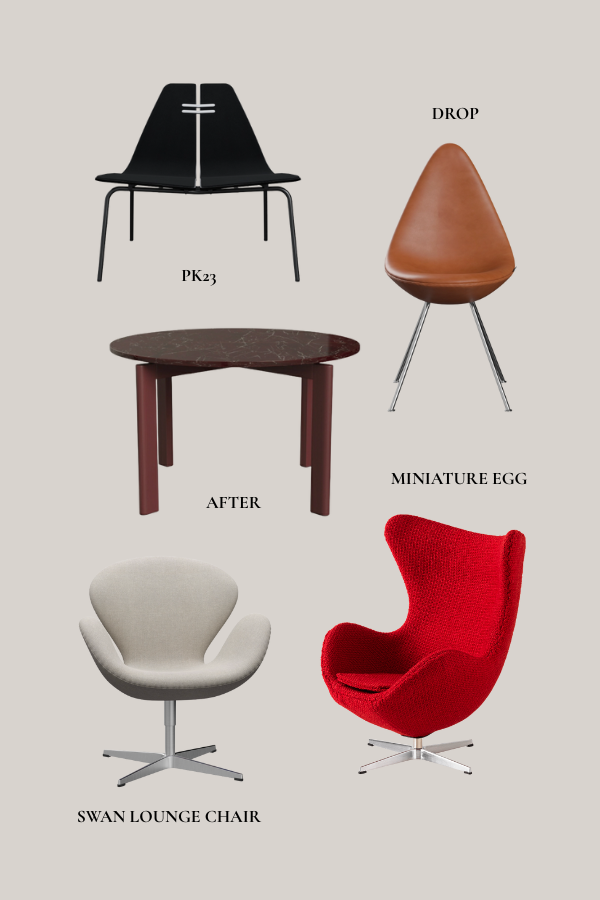
Founded in 1872, Fritz Hansen is one of Denmark’s oldest furniture manufacturers. The company began as a woodworking workshop and expanded significantly in the early twentieth century, eventually becoming a major contributor to Danish modern design. Its international reputation was cemented through long-term collaborations with architects and designers working at an architectural scale.
Fritz Hansen is most closely associated with Arne Jacobsen, whose Egg Chair, Swan Chair, and Series 7 chair are still core pieces in the collection. Originally designed for public and commercial interiors, these works were later adopted widely in residential settings. The company also produces tables, sofas, and lighting that reflect the same emphasis on engineered form and material precision.
In addition to Jacobsen, Fritz Hansen has worked extensively with Poul Kjærholm, whose steel and leather furniture introduced a more industrial approach to Danish design. Today, the brand continues to balance historic production with contemporary collaborations while maintaining a strong presence in both residential and contract markets. It’s known for visionary ideas, sharp execution, and both modern and contemporary furniture.
Fredericia Furniture
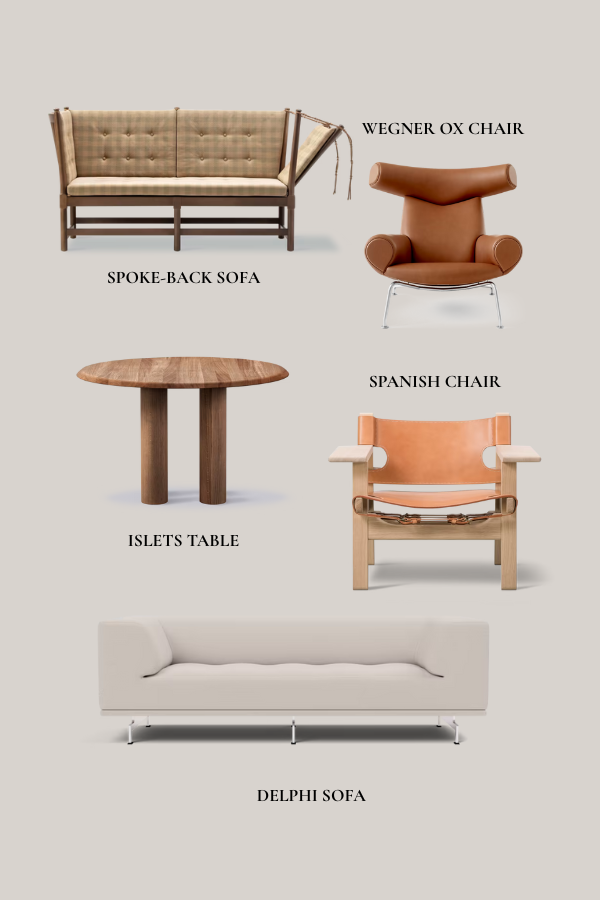
Founded in 1911, Fredericia Furniture developed from a small cabinetmaking workshop into a manufacturer praised for functional, architecturally grounded furniture. The company played a significant role in shaping Danish modern interiors during the mid-twentieth century through its collaboration with Børge Mogensen.
Fredericia continues to produce many of Mogensen’s best-known designs, including the Spanish Chair and the J39 dining chair. These pieces are defined by solid wood construction, restrained proportions, and materials chosen for long-term use. The collection also includes tables, storage, and upholstered seating suited to both private homes and public spaces.
Alongside Mogensen’s work, Fredericia has collaborated with designers like Nanna Ditzel (the “first lady of Danish design”) as well as more contemporary studios.
PP Møbler
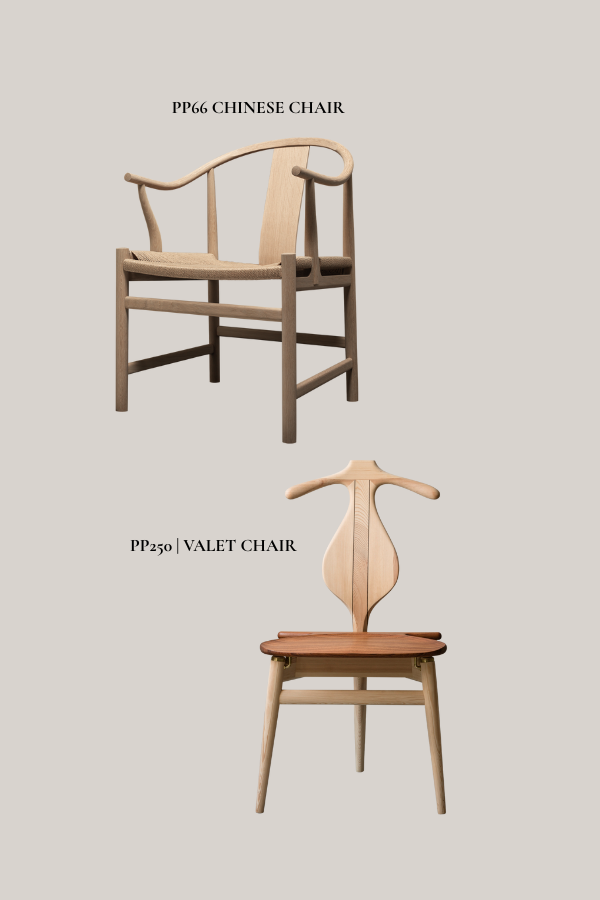
Founded in 1953 by brothers Ejnar and Lars Peder Pedersen, PP Møbler operates as a cabinetmaker-driven workshop rather than a large-scale manufacturer. Ejnar was the creative and “ideas man” while Lars executed much of the work. Both were committed to incredibly high standards. The company is known for producing complex designs that require a significant level of hand craftsmanship.
PP Møbler worked closely with Hans J. Wegner throughout his career, particularly on pieces that were too demanding for industrial production. Designs such as the Round Chair and the Valet Chair are produced using traditional joinery techniques and extensive hand-finishing.
Production volumes at PP Møbler remain limited, and lead times are typically longer than those of larger manufacturers because so much is kept in-house.
House of Finn Juhl
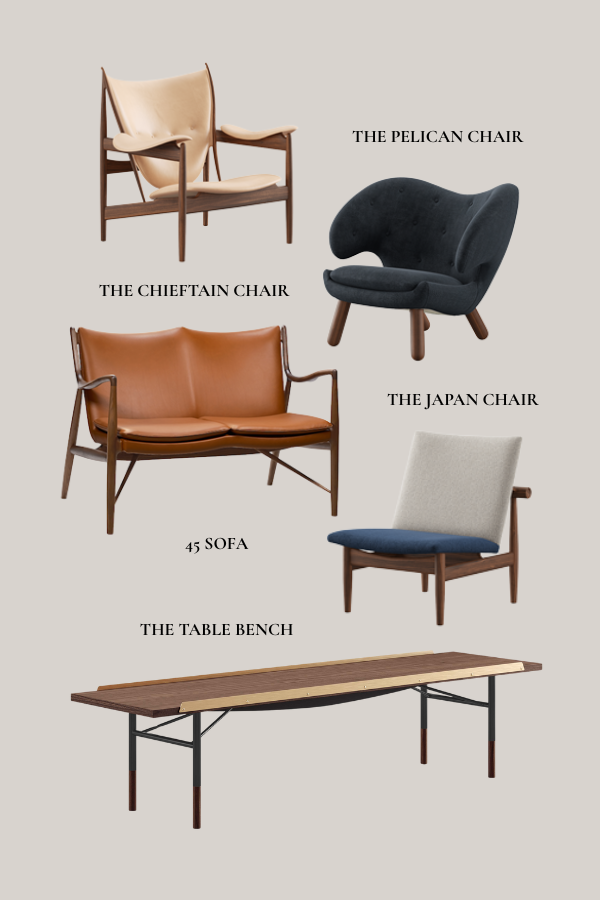
House of Finn Juhl was established to bring Finn Juhl’s furniture back into production after many of his designs had been unavailable for decades. Juhl’s work stood apart from his contemporaries through its sculptural forms and emphasis on visual lightness.
The brand produces seating, tables, and storage based on original drawings from the 1940s and 1950s. Well-known pieces include the Chieftain Chair, the Poet Sofa, and the 45 Chair. These designs are often used as focal elements within interiors due to their expressive profiles. In 2018, the company re-released Juhl’s Grasshopper Chair, which was removed from production for decades but has since become a cult hit.
Fuel your creative fire & be a part of a supportive community that values how you love to live.
subscribe to our newsletter
*please check your Spam folder for the latest DesignDash Magazine issue immediately after subscription

House of Finn Juhl works closely with archives and estates to ensure accuracy in materials and construction. The company’s output is still tightly focused on Juhl’s legacy rather than expanding into unrelated contemporary collections.
GUBI
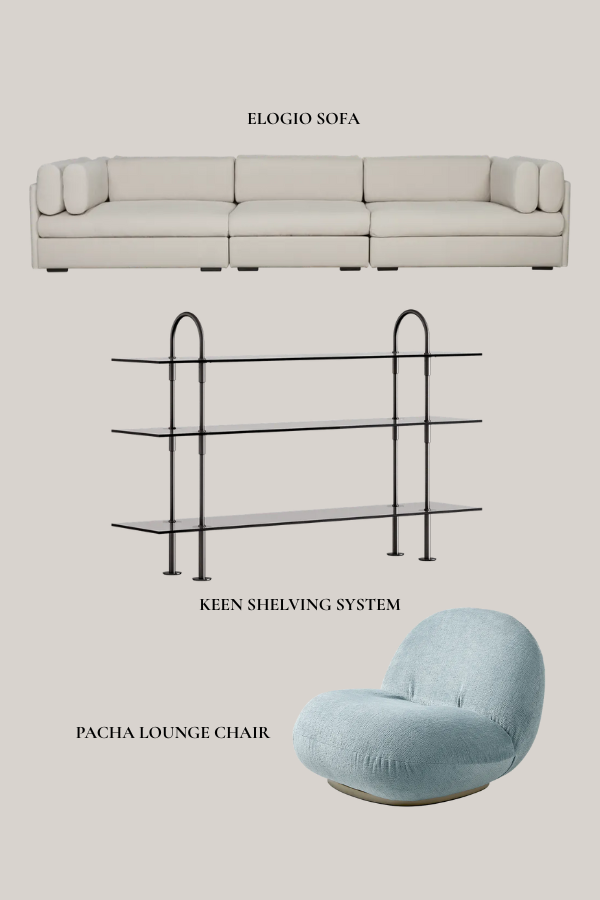
Officially founded in 1967 by Olsen and Lisbeth Gubi but with brands operating in some capacity for a century, GUBI is known for reintroducing overlooked twentieth-century furniture alongside contemporary work. The company gained broader recognition by revisiting designs that had fallen out of production rather than focusing solely on well-known classics.
GUBI produces furniture, lighting, and accessories, including reissues by designers like Bill Curry, Carlo de Carli, Greta Magnusson Grossman and Gio Ponti, alongside new work by contemporary studios. Upholstered seating, marble tables, and sculptural lighting are central to their collections, but they recently released a modular Keen Shelving System designed by Linda Korndal of Toko Among Friends.
&Tradition
Founded in 2010, &Tradition was created to connect historic Scandinavian design with contemporary manufacturing. The brand works across furniture, lighting, and accessories, producing both reissues and new designs.
&Tradition is known for reintroducing works by designers like Verner Panton and Arne Jacobsen, including the Flowerpot lamp. These pieces are produced alongside contemporary designs that share similar proportions and material sensibilities.

Muuto
Founded in 2006, Muuto represents a contemporary approach to Danish furniture design. The brand focuses on new production rather than historical reissues, working exclusively with living designers.
Muuto produces seating, tables, storage, lighting, and accessories using materials such as molded plastics, powder-coated metals, textiles, and wood. Many of its pieces are designed for flexibility and modular use. Muuto’s furniture is often chosen for its clarity, adaptability, and suitability for large-scale production.
Skagerak
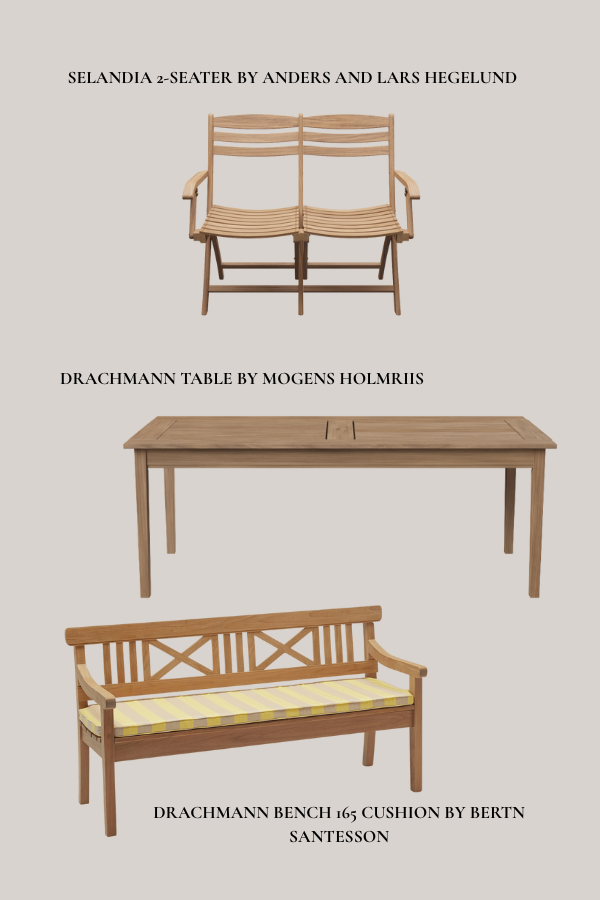
Founded in 1976, Skagerak by Fritz Hansen is best known for outdoor furniture made primarily from wood, particularly teak. The brand’s work is rooted in durability and long-term exposure to natural conditions. The collection currently in production consists of 43 different product series and is quite extensive.
Skagerak produces 200 different outdoor seating, tables, and storage pieces that are frequently used in residential gardens, terraces, and hospitality settings. Many of the designs transition easily into indoor spaces due to their straightforward construction.
In 2016, Skagerak became part of the Fritz Hansen group. The brand continues to focus on outdoor furniture while benefiting from expanded distribution and manufacturing support.
Mater
Founded in 2006, Mater is a Danish design brand with a focus on responsible production and material sourcing. Sustainability plays a central role in how the company approaches manufacturing.
Mater produces furniture and lighting using recycled materials and alternative manufacturing processes. The brand works with both historic and contemporary designers, including reissues of earlier designs alongside new work. Materiality is key here, as can be seen across all product lines creates by the company and in every store front (if you’re in Denmark, check out their Købmagergade space, Copenhagen).
Final Thoughts on Danish Interior Design & Furnishings
Danish manufacturers have historically treated furniture as part of the built environment rather than an accessory layered on top of it. These brands work incredibly well across residential and contract settings. They sit comfortably in historic homes and contemporary buildings.
Of course, some of these companies operate at a cabinetmaker’s pace. Others work at an industrial scale. But what they share is a respect for human proportion, material honesty, and continuity across collections. That consistency makes Danish furniture a dependable choice for designers and homeowners alike, especially when a project needs longevity rather than novelty.
Written by the DesignDash Editorial Team
Our contributors include experienced designers, firm owners, design writers, and other industry professionals. If you’re interested in submitting your work or collaborating, please reach out to our Editor-in-Chief at editor@designdash.com.
Related Posts
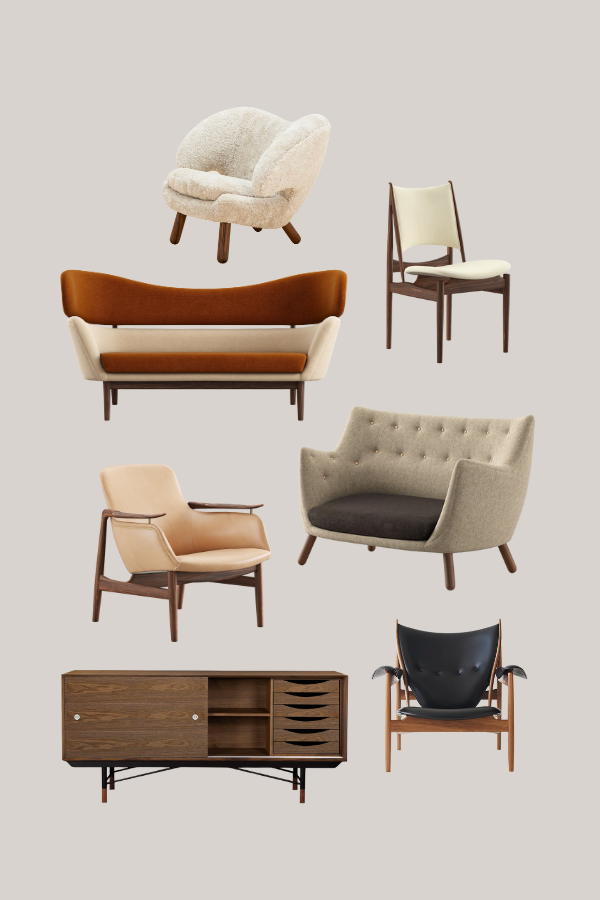
10 Finn Juhl Furniture Pieces That Embody Danish Modern Design
As evidenced by these 10 iconic Finn Juhl furniture pieces, he exempli
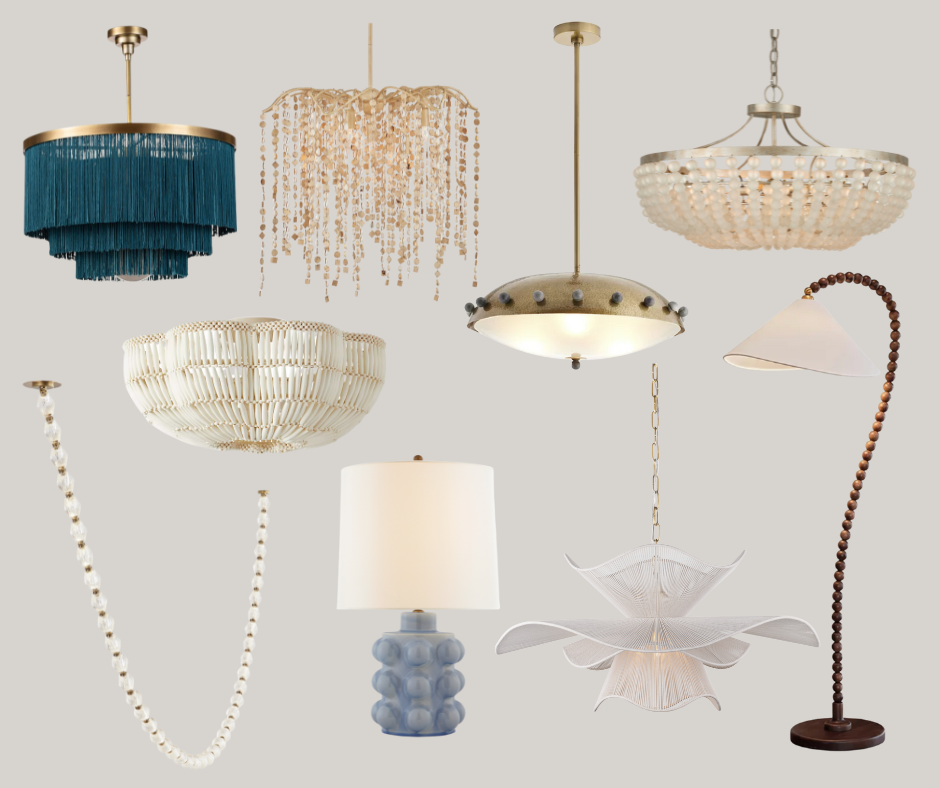
Interior Design Trend: Beaded Lamps & String Light Fixtures
To honor another interesting HPMKT interior design trend, we've rounde

A Winning Combination: How AutoCAD and SketchUp Can Enhance Your Design Projects
We explore the value of AutoCAD vs. SketchUp, their individual advanta
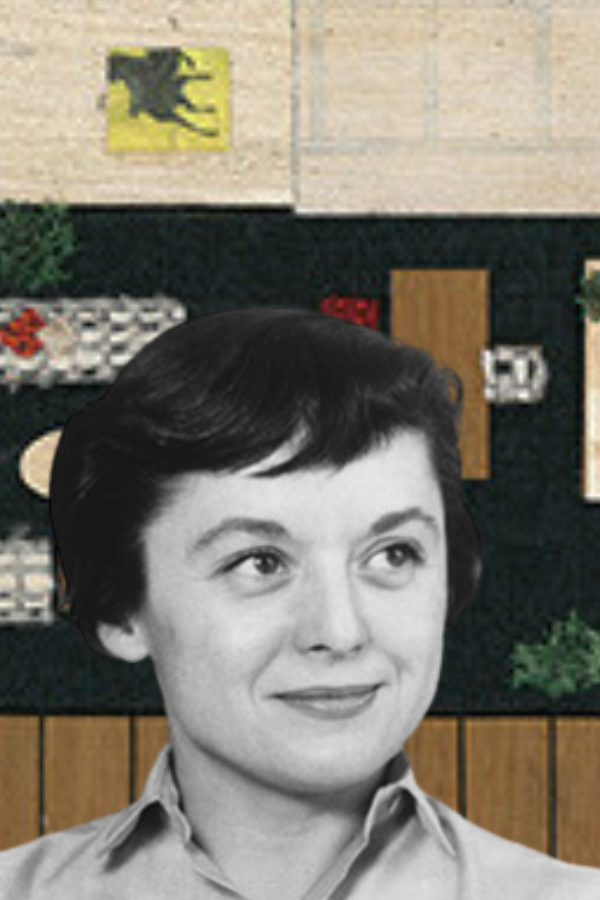
The Fascinating Life of Architect & Designer Florence Knoll
Read about the remarkable life of interior designer Florence Knoll. Ex

Interior Design of the 20th Century: How Dorothy Draper Made History
With a stylistic approach that was intensely anti-minimalist, Dorothy

DesignDash Guide: Create the Ultimate Fall Capsule Wardrobe
Build a fall capsule wardrobe to streamline your style, save time, and