
What Legal Steps Do I Need Before Taking My First Paying Client?

 0
0
 0
0Summary
Before taking your first paying client, prioritize legal structure, insurance, contracts, and basic systems. As Laura says, protection must come before polish to avoid unnecessary risk and stress as work accelerates.
Reflection Questions
Which parts of my business am I currently relying on trust or memory for instead of written agreements or systems?
If a project issue arose tomorrow, would I feel legally and financially protected or exposed?
Am I delaying foundational setup in favor of branding or visibility, and why?
Journal Prompt
Which boundaries, systems, or protections would help me feel more grounded and confident as my firm begins (or continues) to grow?
Your first client won’t appear the exact moment you’ve wrapped all preparation at your new studio. In most cases, a firm’s first client arrives in the midst of setting up, whether that means literally putting the office together or lining up legal ducks in a row. That moment is exciting, but it’s also where designers often underestimate what’s required to operate responsibly.
So what do you do if a referral comes through a former coworker, a friend of a friend asks for help with a renovation, or a contractor reaches out after seeing your portfolio? The work feels quite informal at first, almost provisional, and that’s probably why you’ll find yourself in trouble. We often think of legal and administrative steps as things that come later, after the business feels “real” and established. But that’s not really the case. You absolutely need certain protections before accepting client work.
In this Q&A, we spoke with Laura Umansky and Melissa Grove of Laura U Design Collective about what truly needs to be in place before accepting your first paying client, what protections matter most early on, and which systems can wait without exposing you to unnecessary problems.
Why Legal Structure Matters Earlier Than You Might Think
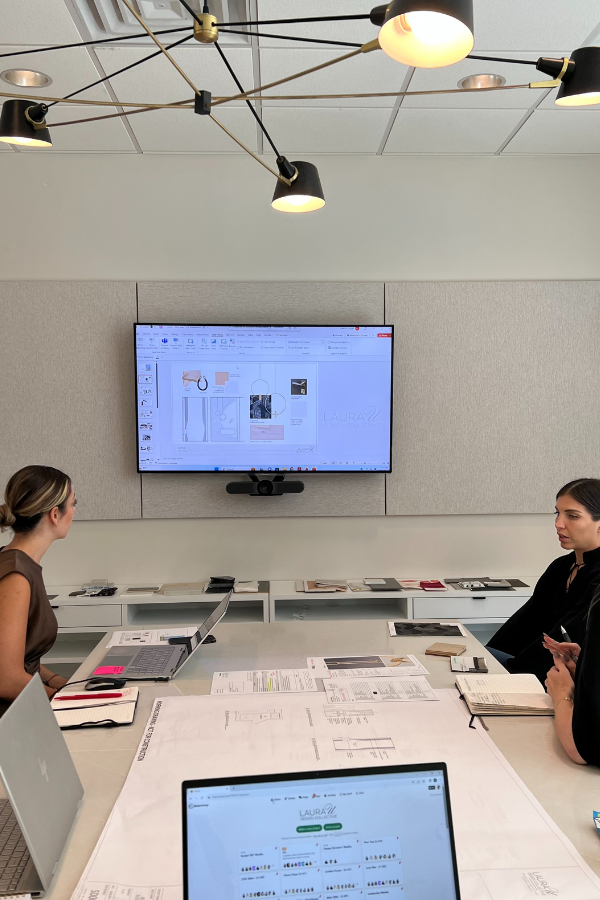
As noted in our intro, the first client often arrives before your business feels official. That gap between intent and infrastructure is where problems tend to surface. Without contracts or insurance, even a small project carries outsized risk. As we all know, scope can shift. Payment timelines can blur. Responsibilities can feel personal instead of professional.
Designers sometimes assume that legal structure only matters once projects are larger or more complex. In practice, the opposite is true. Early work is often less defined and more relationship-driven, which makes boundaries harder to enforce when things go sideways. Structure provides clarity when experience has not yet done that for you. Laura Umansky prioritized protection early, even before anything client-facing looked official.
“Contracts, insurance, and a real business entity came before branding, a website, or social media. Protection matters before polish.”
It’s also easier to put these protections in place before emotions enter the picture. Once a client is excited and work is underway, it becomes harder to introduce boundaries retroactively. Starting with clear documentation removes guesswork on both sides. Legal groundwork does not make the business feel glamorous, but it creates the conditions for stability.
What Must Exist Before You Accept Money

Designers often ask what absolutely needs to be done before saying yes to paid work. The answer is not exhaustive, but it is specific. You need a structure that allows you to transact, document expectations, and protect yourself financially. Melissa Grove identifies what LUDC needed and what all design firms should have in place before moving forward.
“You need to have an established business entity and insurance. A bank account and some way to invoice clients and order furniture. Contracts and a clear pricing structure. And some kind of sales tax compliance or reseller license. A great accountant can help with a lot of this.”
Each of these serves a different purpose. The business entity separates your personal finances from your professional risk. Insurance covers mistakes that inevitably happen. Contracts clarify responsibility. A bank account creates clean records. In an article for Architectural Digest Pro, Danine Alati recommends Wells Fargo, Chase, and Bank of America for small business banking. Sales tax compliance prevents problems that surface months later, often when cash flow is already tight.
None of this requires perfection, but it does require intention. The goal is not to build a flawless system but to avoid operating entirely on trust and memory, which is usually flawed.
The Speed of Work Is Easy to Underestimate

Some designers delay formal systems because they expect work to ramp slowly. One of the biggest surprises for new firm owners is how quickly things accelerate once the first client signs. A single project leads to another. Vendors begin reaching out. Contractors want answers. Without processes in place, each new project adds pressure. Laura admits that she underestimated this.
“[You need] formal systems. I underestimated how quickly things would move once the work came in and acted in a very reactive capacity for a long time.”
Reactive work creates stress that compounds. Hiring decisions feel rushed. Roles are unclear. Expectations live in someone’s head instead of on paper. Even strong projects can feel chaotic when the backend is improvised.
You can build systems as you go, but that only works if you have at least outlined how things should function. Otherwise, every decision feels urgent and personal. Systems don’t need to be perfect on day one, but they do need to exist.
Fuel your creative fire & be a part of a supportive community that values how you love to live.
subscribe to our newsletter
*please check your Spam folder for the latest DesignDash Magazine issue immediately after subscription

What Can Wait Without Creating Exposure
Serious legal risk and minor reputational risk are not the same thing. So not everything needs to be finished before you begin. Some designers stall because they think every detail must be resolved before accepting work. That hesitation can delay momentum unnecessarily. Don’t let perfect be the enemy of the good. Melissa draws a clear line between protection and presentation so that you don’t have to wait months before accepting work.
“Anything beyond basic branding, a marketing plan [isn’t necessary right away]. Really anything beyond the absolute musts of a logo. You can even get started without a website, although I wouldn’t recommend it. Handbooks and SOPs. Fancy proposals.”
Those elements matter eventually, but they don’t typically expose you to immediate legal or financial risk. A simple logo will suffice early on. Proposals can evolve. Internal documentation can be built alongside real experience rather than imagined scenarios. The key is discernment. Ask whether a missing piece creates confusion, liability, or financial exposure. If it does, address it. If it doesn’t, it can wait.
Prioritize People, Not Just Legal Parameters

Early growth might require you to bring in help before you have perfect clarity. A part-time assistant joins to “take a few things off your plate.” A project manager comes in midstream because deadlines are stacking up. Someone offers to help because they have availability and seem capable. On paper, it feels like relief. In practice, the lack of structure tends to surface almost immediately.
Without defined roles, expectations can be very fuzzy. Tasks can be duplicated or missed. Decisions can be sent to purgatory because no one is sure who owns them. The firm owner ends up answering more questions than before, not fewer. Even well-intentioned hires can feel frustrated when they are asked to perform without context, authority, or a clear sense of success.

Plan for Hires Instead of Being Reactionary
“Of course, you can and should build your systems as you go. But know how you hire, what roles you need, and then a plan for onboarding your hire. Throwing someone into a role with zero plan is a recipe for unhappiness.”
That unhappiness can develop on both sides and lead to serious issues between employees and employer. The hire feels unsupported and uncertain. The firm owner feels disappointed that the help did not help. Often, the issue is not either person. It’s the absence of a framework. Even a simple outline of responsibilities, decision-making authority, and communication expectations can prevent tension before it starts. If this is your first time in the “boss role,” you shouldn’t leave any room for guesswork or indecision. Your employees aren’t your friends (probably). They’re not joining a startup to make your joint dreams come true. They are there to work and to learn. So be professional.
This applies even when the hire is informal (or more complicated, a family member). A contractor, a former colleague, or a friend helping part-time still needs boundaries. Clear responsibilities protect both sides. They also make it easier to adjust the role over time, whether that means expanding it, narrowing it, or letting it go without resentment. Uncertainty and the perception that boundaries are consistently breached is what breeds that resentment. Clarity will save your work and your relationships.
Getting Set Up Is an Act of Respect

The legal steps you take to protect yourself and your firm are not rooted in distrust. They are intended to foster and preserve alignment between people who are entering a financial and creative relationship. When expectations are written down, conversations are productive. Decisions are less personal. Disagreements have a reference point instead of turning into tests of your memory.
Structure also protects your energy. Without it, every question feels urgent and every issue feels like a referendum on your judgment. With it, you can point back to agreed terms and move forward. That frees up mental space for design work, client relationships, and long-term planning.

Putting protection first does not slow growth. It prevents the needless friction that pulls attention away from projects once momentum builds. Problems that are manageable early tend to compound when ignored. The first paying client should feel exciting, but you should also feel grounded. With contracts in place, insurance secured, and systems defined at a basic level, that first “yes” can be a true step forward rather than a leap into uncertainty.
Related Posts

Axel Vervoordt Reminds Us That Time and Use Are Design’s Collaborators
An editorial examination of Axel Vervoordt’s design philosophy and w

San Francisco Design Week 2026 Returns June 1st-12th
San Francisco Design Week 2026 returns June 1st through 12th with prog

Deceptive Advertising: Are There Words I Can’t Use to Describe My Work?
LIKE 0 LEAVE COMMENT 0 10 min read Summary Reflection Questions Journa

Iconic Demolished Buildings: A Glimpse into History’s Lost Marvels
Who among us has not stood before ancient ruins or modern skyscrapers

9 Talented Female Interior Designers in San Francisco to Follow in 2026
From Tineke Triggs to Noz Nozawa, here are ten talented female designe

Iconic Olympic Architecture in Honor of the 2024 Paris Olympics
The Paris 2024 Summer Games will be exciting and filled with cultural