



5 Podcast Episodes About Growing Your Design Team Intentionally Not Reactively

 0
0
 0
0Summary
These five DesignDash podcast episodes explore how sustainable firms grow by resisting reactive decisions. The focus is on timing, capacity, and judgment rather than speed, visibility, or constant expansion.
Reflection Questions
Where in your firm are decisions being driven by pressure instead of actual capacity?
Which systems are working well enough that they don’t need to be changed right now?
What would waiting look like in your current season of business, and what would it protect?
Journal Prompt
Think about the last major decision you made in your firm. What information did you have, what pressure were you responding to, and how might you approach that decision differently if you slowed the timeline?
Growth is usually described as acceleration of momentum. More projects. More visibility. More staff. More cities. But when you listen closely to firm owners who have been in our industry long enough to see the consequences of those choices, a stable path to growth looks quite different.
Across these episodes of the DesignDash Podcast, Laura Umansky and Melissa Grove return to the same thread again and again, which is understanding the difference between acting and reacting. It’s clear that there is no single strategy or model for success; instead, success is defined by a pattern of controlled decision-making.
The designers and business owners featured here talk openly about moments when growth outpaced readiness, which led to chaos. They discuss hiring too fast, expanding before systems were in place, or saying yes when they should have paused. Just as often, they describe the discipline it takes to wait, to maintain functional systems instead of needlessly overhauling them, and to make fewer but more deliberate moves even when opportunity knocks at the studio door.
Taken together, these conversations help listeners see what intentional growth looks like inside real firms. Growth should never be performance or projection; growth is merely the consequence of good judgment. If you’re trying to build a design business that succeeds long-term without running you into the ground, these episodes will give you the much-needed perspective that’s hard to find elsewhere.
5 Podcast Episodes About Growing Your Design Firm Intentionally Not Reactively
What 40 Podcast Conversations Taught Us About Business, Risk & Growth
Listen to this podcast if… you’re trying to slow down reactive decision-making and want perspective on what actually sustains a firm over time.
After forty conversations, Laura Umansky and Melissa Grove don’t talk about growth as acceleration (doing more faster). They talk about it as decision-making under immense pressure while building the confidence needed to make clearer, more intentional choices without “having everything just so”.
Again and again, their guests described design firms they’ve built as shaped less by big strategic moments and more by repeated choices made without certainty but with total focus on core values. Risk is a given. What varies is how firm owners respond to it and what they hold close to their hearts when they do.
In this episode, Melissa reflects on how much self-trust it takes to keep going, especially before outcomes are visible, and how confidence often comes from accepting that you will never have full information. The firms that succeed and actually last were not chasing every opportunity. They were making selective, sometimes uncomfortable calls and standing by them.
“Risk goes into having your own business… how much trust and confidence you have to have in yourself in order to make it successful.”
— Melissa Grove
What separates intentional growth from reactive growth, in their view, is restraint. That will present itself in hiring, in client selection, and in knowing when not to change things. Melissa points to conversations where saying no created more leverage than saying yes, even when work was available. Later, she talks about maintenance as a real business skill. Not adding new systems. Not reinventing the firm. Just getting sharper and clearer about what already works and letting those systems run the firm for you. This might not be the awe-inspiring version of growth people like to post about, but after forty interviews, it’s the version Melissa and Laura point to as formative and supportive.
“There’s a lot of power in saying no. There’s minimal power in saying yes.”
— Melissa Grove

How Yates Desygn Grew One of Dallas’ Most Sought-After Design Firms
Listen to this podcast if… you’re growing fast and you want a clearer way to protect process, morale, and client trust at the same time.
In this episode, Mike and Brian Yates are candid about how much of their growth came from waiting and what chaos ensued when they moved too quickly. They kept overhead low for years, worked out of homes and shared offices, and resisted expanding their footprint until they could articulate exactly what they needed and why. When they finally moved into a larger studio, it wasn’t a reaction to pressure or visibility.
They made this decision after saving, testing, and clarifying how their firm actually operates. The new space was designed to support process, presentations, and the client experience they already had, not to signal a new version of the business. But Mike and Brian are honest about not having the same restraint in team-building and how that impacted their firm.
“We had grown to six people and we weren’t ready for it.”
In one of their strongest admissions, they describe a year when the firm had its highest revenue and its lowest morale. They had grown to six people quickly, had the workload to justify it, and still weren’t ready. Two team members left. Instead of pushing forward or hiring again to patch the gap, they paused. They used an honest exit interview, rebuilt their internal structure, and clarified roles before moving on. Growth didn’t stop, but they let it slow down long enough to become more stable.
“We had our biggest financial year that we ever had… and [were] coming apart at the seams.”
— Mike Yates
Much of the episode centers on protecting process as a way to avoid reactive decisions. Mike and Brian talk about creating clear road maps for clients that outline friction points before they happen, including budget shock and emotional fatigue. They do the same internally, using function charts to show who owns what and where responsibility actually sits. If a client pushes for work outside that framework, they are willing to walk away. If a hire isn’t right, they don’t rush to replace them. According to Mike and Brian, momentum without structure creates a massive amount of cleanup work later. Structure first gives you room to grow without being reactionary.
“If you like our process, let’s do it [because] our most successful projects follow our process. [But] the minute we deviate from our process, it becomes a failure.”
— Brian Yates
Startup vs. Scale-Up: How to Know You’re Ready to Build a Team
Listen to this podcast if… you’re thinking about hiring but you don’t want your first few team decisions to be driven by panic, exhaustion, or a single big project.
Laura Umansky and Melissa Grove frame this episode around a distinction that often blurs when you run your own firm: the difference between being busy and being ready to scale. Startup mode, as they describe it, is defined by hunger and improvisation. You do everything yourself. Systems are informal or missing. Costs stay low because they have to. You are proving the business while holding it together at the same time.
Scale-up mode starts when the volume and complexity of work start to exceed what that loose structure can support. The work is coming in, but delivery is a bit strained. Mistakes occur more and more often. Decisions are rushed. Laura and Melissa clarify that deciding whether to scale your firm shouldn’t center on ambition or growth for its own sake. The driving force should be capacity. When the business asks for more than what one person can reliably deliver, refusing to expand your team becomes its own risk.
“You’re wearing every hat. You’re the designer, the bookkeeper, the project manager, the delivery person [and that’s unsustainable].”
— Melissa Grove
Much of the conversation focuses on hiring as a financial and operational decision, not an emotional one. Laura walks through how to evaluate a first design hire by looking at utilization and billable time, rather than fear or fatigue. If the work is steady and time is tracked, a junior designer can expand capacity without destabilizing the business.
They are also realistic about how early hires often happen, meaning that many first team decisions are reactive because the owner is overwhelmed. But don’t pretend that urgency never exists. Just stop repeating the cycle. Planning hires around workload, cash flow, and delivery quality creates a different trajectory than hiring only when things feel unmanageable.
“They will always make more for the business than what they cost [if you make smart hiring decisions].”
— Laura Umansky
The episode closes on what happens after you hire someone, which is where many firms struggle. Laura and Melissa talk about onboarding, role clarity, and the time it takes for someone to truly integrate into a design firm. Ninety days is a starting point, but it’s not always a finish line. In practice, a designer often needs to move through an entire project cycle to understand expectations, standards, and decision-making as it applies specifically to your firm.
Their underlying argument is consistent with our overarching theme of intentional growth. Hiring works when it’s tied to structure instead of instant relief. When you plan for ramp-up time, protect process, and are actually honest about what the business can support, growth is manageable.
Fuel your creative fire & be a part of a supportive community that values how you love to live.
subscribe to our newsletter
*please check your Spam folder for the latest DesignDash Magazine issue immediately after subscription

Secrets to Scaling a Design Firm with Kate O’Hara
Listen to this podcast if… you’re trying to grow beyond a single studio, but you don’t want expansion to dilute the work or turn the firm into three separate businesses under one logo.
Kate O’Hara runs O’Hara Interiors with teams in multiple cities, and she talks about scale as a brand discipline, not a hiring spree, in this episode of the DesignDash Podcast. Her entry point is actually photography. She describes how deciding what to shoot and what to leave undocumented forces a firm to define its point of view.
She’s also blunt about the “we can do anything” trap. If you’re client-centric, your work will naturally range. That range still needs a through-line, or your marketing starts to look scattered and your team starts designing in silos.
“Every photo shoot, every project we would choose to photograph became a conversation.”
— Kate O’Hara
A big part of the episode is about what happens inside the company once you have more than one location. Kate describes the push and pull of running a firm where some people are wired to say yes and move fast, and others are paid to think through the “what-ifs”. She views that tension as useful but only if roles are clear. Pitch in culture is great, but it’s not a substitute for ownership or great leadership. She also talks about communication as an operating system, which we feel is a unique take.
“I was pretty mathematical about it.”
— Kate O’Hara
Later, our conversation with Kate becomes a bit more personal, but it still ties back to firm leadership. Kate admits she can over-plan when she’s working alone, then move quickly when she has the right people beside her. That might sound like a personality quirk, but it’s actually a real argument for building a team you trust, then structuring your time so you can support them.
There’s also a useful aside on how new ventures emerge from irritation. Her rug company started as a sourcing problem that kept getting in the way. She didn’t romanticize it or bemoan it. She fixed it, which is what separates true leadership from mere ownership.
“One year I just say yes to everything and the next year I say, okay, I can handle this many trips per month.”
— Kate O’Hara
The episode doesn’t promise a clean blueprint for every design firm planning to scale. It’s much closer to a report from someone operating at scale and still trying to protect taste, clarity, and team trust. If your firm is growing faster than your internal structure, this conversation will help you tighten it up before it starts costing you time and money.
How Patti Carpenter Built a Meaningful Global Design Career
Listen to this podcast if… you’re considering a pivot, or you’re trying to build a career that isn’t confined to one lane, especially if you’ve been “successful” for a long time and still feel restless.
So, you’re questioning whether staying the course is actually the most responsible choice, or if growth for you might mean changing direction instead of pushing harder? In this episode, Patti Carpenter reflects on a similar phase in her career. That career looks expansive from the outside but was shaped by a series of deeply personal decisions about alignment, values, and long-term impact.
After decades in fashion and senior roles at major brands, Patti explains when success stopped feeling like progress and more like a barrier. Fast fashion was accelerating and suddenly, volume mattered more than craft or vision. At that point, the work no longer reflected what she wanted to put into the world.
“I really wasn’t a fan of the mindset of fast fashion.”
— Patti Carpenter
Yet, her pivot to interior design wasn’t impulsive. It came from paying attention to discomfort instead of ignoring it. This can be compared, in some ways, to Kate’s admission that irritation was a catalyst for change in her career. Patti had already been working with artisan organizations when the opportunity arose to step away from fashion entirely. Leaving a high-status role didn’t feel reckless to her; it was a. necessary next step.
Much of our conversation centers on redefining growth when the traditional markers no longer apply. Patti talks about letting go of title, visibility, and perceived authority in order to build a career rooted in cultural preservation, education, and responsible production. She didn’t attempt to transplant her former status into a new industry, but she did bring her skills and started learning again. Patti repeatedly frames credibility not as something you claim but as something you earn by showing up consistently, asking better questions, and always being curious no matter how much you know. Humility is key. You can’t learn and grow without it.
“I knew I wasn’t going to come over into this other sector and be that.”
— Patti Carpenter
There’s also a thread in this conversation about patience and future-forward thinking. Patti distinguishes between trends and fads, emphasizing that sustainable work (whether product, interiors, or careers) depends heavily on understanding cycles instead of chasing spikes. She applies that same thinking to professional life. Not every opportunity needs to be maximized and not every moment of momentum needs to be accelerated. Instead, she makes the case for depth. “Don’t stop at the first page of Google,” Patti Carpenter cautions.
By the end of the episode, it’s clear that Patti’s version of success isn’t about speed or reach but about coherence. Her work connects fashion, interiors, craft, and culture because her decisions have always been guided by the same internal compass.

Final Thoughts
Taken together as a collection, these episodes make a clear case for restraint being a critical business skill. Restraint in’t hesitation but proper judgment. The designers featured here didn’t shy away growth out of fear; instead, they questioned its timing, its shape, and its cost.
Across hiring, expansion, branding, and career direction, we see the same pattern. Firms run into trouble when decisions are driven by pressure instead of capacity. They regain stability when leaders slow the pace, clarify roles, and let established systems draw lines around their projects.
If you’re building a design firm that you want to lead for years instead of merely surviving in the short term, these conversations will give you a healthier way to think about growth. You can’t chase growth; you can only earn it through clarity, discipline, and a willingness to wait.
Written by the DesignDash Editorial Team
Our contributors include experienced designers, firm owners, design writers, and other industry professionals. If you’re interested in submitting your work or collaborating, please reach out to our Editor-in-Chief at editor@designdash.com.
Related Posts

Day 4: DesignDash Focus & Flex Challenge
It's Day Four of the Focus and Flex Challenge, and we're thinking abou


How to Plan a Monthly Family Meeting to Improve Communication
Learn how to plan a monthly family meeting that helps improve communic

Tips for Turning Your Law Degree Into a Creative Career
So you finished law school and passed the bar, but your current career
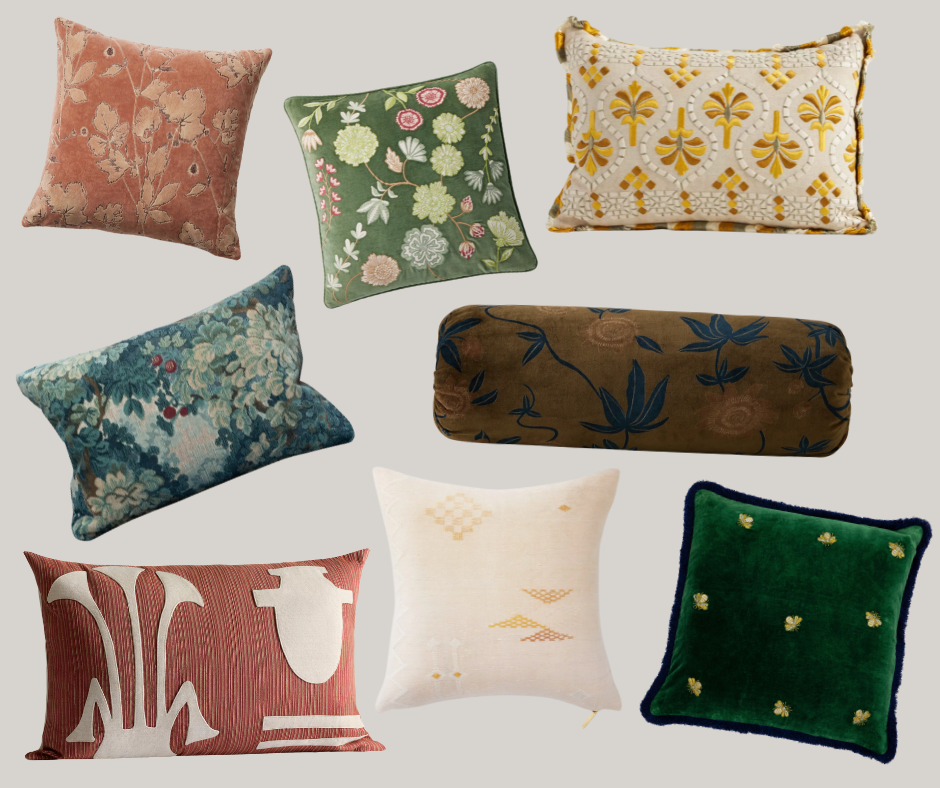
10 Embroidered Pillows We Love for Spring, Summer, and Beyond
Embroidered pillows are the perfect seasonal refresh—blending color,

No Cash? Here’s How to Start a Creative Business on a Tight Budget
Whether you dream is an interior design firm, ceramics studio, or art

POST COMMENT
You must be logged in to post a comment.