
8 Italian Tile Brands Interior Designers Specify Again and Again

 0
0
 0
0Summary
Italian tile manufacturing grew out of centuries of material experimentation, regional clay resources, and postwar industrial investment centered in Emilia-Romagna. Over time, advances in porcelain stoneware, digital printing, and slab technology positioned Italy as a global leader in ceramic production. Today’s Italian tile brands balance technical precision with surface design, offering durable materials that perform reliably across residential, commercial, and architectural applications. The eight manufacturers featured here reflect the range of approaches that continue to define Italian tile today.
Reflection Questions
How often do material performance and long-term availability influence your tile selections compared to surface appearance alone?
Are there areas in your current projects where porcelain could replace natural stone without compromising visual depth or durability?
Which Italian manufacturers align most closely with the scale and complexity of the projects you typically work on?
Journal Prompt
Think about a recent project where tile specification took longer than expected. What factors slowed the decision-making process: finish variation, lead times, installation requirements, or coordination with other materials? Write through how earlier familiarity with specific manufacturers might have simplified those choices.
Italian ceramic tile production developed rapidly in the mid-twentieth century, particularly in Emilia-Romagna, where natural clay deposits and existing infrastructure for the manufacturing process supported large-scale growth. Unlike many decorative trades, tile production evolved alongside industrial technology rather than in opposition to it.
This history explains why Italian tile manufacturers tend to operate with a strong technical foundation as well as an eye toward sustainable design and aesthetics. Glaze chemistry, kiln technology, digital printing, and slab engineering are considered central components of design rather than secondary ones. Over time, this approach has empowered Italian brands to produce surfaces that perform consistently in real-world environments while continuing to evolve visually.
Of course, all Italian tile brands are different in their approach, even they prioritize quality much in the same way. Some manufacturers lean heavily into experimentation. Others focus on refinement and continuity. Many do both, and do so exceptionally well. Below are eight Italian tile brands that continue to shape the global interiors market. There truly is nothing like the Italian style of tile design.
A Brief History of Italian Tile Design and Manufacturing
Before we launch into our round-up, let’s learn a bit about the history of Italian tile making. Italian ceramic tile manufacturing did not begin as a design industry. Mosaic tiles can be found in cathedrals, palaces, and houses of worship throughout Italy, used to tell Biblical tales, embody mythology, and capture the flora and fauna of each region.
Its history as a commercial product grew out of regional construction trades shaped by geology, labor, and access to raw clay. Northern Italy, particularly the Emilia-Romagna region, contains mineral deposits that supported brick-making and terracotta production long before tile entered domestic interiors.
Early kilns produced basic building components intended for roofs, agricultural structures, and simple floor finishes. These early forms relied on locally sourced ceramic material, which was fired at low temperatures and shaped with minimal mechanization. The decorative motifs and product range we see from tile makers today were not as evolved then.
By the late nineteenth and early twentieth centuries, mechanized presses and tunnel kilns transformed this regional craft into an organized industry. Factories concentrated around Sassuolo, where rail access and natural resources supported expansion.
This clustering gave rise to what is now known as the Italian ceramic district. This dense manufacturing zone is where raw material suppliers, glaze producers, and equipment builders developed alongside tile factories. Even at this early stage, production emphasized repeatability and reliability over ornament, setting the foundation for what would later become internationally recognized quality ceramic tiles.

Postwar Reconstruction and Industrial Expansion
After World War II, rebuilding accelerated demand for durable construction materials. Ceramic tile provided resilience, affordability, and hygienic performance at scale. Throughout the 1950s and 1960s, factories expanded rapidly, shifting from batch firing to continuous production lines. Tile manufacturing evolved into an integrated system where kilns, presses, glazing equipment, and packaging lines operated together within a tightly controlled manufacturing process.
This period also established Italy’s collaborative industrial culture. Engineers worked beside surface designers. Glaze chemists collaborated with mold makers. Equipment manufacturers remained physically close to tile plants, allowing new firing methods and finishes to be tested quickly. As exports increased, Italian tile entered markets across Europe and beyond.
The Emergence of Porcelain Stoneware
The next major transformation occurred during the 1970s and 1980s with the development of porcelain stoneware. Pressed under extreme force and then fired at higher temperatures, this material had very low water absorption and boasted exceptional strength. Early iterations were utilitarian, primarily gray or beige, and used in industrial contexts.
Over time, advances in milling and firing introduced a new generation of surfaces. New stoneware formulations allowed tighter grain structure and improved color stability. By the 1990s, porcelain tiles began replicating natural materials with increasing accuracy. Stone textures, cement finishes, and early marble interpretations entered the market, expanding tile’s role beyond service spaces and into residential interiors.
Digital Printing and Surface Innovation
The mid-2000s marked another turning point with the adoption of digital inkjet printing. This shift allowed multiple layers of imagery to be applied with unparalleled precision. This introduced depth, tonal variation, and irregularity previously unattainable through screen printing and opened the door to much more complex designs. Italian manufacturers were among the earliest to invest in these systems.
Tile design began drawing directly from photography, geology, and scanning technology during this period. Natural references like stone, concrete, and veined marble could be interpreted across large panels without the obvious repetition of older printing systems. Designers developed surfaces with subtle patterns, controlled movement, and layered color variation. This era also introduced greater emphasis on tactile surfaces because traditional methods were popular, too.
Fuel your creative fire & be a part of a supportive community that values how you love to live.
subscribe to our newsletter
*please check your Spam folder for the latest DesignDash Magazine issue immediately after subscription

Large-Format Slabs and Architectural Use
During the 2010s, Italian manufacturers expanded into large-format porcelain slabs and modular systems. Thin but strong, these materials allowed tile to function as an architectural skin rather than a finish applied afterward. Variations in thicknesses made it possible to coordinate floors, walls, countertops, and vertical planes using the same surface.
This expansion supported both indoor and exterior applications. Porcelain pavers were developed for structural installations, including terraces and walkways, enabling consistent material language between inside and outside spaces. Tile was no longer confined to wet areas. It appeared in staircases, façades, and large public interiors, including transport hubs and the occasional office building.
Manufacturing Continuity and Regional Identity Among Italian Tile Brands
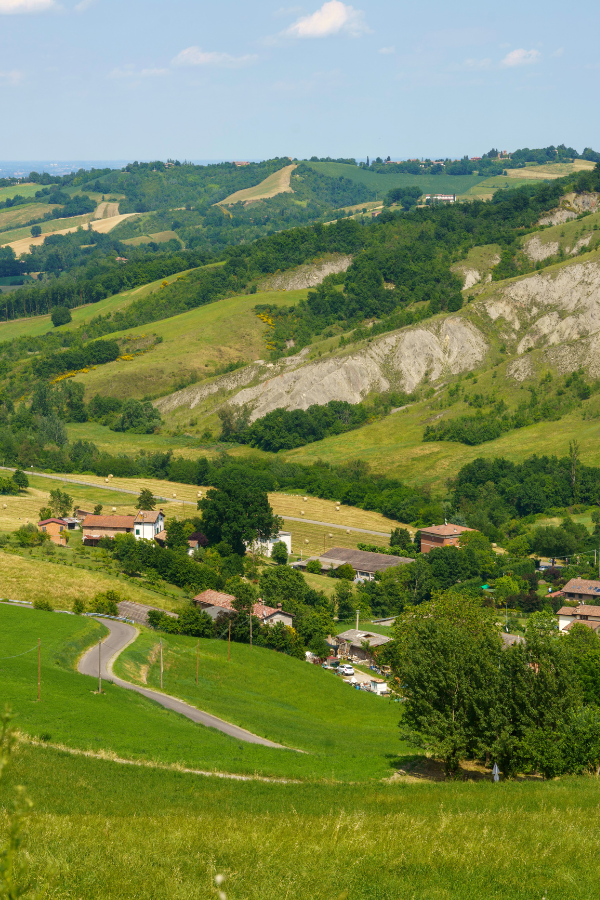
One defining trait of Italian tile production is continuity. Many manufacturers are still family-run or multigenerational and have operated within the same district for decades. Rather than cycling product lines quickly, companies tend to refine existing collections over time.
This long-view approach allows surface development to evolve slowly so that the brand is preserved. A travertine-inspired tile introduced one year may be updated later with new finishes, softer veining, or expanded formats rather than discontinued entirely. This continuity supports consistency across large projects and reinforces trust in long-term availability.
Contemporary Italian Tile Production
Modern ceramic factories combine automation with regional expertise. Robotics handle pressing and sorting, while digital inspection systems manage color accuracy and surface alignment. Many facilities operate closed-loop water systems and track emissions to reduce environmental impact.
Sustainability now plays a measurable role in manufacturing. Recycled content, low-emission kilns, and transparent documentation support broader goals around sustainable design and responsible sourcing. For example, Italian tile brad Supergres continually “invests in cutting-edge technology and eco-sustainable production processes, aiming for a future where ceramic excellence and environmental responsibility walk hand in hand.” These measures influence not only production but also how tiles interact with the built environment over time.
Design Culture and Material Language
Italian tile culture has always blurred boundaries between industry and creativity. Surface designers often reference sculpture, architecture, and graphic art, bringing creativity into an otherwise technical field. This relationship between art and manufacturing is still central to Italian ceramics.
Color palettes now move easily between warm mineral tones and cooler industrial shades. Subtle shifts in colour, tonal depth, and finish allow surfaces to respond to natural light throughout the day. Collections frequently include multiple finishes in different shades, enabling nuanced composition rather than uniform repetition.

Italian Tile Today
Today’s Italian tile industry operates at a global scale while remaining regionally grounded. Manufacturers produce vast ranges of products that serve residential, commercial, and civic spaces around the world. From minimal wall tiles to expressive decorative surfaces, tile functions as both structure and expression.
Brands continue to explore new glazes, firing methods, and new technologies that improve durability, slip resistance, and long-term performance. Many products are engineered to be resistant to freeze-thaw cycles, chemical exposure, and heavy foot traffic, supporting extended life in demanding environments.
Whether referencing natural travertine, layered sediment, or abstract geometry, Italian tile reflects ongoing dialogue between material science and design culture. It is shaped by nature, refined through technology, and continually adjusted through experimentation.
8 Italian Tile Brands for Stunning, Tactile Surfaces
Mutina
Mutina was founded in 2006 in Fiorano Modenese, near the center of Italy’s ceramic manufacturing district. From the beginning, the company positioned itself differently from traditional tile producers by working closely with architects and industrial designers. Rather than developing large collections internally, Mutina builds many of its lines through external collaborations. Designers including Patricia Urquiola, Ronan and Erwan Bouroullec, Inga Sempé, and Konstantin Grcic have all contributed to the brand’s catalog. You’ll find their tiles installed in gorgeous spaces like the Art Yard Hotel restaurant, The Social House, Saltimbocca, and more.
The resulting collections often emphasize matte surfaces, textured glazes, and nonstandard formats. Recent projects from the iconic brand include Motivo by Ronan Bouroullec, DIN by Konstantin Grcic, and Being Mutina by Brigitte Niedermair. Mutina tiles are produced in porcelain and ceramic and are frequently used in architectural interiors where surface design plays a central role rather than acting solely as a background material.
Marazzi
Founded in 1935, Marazzi is one of the most established ceramic manufacturers in Italy and one of the largest producers of porcelain tile globally. The company is headquartered in Sassuolo and operates manufacturing facilities in Italy and abroad. Marazzi’s catalog includes porcelain floor tile, wall tile, large-format slabs, and exterior pavers. Many collections, including Eccentric Luxe and Essential Mood, are produced in multiple finishes and thicknesses, which allows for visual/thematic continuity across interior and exterior applications.
The brand is widely distributed and commonly used across residential, commercial, and multifamily projects. Its long production history and expansive offering have made Marazzi a consistent presence in specification libraries worldwide.
Florim
Florim Group is a major Italian porcelain manufacturer based in Fiorano Modenese. The company operates several sub-brands under one corporate structure, including Florim Stone, Floor Gres, and Rex. Florim is known for large-format porcelain slabs and advanced surface technologies. Many collections replicate stone, marble, and concrete through layered digital printing and surface texturing.
The company places significant emphasis on environmental certification and production transparency. Florim’s manufacturing facilities operate with sustainability standards that support large institutional and hospitality projects requiring formal documentation.
Atlas Concorde
Atlas Concorde was founded in 1969 and remains one of Italy’s leading producers of porcelain stoneware. The brand focuses heavily on architectural applications, offering coordinated systems for floors, walls, façades, and outdoor use. Collections typically feature structured veining, controlled color variation, and modular sizing. Atlas Concorde products are manufactured with technical consistency in mind, allowing large installations to maintain visual continuity.
The company also operates Atlas Concorde USA, which supports domestic distribution and production tailored to North American standards.
Cotto d’Este
Cotto d’Este is based in Sassuolo and is recognized for its high-end porcelain tile and slab production. The company was among the early adopters of thin slab technology and remains closely associated with large-format surfaces. Many of its collections focus on natural stone interpretations, produced with deep surface texture and rectified edges. Thickness options allow applications across floors, walls, countertops, and exterior environments.
Cotto d’Este tiles are often used in projects requiring visual continuity across multiple planes without introducing additional materials. Visit their Milan show room to view their stunning tiles.
Ceramica Bardelli
Ceramica Bardelli is known for decorative ceramic surfaces rooted in Italian graphic tradition. Founded in the 1960s, the company gained recognition for incorporating illustration, pattern, and historical reference into tile production. Collaborations with designers and artists, including the Fornasetti archive, have become central to the brand’s identity. Bardelli tiles often feature repeating motifs, ornamental borders, and hand-drawn aesthetics.
Production remains focused on ceramic wall tile rather than large-format porcelain, making the brand particularly associated with accent surfaces and decorative installations.
41zero42
41zero42 is a contemporary tile manufacturer based in Fiorano Modenese. The award-winning brand emphasizes color, geometry, and surface clarity rather than imitation of natural materials. Collections like Biscuit, Kappa, Otto, and Technicolor often feature solid colors, small-format tiles, and modular systems designed for repetition. Finishes are typically matte or satin, with restrained texture.
41zero42 works primarily in porcelain stoneware and has developed a reputation for graphic consistency across product lines. The brand is frequently associated with modern residential, retail, and gallery interiors.
LEA Ceramiche
LEA Ceramiche is part of the Panariagroup and has been active in ceramic production since the 1970s. The company focuses on porcelain stoneware developed through advanced digital printing and material research. Collections and projects like the Three Falls House frequently interpret marble, cement, and stone through controlled palettes and consistent patterning. LEA tiles are produced in a wide range of formats, including large slabs and coordinated wall systems.
The brand is also known for environmental certifications and low-emission manufacturing processes, which support specification in hospitality and commercial projects.
Final Thoughts on Italian Tile Manufacturing
Italian tile production has long balanced technical innovation with material discipline. Some of the companies listed operate at a studio scale. Others function as global manufacturers. What connects them all is an emphasis on process, surface development, and production stability. Let us know in the comments below which Italian tile brands you specify for projects. We’d love to hear your perspective!
About the Featured Image: Basilica of San Vitale, Ravenna. Completed in 548, the mosaic interiors are among the earliest examples of large-scale surface design in Italy. Clearly, Italy has been a star member of the tile club for over a thousand years!
Written by the DesignDash Editorial Team
Our contributors include experienced designers, firm owners, design writers, and other industry professionals. If you’re interested in submitting your work or collaborating, please reach out to our Editor-in-Chief at editor@designdash.com.
Related Posts
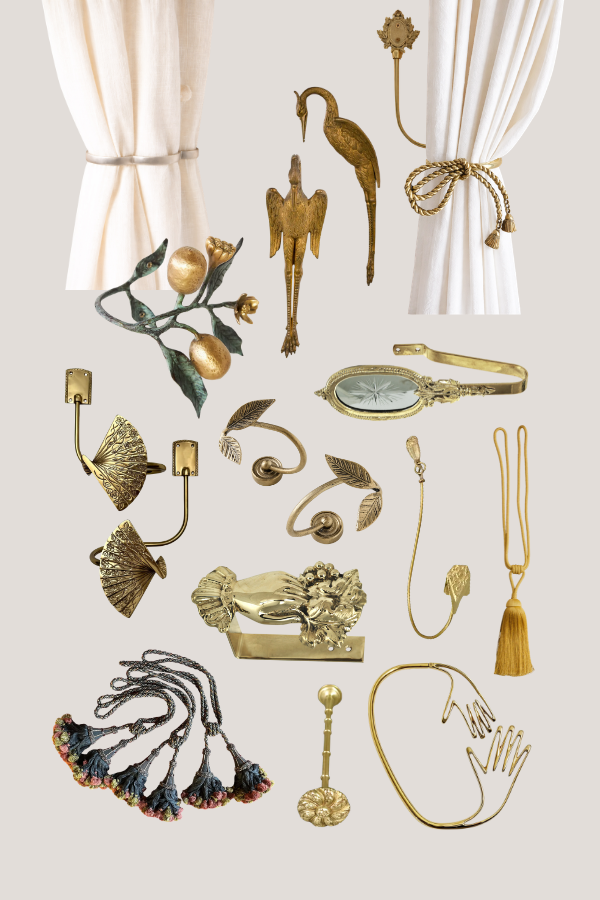
13 Charming Curtain Tiebacks to Make Your Drapery More Whimsical
From brass bows and mirrored Victorian holdbacks to French tassels and

10 Tips for Growing Your Online Presence in a Crowded Creative Market
Learn to define your niche, optimize your website, leverage social med
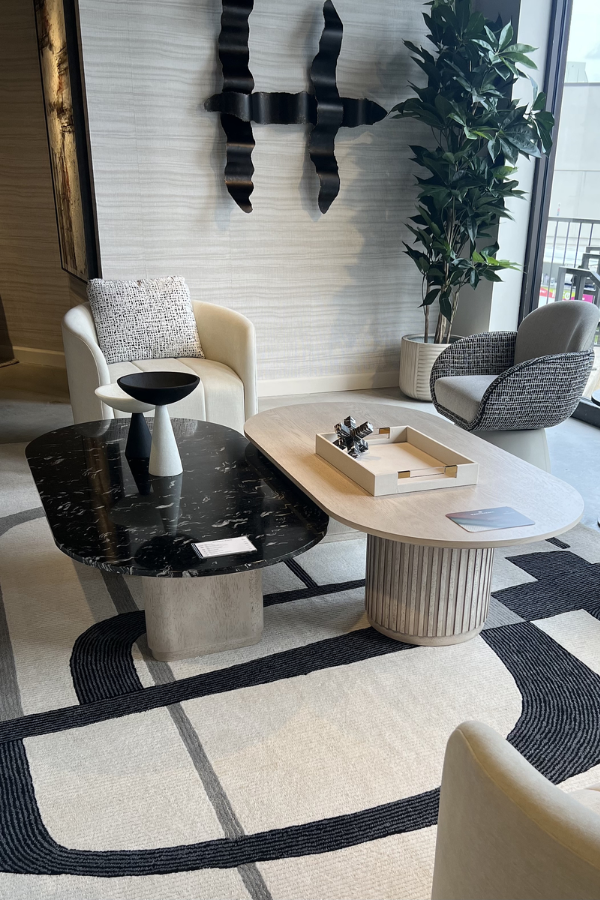
Soft Geometry: The Return of Rounded Forms at 2025 Design Fairs
Curves are back. From Milan to High Point, 2025 design fairs prove sof
Light, Color, and Craftsmanship: How is Stained Glass Made?
From the towering cathedrals of medieval Europe to contemporary buildi

Where Can I Study Interior Design in Chicago?
Including Columbia College Chicago, the School of the Art Institute of