Axel Vervoordt Reminds Us That Time and Use Are Design’s Collaborators

 0
0
 0
0Summary
Axel Vervoordt’s work reminds us that meaningful interiors are not created through novelty or perfection, but through time, use, and accumulated judgment. His approach treats aging materials, lived-in surfaces, and patient editing as collaborators rather than problems to solve.
Reflection Questions
Where in your current projects are you prioritizing visual control over how the space will actually be used?
Which materials or finishes in your work are chosen for longevity, and which are chosen mainly for appearance at installation?
How often do you allow rooms to develop slowly rather than completing them all at once?
Journal Prompt
Think about a recent project where perfection played an outsized role in decision-making. What finishes, layouts, or furnishings were selected to maintain control rather than accommodate real use?
Now imagine revisiting that space five years later. Which choices would still make sense once time, wear, and daily life have shaped the room? What would you design differently if use were treated as a collaborator instead of a threat?
Axel Vervoordt’s interiors are often discussed as if they emerged fully formed, but his work actually grows out of a long life spent handling objects. Before architectural collaborations or residential commissions entered the picture, the designer and dealer was already buying, selling, and living with antiques. That habit of proximity matters.
This background explains why his rooms feel closer to curated environments than decorated ones. The furniture, art, and architectural decisions come from a depth of understanding and respect that can be rare in an industry increasingly focused on “the new and the now”. Everything is treated as material culture rather than product. A 17th-century trunk can sit comfortably beside contemporary abstraction because value is not attached to period or pedigree but to presence.
Spatial language develops through exposure. Looking closely, handling real materials, and learning how objects age matures our instincts and deepens our perspectives. Vervoordt’s work suggests that taste sharpens through accumulation, not speed. As Kate McGregor writes in this article for House Beautiful, Axel Vervoordt is incredibly accomplished and beloved by many tastemakers, but “Vervoordt keeps a decidedly low profile, working only on projects that speak to him.”
Maintenance of that “low profile” is not a personality quirk here. It’s a business and lifestyle decision with aesthetic consequences (or rather, benefits). If you accept fewer projects, you can refuse the compromises that flatten your design work into a repeatable service.
A Belgian “Aesthetic,” or a Design Infrastructure?
Vervoordt is often treated as a source point for what people now describe as Belgian minimalist or Belgian “cool” design: pale plaster, low furniture, restrained rooms, antique surfaces, very little bright color. In Architectural Digest’s AD100 Hall of Fame profile, his aesthetic is described as “somber, sparse, and rustic rooms with a neutral palette” and noting that familiar moves, including plaster walls and the low coffee table, trace back through him.
That influence and accreditation can make designers defensive. Nobody likes being told their favorite detail is inherited. But if you’re running a studio, influence is not the issue. The issue is whether you understand why that specific detail worked in the first place. Plaster walls are not a “vibe”. They are a surface choice with specific visual and physical behavior. Low tables are not a trend. They change posture, sightlines, and how people occupy a seating group. If you borrow those elements without understanding what they do, you end up with a room that feels untailored, like it is wearing borrowed clothes.
As the designer himself put it:
“I don’t like the word ‘decoration.’ It’s, for me, too superficial. It’s a search for harmony.”
With Vervoordt’s work, you’re not staring at a space he designed and taking a table here and a wall finish there. You’re drawing from his discipline, from his methodology.
Patina, Refusal, and the Problem with Perfection
A lot of people summarize Vervoordt as “wabi-sabi,” then stop there. Of course, a more useful framing is that he treats age as a design input; not “character” in the marketing sense but real evidence of its past, its craftsmanship, or its creator. These are not defects that need correcting. They’re proof that the room has been lived in, and that the objects in it were chosen with some tolerance (nay, respect) for reality.
In a transcript for The Grand Tourist, Vervoordt laments that he “hated things that were over-restored and over-varnished or over-gilded. I want everything in the original condition.” Age and use aren’t necessarily damage to be undone; rather, they can be viewed as time’s collaboration with an object. The idea that time collaborates with a space rather than unraveling, muddying, or damaging it is key here as well.
Fuel your creative fire & be a part of a supportive community that values how you love to live.
subscribe to our newsletter
*please check your Spam folder for the latest DesignDash Magazine issue immediately after subscription

The Value of Imperfection in Designing Spaces for Real Life
You might not agree with every part of that, but it’s hard to ignore the operational implication. If your entire installation depends on the space looking interminably perfect and composed, you end up with a house that feels fragile. Clients start policing their own lives inside it. Then, you’re asking the client to behave. Put simply, spaces arranged this way make everyday life feel like a risk to the design.
This is where his work pushes against a common industry reflex. Many studios still treat the selection and procurement process as a control exercise. The goal is clarity, cleanliness, proportion, spacing. But houses are touched constantly. Chairs get dragged. Walls get bumped. Stone gets stained. When you specify finishes that require perfection to look “right,” you lock the client into maintenance mode from day one.
But daily life is messy and repetitive. Materials that cannot absorb that reality get damaged quickly and age even more rapidly. A limewashed wall that can be touched up without drama is a better long-term decision than a perfect paint job that turns every scuff into a crisis.
And, of course, there’s another element at play: perfection can read generic. It photographs well, then it blends into everything else. But imperfection? It makes one room different from the next because it represents actual use and actual history, even if that history is only a few years old. It also gives a client permission to live like a person. That permission is part of luxury, even if some in the industry prefer to talk about luxury as price tags, high maintenance finishes, and rarity.
Collecting and Sharing as a Design Philosophy
Discussing his career and passion for dealing art in an interview led by Dan Rubinstein, Vervoordt noted that he never wanted to “have a shop.” Instead, he said, “I would like to deal from a home. And then because I only will buy things I love myself. I want to live with them first and then sell them.”
That distinction matters. Refusing the traditional storefront model allowed him to treat collecting as a lived experience rather than a commercial one. Objects weren’t inventory waiting for placement; rather, they were companions. Only after that period of coexistence would he consider passing them on.
In the same conversation, he described selling not as loss but as exchange. Once he had lived with a piece and understood it, possession no longer mattered. Sharing did. That perspective explains why his interiors feel closer to personal environments than installations assembled for display.
Resonance Over Rarity and Editing Over Excess
Vervoordt began selling antiques as a teenager in Antwerp, long before he explored interior design as a profession. By his twenties, he was already renovating neglected buildings and sourcing objects through buying trips across England and Europe, often during school holidays. In this Grand Tourist interview, Rubinstein describes him as an early outlier, someone who was drawn less to rarity and more to resonance.
He gravitated toward pieces that felt contemporary to our time despite their age. He dissolved a barrier by identifying throughlines across periods, styles, and aesthetics. That instinct to collapse hierarchies between “important” and “useful” objects became foundational to his work and is quite clear in the designer’s interiors.
This sensibility crystallized publicly at a Paris Biennale in the early 1980s. While other dealers constructed elaborate booths layered with fabric and ornament, Vervoordt stripped his display down to bare concrete and placed the objects together without scenery. He later recalled removing all decoration at the last moment, unsure whether anyone would understand it. Of course, it was a breakout success; Vervoordt attracted collectors ranging from Rudolf Nureyev to the Getty Museum.
Decades later, we see this same approach in his galleries in Antwerp and Hong Kong, which opened in 2011 and 2014. And here we have an intriguing dynamic in Vervoordt’s work: collecting, then editing. But editing for real life. Fewer pieces, clearer relationships.
Creating from Accumulated Knowledge Blurs the Line Between Art, Architecture, and Interiors
That dealer’s training still governs how his interiors develop. Rather than designing around a concept and sourcing to match it, Vervoordt builds rooms from accumulated knowledge. Objects are evaluated not only for beauty, but for how they behave in proximity to others.
This approach explains why his rooms never feel over-composed. There is no sense of urgency to complete them. A chair can sit alone for months before something joins it. A wall can remain bare because nothing improves upon it yet. The restraint that Vervoordt exerts comes from confidence built across decades of handling objects and examining spaces, not from strict adherence to an aesthetic doctrine.
We can see this most notably in Kanaal, the former distillery complex outside Antwerp that now houses his studio, gallery spaces, residences, and foundations. Architectural Digest describes Kanaal as the clearest expression of how Vervoordt has blurred the boundaries between fine art, architecture, and interior design. Quoted back in 2017 by Brook Mason, Vervoordt described the site as “the place that invites individuals to live a life true to their innermost being.”
Created over ten years, the project wasn’t designed so much as it was conceived; it grew gradually, building by building, and its scale may have been large, but the pace was controlled. It evolved in its own time. Kanaal reinforces the idea that Vervoordt’s interiors are not isolated acts of styling. They sit inside a much larger ecosystem. And this brings us to the thesis of this article, that designing for human beings means embracing the fact that spaces evolve as they are used. Quoted by Rubinstein, Vervoordt acknowledges:
“It’s never complete. Things are never completed.”
Final Thoughts
The job of an interior designer is not to produce renderings or procure furniture. It is judgment, interpretation, and prediction. It’s how you make decisions that will continue to make sense once people return to their homes and actually live in those spaces. Your humanity and emotion matter, because it’s your ability to translate a life into space that keeps your work desirable and enjoyable.
If you acknowledge that use is what truly curates and edits a space, that interiors evolve towards their truest selves only because they are occupied, then you share quite a bit in common with Mr. Vervoordt.
Featured Image Note
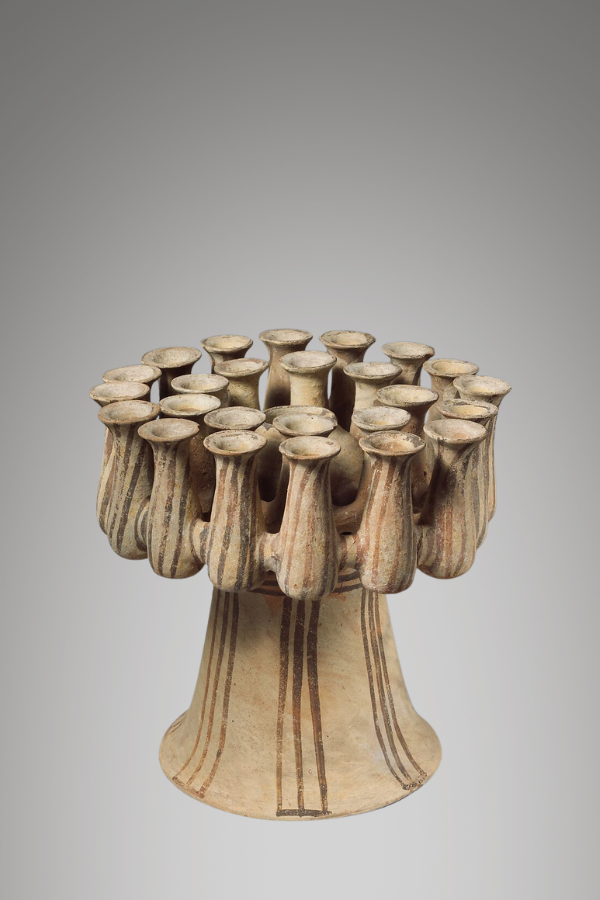
This Cycladic terracotta kernos on view at The Met was created between 2300 and 1900 BCE. It was designed to hold multiple offerings. In its current state, this piece reflects repetition, use, and accumulation rather than ornament or refinement. We chose this object because it embodies the same principle explored throughout this article: that time does not diminish meaningful design. It completes it.

Related Posts

What is a Capsule Wardrobe, and How Can I Build My Own?
The term "capsule wardrobe" was first coined in the 1970s by Susie Fau

What is Fractional Real Estate Investing, and Is It Truly Accessible?
Let's explore the mechanics of fractional real estate investing, outli
All About Helene Schjerfbeck: The Finnish Painter with an Ever-Evolving Artistic Style
From her beginnings at the Finnish Art Society to her later years as a
Spring HPMKT Design Trends: Color Drenching with Confidence
The color drenching trend has been around for a few years, the desire

Frieze London and Frieze Masters 2026 Return to Regent’s Park
Frieze London and Frieze Masters run October 14th through 18th, 2026 i

Iconic Olympic Architecture in Honor of the 2024 Paris Olympics
The Paris 2024 Summer Games will be exciting and filled with cultural