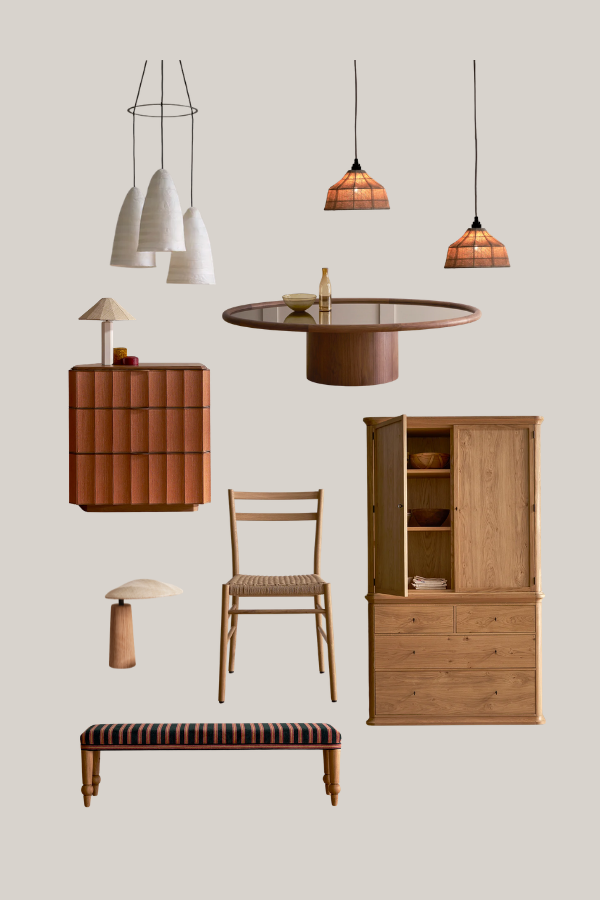
22 Years of Poetic British Furniture: Why We Love PINCH

 0
0
 0
0Summary
PINCH, founded in 2004 by Russell Pinch and Oona Bannon, has spent 22 years making refined, carefully crafted British furniture rooted in patience, material honesty, and real life. Growing slowly and intentionally, the studio balances tradition with innovation, notably through its 20th anniversary collection and Autumn 2025 releases. PINCH has earned sustained respect for its poetic, human-centered approach to design.
Reflection Questions
How does PINCH’s slow growth model challenge dominant ideas about success in the furniture and design industry?
In what ways can designing for real life rather than trends change how we evaluate furniture?
How do craft, time, and material experimentation shape the emotional value of an object, not just its function?
Journal Prompt
Write about an object in your own home that has grown more meaningful to you over time. Consider whether its material, its story, its use, or your memories with it make it endure. Reflect on how PINCH’s philosophy of patience and craft might change the way you think about the things you choose to live with.
British furniture and design brand PINCH was founded back in 2004 by Russell Pinch and Oona Bannon in London. The brand frames its beginnings not around a commercial strategy but around a very personal intention: to make furniture and lighting that they themselves “would want to live with.” They describe setting their sights on what they wanted to be surrounded by, indulging in detail, and refusing to compromise on materials. From the start, the company positioned itself as a studio driven by craft, refinement, and long-term thinking rather than trend or volume. As we draw inspiration from their 20th anniversary collection, which debuted two years ago but still resonates for its quality, beauty, and simplicity, let’s celebrate PINCH anew!
PINCH Furniture Begins at an Unassuming Kitchen Table
PINCH did not begin with outside funding, or, presumably, a polished business plan in the way that many other furniture companies get their start. According to Russell Pinch’s own telling, the idea emerged around a London dining table. As Diana Budds describes in her Fast Company profile of the brand, Bannon and husband Pinch once sat together and wrote a manifesto on a plain sheet of paper, asking what they wanted out of life. They wanted children, time with those children, and work they would be proud of. From that conversation came the decision to create a furniture company aligned with those values.
On PINCH’s own website, its founders describe a similar spirit. They set their sights on what they wanted to be surrounded by, focused on detail, and insisted on high-quality materials. From the beginning, they positioned their work as something intended to endure rather than chase trends. The brand calls its aesthetic “quiet and elegant,” but that description is less about visual minimalism and more about an attitude toward making. Design, for PINCH, seems patient, iterative, and rooted in craft.
The couple’s commitment endures. In an interview with Gianna Annunzio for Sixtysix Magazine, Russell recalls “clearing out the furniture in their own home and replacing it with their earliest designs.” He admits he did not stop to consider whether this was a good idea for their relationship. Passion, in that moment, simply carried them forward. That intensity seems to have supported both a decades-long relationship and a fruitful design partnership; as Russell told Annunzio “‘We push each other a lot.'”
Growing Slowly on Purpose
One of the most striking aspects of PINCH’s story is how deliberately it has expanded. In the Fast Company article, Russell Pinch speaks openly about prioritizing quality over rapid growth. He describes the company’s trajectory as a “beautiful slow graph,” with steady year-on-year increases rather than sudden spikes. U.S. sales rose significantly in recent years, but the brand frames that success as the result of patience rather than aggressive marketing.
Fuel your creative fire & be a part of a supportive community that values how you love to live.
subscribe to our newsletter
*please check your Spam folder for the latest DesignDash Magazine issue immediately after subscription

Russell also draws a clear distinction between how some large companies treat customers and how PINCH approaches its audience. He says many businesses speak about “consumers” in abstract, transactional terms. PINCH, by contrast, wants to design for real people and real homes, where furniture will witness dinners, arguments, and dancing. That perspective shapes how the brand thinks about durability, comfort, and daily use.
There is something old-fashioned in that mindset, but not overly precious or nostalgic. It aligns more closely with earlier traditions of British furniture making, when longevity and human scale mattered as much as appearance.
Emphasizing Refinement, Craft, and How Things Are Made
PINCH consistently frames its design process as one of refinement rather than speed. On its website, the studio explains that it develops each piece until it feels close to its own idea of perfection, while still seeking a lightness of touch that allows the work to sit comfortably in both country houses and urban apartments. The emphasis is not on dramatic form, but on careful proportion, finish, and material honesty.
Manufacturing matters just as much as drawing. PINCH states that it works with an evolving group of skilled craftspeople in the UK and Europe, rather than relying on a single factory. It holds stock of many pieces, offers bespoke color finishes, and accepts custom commissions that receive the same level of attention as standard designs. That flexibility suggests a studio more interested in long-term relationships with clients than rapid scale.
As Leo Lei describes in his retrospective on PINCH’s first twenty years for Design Milk, the brand marked its anniversary in 2024 with a New York pop-up at Jacqueline Sullivan Gallery. The exhibition was not framed as a commercial push alone, but as a chance to share what the founders call the “poetry” of their designs with an American audience that had slowly come to appreciate them over two decades.
The 20th Anniversary Collection
PINCH’s 20th anniversary in 2024 became an opportunity to experiment more boldly while staying true to its core principles. The New York pop-up presented fourteen new products, including lighting, seating, tables, and cabinetry. According to Sixtysix Magazine, Russell described this moment as an excuse to throw any budgetary concerns out the window and take creative risks that might not have made sense earlier in the brand’s life when they had just started to create furniture. The public’s response to these pieces was incredible (but expected given PINCH’s reputation for elegance and endurance).
The Colton chair, introduced as PINCH’s second-ever dining chair, illustrates this balance between innovation and tradition. It features a solid oak frame, saddle leather, and detailed stitching across a webbed seat and sling back. Russell emphasized the level of craftsmanship involved, crediting specialist leather workers in London. The Onis dining table leaned in a different direction, combining contemporary scale with traditional references. Made from French oak, it features a large elliptical top supported by four sculpted column bases and can seat ten to twelve people.

Lighting in the anniversary collection pushed the studio further into material experimentation. The Posent wall light pairs hand-blown glass with brown oak and bronze metalwork, using an old Viennese technique involving bicarbonate to create a distinctive surface effect. Other pieces, like the Cari wall light, were initially considered for 3D printing before Russell chose to sculpt them by hand, deliberately preserving sanding marks rather than eliminating them.
The Latest: PINCH’s Autumn Collection from 2025
Released late last year, PINCH’s Autumn 2025 collection feels like a careful expansion of ideas the studio has already been developing rather than a sharp change of direction. The Landry coffee table appears in several new versions circular and elliptical, in timber as well as finishes like white gold, moss, and bronze which suggests an interest in subtle surface variation rather than dramatic new forms.

Alongside are the extending Tove dining table, the Avery woven dining chair, the Joyce bedside table (in its larger size), and the Walcot bench. The Soren Globe Light 950 adds a softer lighting option to the lineup, while the Mercier press and the Ellery chest of drawers round out the collection with beautiful yet useful storage. This collection has successfully layere new finishes and textures onto PINCH’s existing vocabulary rather than reinventing it.
Ongoing Recognition for PINCH
PINCH lists a long record of awards on its website, ranging from Wallpaper* Design Awards to the Guild Mark for Excellence in British Furniture Design. These honors span lighting, tables, shelving, desks, and cabinetry, indicating that the studio’s strengths are not limited to one category.
More telling, perhaps, is the consistency of that recognition. PINCH did not peak early and then fade. Instead, its accolades appear across more than a decade, suggesting sustained respect within the design community. That steady acknowledgment aligns with the brand’s slow-growth philosophy.
Final Thoughts on PINCH
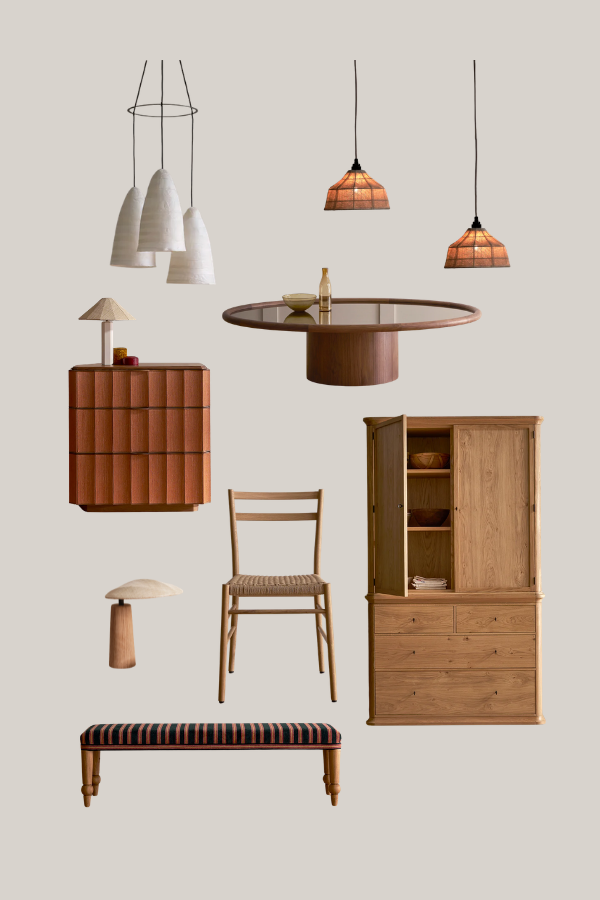
PINCH occupies an interesting position in contemporary British design. It is modern without feeling aggressively new, traditional without slipping into pastiche, and ambitious without abandoning practicality. The brand’s story is proof that furniture companies can grow slowly, win respect gradually, and still feel relevant two decades later. The confidence, care, and craft this brand embodies is rare, and it explains why PINCH has developed a devoted following on both sides of the Atlantic.
Written by the DesignDash Editorial Team
Our contributors include experienced designers, firm owners, design writers, and other industry professionals. If you’re interested in submitting your work or collaborating, please reach out to our Editor-in-Chief at editor@designdash.com.
Related Posts
DesignDash Podcast: Client Red Flags That Cost You Time, Profit, and Peace
Not every client is a fit and that's okay! Learn how to spot client re

How to Time Block for a More Satisfying, Efficient Workflow
Time-blocking can help you reclaim your schedule, boost your focus, an

What Is Desert Modern Design? Exploring the Palm Springs Style
Desert Modern’s longevity comes from discipline: fewer finishes, bet

Hiking to the Oldest and Largest Banyan Trees in the World
If planning a hike to the banyan trees of India, Taiwan, or even Hawai

Three European Design Fairs Worth Following on Socials This Fall
Follow London Design Festival, Feria Hábitat València, and EDIT Napo
Gotham Greens: Spotlight on Successful Urban Agriculture
With rooftop greenhouses and carefully-planned delivery routes to loca