Eight Fringed Light Fixtures to Capture the Interior Design Trend

 0
0
 0
0Summary
Fringe had a major year in interiors, but its use in lighting is most interesting to us. This article looks at eight fixtures that apply tassels, leather fringe, wrapped fiber, and layered trim in very different ways, then places that recent interest in a longer decorative history that runs through passementerie, upholstery, and historic textiles.
Reflection Questions
How much fringe does a room actually need before the detail starts to compete with everything around it?
Which of these fixtures uses trim in a way that feels fully integrated into the form, and which ones treat it more as embellishment?
When a decorative detail has this much history behind it, what makes a current version look considered instead of nostalgic?
Journal Prompt
Write about a decorative detail you keep returning to, even when it falls in and out of fashion. Why does it stay with you? Think through the rooms, objects, or textiles where you first noticed it, then write about how you would use that detail now. Be specific about material, placement, scale, and what it would need around it in order to look resolved rather than arbitrary.
Fringe was a top trend in 2025, with Business of Home’s Caroline Biggs pointing to it in a reflective piece from December. Biggs noted that “Fringed trims brought rhythm and movement to an array of rooms in 2025, as seen in spaces by Paloma Contreras, Andrea Goldman and Allison Handler.” Quoting Paloma Contreras, she writes that “‘Fringe adds interest, texture and an instant dose of glamour to a furniture piece.’” It was interesting to see fun-loving fringe beside prim pleats, but the trim is certainly here to stay. From valence tassels to upholstery trim, fringe was all over interiors last year, but we’re most excited by its application in lighting. Below are eight fringed light fixtures we adore in 2026. We’ll update this article after April’s High Point Market with fresh photos if we notice any new uses of the trendy yet timeless trim.

A Brief, Abridged History of Fringe in Historic Interiors
Fringe has been part of interior decoration for centuries, especially in the European tradition of passementerie, where tassels, braid, galloon, and other trims finished furniture, drapery, bed hangings, and upholstery. By the 17th and 18th centuries, it was already well established in formal interiors.
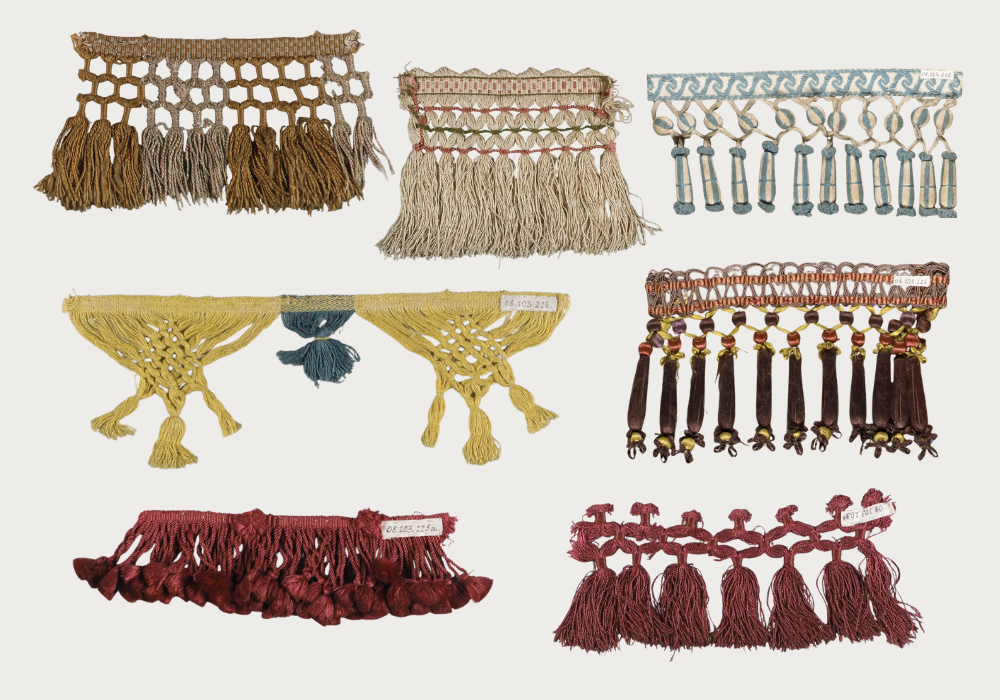
You see it along valances, at the base of seating, around textile borders, and anywhere a decorator wanted a harder line broken up with thread, color, and ornament. Sometimes fringe covered a seam or edge, but just as often, it was there because rooms of that period had absolutely no fear of gratuitous detail.
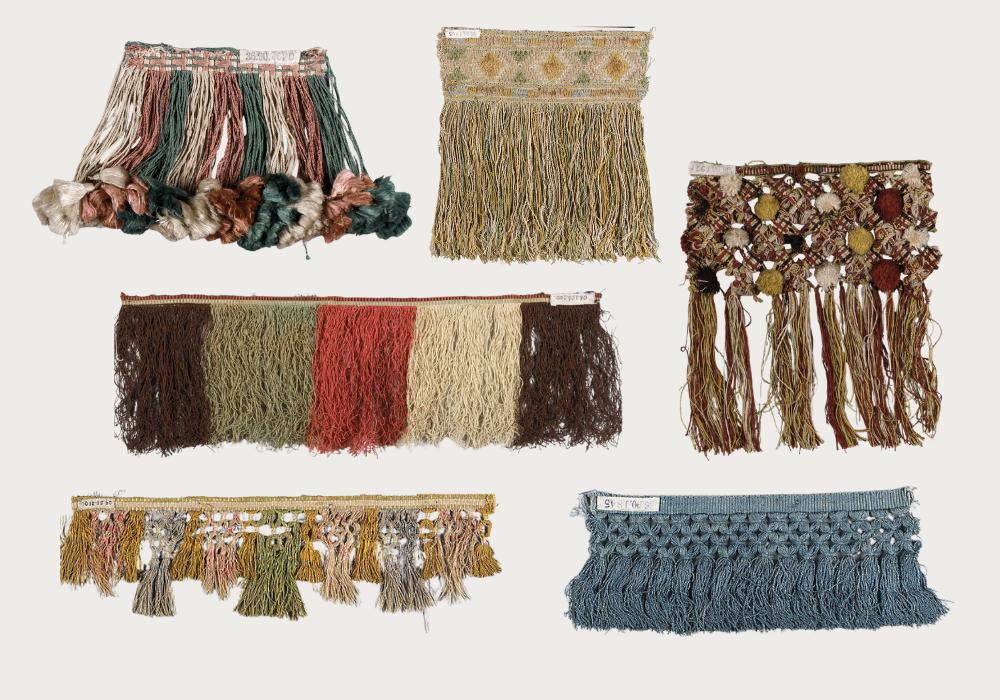
The Met’s collection demonstrates how wide-ranging applications of fringe were between the 1600s and 1900s. A search for “fringe” inn their open access collection database turns up more than 10,000 results, including French, Italian, British, Spanish, and broader European examples dated from the 17th century through the 19th and into the 20th. The application today might be more common on pendants and shades instead of valances and fauteuils, but this long history still informs contemporary design decisions.
Eight Fringed Light Fixtures We Love
Aquitane Chandelier by Breegan Jane for Savoy House
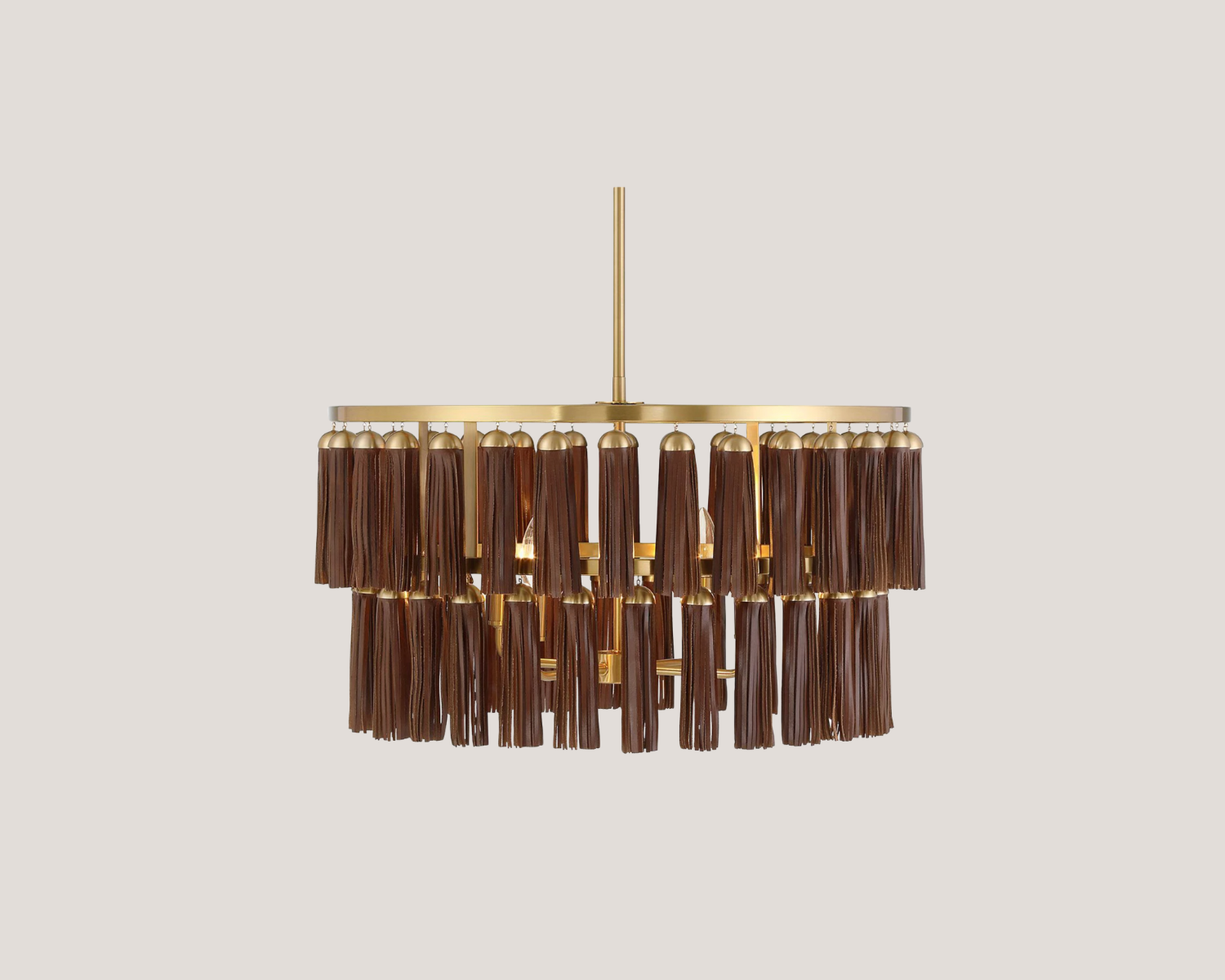
Breegan Jane’s Aquitane chandelier for Savoy House takes the fringe concept in a richer, more tailored direction. A warm brass ring frames two tiers of brown leather tassels, which hang in dense rows around the fixture and partly veil the bulbs within.
That mix of concealment and glow gives it a dressed quality, almost like jewelry scaled up for the ceiling. The material choice is what sets this fringed lamp apart. Leather pushes the piece away from anything overly sweet and gives the fringe real weight, both visually and literally.
Regina Andrew Cabaret Fringe Chandelier in Peacock
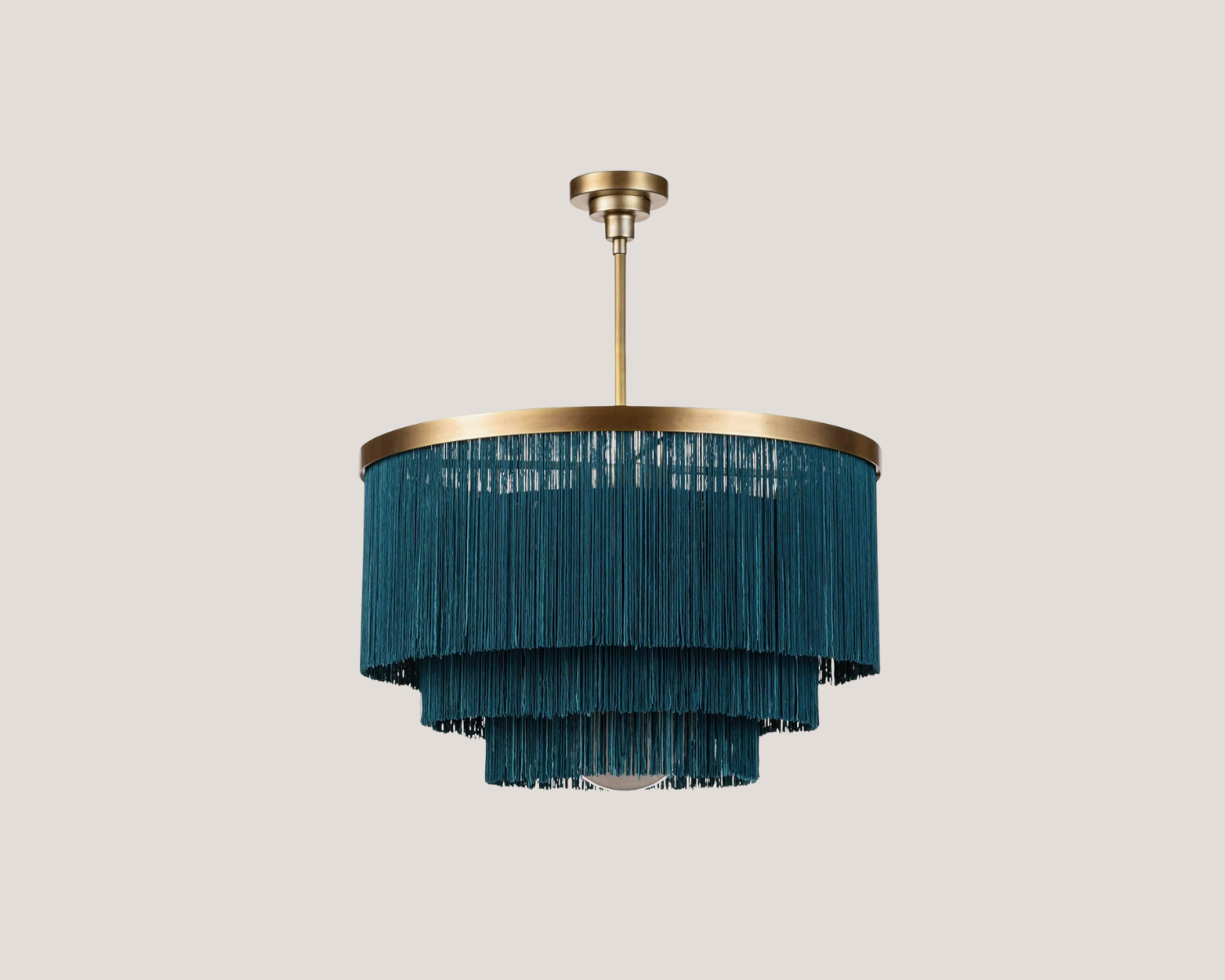
The Cabaret chandelier from Regina Andrew is more overt. Three tiers of peacock fringe drop from a brass frame, and an opal glass dome sits at the center. The fringe is full and saturated, and the brass ring at the top keeps the silhouette crisp.
Regina Andrew often brings a decorative streak to lighting, and this fixture does not hide it. The peacock color is the main event here. It is darker and richer than the brown leather on the Aquitane, and the fringe falls in a fuller curtain.
Fuel your creative fire & be a part of a supportive community that values how you love to live.
subscribe to our newsletter
*please check your Spam folder for the latest DesignDash Magazine issue immediately after subscription

Workstead Lantern Pendant Small
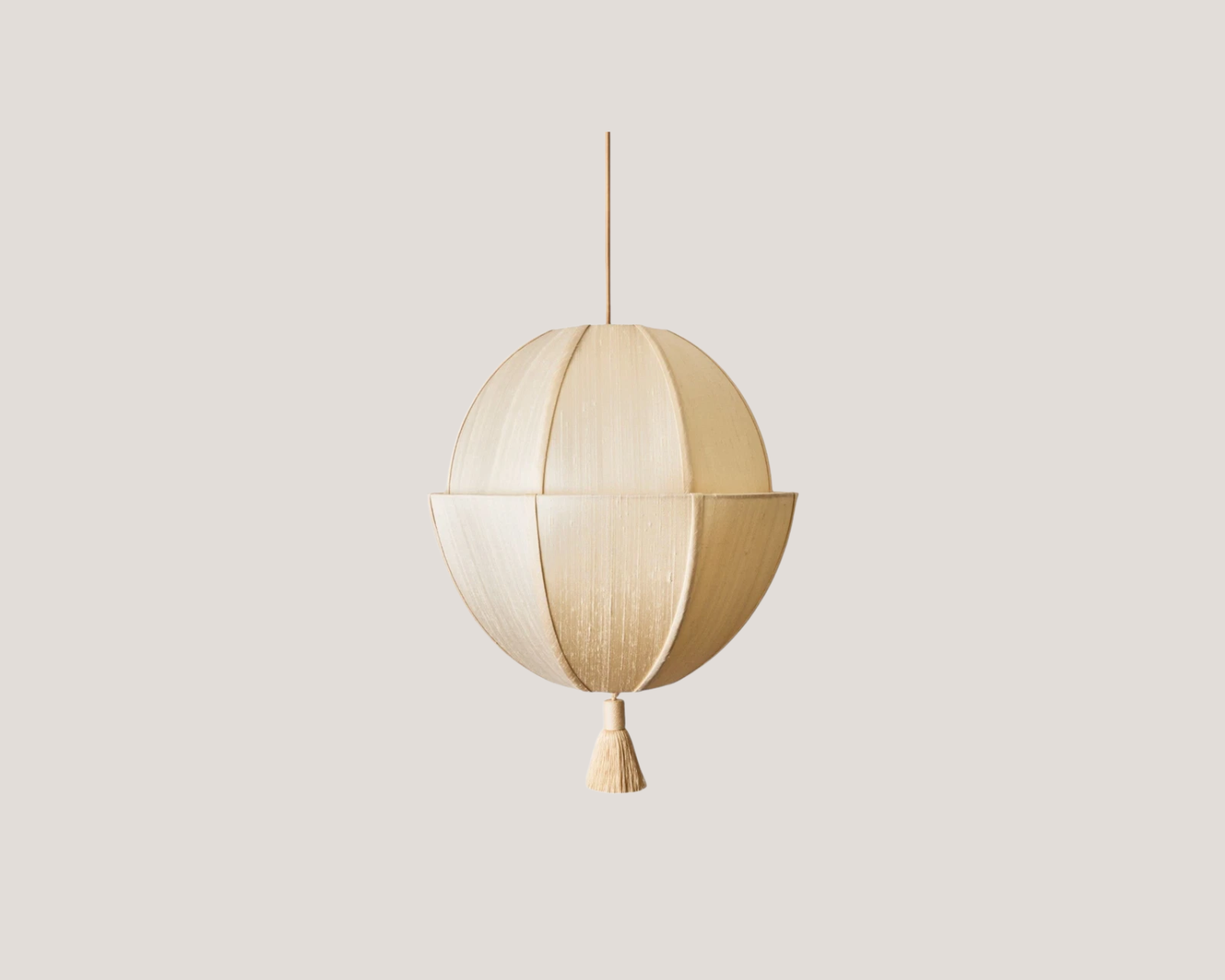
Workstead’s Lantern pendant is wrapped in raw silk and finished with a hand-worked tassel at the base. The shade has a rounded lantern form with paneled sections, and the silk gives the surface a soft luster rather than shine. Light passes through the material as a warm, muted glow.
The tassel is a small detail in relation to the whole pendant, but it changes the object’s reference points. The fixture is relatively pared down, but the tassel links it to older textile traditions more directly than a plain silk lantern would. Workstead makes its lighting in the Appalachian Mountains of Virginia, and that emphasis on material and finish is obvious here.
Mitzi Niya 6 Light 36″ Wide Chandelier
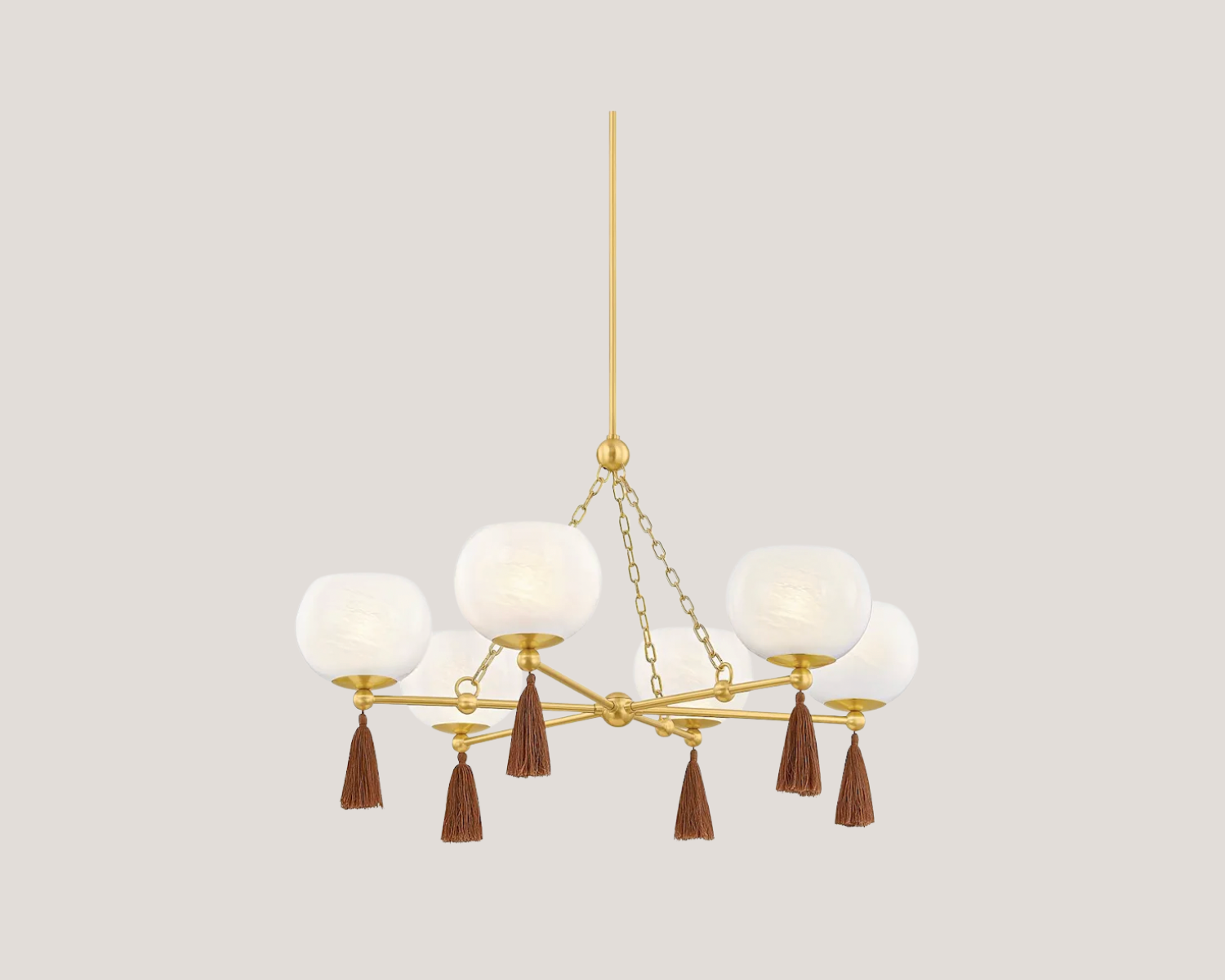
The Niya chandelier from Mitzi starts with a familiar branching form and then adds tassels at each candle stem. The aged brass frame is thin and linear, with small sphere details along the arms, and each arm is topped by a rounded white glass shade. Below each light, a brown cotton-linen tassel hangs straight down.
That combination keeps the fixture beautifully balanced. The white glass shades are smooth and even, and the tassels break up the regularity of the frame. Mandy Cheng’s influence is visible in the tassel detail, but the overall structure is still quite disciplined.
Wink Floor Lamp from Vakkerlight
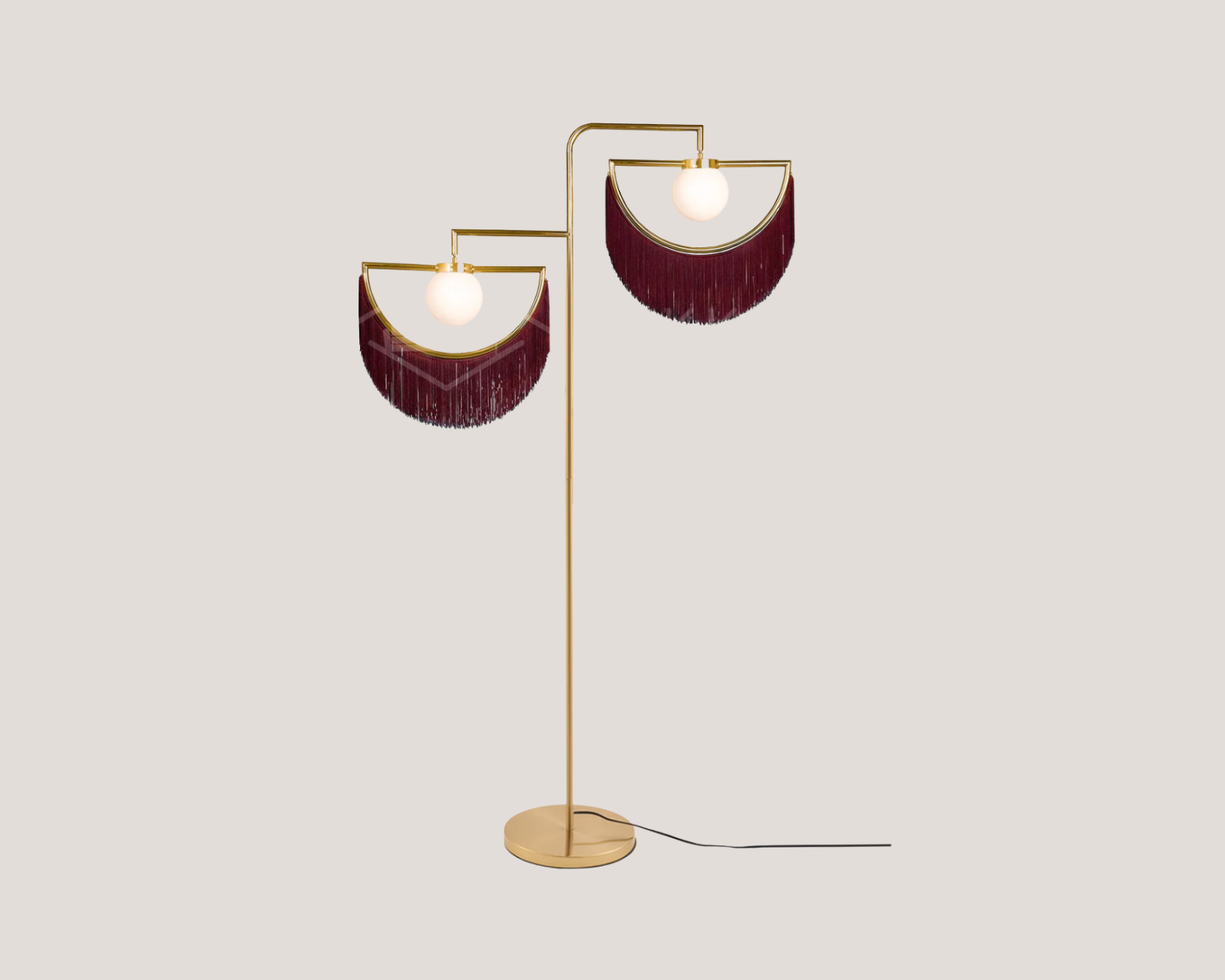
The Wink floor lamp from Vakkerlight is the most theatrical object in the group. A slim brass floor base supports two offset semicircles, each framing a white globe bulb. Deep burgundy fringe hangs below both arcs in a dense half-moon.
It’s part Art Deco architecture and part stage set. The brass frame is thin and geometric, and the fringe gives the lamp nearly all of its volume. It’s a more direct interpretation of fringe, with no attempt to soften or minimize the reference.

Tassel Table Lamp by Laura Kirar For Arteriors Home
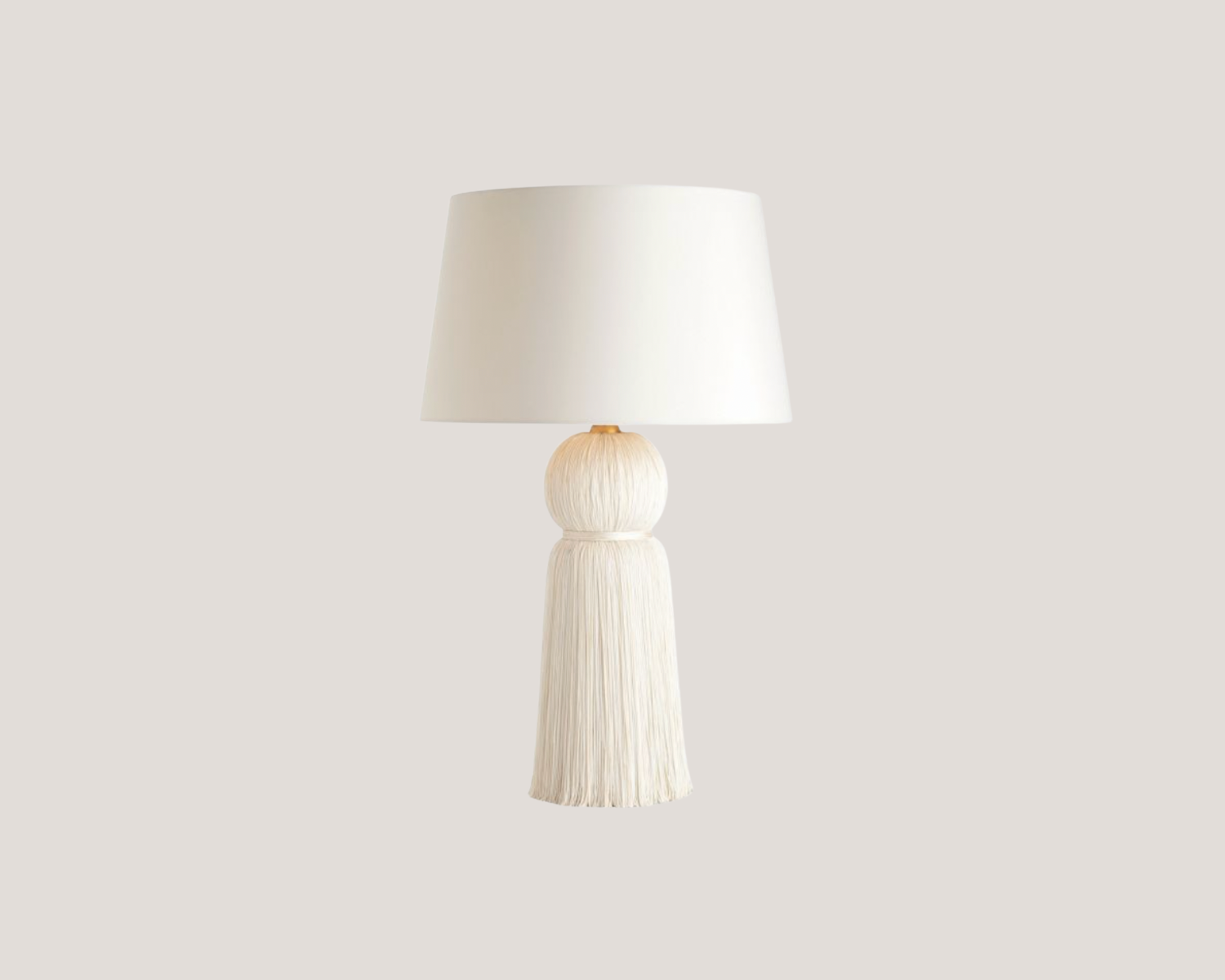
Laura Kirar’s Tassel Table Lamp for Arteriors takes the tassel and turns it into the base itself. The body is ivory from top to bottom, with a rounded upper form pinched at the center and a long fall of thread below. The tassel is enlarged and simplified. A simple ivory shade sits above it.
The monochrome palette keeps the silhouette from veering into sheer novelty. Kirar trained in sculpture and interior architecture, which clearly informs her work. The base is decorative, but the shape is classical and the proportions are controlled. It’s cheeky yet classy!
Arteriors Aramis 37″ Sconce by Barry Dixon
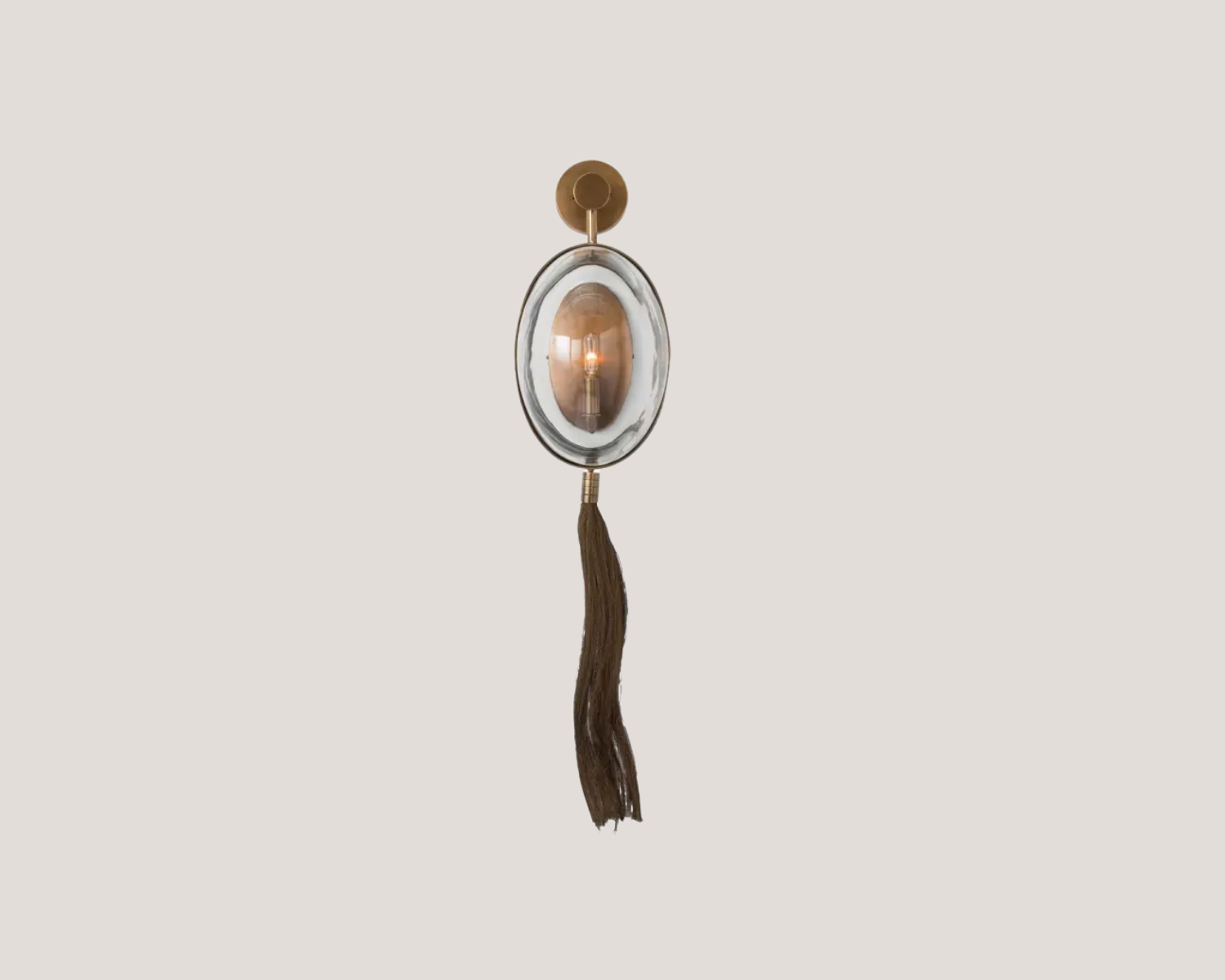
Barry Dixon’s Aramis sconce for Arteriors uses a single tassel rather than a band of fringe. A convex oval glass shield mounts to the wall on brass hardware, and a long brown tassel hangs below from a small brass collar. The glass sits at the center of the composition, and the tassel drops straight down under it.
Arteriors describes the piece through fashion references, including Barry Dixon’s interest in couture and face-covering silhouettes. That source material is apparent in the piece. The oval glass has the clarity and symmetry of a mask, and the tassel looks almost like hair pulled into one long tail, though the entire sconce could easily be a piece of jewelry (like a broach) in a different context.
Tory Jute Table Lamp from Pottery Barn
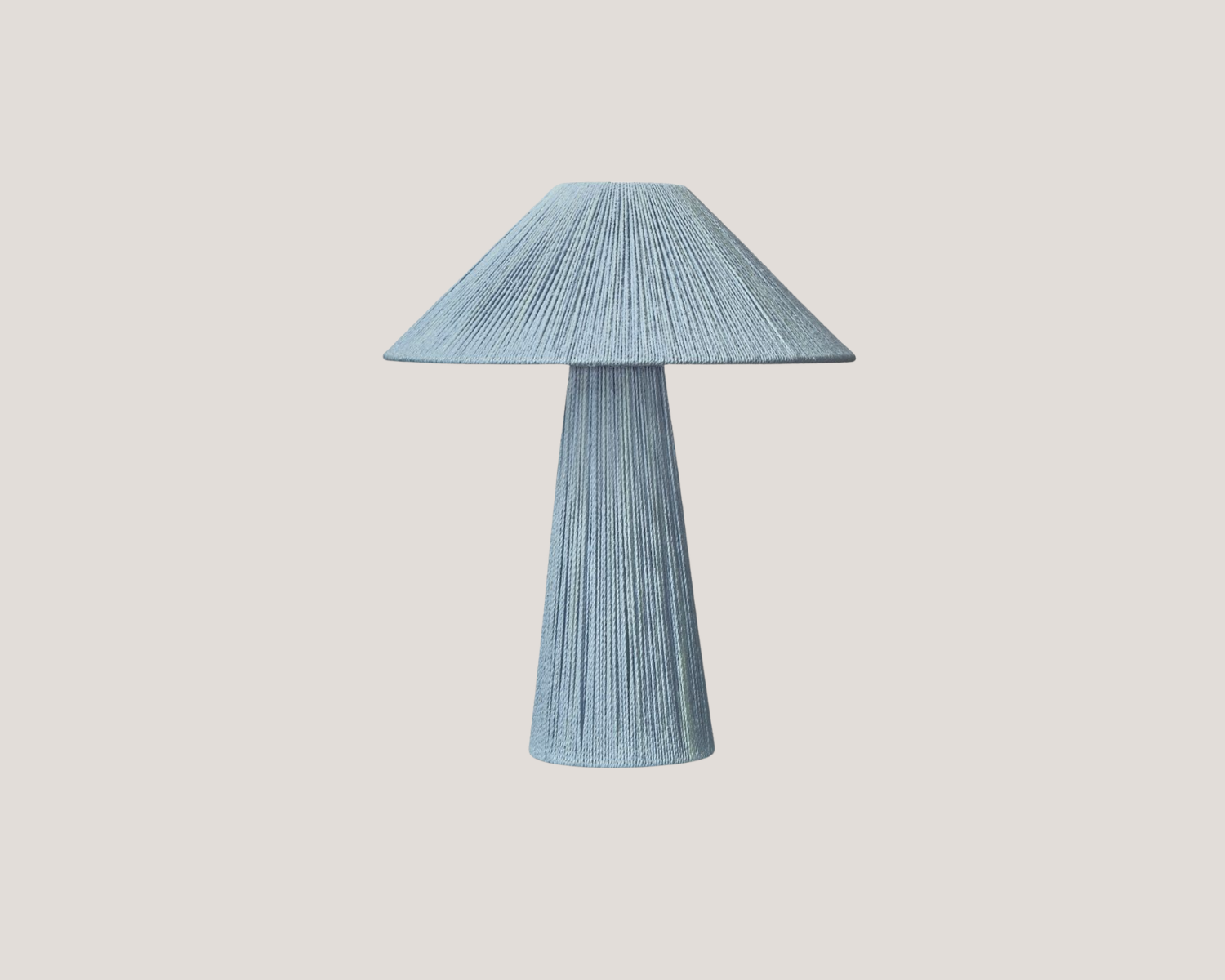
Last but not least, Pottery Barn’s Tory lamp interprets fringe through fiber and repeated line rather than loose trim. The base and shade are both wrapped in jute, so the whole lamp is covered in narrow vertical strands laid tightly side by side. In the version pictured above, the wrapped surface gives the form a dry finish and softens the color into a powdery blue.
The shape itself is straightforward: a tapered cylindrical base and a broad, conical shade above. Nearly all of the interest comes from the jute wrapping. It’s the least literal fringe piece in this group, but the connection is still there in the thread, the texture, and the vertical repetition.
Written by the DesignDash Editorial Team
Our contributors include experienced designers, firm owners, design writers, and other industry professionals. If you’re interested in submitting your work or collaborating, please reach out to our Editor-in-Chief at editor@designdash.com.
We Think You’ll Also Like…
Related Posts
Light, Color, and Craftsmanship: How is Stained Glass Made?
From the towering cathedrals of medieval Europe to contemporary buildi
Miniature Marvels: Art & Architecture of Ancient Egyptian Models
From intricate boat models to detailed household scenes ensuring comfo
Baroque Interiors: The Opulence, Drama, and Grandeur of 17th-Century Design
From the Hall of Mirrors at Versailles to St. Peter’s Basilica, the
Are Antique Furniture and Homeware Prices Increasing? If So, Why?
Are antique homeware prices increasing? Here's what's driving demand,
Eight Green Interiors Shaped by Pattern, Millwork, and Stone
Eight green interiors from DesignDash Community members show how the c
Bohemian Interior Design: Free-Spirited Style with Eclectic Charm
LIKE 0 LEAVE COMMENT 0 11 min read Summary Reflection Questions Journa