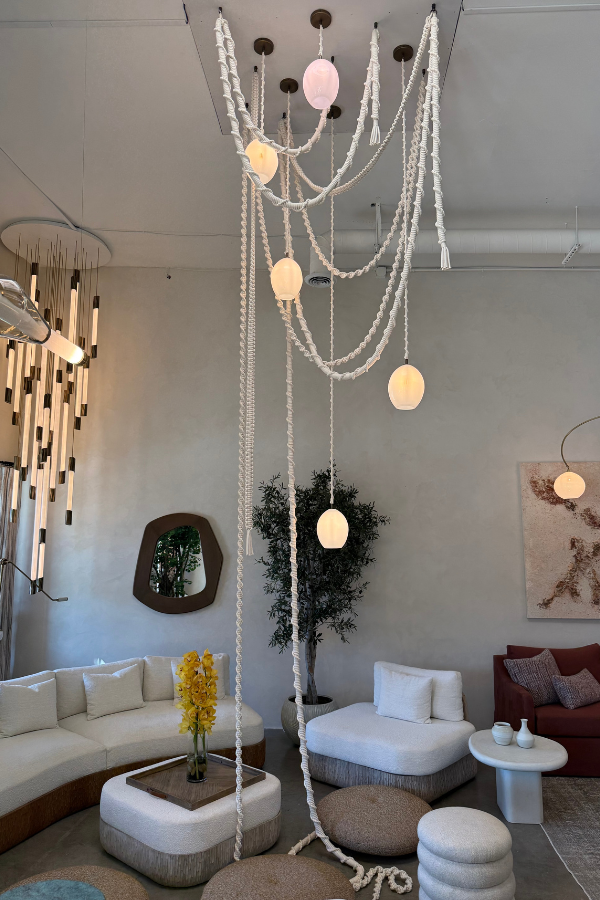
Should You Open a Storefront As a Design Firm Owner?

 0
0
 0
0Summary
Opening a retail storefront can shape a design business in ways that are not obvious at first. Laura Umansky and Melissa Grove walk through the real reasons designers consider it, what it actually does for marketing, and where the pressure builds once the doors are open. The conversation moves past surface appeal and focuses on time, intent, and how a storefront fits into a larger business model.
Reflection Questions
Why do I want a storefront right now, and what role would it play in my business beyond design interest?
If I opened a physical space, would I treat it as a marketing channel or expect it to generate revenue on its own?
How much time, energy, and financial risk am I actually willing to commit to a retail operation?
Journal Prompt
Write one paragraph that answers this question: why do I want to open a storefront, and what do I expect it to do for my business. Then write a second paragraph that outlines the tradeoffs, including time, staffing, and financial pressure. End by deciding whether the idea belongs in your current phase of business or a later one.
A storefront has obvious appeal for designers. You can shape the space, choose every object, and build a physical expression of your point of view. We all get that. But the harder part is figuring out what that space actually does for your firm, your reputation, your creative process, and more. In a recent episode of the DesignDash Podcast, hosts Laura and Melissa weigh the pros and cons of opening a storefront. Opening a storefront might be your dream, but Laura and Melissa encourage you to dig deep and figure out why it’s your dream. What will it do for you? They talk about vendor accounts, client acquisition, staffing, lease terms, and the hours you’ll spend there.
Laura has direct experience here. She opened a shop at the same time she started her studio, and she did it before she had any clients. She wanted wholesale accounts that required a brick-and-mortar presence, and she wanted a visible space that could draw in design clients. Melissa asks all the nitty-gritty business questions we need to ask before taking that leap. This shouldn’t be just a vanity project, and it doesn’t have to be!
Three Takeaways from Episode 91 of the DesignDash Podcast
#1 A storefront needs a real purpose
Laura opened her shop for specific business reasons. She wanted wholesale accounts and better pricing, and at the time a retail presence helped open those doors. She also wanted visibility. She was starting from scratch and needed people to know she existed.
She opened the shop pretty much at the same time as the studio, and she had no clients. The storefront was part of how she built the business in the first place. People could find her, walk in, look around, and understand her aesthetic without needing a long introduction. The shop also gave her a reason to invest in inventory that supported vendor relationships she wanted to build.
Melissa keeps pulling the discussion back to motive, which helps anyone who’s considering a storefront. Why do it? What will it produce? Does it make sense in your market? Those questions are more useful than the fantasy of a beautiful storefront because they force you to define the role of the space before you sign a lease or buy inventory.
Timing matters too. Laura says her answer would be different if she were starting out now. Twenty years ago, a storefront could be close to necessary if you wanted certain vendor relationships. Now there are more ways into those accounts. The reason has to fit the current market and the current structure of your firm. A storefront can still make sense. It just needs a business purpose that fits the present, not a story borrowed from somebody else’s early years.
She also separates two ambitions that often get tangled together. One is opening a storefront to support a design firm. The other is building a full retail business. Those are different paths. They require different staffing, different financial expectations, and a different relationship to inventory. If your real goal is design work, the storefront has to support design work.
Takeaway for Firm Owners
Write down what the storefront would do for your business in direct terms. Would it help you open vendor accounts, bring in clients, increase visibility, or support another clear goal? If the answer is still vague, the idea needs more work before you commit to it.
#2 The strongest case for a storefront is marketing and client acquisition
Laura didn’t expect the store to produce serious retail profit, and it didn’t. The value came from visibility. She had a location on a major street in Houston, and she wanted people to see her work and connect that work to design services. Retail sales were part of the picture, but they weren’t the reason the store existed.
She even calls the space “the honeypot,” which is blunt but accurate. The point was to bring in people who could become design clients. Someone might walk in to browse candles, accessories, or upholstered pieces, but the larger goal was exposure to the firm’s aesthetic and access point. A storefront can do that in a way Instagram can’t. A person can walk through the space, look closely, ask questions, and decide whether the work fits them.
Melissa calls the storefront “a client acquisition tool” and “a content machine.” She makes the point that you can’t reduce or distill the value of the space to one channel. A physical storefront can generate photography, events, vendor relationships, and direct interaction with potential clients. It can also bring in architects, builders, and other industry contacts. That level of contact takes work to create online and still won’t have the same physical immediacy.
Laura’s own example gives the argument some weight. One of her best long-term clients walked in off the street, looked around, and ended up working with her on six houses. That does not mean every storefront will produce that result. It does show what visibility can do when the space communicates the firm’s point of view and the right person walks through the door.
Melissa also puts language to the physical side of this. She says a storefront can establish a designer “as a tastemaker” in a way that is “more tangible than just living in Instagram.” A client can see materials, styling, scale, and editing in person. They do not have to imagine how your taste translates into a room. They can see it.
Takeaway for Firm Owners
If you’re considering a storefront, judge it by what it can do for marketing, visibility, and client acquisition. Don’t expect retail sales to explain the whole decision. In Laura’s case, the design work that came through the door was the real return.
#3 The risk isn’t only financial. It’s time, labor, and long-term commitment.
Laura and Melissa spend a lot of time on the daily investment that a storefront requires. Who opens the store? Who covers the space when staff call out? How many events you’re willing to host? How much of your week gets absorbed by tasks that have nothing to do with design but still need to happen?
Laura talks about being open seven days a week in the early years and more or less living there for a long stretch. She also says she was obsessed. That probably made the schedule possible. Not everyone wants that kind of life, and not every business needs it. Still, her experience makes the demand level hard to ignore. The store took a huge amount of time, especially at the beginning.
Staffing complicates the picture further. Laura points out that designers usually don’t want retail responsibilities. If you’re hiring junior and senior designers, they’re there to design. They’re not there to run the front of the shop or cover weekend hours. So now you need a separate role. Someone has to handle the retail side, and when that person is out, Laura says the owner fills the gap.
Melissa brings up operations too. Inventory, point-of-sale systems, restocking, and overhead all come into view once you stop thinking about the store as a concept and start thinking about it as a business unit. Laura’s answer is interesting because she kept the shop simple. She had a few upholstered pieces that reflected her aesthetic, some accessories, some art, and enough inventory to support the larger goal. That smaller scale probably helped keep the operation manageable.

Location matters as well. If the store is supposed to function as a marketing tool, visibility has to be part of the equation. A cheaper space in a tucked-away area may save money up front, but it can weaken one of the main reasons for opening the store. Laura also raises the issue of initial capital. Are you willing to take out a loan. Can you buy inventory. Can you give yourself a few months of runway while the business develops.
The lease deserves just as much attention. Laura says her first lease was three years, while many landlords will push for five or even ten. That changes the shape of the decision. A storefront can’t be treated like a passing experiment when the lease runs that long. You need to know how long you want the space in your business and whether you see it as temporary, transitional, or permanent. Laura eventually let the retail side go after about seven years because the firm had grown past the point where it still needed that structure.
Takeaway for Firm Owners
Before you romanticize the space, map out the labor. Who will staff it. How many hours will you personally cover. What kind of lease can you tolerate. How much inventory can you responsibly fund. Those answers will tell you a lot.
Final Thoughts
Melissa asks the big question: “Can I make money doing this? Is this worth my time?” The episode doesn’t answer with a blanket yes or no because those two questions might actually be at odds with each other.
Instead, this episode gives you a framework through which to make your decision. If the storefront fits your market, your capacity, and your goals, it may be worth it. If it drains your schedule, inflates your overhead, and distracts from the design business you’re trying to build, the answer may be no, at least for now.
Watch the Full Episode on DesignDash
If you’ve been thinking about opening a storefront, this episode is worth your time. Laura brings firsthand experience, and Melissa asks the exact business questions a firm owner should be asking before taking on a commitment like this.
Written by the DesignDash Editorial Team
Our contributors include experienced designers, firm owners, design writers, and other industry professionals. If you’re interested in submitting your work or collaborating, please reach out to our Editor-in-Chief at editor@designdash.com.
Related Posts
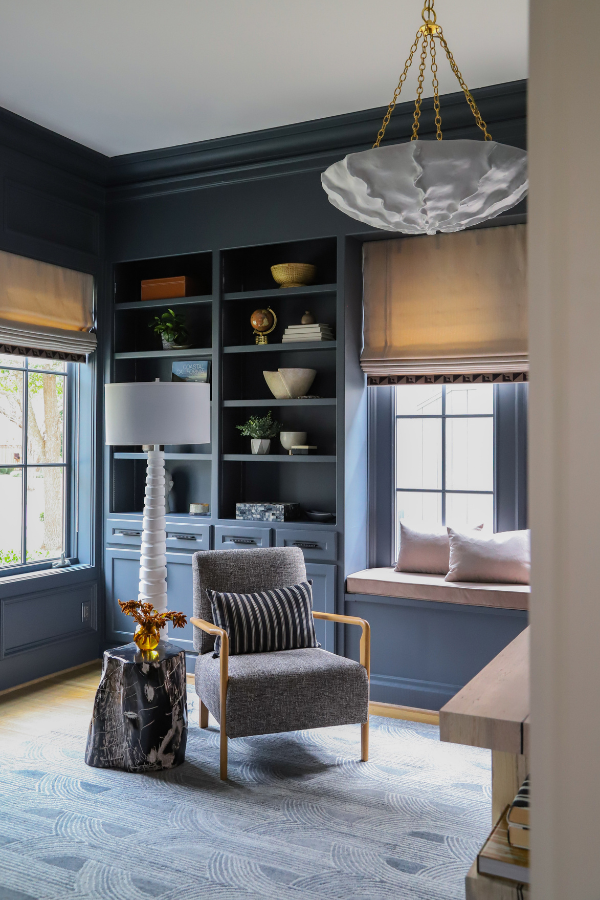
5 Blue Interiors That Show How Designers Use the Calming Color
Five blue interiors show how designers use the color in bedrooms, bath

Interior Design of the 20th Century: How Dorothy Draper Made History
With a stylistic approach that was intensely anti-minimalist, Dorothy

From Hangisi to Oasis: The Most Comfortable Luxury Heels
Whether you're getting married or presenting at a conference, these ar
Looking Back on October 2025 High Point Market Trends
This article recaps Fall 2025 High Point Market and highlights the key

How to Design Romantic Interiors Without Falling Prey to Clichés
Learn how to design romantic interiors that feel intimate, sensual, an

Five French Wallpaper Brands We Adore as US-Based Designers
Learn all about five French wallpaper brands we adore, from Élitis an