Five Public Companies Interior Design Firms Should Watch

 0
0
 0
0Summary
Interior design firms don’t have to follow the stock market closely to learn from public companies tied to home, renovation, retail, and materials. Wayfair, RH, Williams-Sonoma, Home Depot, and Mohawk Industries all give designers a way to track the outside pressures that affect client decisions, from tariffs and supply chain delays to housing turnover, big-ticket spending, and the growing overlap between retail and design services.
Reflection Questions
Are your clients comparing your sourcing recommendations against online or big-box retail more often than they used to?
Have tariffs, freight costs, vendor delays, or contractor availability changed the way you talk about project budgets and timelines?
Which parts of the home market seem closest to your firm’s current work: luxury furnishings, branded retail, renovation activity, flooring, or trade sourcing?
Journal Prompt
Think about the last project that changed because of cost, timing, product availability, or client hesitation. What outside factor influenced that change? Now choose one public company from this list and ask what its earnings commentary might tell you about the same pressure your firm is already dealing with.
Interior design firms are affected by economic factors constantly, whether it’s tariffs or supply chain disruptions or interest rate hikes. An email will come through from a client who wants to pause her renovation because interest rates have made borrowing too costly. A contractor won’t be able to fit you in because too many local homeowners are remodeling instead of moving house. A big-box retail brand will open up a massive brick-and-mortar store and, suddenly, clients expect every online purchase to have a physical showroom behind it.
Some of us do, but many of us don’t follow the stock market all that closely. However, a few public companies are worth watching purely because of their impact on interior design and adjacent industries. We’re not encouraging you to run out and buy stock in these companies, just to watch how they perform or tune in for earnings calls. Every quarter, their leadership will talk about the same issues that affect design firms in smaller, more personal ways: housing turnover, consumer confidence, material costs, imported goods, big-ticket purchases, and the growing overlap between retail, design services, and renovation support.
Below are five public companies we think designers should keep an eye on.
Five Stocks to Watch as a Design Firm Owner
#1 Wayfair (W)
Wayfair is probably the most obvious company on this list because your clients already know it. They may not be buying every sofa, mirror, nightstand, or outdoor chair from Wayfair, but they’re searching there. They’re comparing prices there. They may be sending screenshots to your team and asking why a custom piece, a vintage piece, or a trade-only piece costs so much more than something that can be added to a cart in thirty seconds.

That comparison has always been part of full-service design, but Wayfair’s move into physical retail makes it more interesting. The company opened its first large-format store in Wilmette, Illinois, in 2024. The store is about 150,000 square feet and includes furniture, décor, housewares, appliances, and home improvement products. That’s a significant change for a brand many people still think of as an online furniture marketplace.
Designers should watch Wayfair because it reflects the way clients now expect shopping to work. They want the convenience of online browsing, but they also want to see scale, texture, color, and comfort in person before they commit. That expectation can affect how a client responds to your sourcing process, especially if they’re already comparing your recommendations against retail pricing.

Wayfair also gives designers a read on price sensitivity in home furnishings. When the company talks about promotions, lower order values, slower big-ticket purchasing, or customers waiting to buy, those comments may mirror the hesitation your own firm hears during furnishing presentations. If its store strategy works, other online home brands may try the same thing, which could reshape how clients expect to shop for the home.
#2 RH (RH)
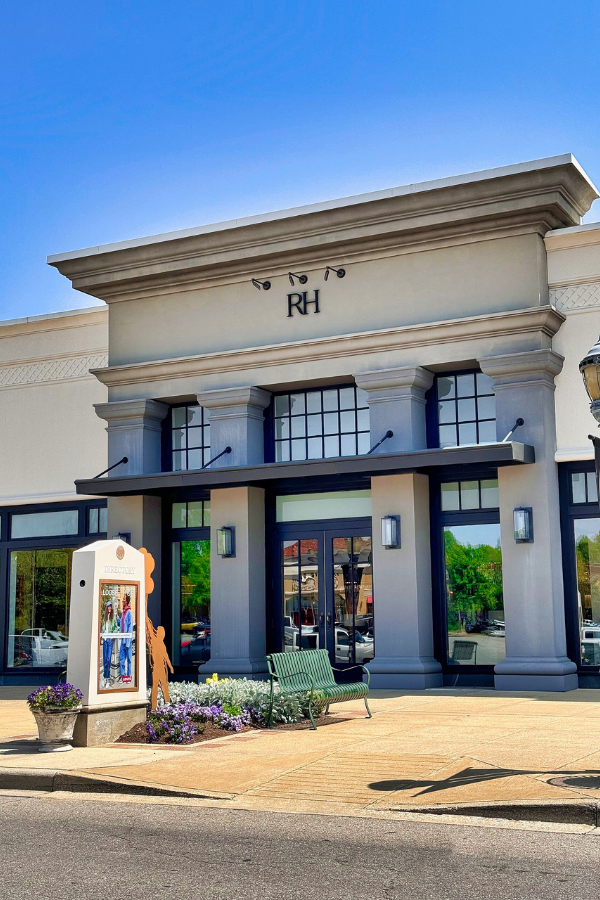
Previously known as Restoration Hardware, RH is worth watching because it has spent years turning furniture retail into an experience that looks a lot like hospitality. Its galleries include restaurants and wine bars, and the brand has invested heavily in physical spaces that clients can visit, linger in, and use as a reference point for how luxury home furnishings should be presented.
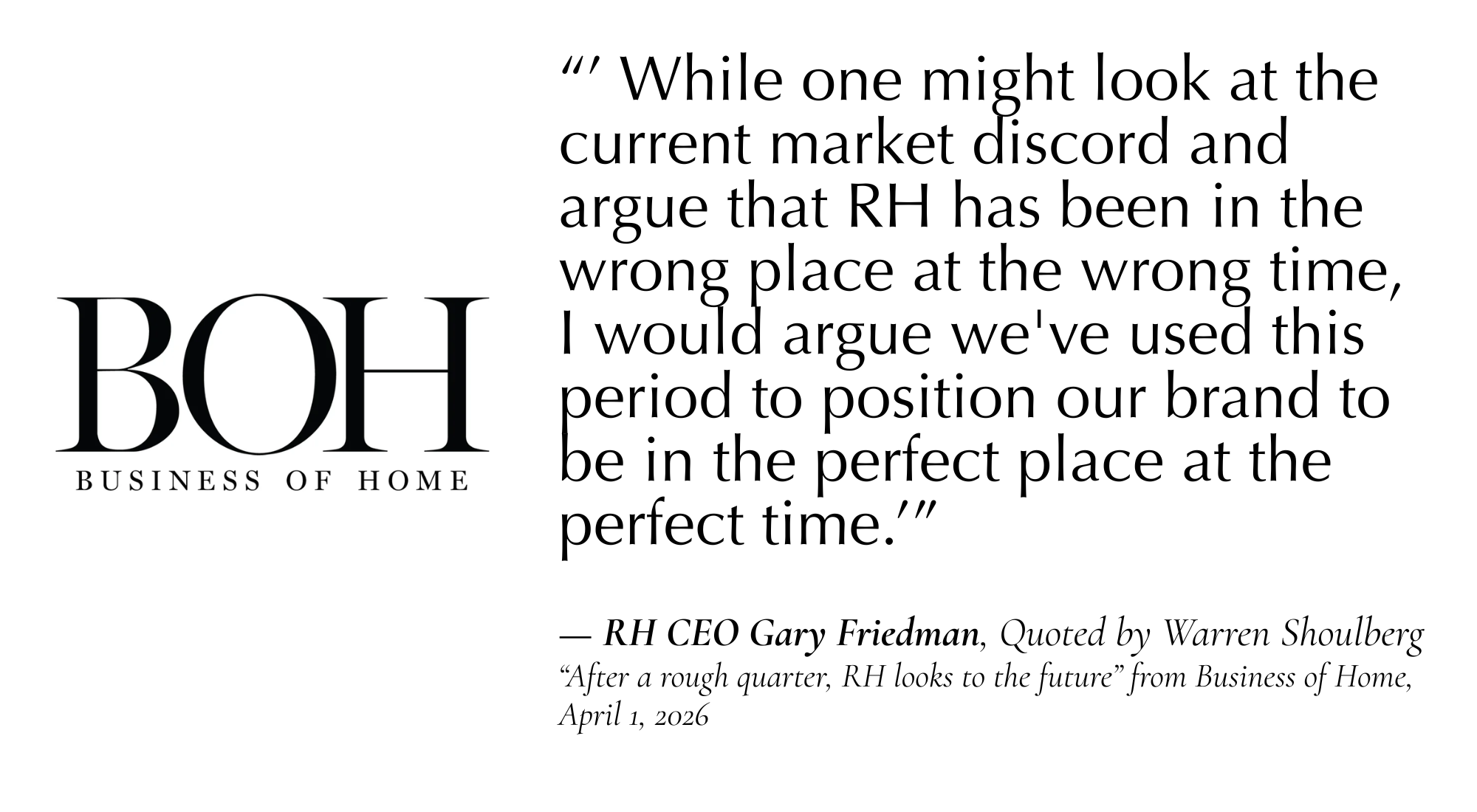
RH provides design services through RH Interior Design, which means affluent clients can walk into a highly controlled brand environment, see complete rooms, talk through selections, and receive guidance without first hiring an outside studio. Some clients will still want the deeper interpretation, customization, procurement support, and project management that a full-service firm provides. Others may start with RH because the path feels easier and more streamlined.
Designers don’t need to treat RH as a direct competitor in every situation, but they should understand the expectations it creates. A client who has spent time inside an RH gallery may come to your firm with a more developed idea of what luxury retail looks like, how a space should be staged, and what kind of service they expect around furnishings. That can influence how you talk about your own process, your sourcing, your margins, and your role.
RH is also one to watch because luxury furniture is still affected by tariffs, freight costs, imported materials, and changes in discretionary spending. High-net-worth clients may not react to price increases the same way other clients do, but they still ask questions when a quote changes or a delivery date stretches. When RH discusses pricing pressure or supply chain risk, designers can use that context when they prepare clients for the real cost of furnishing a home well.
#3 Williams-Sonoma (WSM)
Williams-Sonoma Inc. matters because we (and our clients) see its products everywhere all the time. The company owns Williams Sonoma, Pottery Barn, Pottery Barn Kids, Pottery Barn Teen, West Elm, Williams Sonoma Home, Rejuvenation, Mark and Graham, and GreenRow. Even if your firm sources primarily through trade vendors, your clients probably know at least a few of those names.
That familiarity can both help and complicate a design project. A client may love Rejuvenation hardware, want a Pottery Barn bed for a child’s room, or compare a West Elm dining chair against something your team specified through a trade account. Those comparisons aren’t always unreasonable, but they do require your team to explain quality, scale, lead time, finish options, customization, installation, and the difference between buying a product and designing a space.
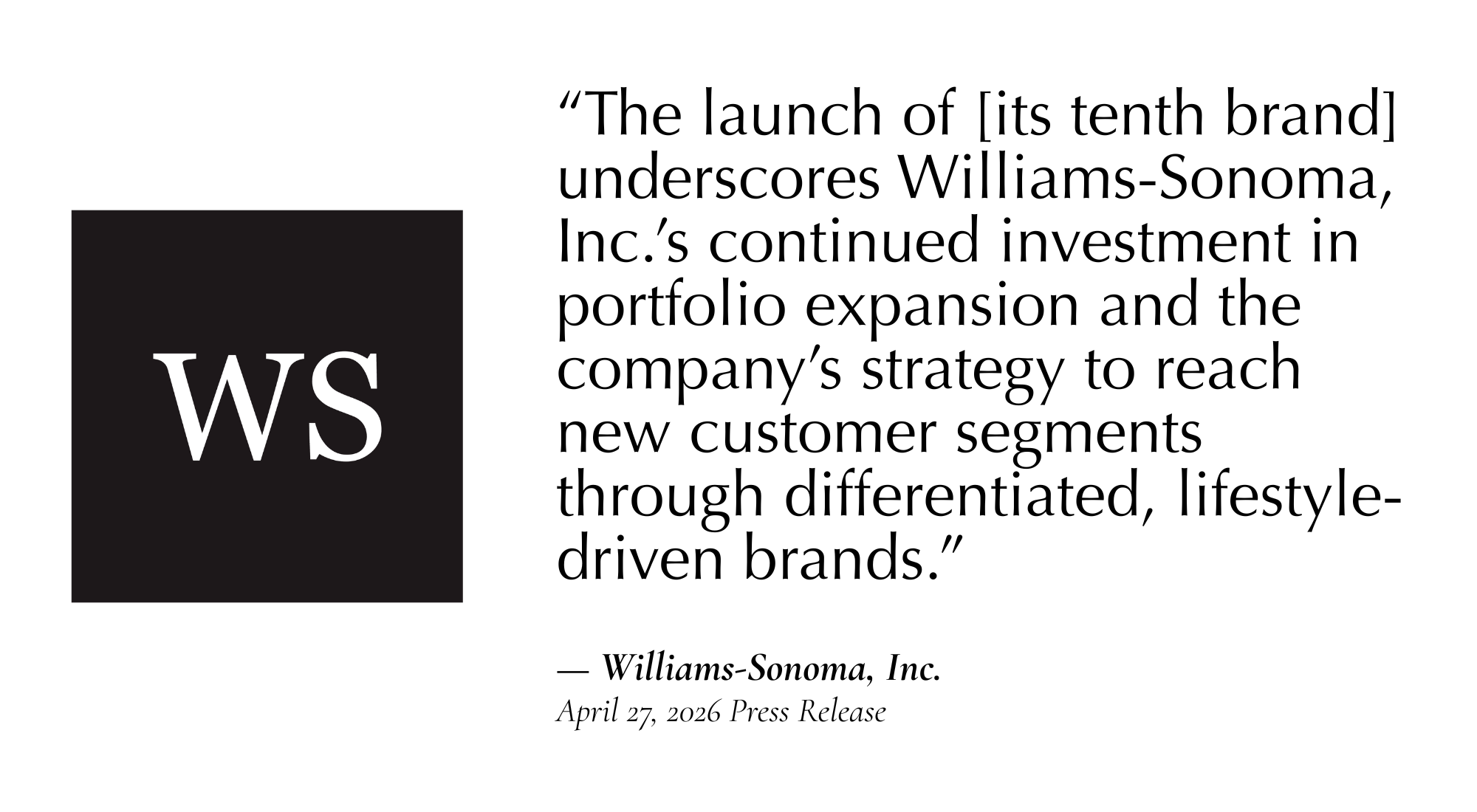
The company’s business-to-business (B2B) work is especially relevant here. Williams-Sonoma has continued to develop trade and contract channels across its portfolio, which means the same brands your clients know as retail names are also trying to build stronger relationships with designers, hospitality buyers, and project-based customers. Rejuvenation is a good example because its lighting, hardware, bath, and furniture categories often overlap with the kinds of projects design firms handle.
Watching Williams-Sonoma can help designers understand how the middle and upper-middle home market behaves. If the company says customers are spending on outdoor furniture, tabletop, children’s rooms, kitchens, lighting, or seasonal décor, that may suggest where households still feel comfortable investing. If it talks about delayed purchases, markdowns, lower demand, or pressure from tariffs and freight, designers may want to prepare for more budget sensitivity in their own client conversations.
Fuel your creative fire & be a part of a supportive community that values how you love to live.
subscribe to our newsletter
*please check your Spam folder for the latest DesignDash Magazine issue immediately after subscription

#4 Home Depot (HD)
Home Depot may not be glamorous, but neither are many of the factors that determine whether a design project reaches fruition without hitting a million bumps in the road. Appliances, lumber, tile backer, paint, hardware, tools, jobsite delivery, contractor scheduling, and replacement parts all affect the client experience, even when the designer is nowhere near a checkout aisle.
Home Depot’s stock is important to watch because it gives designers a broad view of renovation and pro activity. Home Depot’s acquisition of SRS Distribution made that even more relevant. SRS brought a large specialty trade distribution network, thousands of trucks, and jobsite delivery capabilities into Home Depot’s business. That kind of expansion tells you the company is paying close attention to professional customers, not only weekend DIY shoppers.
Design firms should watch Home Depot because the pro market heavily influences renovation timelines. If contractors are busy, if homeowners are staying put and remodeling, or if materials are moving differently through distribution channels, the effects can reach your projects quickly. A client may think a delay is about your firm, the contractor, or one vendor. Sometimes, the whole renovation environment is under pressure.
Home Depot also talks about mortgages, credit markets, tariffs, labor, fuel, consumer demand, and supply chain disruption. Those subjects may sound broad, but they turn into very specific design-firm issues. They affect whether a client phases a renovation, whether they approve appliance upgrades, whether they wait on a bathroom remodel, and whether they understand why a contractor’s estimate no longer looks like the number they expected.
#5 Mohawk Industries (MHK)
Mohawk Industries is worth watching because flooring can reveal a lot about renovation confidence. Replacing flooring is disruptive, expensive, and hard to isolate from the rest of the house. Once the floors are being changed, clients often start talking about paint, stairs, trim, rugs, furniture, cabinetry, and sometimes a much larger renovation than they originally planned.
That makes Mohawk a helpful company to follow if your firm handles whole-home renovations, move-in projects, or large refreshes tied to resale, relocation, or long-delayed updates. The company has said housing turnover has a significant effect on flooring demand, and that homeowners spend much more on flooring in the first year after buying a home than non-movers do.
One caveat: flooring demand is not one single market. Residential and commercial can behave differently, and design firms should keep that distinction in mind when reading Mohawk’s results or broader flooring forecasts. A strong healthcare, education, hospitality, multifamily, or workplace pipeline may lift commercial flooring demand even if individual homeowners are delaying larger residential projects. So if Mohawk or another flooring report sounds optimistic, the next question is which part of the market is driving that optimism.
That point connects directly to the current housing market. Higher mortgage rates have kept many homeowners in their existing homes because selling would mean giving up a lower rate and buying into a more expensive loan. Some of those homeowners will renovate instead. Others will wait because the same uncertainty that keeps them from moving also makes them cautious about expensive upgrades.

Designers should watch Mohawk for clues about that split. If flooring demand improves, clients may be more willing to take on larger material decisions again. If demand weakens, it may suggest that homeowners are delaying the disruptive, higher-cost parts of renovation. Either way, flooring is a practical category to watch because it often sits near the beginning of a bigger project conversation.

Final Thoughts
Following these companies doesn’t mean you need to become a “market person”. You can absolutely skim an earnings recap, read a few lines from leadership, or listen for the issues that already affect your firm: tariffs, client confidence, housing turnover, remodeling demand, retail expansion, and big-ticket spending.
Wayfair can help you understand how clients are shopping across online and physical retail. RH can help you see how luxury brands are combining hospitality, retail, and design services. Williams-Sonoma can tell you how familiar home brands are expanding deeper into trade and contract work. Home Depot can give you a broad view of renovation conditions and pro demand. Mohawk can help you track flooring, housing turnover, and client comfort with larger material decisions.
*The featured image for this post is attributed to: https://commons.wikimedia.org/w/index.php?curid=147438445
Written by the DesignDash Editorial Team
Our contributors include experienced designers, firm owners, design writers, and other industry professionals. If you’re interested in submitting your work or collaborating, please reach out to our Editor-in-Chief at editor@designdash.com.
Related Posts

How to Interpret ESG Scores While You Shop, Travel, or Invest
ESG scores rate the sustainability and ethical practices of companies,

Think You Might Have a True Winter Color Palette? Here’s How to Know
If you find yourself drawn to bold, icy colors like stark white, deep

Talking to Kids About Your Career
LIKE 0 LEAVE COMMENT 0 10 min read Summary Reflection Questions Journa
A DesignDash Guide: Here’s What to Expect at Round Top 2024
Read up on this Spring's Round Top market—including special guests l

The Best Boutique Hotels in Nashville for Art & Design Lovers
Nashville is a destination for designers, musicians, and creative prof

These Are the Best Architecture Schools in the U.S.
If you are a woman considering a career in architecture, read on for t