
Takeaways from Our Coaching Session-ish with Alexandra Hartley

 3
3
 0
0Summary
In this episode of the DesignDash Podcast, Laura Umansky and Melissa Grove coach Alexandra “Sandy” Hartley through a question many solo designers eventually face: where should the next investment go? Sandy’s calendar is full, but too much of her time is going toward invoicing, admin, order tracking, and half-built systems instead of design, business development, and the larger projects she wants to pursue.
Reflection Questions
Where is your time actually going each week, and how much of it is spent on design?
Which task would change your week the fastest if someone else handled it: invoicing, order tracking, client follow-up, marketing, or project admin?
Are you waiting until your systems look better before you hire, or could the right admin or operations person help build those systems with you?
Journal Prompt
Track one full week of work as honestly as you can. Write down every task, from client communication and sourcing to invoicing, order tracking, email, social media, and design work. Then group those tasks into design, admin, procurement, client communication, marketing, and business development. Which category is taking the most time, and which one should come off your plate first?
We’ve written and spoken often about how a solo design firm can look healthy from the outside while the owner is slowly turning into the entire operating system and buckling under the strain of all that responsibility. The referrals are coming in. The projects are chugging along. Clients are happy. But the owner is still writing invoices at night, tracking orders between site visits, digging through 30,000 photos on her phone when a prospect asks to see more work, and wondering why a full calendar doesn’t necessarily mean the business is growing in the direction she wants it to.
In this episode of the DesignDash Podcast, hosts Laura Umansky and Melissa Grove sit down with Alexandra “Sandy” Hartley, founder of Alexandra Hartley Interiors, for what Laura calls a “real-time coaching session-ish.” Sandy came to the conversation with a question that many solo designers eventually have to answer: where should she invest her time, money, and energy if she wants the business to grow without losing the parts of the work she actually loves?
Sandy, like all the other designers in our community, certainly isn’t lacking talent. She isn’t trying to manufacture demand from nothing. She has clients, referrals, and a clear love for remodels, furnishings, and the relationship side of the work. The strain she felt every day was coming from an entirely different place. Client communication, invoicing, order tracking, admin, software decisions, marketing, and project follow-up were all routing back through her. The question was no longer whether she could keep working that way. Of course, she could. The better question was whether she wanted to be in the exact same place next year. As we hit the halfway point in 2026, this conversation is worth a second listen.

Three Takeaways from This Episode of the DesignDash Podcast
#1 If you’re bogged down, your entire calendar needs closer inspection
Sandy opens the conversation by asking for clarity. She wants to know where to put her time, energy, and money so the business can grow instead of simply keeping her busy. That’s the right question, and it’s a hard one because a packed schedule can disguise a lot. A week can include site visits, client emails, order checks, invoice reminders, software updates, sourcing, and a few hours of actual design work, and the firm can end Friday with very little changed.
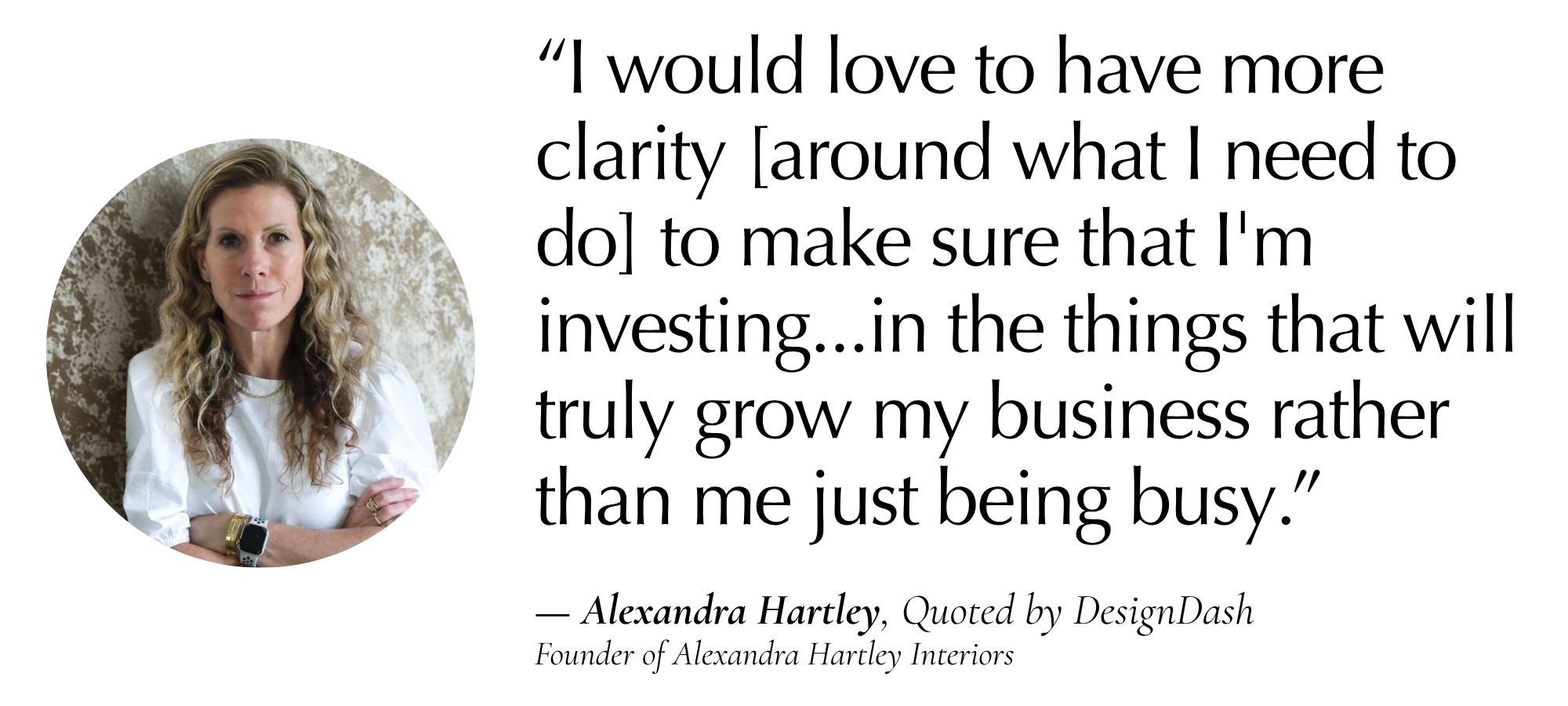
Sandy had already done one of the more uncomfortable exercises a firm owner can do. She looked at her time and compared her hourly rate to what she was actually paying herself. She had started with hourly billing, switched to fixed pricing, and then returned to hourly after realizing the fixed-fee structure was undercutting her income and creating miserable cash flow. The switch improved things, but it also forced her to see how much of the firm still depended on her direct attention, which isn’t sustainable for a firm owner who wants the business to grow while still being involved in design.
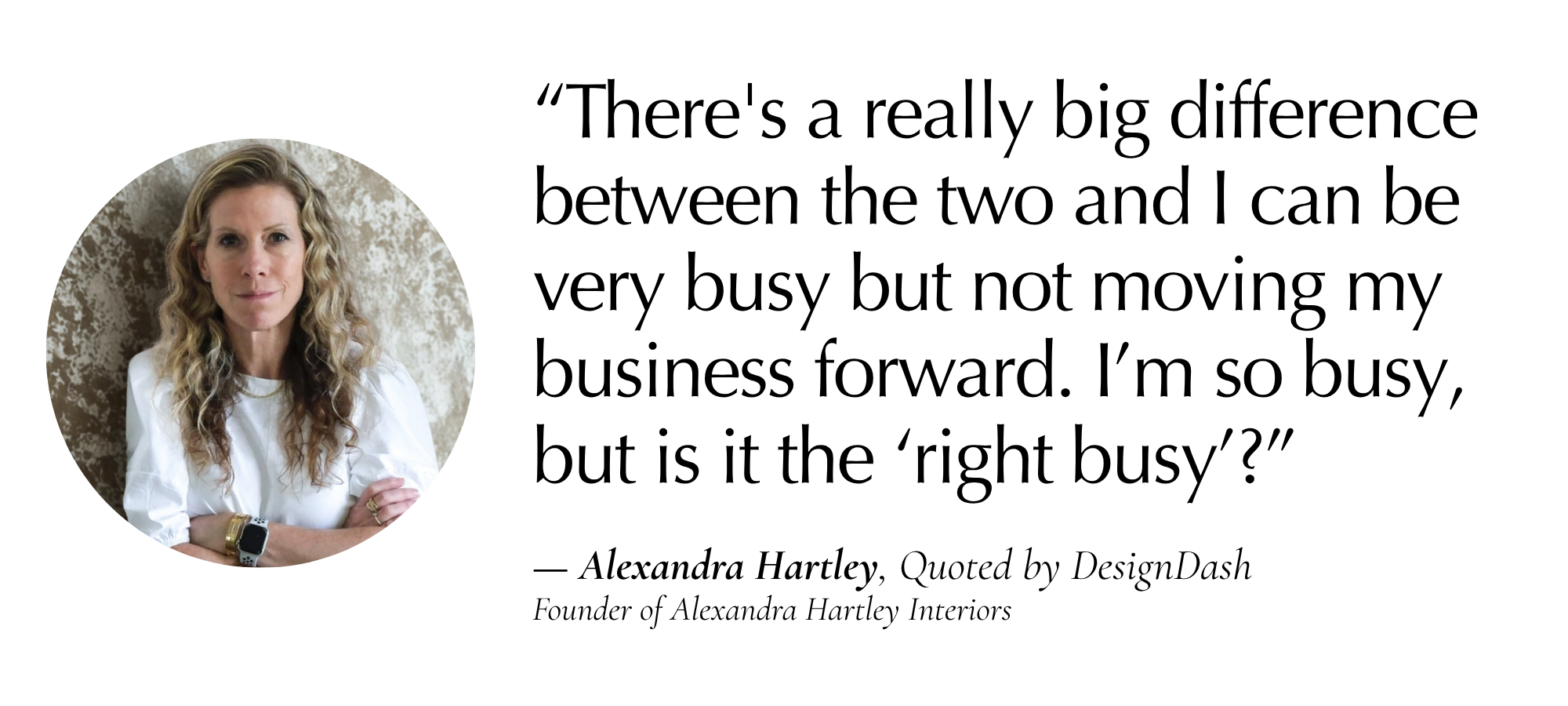
The issue wasn’t only money. Sandy realized that too many decisions, questions, and follow-ups were waiting on her. A contractor conversation needed to be relayed to a client. An order needed to be checked. A lead time needed confirmation. A potential client wanted to see more work, and Sandy had the proof sitting in her phone instead of on the website or social channels where someone could find it before asking.
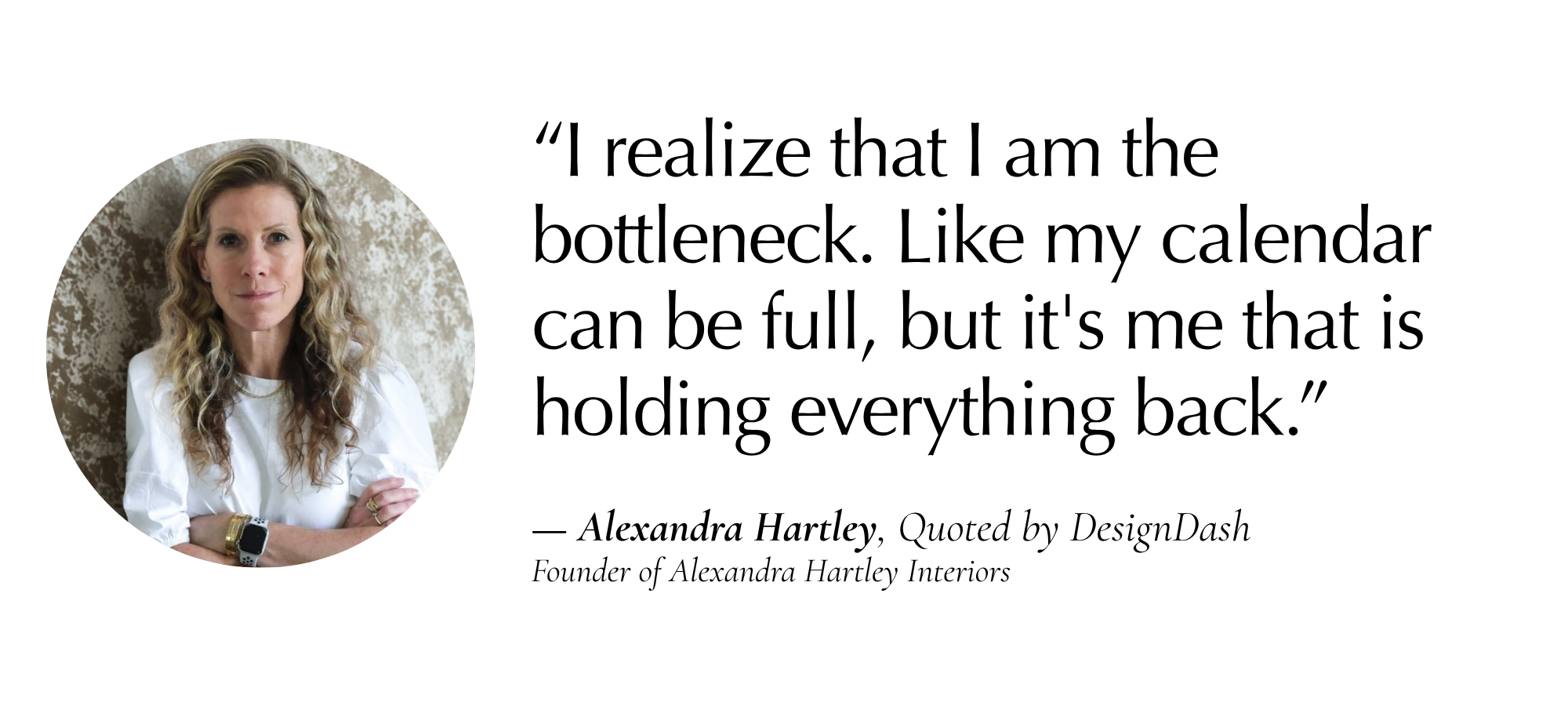
That is a strange and frustrating place for a solo designer to land because the business can seem fine in many ways. Clients are happy. Projects are moving. People are referring. Sandy is not sitting around waiting for the phone to ring. But if every piece of admin, procurement, client communication, marketing, and project follow-up still routes back through her, then larger projects will ask more from the same already-full week.
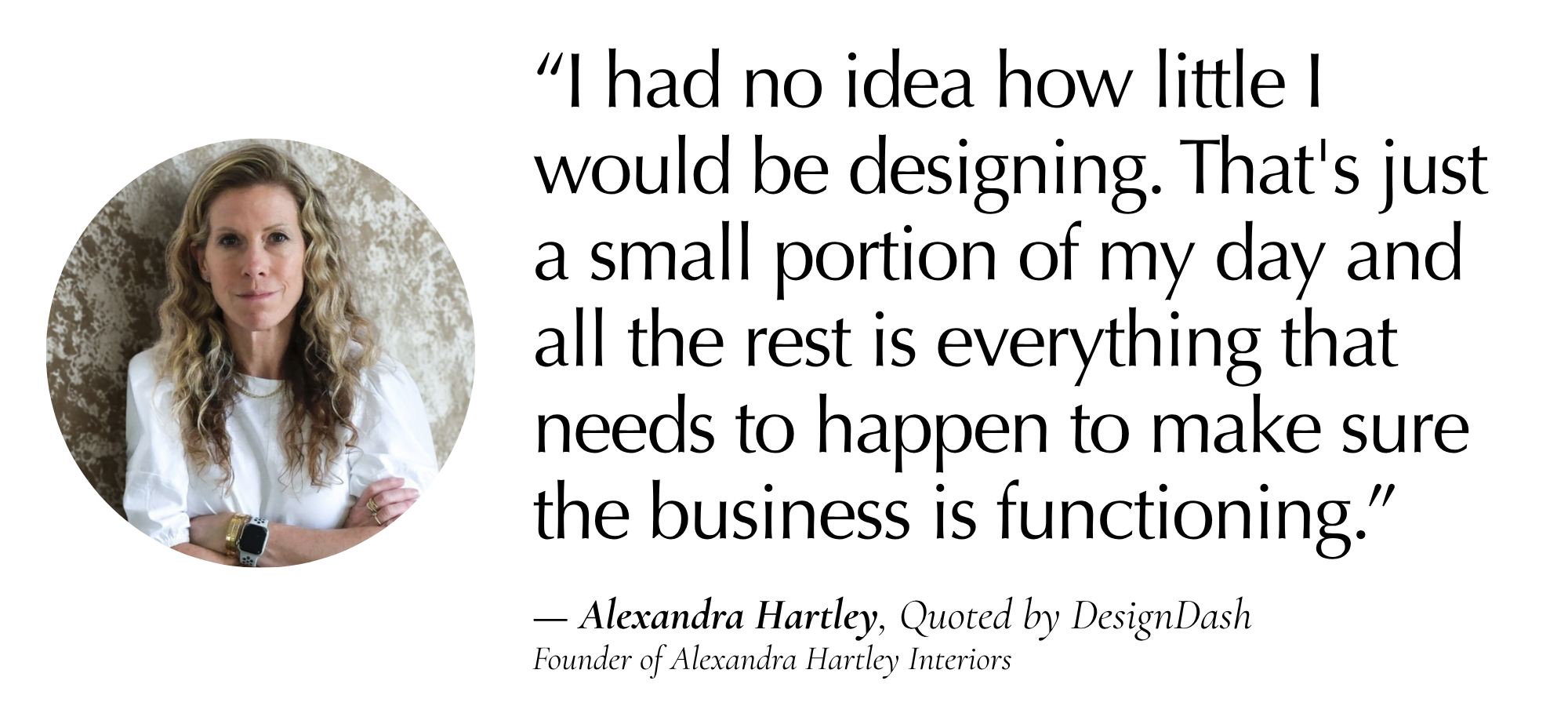
Before Sandy can decide where to invest, she has to know which tasks are taking the most from her and which ones are keeping her from the work she actually wants more of.
Takeaway for Firm Owners
Track your time before you decide what to fix. A full calendar confirms that you’re working, but it won’t tell you whether the work is taking the firm where you want it to go.

#2 Back-of-house support might be the first place to invest
Sandy was deciding between two kinds of support: marketing and back-of-house help. The marketing need is significant; it can bring in ideal clients and shouldn’t be neglected. Her website could include more photographed projects. Her social media presence could be stronger. She has tens of thousands of images on her phone and plenty of behind-the-scenes proof of what she does every day, but the public-facing side of the firm has not caught up with her experience.
At the same time, invoicing, order tracking, purchasing follow-up, sample ordering, and general admin are eating through her week. Melissa doesn’t dismiss marketing at all, even in Sandy’s case. Marketing support is invaluable, but Sandy’s business has already been growing through referrals, conversations, and relationships. And Sandy actual enjoys networking. She likes meeting people, talking through possible collaborations, and nurturing those relationships. She also loves designing, but she hasn’t had much time for that lately.
That’s why Melissa and Laura steer the conversation toward admin, bookkeeping, procurement, or some combination of back-of-house support. The first person you bring in doesn’t have to be full-time. Sandy isn’t ready for that yet, and she says so. A contractor, part-time hire, or outsourced admin could take on a defined group of tasks without creating the same financial pressure as a full-time employee.
The help Sandy seems to need is with invoicing, placing orders, checking orders, ordering samples, confirming lead times, and keeping the business moving behind the scenes. Some of that time can be billed to the client when it connects directly to a project. If someone is tracking a client’s order, chasing missing information, or checking whether a lead time has changed, that time has to be billed.
Thankfully, hiring support in any part of your business doesn’t automatically mean adding a pure overhead expense. A bookkeeper may be harder to bill through to a client, depending on the task. But procurement, order tracking, expediting, and other project-specific admin can often be treated differently. Sandy doesn’t need to absorb every hour if the work is tied to project progress.
If Sandy wants more time with her family, more design work, and more room for business development, the evening invoice routine that many of us resort to is a no-go. Marketing still needs attention, and Sandy may eventually hire support there too. Right now, back-of-house support may return time faster because it removes the tasks already consuming her evenings.
Takeaway for Firm Owners
Before you spend money on the most visible problem, look at the task that is taking the most personal time. Your first support hire may be the person who removes invoicing, purchasing, and admin from your evenings.
Fuel your creative fire & be a part of a supportive community that values how you love to live.
subscribe to our newsletter
*please check your Spam folder for the latest DesignDash Magazine issue immediately after subscription

#3 You can hire before every system is fully documented or decided
Sandy’s hesitation around hiring is financial, but she’s also worried that her systems aren’t ready to absorb or support a new person. Some processes are in software, some are in her head, and some are probably living in the improvised space every solo firm creates while projects are underway. Training someone sounds like another job because she would have to explain all of it.
If you’ve been the only person doing the work for years, handing it to someone else can expose every half-built system in the business. Designers can be perfectionists about this. Sandy says it herself! There can be embarrassment around inviting someone into the back end of the firm when the back end doesn’t look nearly as polished as the projects you put on your website.
But operations people often like the mess. They like identifying a process that needs fixing, untangling it, and improving it. If everything already ran perfectly, there would be less for that person to do. And you’re not hiring another designer. You’re hiring someone who loves this type of work.
A good admin or operations hire won’t necessarily be scandalized by unfinished systems. That person may need Sandy to explain the client flow, the software, the orders, the invoicing process, and where the weird project exceptions usually happen. But she doesn’t need to hand over a perfectly documented firm on day one. In fact, the first few weeks might just be a transfer of information.
Laura suggests treating the first week almost like a brain dump. Sit down with the admin, bookkeeper, or operations person and walk through what has been happening behind the scenes. What needs to be ordered? Who needs a reminder? Which vendors require extra follow-up? Which invoices need to go out? Which lead times need to be checked before a client asks? It might be messy at first, but a messy handoff is still a handoff.
Takeaway for Firm Owners
Don’t wait until every process is perfectly documented before you hire. Choose the software, name the tasks you want off your plate, and bring in support for the work that keeps dragging you out of design, client relationships, and business development.
Final Thoughts
Instead of asking “Should I hire?” or even “Who should I hire?”, Sandy’s experience gives firm owners a better question. Ask yourself, which part of the business keeps pulling you away from design, clients, and business development?
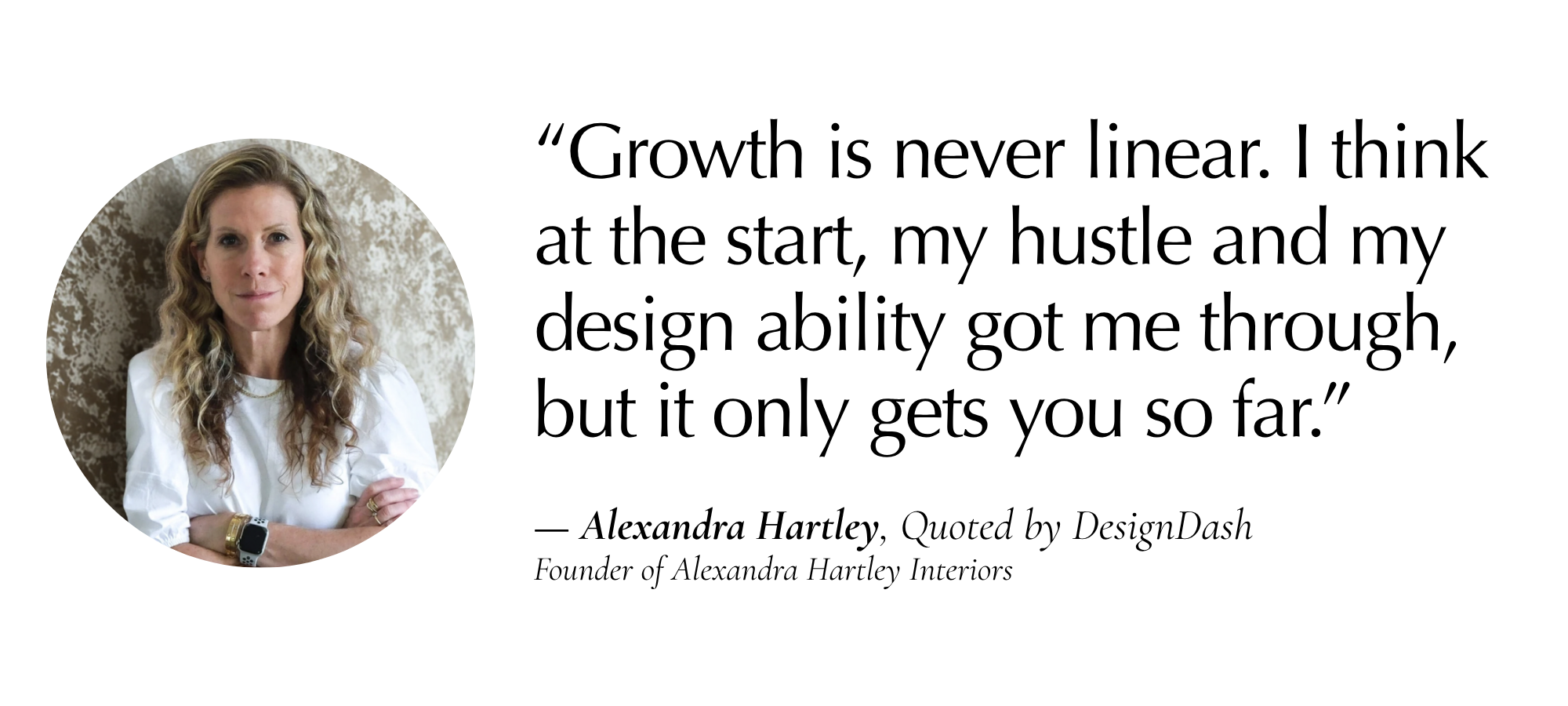
For Sandy, the answer was back-of-house work: invoicing, purchasing, order tracking, admin, and the half-documented systems that lived mostly in her head. Another firm owner might find that marketing, estimating, client onboarding, or procurement is the bigger problem. Regardless, you need to look at how you spend your work week before deciding where the next dollar goes.

In helping firm owners develop their six-month plan to a seven-figure firm, this is part of the work we do inside the DesignDash community and Growth Studio. Firm owners bring their actual business to our community instead of a polished facade; you’ll see the messy software, the unclear hire, the overloaded calendar, the pricing questions, the marketing gaps. Then we help them choose the next practical step toward a firm that can grow without the owner juggling every single ball in the air.
Watch the Full Episode on DesignDash
Watch this episode of the DesignDash Podcast to hear Laura Umansky and Melissa Grove talk with Alexandra “Sandy” Hartley of Alexandra Hartley Interiors about hiring, admin support, invoicing, process, marketing, and how solo designers can decide what kind of support they need next.
Written by the DesignDash Editorial Team
Our contributors include experienced designers, firm owners, design writers, and other industry professionals. If you’re interested in submitting your work or collaborating, please reach out to our Editor-in-Chief at editor@designdash.com.
Related Posts

Mark Your Calendar & Book Your Flight for Salone del Mobile 2026
Don't miss Salone del Mobile 2026 from April 21st through 26th at Fier

Should I Rent an Office or Just Work From Home in My Firm’s First Year?
Learn whether a home studio or a rented space makes more sense in your

What Are Lean In Circles, And How Can I Join One?
Lean-In Circles are intimate peer groups that not only foster personal
Should You Hire an Interior Stylist for Project Shoots?
Often working in lock-step with your photographer, the right interior

The Mid-Career Switch: How to Become a Medical Illustrator
Medical illustration is a specialized field that combines artistic ski

Women, In Their Own Words: Paulina Hospod
Enjoy insights from Paulina Hospod of AhA!nteriors in our “Women, In