
Here’s How to Get Comfortable with Uncertainty as a Firm Owner

 0
0
 0
0Summary
Uncertainty is part of growing an interior design firm, especially when hiring, payroll, marketing, cash flow, and client pipelines are involved. This article breaks down how firm owners can make uncertain decisions feel less volatile by knowing their break-even number, reviewing cash flow carefully, planning for slower months, and setting thresholds before panic takes over.
Reflection Questions
Which business decision currently feels the most uncertain: hiring, marketing, pricing, payroll, or cash flow?
Do you know your firm’s monthly break-even number, and are you reviewing it before making major investments?
What scenario makes you the most anxious right now, and what would change if you actually ran the numbers around it?
Journal Prompt
Write down one decision you’ve been delaying because the outcome feels uncertain. Then list the information you already have: break-even number, cash on hand, signed contracts, active proposals, scheduled invoices, delayed payments, and upcoming expenses. What else do you need to know before you can make a thoughtful decision?
Interior design firm owners live with a lot of uncertainty, yet it seems like only some let that get to us. Some just shrug it off if a client pauses a project after the proposal has already gone out. They sigh “oh well” when an ideal client becomes available after the PNC pipeline is already completely full for the next couple years. But others tear their hair when a marketing investment makes sense, but the return might take months. They panic when that one furnishings deposit hits their account but a bunch of payment reminders have been ignored.
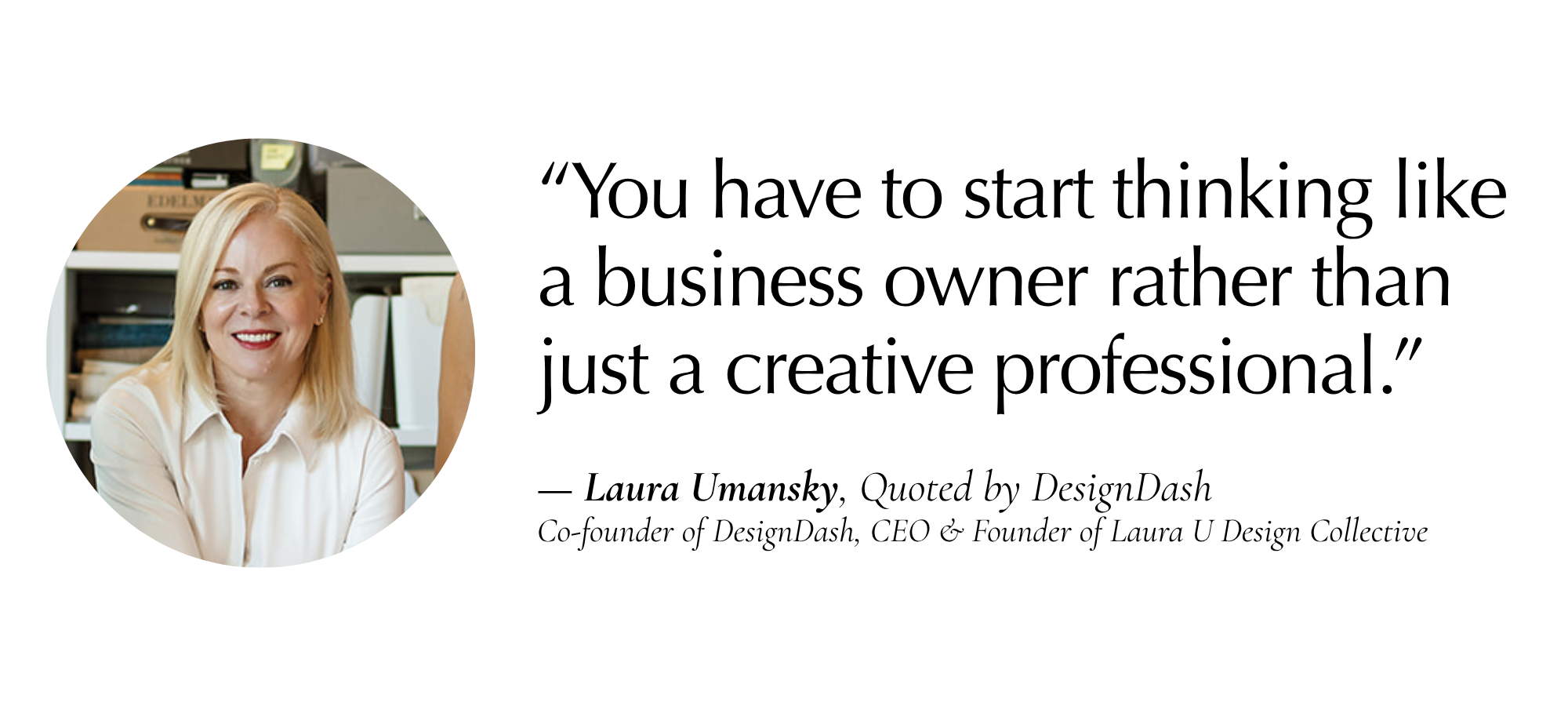
At a certain point, growing your design firm requires making decisions that can’t possibly come from total certainty. The firm owner still has to know the numbers, review the pipeline, understand cash flow, and think carefully about payroll before adding expenses. But waiting until every risk has disappeared usually means waiting too long. Laura Umansky puts it this way…
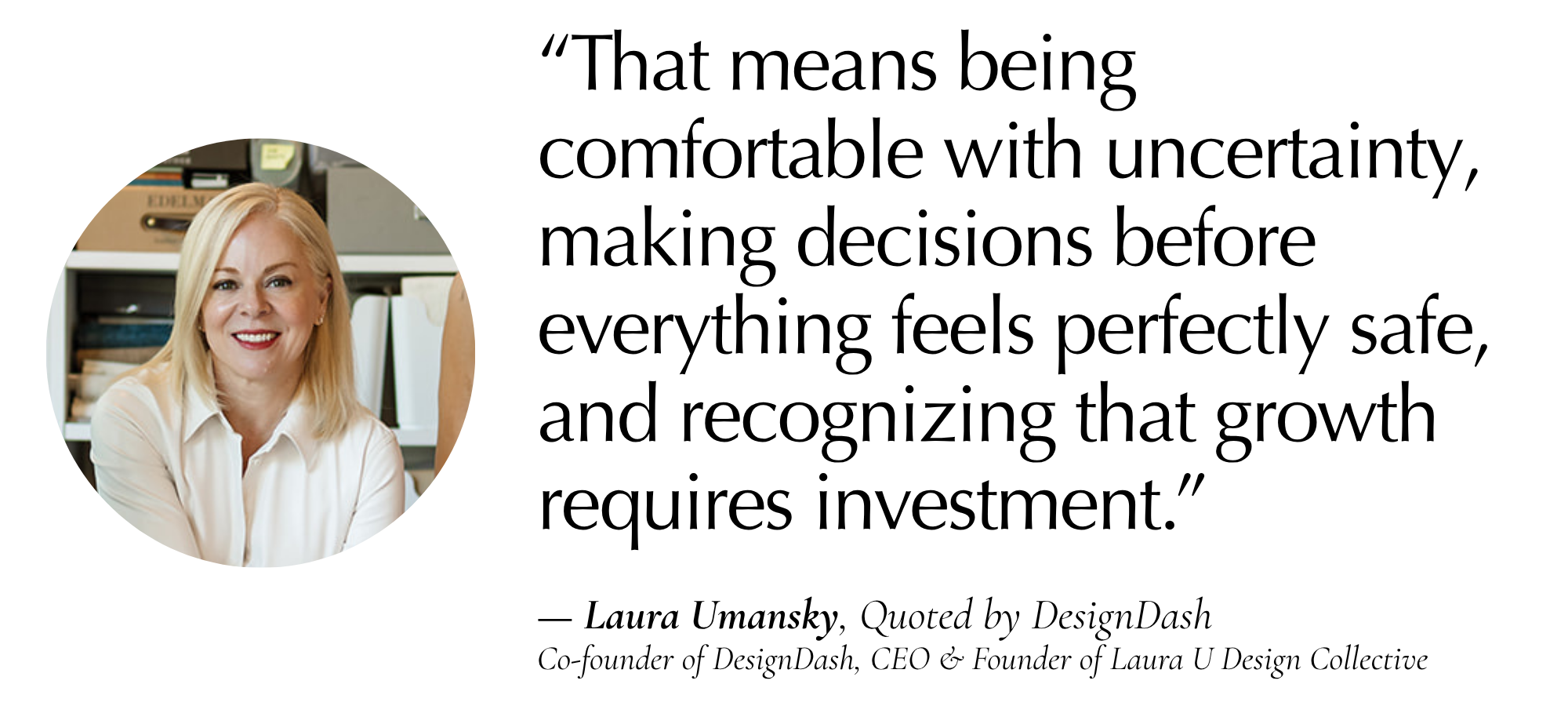
That doesn’t mean making reckless choices or pretending that your business can absorb anything. In a Forbes article from 2016, Chris Myers writes that “maturity of mind is the capacity to endure uncertainty.” In our industry, maturity means knowing your break-even number, setting a cash threshold, asking what would happen if no new client signed for three months, and deciding what level of risk you and your business can withstand.
We can never eliminate uncertainty, but we can make uncertain times less emotional and less volatile. Here’s how to become more comfortable with uncertainty so you can enjoy this crazy experience we call firm ownership!

How to Become Comfortable with Uncertainty as a Design Firm Owner in 6 Not-So-Simple Steps
#1 Know Your Break-Even Number Before You Make a Big Decision
Before you hire, sign a bigger office lease, commit to a marketing contract, or bring on another software subscription, you need to know what your firm costs to run each month. Not a vague idea of it. The actual number.
That number includes payroll, contractors, rent, insurance, taxes, software, bookkeeping, marketing, owner pay, professional memberships, consultants, and every other recurring expense that keeps the firm operating. Some of those costs are obvious because they hit the account on the same day every month. Others sneak in as annual renewals, random subscriptions, small tools, or “we really do need this” expenses that nobody questions until the credit card statement looks absolutely absurd.
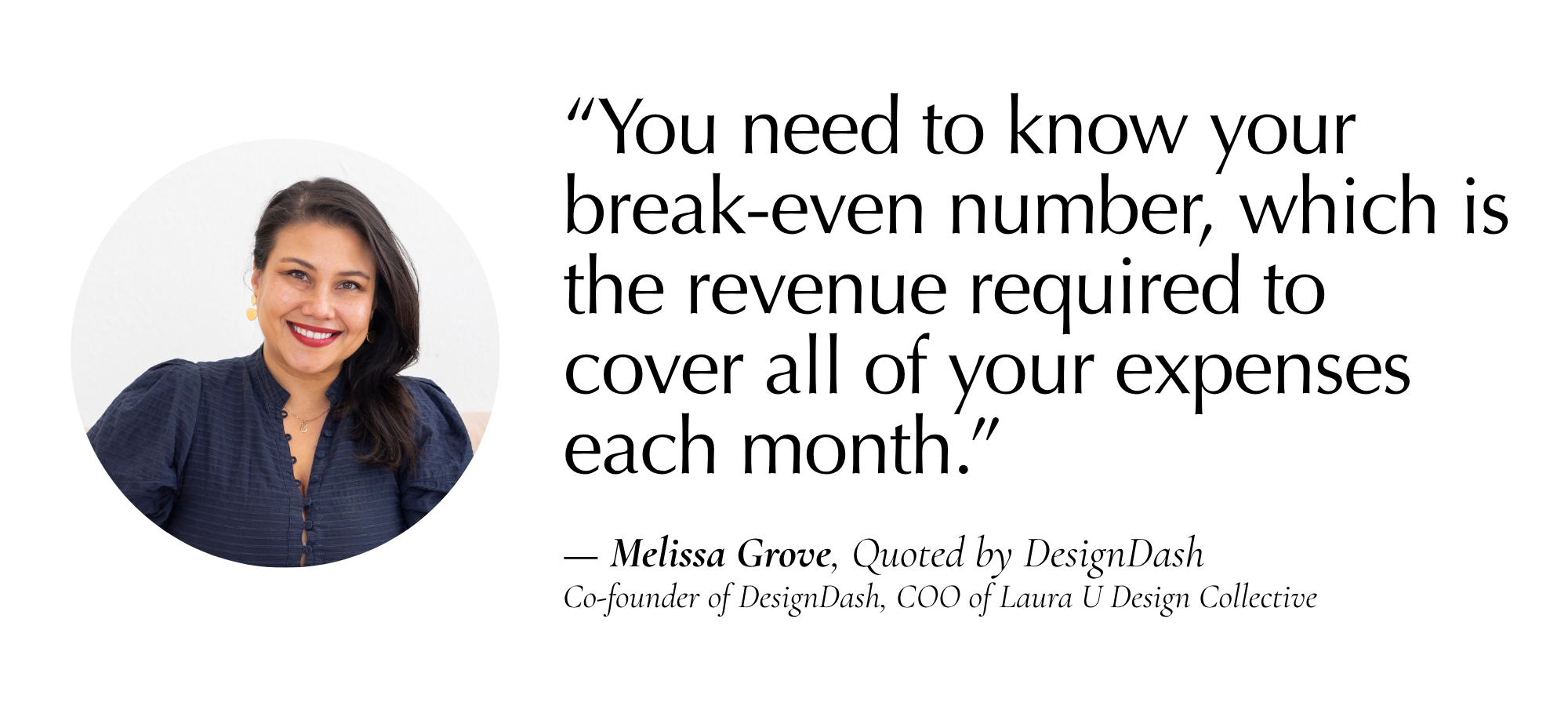
Once you know that number, your next decision will feel way less dramatic. Hiring is still a risk. Marketing is still a risk. Expanding the team, changing your service model, or investing in better photography still requires some tolerance for the unknown. But istead of asking whether the business feels safe enough, you can ask whether the next 30, 60, and 90 days can support your decision.
That means looking at signed contracts, active proposals, scheduled invoices, likely approvals, delayed payments, and the pipeline you keep saying is “pretty warm.” It also means separating cash in the bank from money that already belongs to someone else. If a big furnishings deposit came in last week, your account may look great. But if most of that money is already tied to vendor orders, freight, taxes, receiving, delivery, and installation, it should not be the reason you convince yourself the firm can afford a new salary.
Break-even is not glamorous, but it is calming. It gives you a floor. If you know the firm needs $35,000 a month to operate, you can stop treating every expense like a moral crisis and start looking at whether the business can carry it for the next few months. You might still decide to wait. You might decide to move forward. Either way, your decision is tied to business realities instead of whatever panic or optimism fills your brain that week.
#2 Think Through Payroll Before You Hire
Hiring is a risk, one that often has huge benefits, but it’s still a risk. A salaried employee is not like a vendor invoice, a one-time photography expense, or a software subscription you can cancel if the next quarter looks weird. Payroll will soon be part of the monthly reality of the firm, and it has to be covered whether clients approve quickly, drag their feet, or disappear into the decision-making void for three weeks.
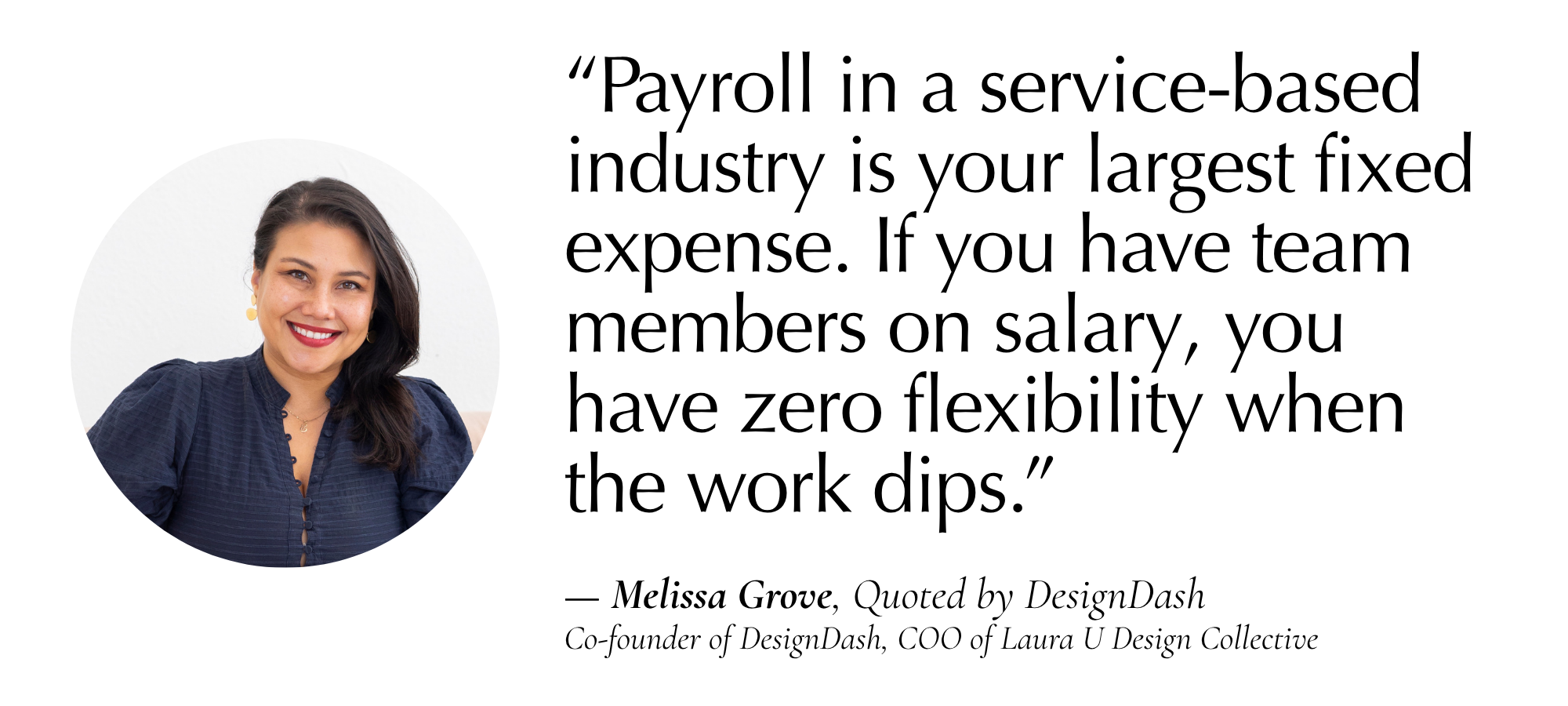
That doesn’t mean you should avoid hiring. Sometimes, hiring is exactly what empowers the firm to grow. A design assistant can help your team document faster. A project manager can keep clients, contractors, and vendors from routing every single question through you. Procurement support can keep orders, freight, receiving, damages, lead times, and installation details from swallowing your week whole.
Before you hire, look at the next several months and ask whether the business can support that person without requiring a miracle project to sign. What revenue is already contracted? What’s likely, but not signed? Which project is ending soon? How much owner pay are you willing to reduce, if any, while the new hire ramps up? If the answer depends entirely on one proposal closing, that should tell you something.
At this point, consider part-time support, contract help, and outsourced roles instead of hiring full-time every time. A firm might need help before it can responsibly add another full-time salary. That could mean a part-time procurement coordinator, an outsourced bookkeeper, a freelance CAD drafter, a contract project manager, or an admin who starts with a narrow set of tasks. Those options still cost money, of course, but they give you more room to test the role before the expense becomes relatively permanent.
A Forbes Coaches Council article quotes Shelli Hendricks advising leaders to “acknowledge the unknowns, build flexibility into the plan and then monitor and adjust accordingly.” That’s a smart way to think about hiring in a design firm. You might not know exactly how the next year will go, but you can build a plan that gives you options. Start with the role you actually need, decide what the firm can support, and review the numbers often enough that you’re not surprised by your own payroll.
#3 Be Patient When Making Marketing Decisions
Marketing can be the right investment and still take longer than you want. A firm might spend money on photography, SEO, PR, ads, a website refresh, or social media support, and the phone may not ring the next week. That delay can make even a good decision feel suspicious, especially when payroll, software, rent, and the rest of the firm’s expenses stack up.
That doesn’t mean your firm should avoid marketing until everything feels easier. You should figure out what kind of result you need and how soon you need it. If you need inquiries quickly, start with the people who already know your work: past clients, builders, architects, vendors, realtors, local business owners, and referral partners. A personal email, lunch, studio visit, or project update may do more this month than a new homepage ever could.
If you’re building the firm’s reputation over the next year or two, the slower marketing approach still makes sense. Photograph your projects. Update the portfolio. Publish that case study. Send a pitch. Build SEO pages. Keep your social media alive and current enough that a potential client can see what you do before booking a consultation. Just don’t judge a long-term investment by a 30-day timeline.
In an Entrepreneur article from January 2024, Peter Goldstein writes that uncertainty “can be a gateway to transformative growth.” That language is a tad cringe-inducing and more jargon-y than most of us would use when we’re staring at a marketing invoice, but his point applies here. Sometimes, the investment that feels uncertain now is the one that helps your firm attract better-fit clients later. You just need enough cash, enough patience, and enough tracking to know whether the plan is actually working (and how long you can wait).
#4 Don’t Let One Big Deposit Fool You
Cash flow can make a design firm look healthier than it is, especially when furnishings deposits arrive in large chunks. A client wires a big payment, the account looks gorgeous for about twelve seconds, and suddenly the marketing contract or next hire starts to look less terrifying. But that money might already be spoken for before it even clears.
A furnishings deposit may need to cover vendor orders, freight, receiving, storage, white glove delivery, installation, sales tax, damages, replacements, and all the tiny project expenses that somehow multiply the second procurement begins. If you treat that deposit like profit, the next month can feel completely insane.
This is why you need very accurate bookkeeping. If your firm has reached the point where large deposits, payroll, procurement, and project timelines are all moving at once, you need financial visibility. Melissa also recommends looking into accrual accounting if you’re still on cash accounting and the numbers are starting to distort the real picture.
Your goal here should be to figure out what money is actually yours to use. If a deposit is tied to product, taxes, freight, and delivery, it should not be the reason you hire a new salaried employee or commit to a major recurring expense. You might still make the investment, but it should be based on service revenue, profit, backlog, and cash reserves, not the temporary thrill of a full account.
Fuel your creative fire & be a part of a supportive community that values how you love to live.
subscribe to our newsletter
*please check your Spam folder for the latest DesignDash Magazine issue immediately after subscription

#5 Run the Scary Scenario Before It Happens
Sometimes the thing you’re avoiding is exactly the thing you need to work through. What happens if no new client signs this year? What happens if a project pauses after the design phase? What happens if a client delays a furnishings payment, a renovation timeline stretches, or a contractor pushes your install into the next quarter? None of those questions are fun. Obviously. But they’re much easier to answer in a normal week than at 11 p.m. after you’ve refreshed your inbox four times and decided the entire firm is probably doomed.
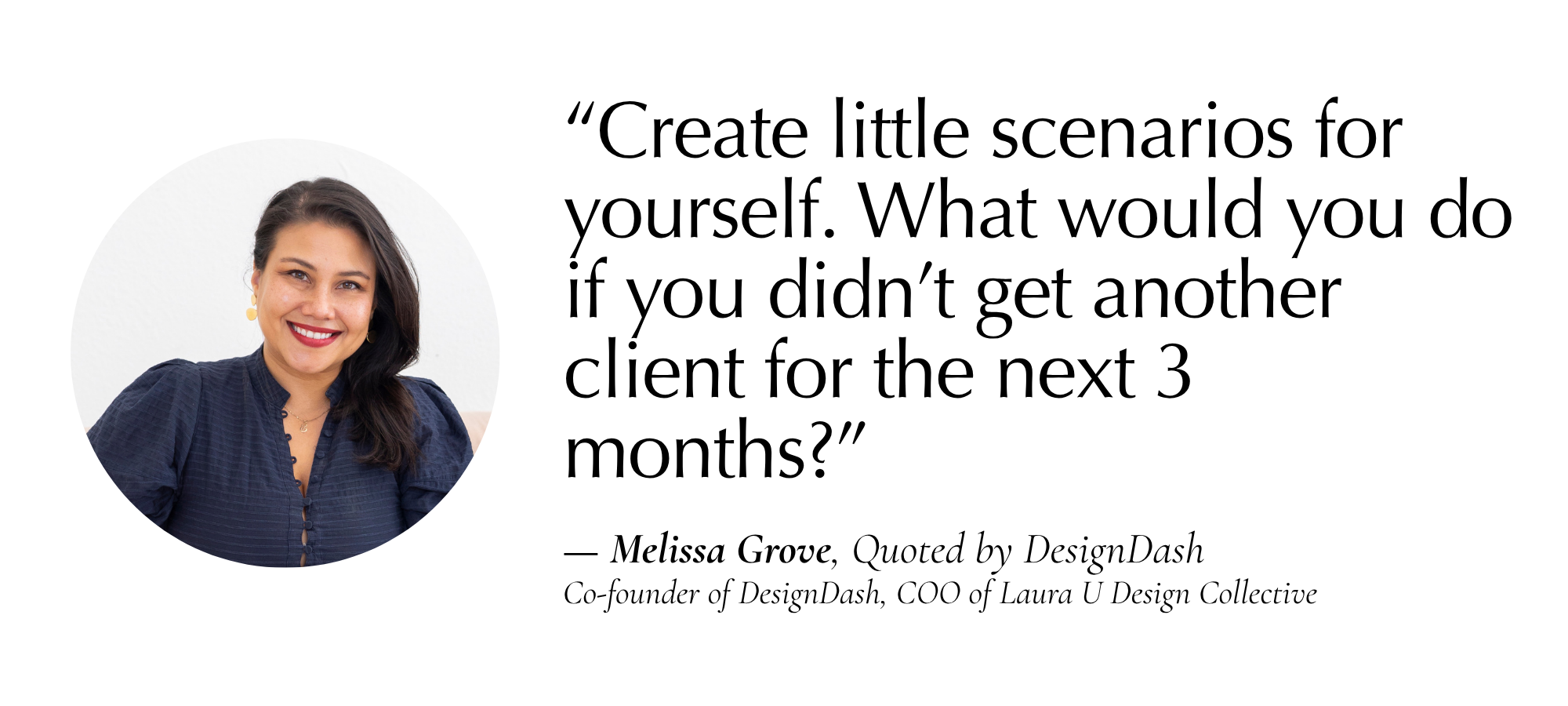
In a Forbes Coaches Council article, Thom Pulliam recommends that leaders “go straight into the fears and imagine them.” That sounds dramatic, but the exercise truly is helpful. Open that Google spreadsheet. Look at your monthly expenses. Look at signed contracts, scheduled invoices, and payroll. Look at what you would cut first, what you would delay, and which expenses are truly flexible.
A scary scenario loses some of its power when it has numbers attached to it. You may realize the firm actually can handle a slower quarter. You may realize you need to wait on a hire. You may realize the business is fine, but your cash reserve is too thin for your own sanity. Any of those answers is better than letting anxiety rule your life when there’s information available to dispel it.
#6 Make Thoughtful Decisions Before Everything Feels Perfectly Safe
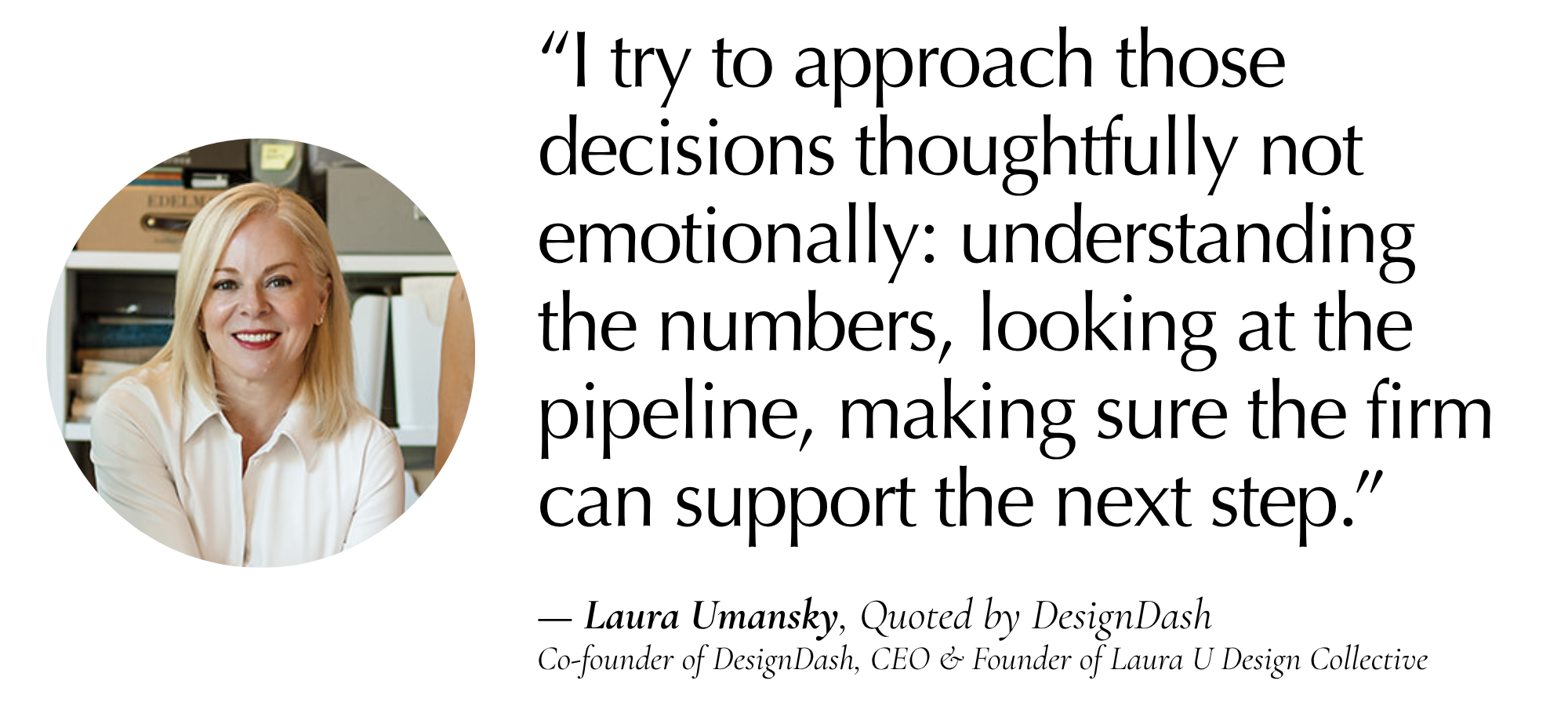
Firm owners who want to grow will have to make a few decisions before every detail is settled. The next hire may need to happen before the pipeline feels perfect. The marketing investment may need to happen before you know which client will come from it. The rate increase may need to happen before every past client applauds politely and says, yes, of course, please charge more. That’s part of being an entrepreneur with goals. Still, there’s a big difference between making a thoughtful decision with incomplete information and making a frantic decision because the business had a stressful week.
In a J.P. Morgan Wealth Management article from March 2026, The Know Editors write that business owners should not make “rash decisions” in response to economic, political, or technological changes. That advice applies just as well inside a design firm. A slow inquiry month, a tariff headline, a client pause, or a weird cash flow dip can all make a firm owner want to react quickly. Sometimes a quick reaction is necessary. Often, it is worth checking the numbers first.
Before you make the decision, ask what changed. Did the pipeline actually weaken, or are you waiting on two people to sign? Did cash actually drop, or did vendor payments all hit in the same week? Did marketing fail, or has it only been live for 45 days? The more specific the question, the less likely you are to treat every uncertain moment like an emergency.
#7 Set Cash Thresholds You Can Actually Live With
If you don’t decide your comfort level in advance, you’ll keep renegotiating it with yourself every time the account balance changes. That is exhausting. One week the firm feels fine. The next week a few payments clear, a client goes silent, and suddenly the same business feels far more fragile than it did on Monday.
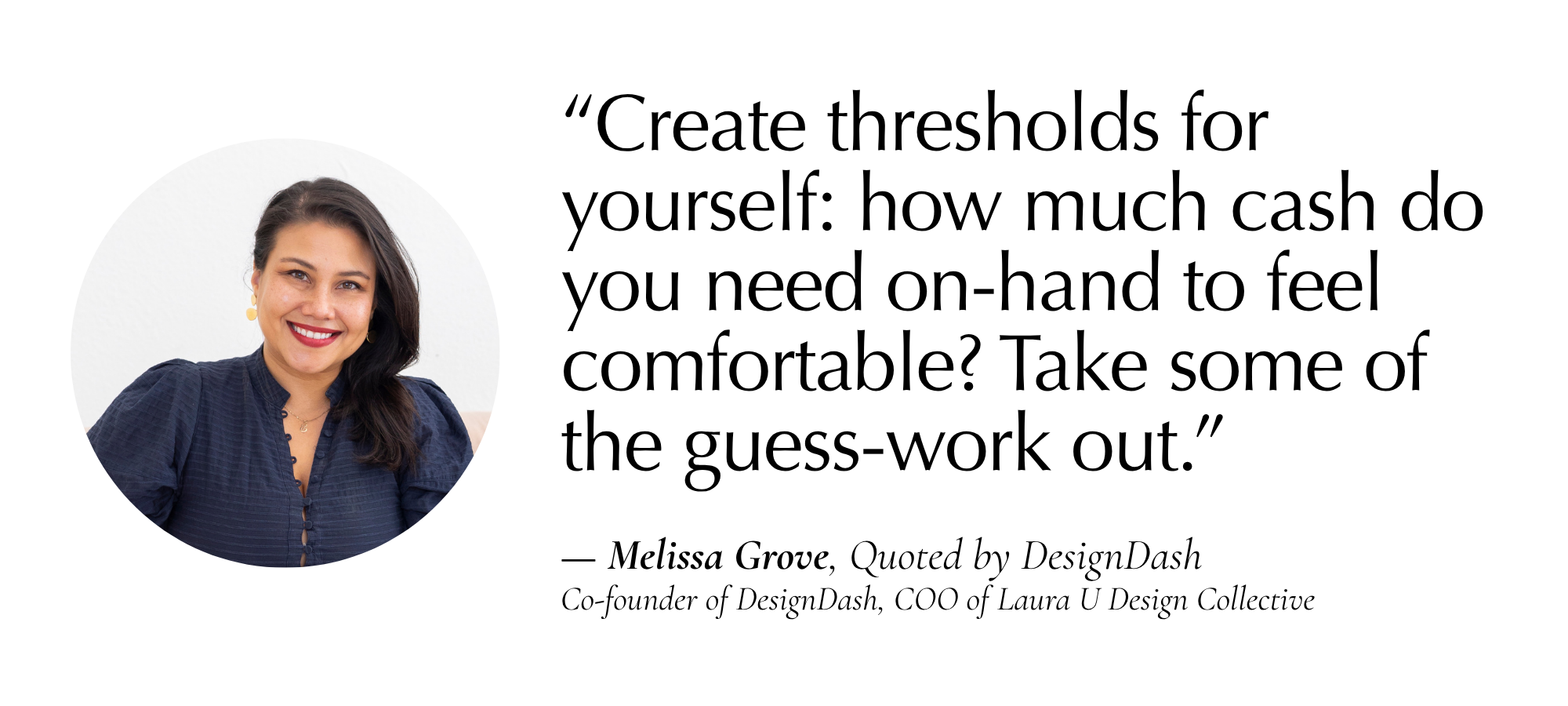
Set a few thresholds before you’re under pressure. How much cash do you want on hand at all times? How many months of expenses would make you comfortable hiring? What backlog would make a part-time role feel responsible? At what point would you pause marketing spend, delay a hire, or call your bookkeeper for a deeper review?
Your thresholds do not need to match another firm’s thresholds. A solo studio with low overhead may have a very different comfort level than a firm with payroll, an office, a procurement team, and several active renovations. The point is to create rules you can return to when the business feels wobbly.
Review those numbers monthly. Adjust them when the firm changes. If you add payroll, the threshold probably needs to change. If you sign a larger project, look at what cash is truly available after vendor commitments. If marketing spend increases, decide how long you’re willing to invest before reviewing the plan. Uncertainty is still part of the business, but at least you’re no longer making every decision from scratch.
Final Thoughts
Becoming more comfortable with uncertainty doesn’t mean you have to be reckless and feckless. Your firm, no matter how young or old, how established or unstable, has a bunch of data points to share with you. These data points will reduce the fear and quell the panic because the uncertainty that remains won’t be all that remains.
Know your break-even number. Understand payroll before you hire. Give marketing enough time to actually produce results. Don’t let one large deposit convince you the firm is more flush than it is. Run the scenario you’re afraid of. Set cash thresholds that make sense for your actual business.
Inside DesignDash Growth Studio, this is part of we do with firm owners: break-even numbers, hiring plans, cash flow, marketing investment, pipeline, pricing, and the decisions that feel scary because they’re unknown. There’s no way for us to entirely remove risk from firm ownership. We can’t. What we can do is help you make the next decision with enough information, support, and self-trust to chip away at that uncertainty and create the design firm of your dreams.
Written by the DesignDash Editorial Team
Our contributors include experienced designers, firm owners, design writers, and other industry professionals. If you’re interested in submitting your work or collaborating, please reach out to our Editor-in-Chief at editor@designdash.com.
Related Posts

Kongjian Yu: 2023 Recipient of the Oberlander Prize for Landscape Architecture
Kongjian Yu—the distinguished landscape architect renowned for his e

Our Comprehensive Roundup of the Best Photography Programs in the United States
From SAIC to Yale, we will guide prospective photography students thro
Do I Actually Want to Scale My Firm, or Just Make More Money?
Laura Umansky and Melissa Grove break down all the implications, from

How to Balance Two Careers Until You’re Ready to Choose One
Jen White tells us how designers can balance two careers while buildin

2024 Holiday Staff Gift Guide: What to Give Employees of Your Firm, Gallery, or Studio
Our 2024 holiday staff gift guide for creative teams includes custom s