What Are SOPs, And Which Do You Need to Formalize as a Design Firm Owner?

 0
0
 0
0Summary
Standard operating procedures help design firms document responsibilities, train new hires, create accountability, and reduce confusion as teams grow. They don’t need to be written before you hire the first employee, but some processes should eventually move out of verbal conversations and into documented systems, particularly those involving money, client communication, and onboarding.
Reflection Questions
What processes in your firm currently depend on you answering the same question over and over again?
If a new employee started next Monday, which parts of your business could be taught through documentation and which would require direct training?
Which responsibilities in your firm currently belong to multiple people without a clear owner?
Journal Prompt
Write down every task that interrupted your work during the past week because someone needed clarification, approval, or direction. Which of those interruptions could have been prevented with a documented process, checklist, template, or training guide?
Many (if not most) firm owners spend years operating without standard operating procedures. When you’re working alone, there isn’t always a reason to document how client meeting notes are organized, how procurement updates are communicated, or where project files belong in Dropbox. You already know that information, for the most part. It lives in your head. Of course, that only works if you stay a solopreneur. Once you make your first hire, it has to change.
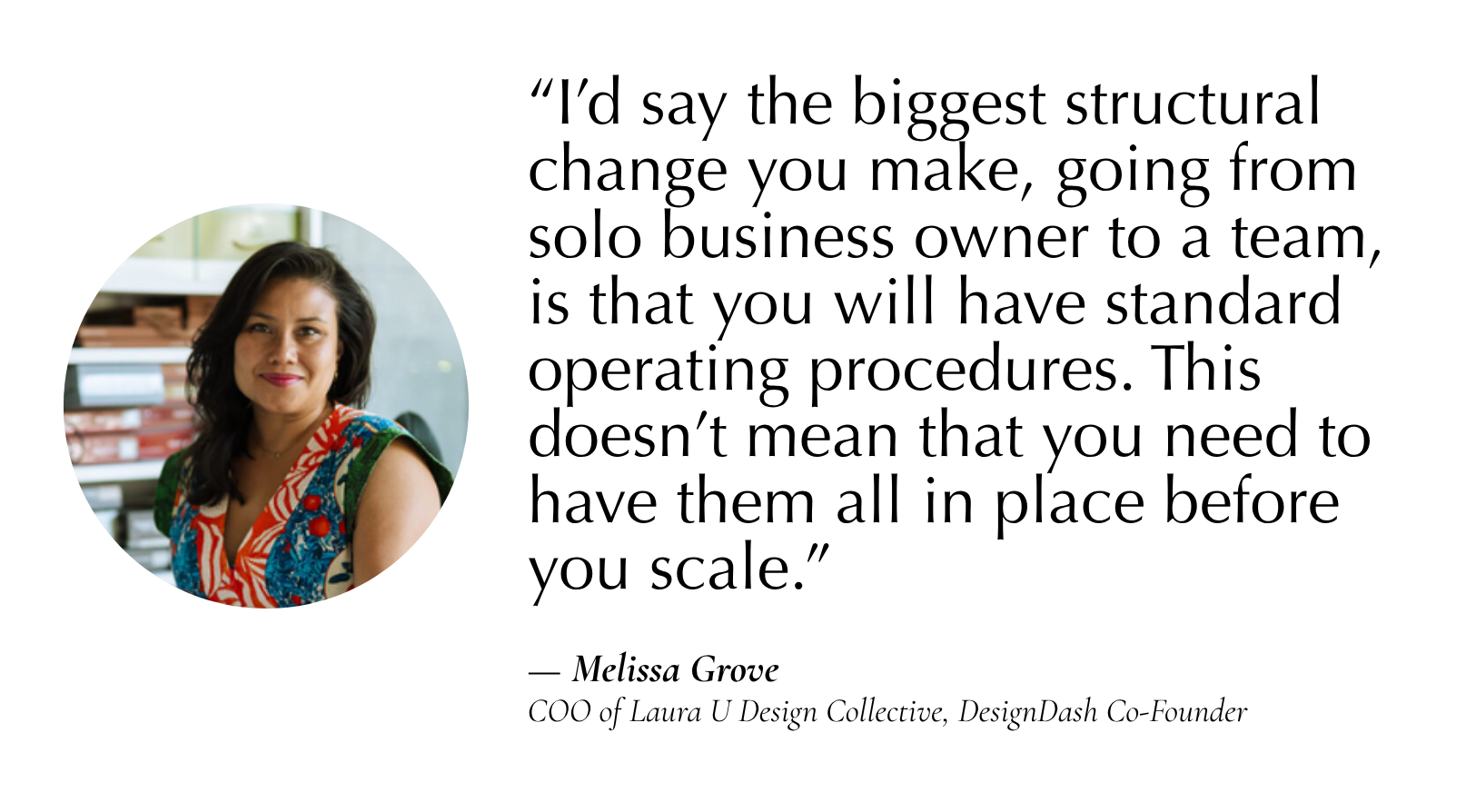
Standard operating procedures help design firms document responsibilities, train new hires, create accountability, and stem confusion as their teams expand. All SOPs don’t need to be written out before you hire the first employee, but some processes should never be informal. These should quickly move out of verbal conversations and into documented systems, particularly those involving money, client communication, and onboarding.

What Is an SOP?
A standard operating procedure, usually shortened to SOP, is a documented process for completing a recurring task inside your firm. It might explain how project folders are organized, how procurement updates are communicated, how time is entered into your accounting software, or how a designer should prepare for a client presentation.
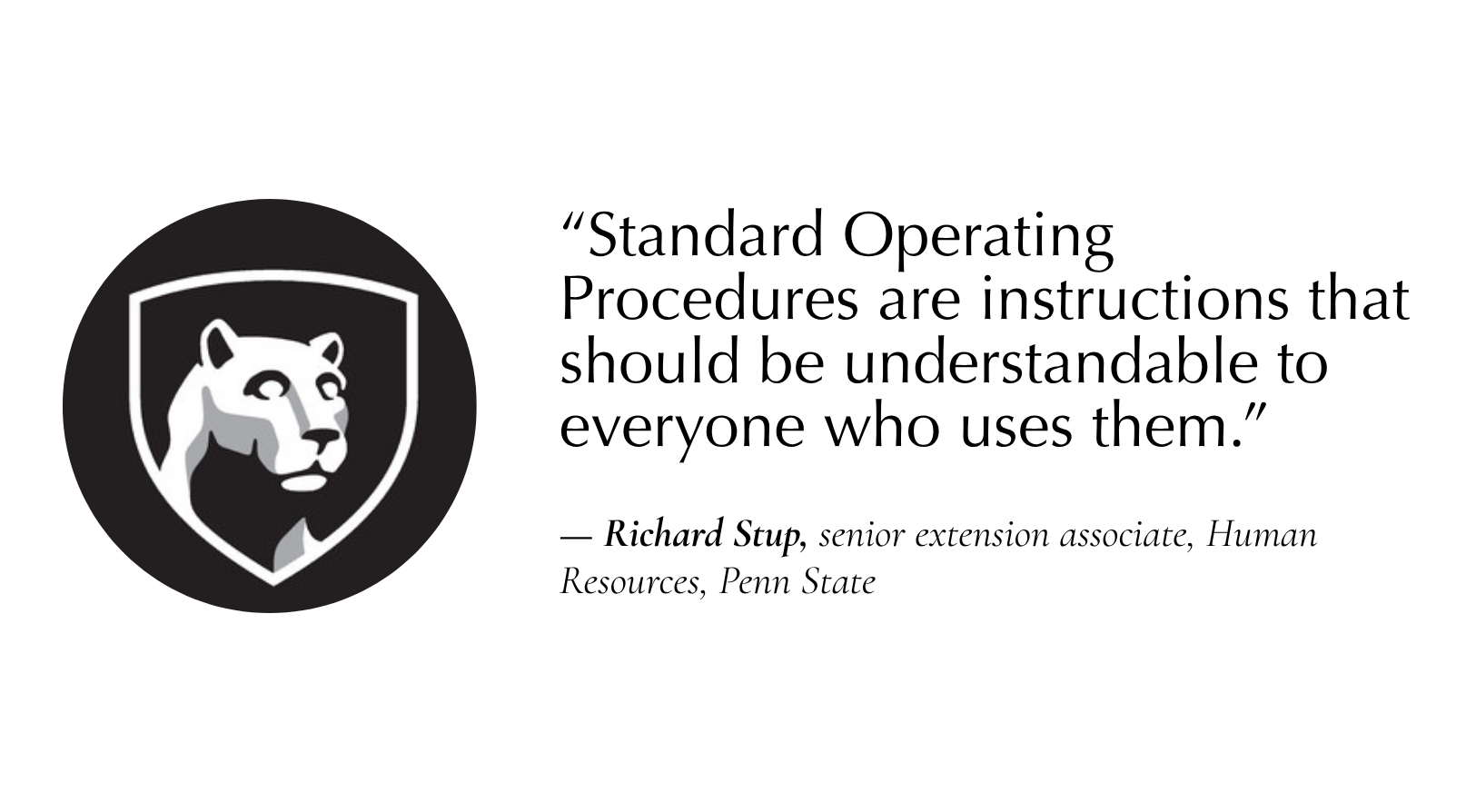
The format matters less than the information. An SOP might be a written checklist, a training document, a screen recording, a template, or a step-by-step guide stored in your project management system. The goal is simple: someone should be able to complete the task correctly without relying on memory, assumptions, or verbal instructions.
Many firms already have SOPs, whether they realize it or not. The difference is that those procedures often exist inside the owner’s head. That arrangement works when one person handles everything. Once additional employees enter the picture, information has to be documented somewhere that other people can access, follow, and eventually improve.
Which SOPs Should You Formalize First?
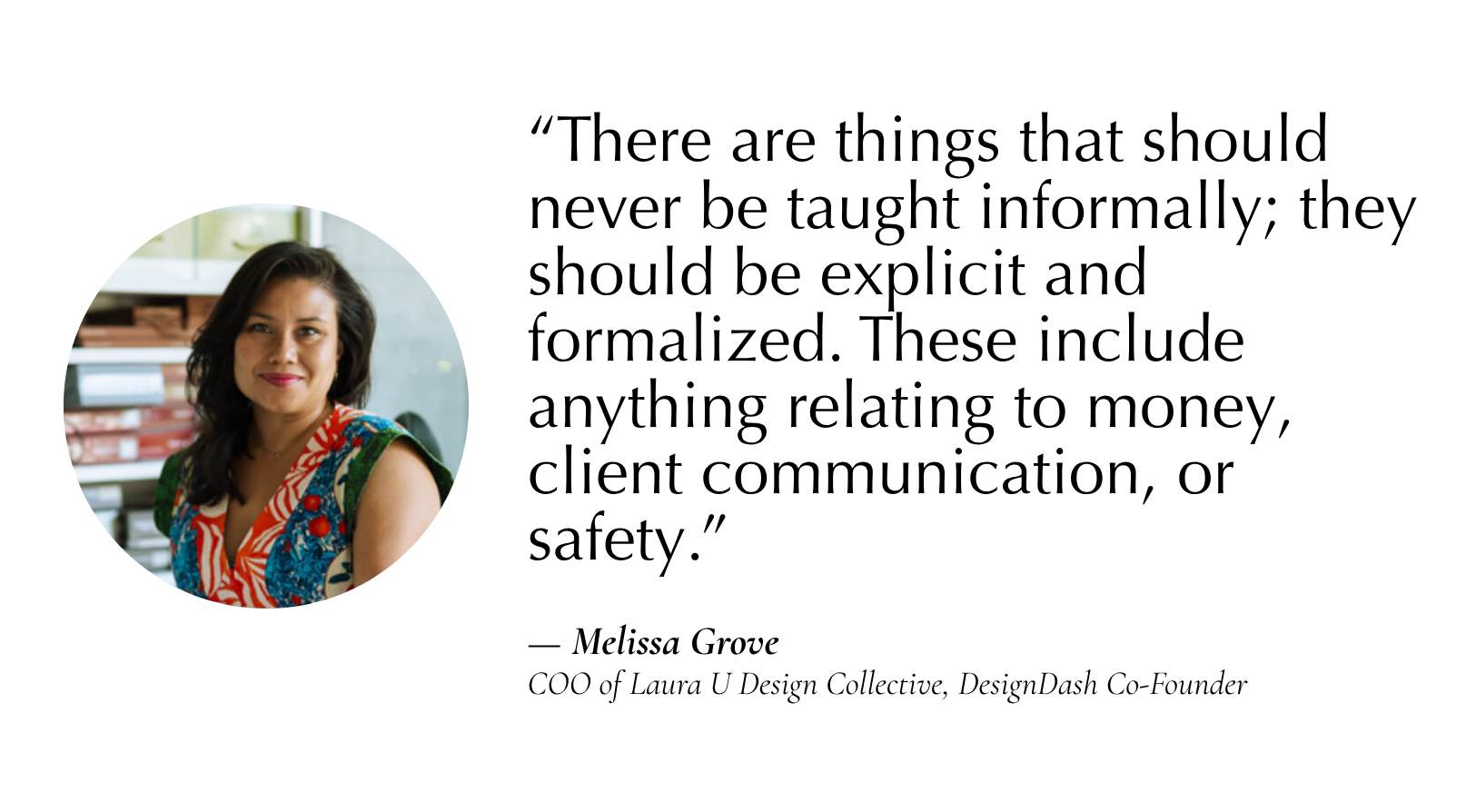
A design firm doesn’t need a written procedure for every recurring task on day one. Some parts of the business can be documented after a new employee has owned that work for a while. Money, client communication, and safety need written procedures much earlier because mistakes in those areas can affect invoices, client trust, employees, vendors, and the project record.
Anything Involving Money
Money is one of the first areas that should be documented because very few firm owners want employees learning financial procedures through trial and error. A new hire shouldn’t have to ask three different people how to enter time. They shouldn’t wonder whether freight should be coded one way or another. They shouldn’t be searching old emails to figure out where a vendor invoice belongs or who needs to approve it before payment.
Most firms eventually create SOPs around time tracking, purchase orders, client invoicing, vendor invoices, expense reimbursements, company credit cards, client deposits, and budget updates. The exact procedure will vary from firm to firm. The important thing is that the process exists somewhere outside a verbal conversation.
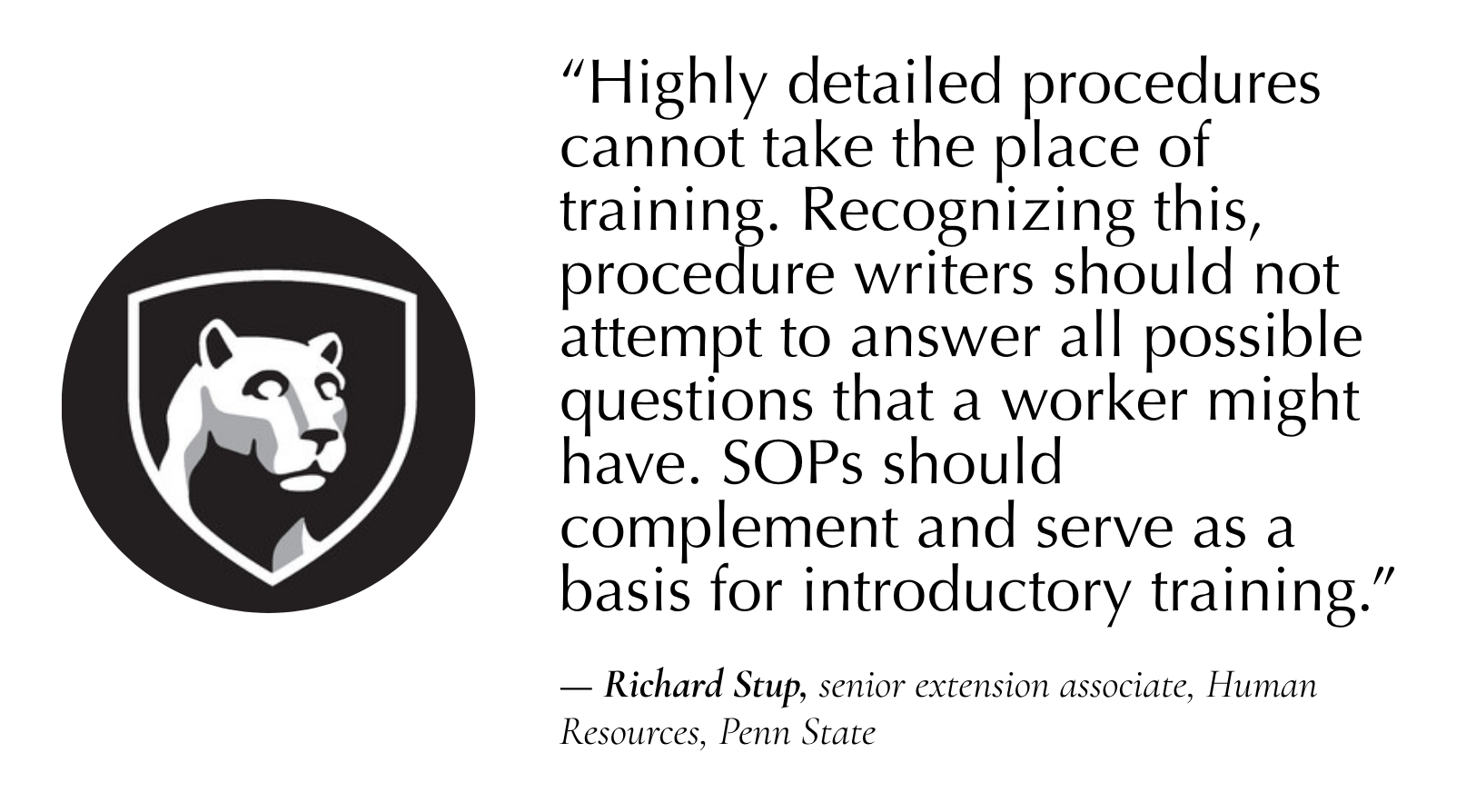
This is even more important as responsibilities become more specialized. The person entering time may not be the person reviewing timesheets. The person approving a purchase order may not be the person issuing payment. A procurement coordinator may need information from accounting. Accounting may need information from the design team. Documentation helps everyone follow the same process instead of creating a new one every time a question comes up.
Many of these procedures also connect to software. Whether your firm uses Studio Designer, Design Manager, QuickBooks, Houzz Pro, or another platform, employees need to know where information belongs, who reviews it, and what happens when something is entered incorrectly. Those expectations shouldn’t exist in just one person’s inbox.
Fuel your creative fire & be a part of a supportive community that values how you love to live.
subscribe to our newsletter
*please check your Spam folder for the latest DesignDash Magazine issue immediately after subscription

Anything Involving Client Communication
Client communication deserves the same level of documentation because every project depends on information moving between the firm and the client. The challenge isn’t sending the information. The challenge is documenting it, storing it, and making sure the right people have access to it later.
Many firms have expectations around meeting notes, client approvals, procurement updates, change orders, budget discussions, and project timelines. The problem is that those expectations often develop slowly. The owner knows how things should be handled because they’ve been doing it that way for years. A new employee doesn’t have that context.
A communication SOP might explain where meeting notes are saved, how quickly they should be distributed after a meeting, who is responsible for sending them, and where client approvals should be documented. It might explain how procurement updates are shared, how project changes are recorded, and when a conversation should move from a text message or phone call into written documentation.
This is especially important when several employees interact with the same client. A project manager might discuss scheduling. A designer might discuss selections. A procurement coordinator might discuss lead times and freight. If everyone documents those conversations differently, information will be incredibly fragmented.
Written procedures help create consistency. A client approval should be documented the same way whether it was received by the owner, a project manager, or a junior designer. Meeting notes should be stored in the same location regardless of who attended the meeting. Procurement updates should follow the same process whether the project involves five items or five hundred.
Most communication problems aren’t communication problems at all. They’re documentation problems. Someone had the information. Someone shared the information. Someone just couldn’t find it six months later.
Anything Involving Safety
Safety might not receive as much attention as procurement, accounting, or client communication, but Melissa includes it in the same category for a reason. Design firms spend time in environments that change constantly. One day an employee may be working in the office. The next day they may be walking an active construction site, visiting a receiver warehouse, attending an installation, inspecting a delivery, or meeting a contractor at a property they have never visited before.
Those situations create questions that should already have answers. What should an employee do if a delivery arrives damaged? Who should be contacted if a condition on site creates a concern? When should a designer document an issue with photographs? What information should be shared with the client, and what information should first be discussed internally?
A safety SOP doesn’t need to be lengthy. Site visits, installation days, warehouse pickups, material handling, driving policies, emergency contacts, and active construction areas are all great places to start. As your firm grows, those procedures can expand along with the responsibilities of the team.
Anything Involving Employment
Melissa doesn’t mention employment as a necessary SOP area, but it certainly is. Don’t make the very first SOP you write about employment; hone your skills elsewhere first, but be prepared to outline training and onboarding SOPs before you bring somebody new on. “We have a 90-day onboarding plan that our office manager oversees,” says Melissa. “Everyone takes part in the training, so that the new hire can meet everyone.”
A new employee will expose gaps in your documentation very quickly. They need to know how the firm names files, where project information lives, how internal communication works, which software they should use, how time is tracked, when meetings happen, and who to ask about different parts of the business.
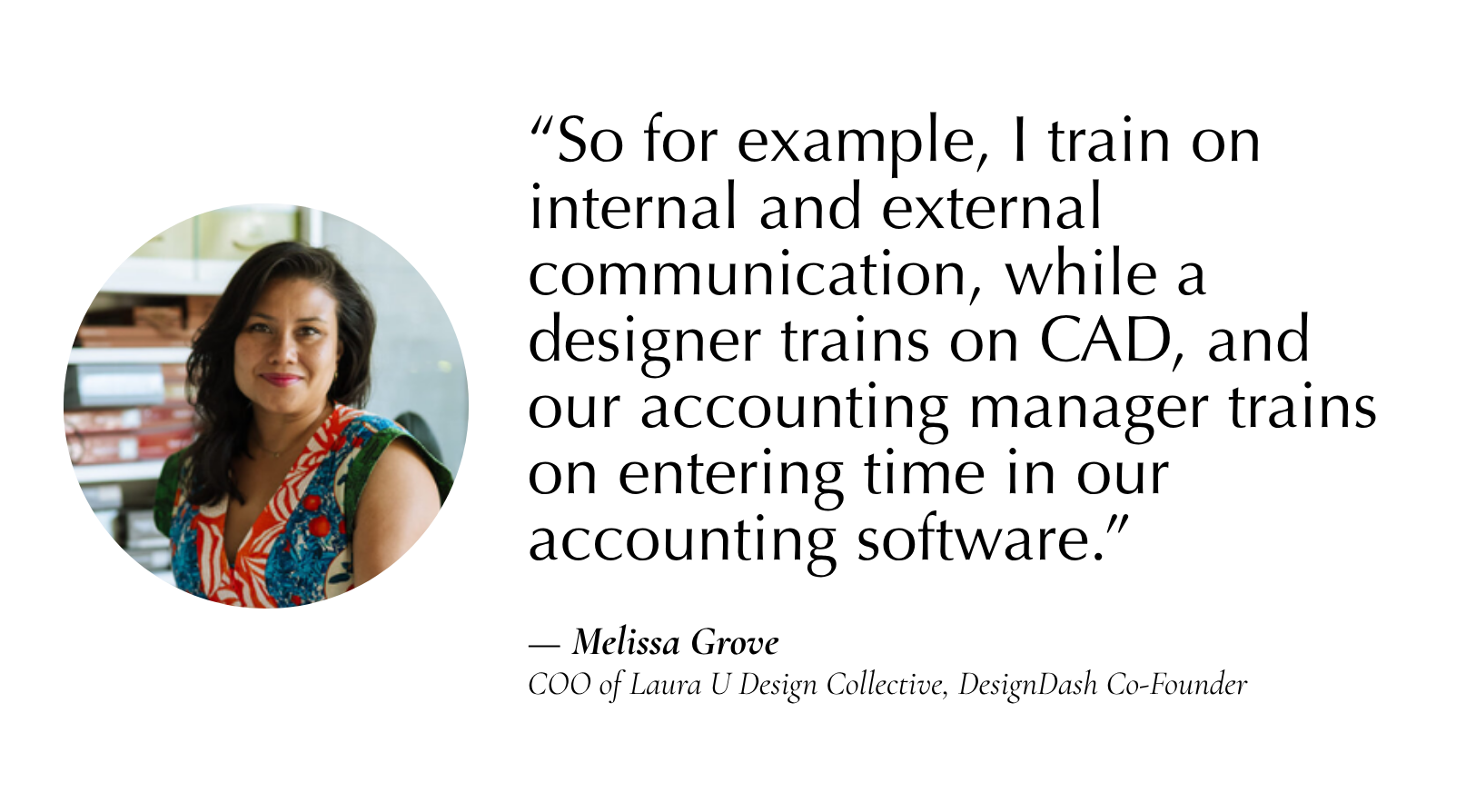
If those instructions only exist verbally, onboarding changes depending on who’s available that week. One new hire may receive a thorough explanation of internal communication. Another may start during a busy installation week and get a rushed version. That inconsistency creates more questions later.
An explicit onboarding plan gives each part of the business a clear trainer. It also makes the documentation easier to update. The person who trains on CAD can create the CAD checklist. The person who trains on time entry can create the time tracking instructions. The person who trains on communication can create examples of internal messages, client updates, and follow-up emails.
A 90-day onboarding plan doesn’t need to explain every possible situation a new hire will encounter, but you need to give each new person enough structure to understand how the firm works, how their role connects to other roles, and where they should look before asking the owner another question.
SOPs Are More Important Once You Have a Team
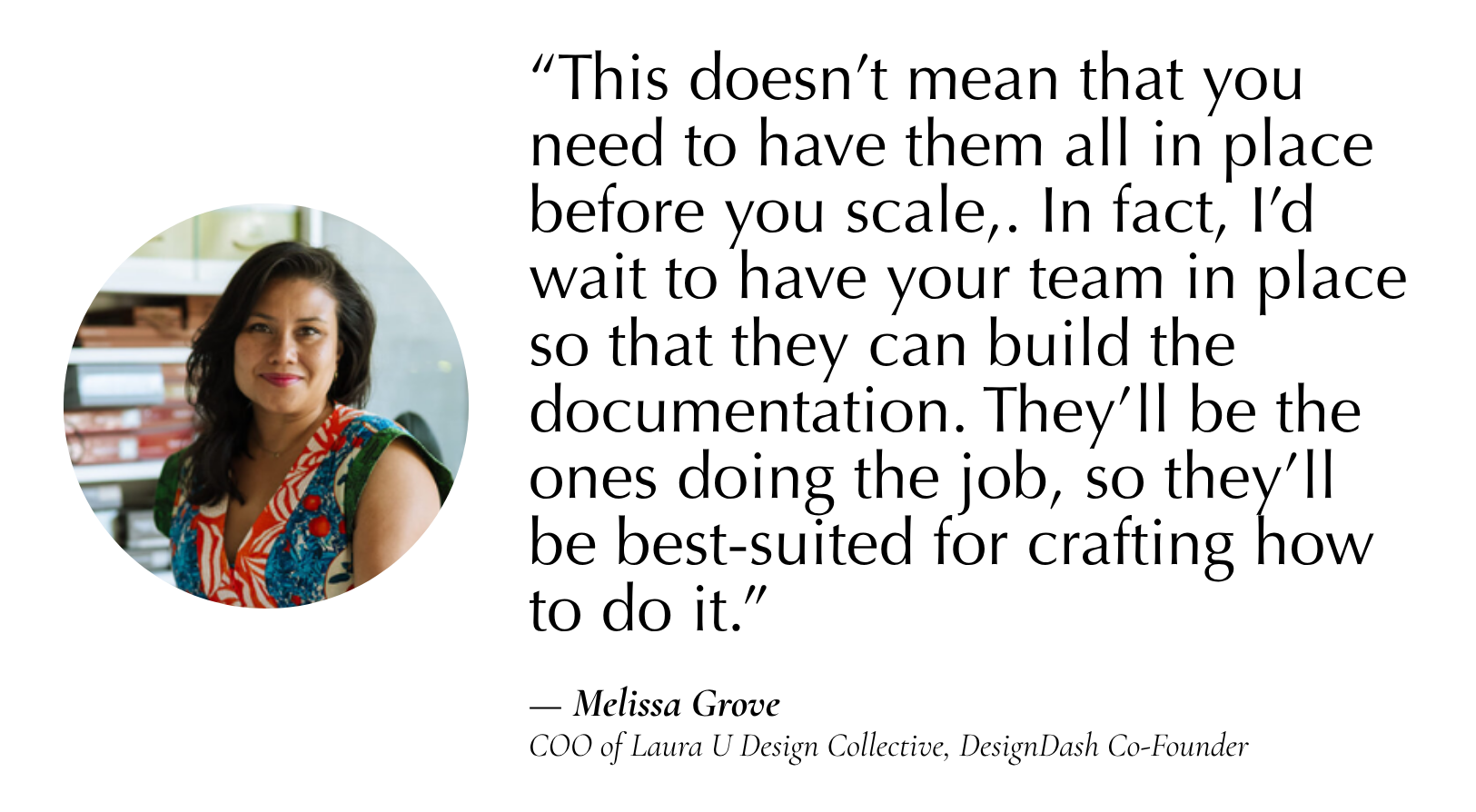
A firm owner might know how procurement works because she has been placing orders, tracking freight, calling vendors, and updating clients herself for years. But the person who takes over procurement may be the one who notices which steps need to be written down first.
Maybe the vendor confirmation emails need to be saved in one place. Maybe every backorder needs to be logged in the same tracker. Maybe damage claims need a checklist because photos, delivery receipts, client notes, and replacement timelines are too easy to scatter across email, Dropbox, and the project management system.

The same can happen with design work. A lead designer may be the right person to document presentation prep because she knows how samples are pulled, which drawings are printed, how the selections are organized, and what the principal wants to review before the client meeting. An office manager may be the right person to document administrative procedures because she sees which questions new employees ask during their first few weeks.
The firm owner still needs to review the final process. A team member can draft an SOP, but the SOP still has to match how the firm wants the work done. Otherwise, documentation can turn into a collection of personal habits instead of a firm-wide procedure.
SOPs Create Reporting Structure and Responsibility
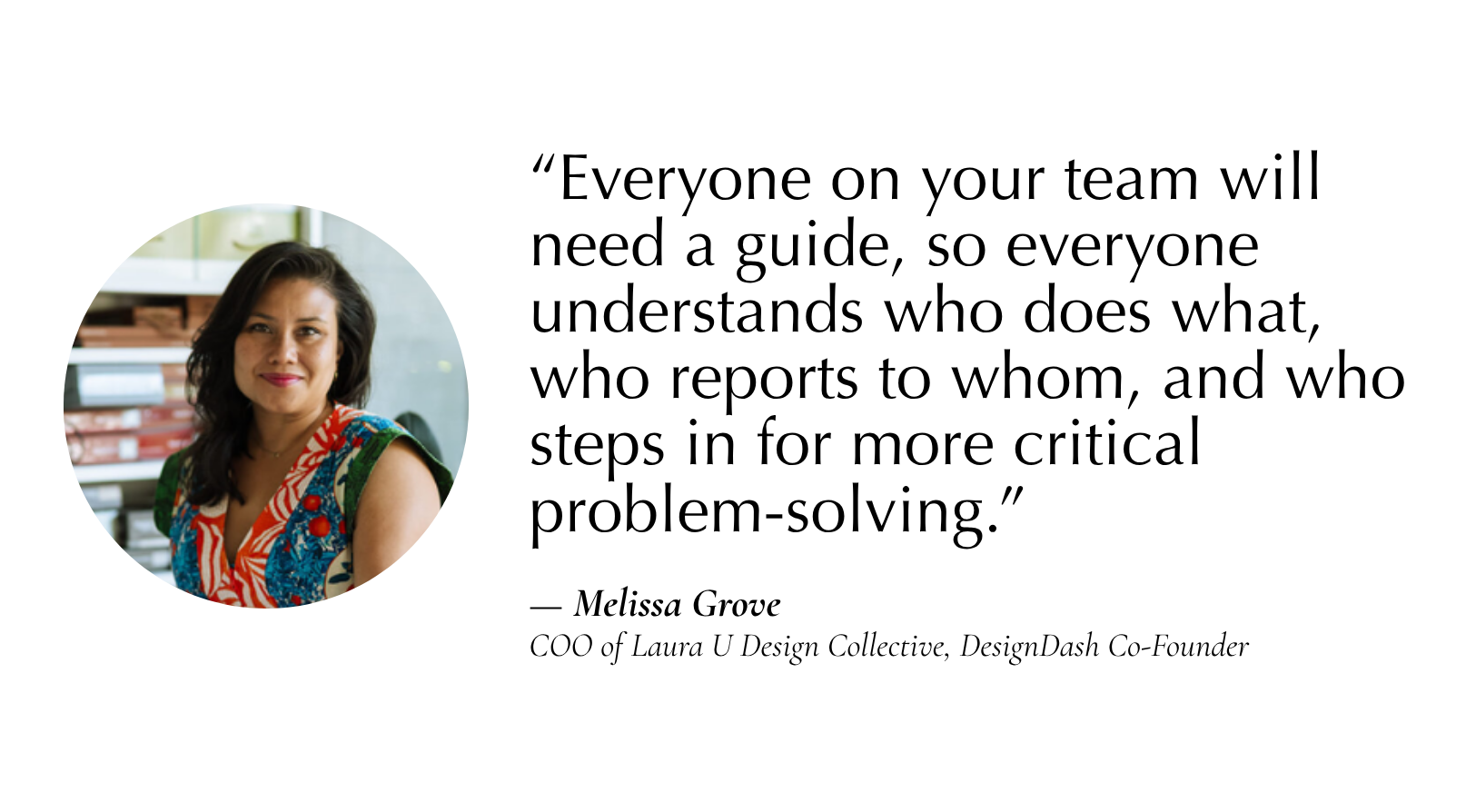
That guide can be part of the SOP itself. A procurement SOP should explain more than how to place an order. It should explain who creates the purchase order, who reviews the pricing, who sends the deposit request to the client, who follows up with the vendor, who updates the procurement tracker, and who tells the client if the lead time changes.
A client communication SOP should do the same thing. If a client emails a junior designer about a budget concern, does that designer respond directly? Does the project manager draft a response? Does the principal review it first? If the client approves a selection by text, where does that approval go? If a contractor asks for a fast decision onsite, who has the authority to answer?
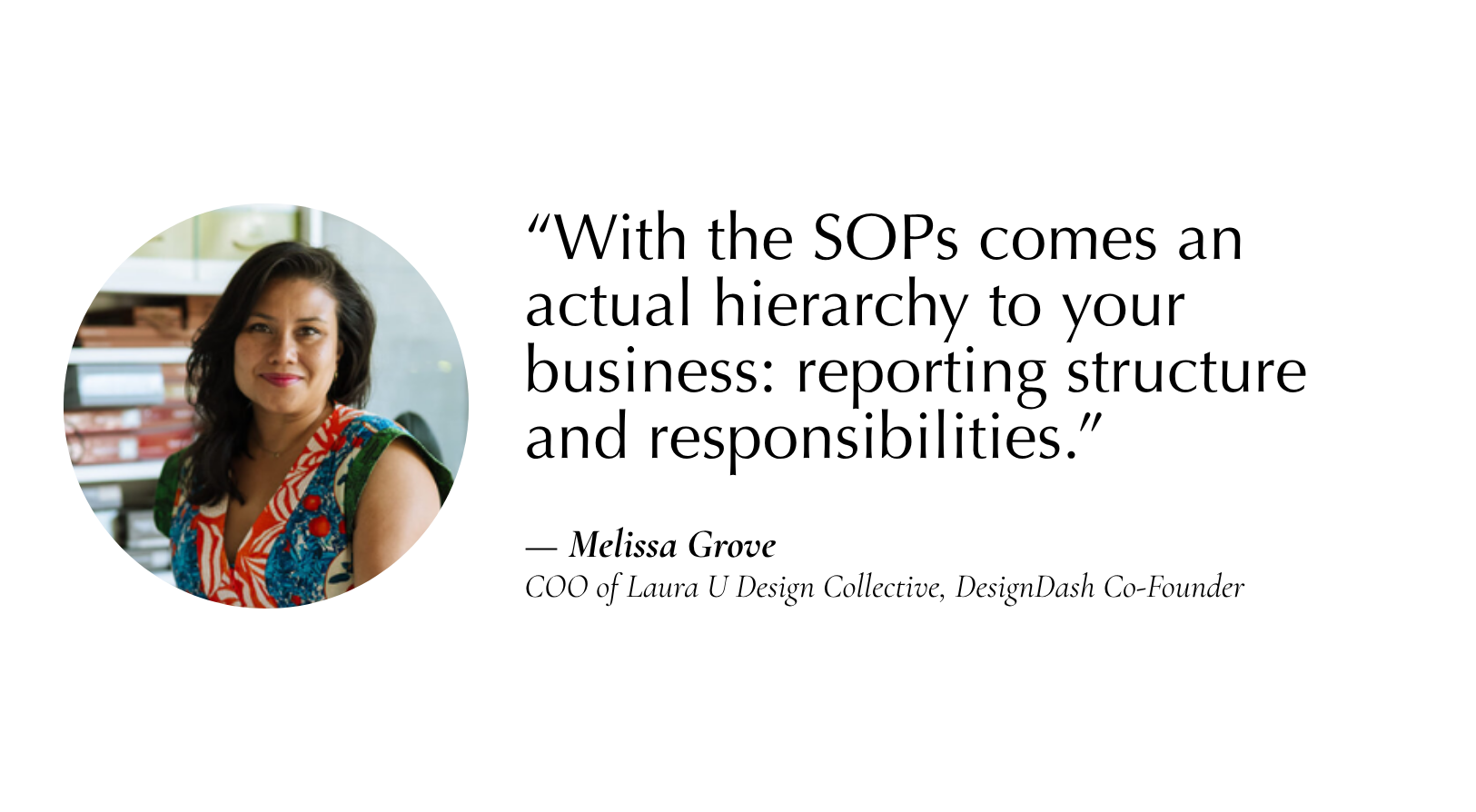
Hierarchy doesn’t have to make the firm stiff or overly formal. It can simply mean that people know who owns which decisions. Someone reviews invoices. Someone approves substitutions. Someone handles difficult client conversations. Someone trains new hires on CAD, time tracking, or external communication.
Without that structure, too many questions return to the owner by default. The owner is the the person who approves, explains, corrects, redirects, and remembers. That might work for a while, but it isn’t much of a team structure.
Cross-Training Still Needs Accountability
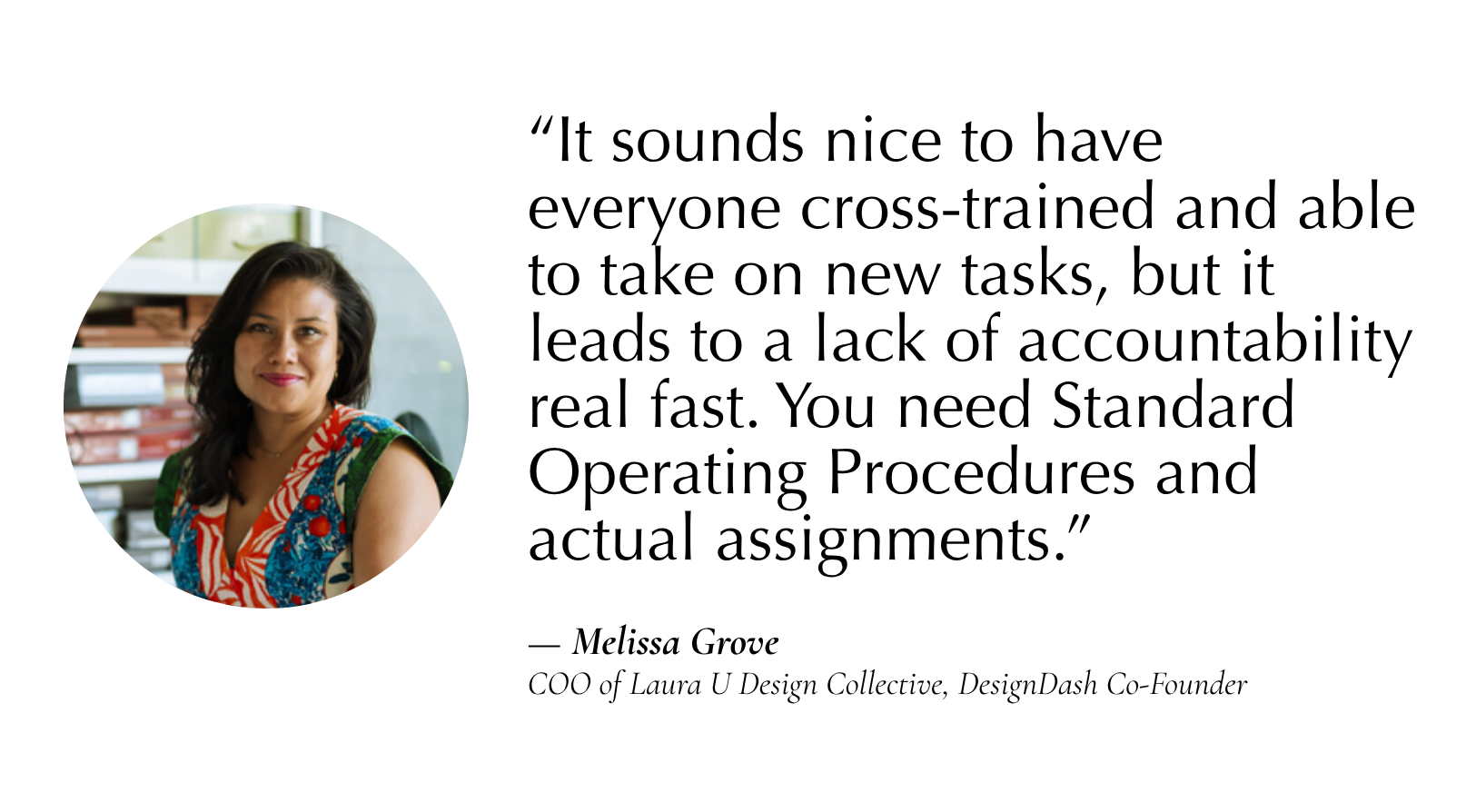
Cross-training and redundancy can absolutely help a firm. A designer may need to understand the procurement tracker. A project manager may need to understand how time entries affect billing. An office manager may need to understand enough about active projects to route vendor calls or client questions to the right person. But every shared process still needs an assigned owner.
If three people can update the procurement tracker, one person still needs to make sure it’s current before the client update goes out. If several people can write meeting notes, one person still needs to confirm that the notes were saved, distributed, and connected to any next steps. If everyone knows how to enter time, someone still needs to review missing entries before invoices are sent out to clients. Otherwise, cross-training can make responsibility nebulous. Everyone sort of knows how the process works. Nobody is fully responsible for the outcome.

The SOP should identify the task, the steps, the person responsible, and the backup person. It should also explain when the issue needs to move up to a manager or owner. That last part is especially important in design firms because many problems start small. A delayed fabric, a missing approval, a vendor invoice discrepancy, or a client question about budget can become a much bigger issue when nobody knows who should handle it first.
Final Thoughts on SOPs for Design Firm Owners
SOPs don’t need to turn your firm into a soulless corporate office where employees have no say in how it operates. The point of SOPs is to help your team understand how recurring work should be handled so you can focus more on creative tasks and less on answering the same inane questions.
Start with the bits Melissa identified: money, client communication, and safety. Then look at onboarding, procurement, project management, design presentation prep, and the tasks that keep interrupting your day because nobody else knows the full process yet.
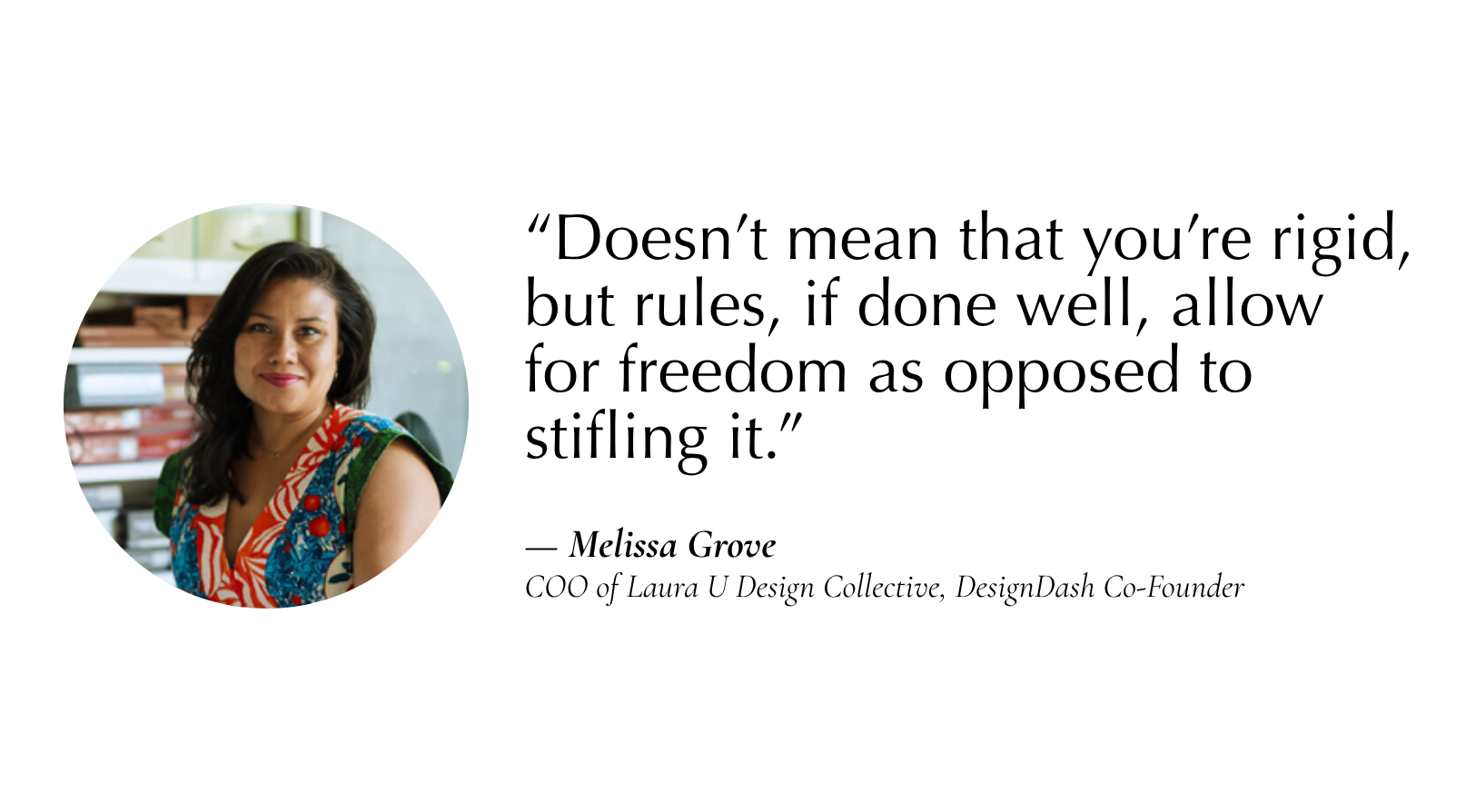
A documented process gives employees a place to start. It gives managers something to train new employees with. It gives the firm a shared record instead of scattered instructions. And for the owner, it can reduce the number of questions that only one person in the business knows how to answer.
Written by the DesignDash Editorial Team
Our contributors include experienced designers, firm owners, design writers, and other industry professionals. If you’re interested in submitting your work or collaborating, please reach out to our Editor-in-Chief at editor@designdash.com.
Related Posts

Where Can I Take Online Photography Classes in Different Disciplines?
Ready to produce stunning images that resonate with viewers and advanc

Should Interior Designers Ever Engage in Spec Work?
Is speculative work ever appropriate in interior design? Learn how AIG

How Do I Raise My Rates Without Scaring Off Repeat Clients?
Learn how to frame increases around business realities, highlight adde


Is It Time to Update Your Company’s Mission Statement?
A great mission statement gives everyone who interacts with your busin

DesignDash Podcast: Client Red Flags That Cost You Time, Profit, and Peace
Not every client is a fit and that's okay! Learn how to spot client re