
How to Handle Loneliness as a Design Firm Owner

 2
2
 0
0Summary
Running a design firm can be lonely, especially as employees, clients, and vendors start looking to you for answers. This article explores why ownership can feel isolating, how that can overlap with imposter syndrome, and why peer community matters.
Reflection Questions
When do you feel most alone in your firm?
Who can you speak with honestly about pricing, payroll, hiring, clients, and growth?
What business decision would benefit from another firm owner’s perspective?
Journal Prompt
Write about one firm challenge you’ve been carrying alone. Who could help you think through it, and what kind of support would actually make the decision easier?
It’s not uncommon for firm owners to find that the people around them change as their businesses grow. Employees might be friendly, but they’re still employees. Clients might trust you, but they’re still clients. Your spouse might listen patiently to concerns about staffing, profitability, pricing, and cash flow, but he or she might not fully understand what it’s like to make those decisions (or hem and haw over them).
As the years go by, many of us realize that we have very few people we can actually talk to (transparently and explicitly) about the challenges of entrepreneurship. It’s lonely, but loneliness isn’t a requirement of leadership. You can and will meet people who are going through the same things; it just takes a bit more effort to find those people than when you were someone’s coworker on a design team.

Why Are Leaders Lonely?
Design firm ownership changes your access to peers. You might spend all day talking to other people, but very few of those conversations allow for full transparency. An employee might need reassurance about the direction of the firm. A client might need confidence about the budget, schedule, or scope. A vendor might need a fast answer about an order, a claim, or a replacement timeline. None of those people are necessarily the right audience for your concern about payroll, pricing, hiring, burnout, profit margins, or whether the firm is growing in the right direction.
In an article for Harvard Business Impact, Abbey Lewis points out that there’s a fundamental mismatch for leaders. Design firm owners might experience that even more sharply because many firms are small, private, and built around the owner’s own name, taste, reputation, and relationships.
A principal designer might not have a true peer inside the firm. The senior designer is part of the team. The project manager is part of the team. The bookkeeper, procurement coordinator, or office manager might know certain parts of the business well, but each person still sees the firm from a specific role. The owner is the person responsible for connecting all of it.
That can make even normal decisions feel oppressive. Should you take on the client with a slightly uneasy discovery call? Should you raise your rates before the next proposal goes out? Should you hire another designer now or wait until the next project is signed? Should you keep trying to train someone who is not working out? Those questions are not unusual, but they can feel very personal when you’re answering them alone.
But Sometimes It Isn’t Loneliness
In the same Harvard Business article, Lewis suggests that leaders consider the source of their disconnection. Loneliness and discomfort can blur together. A firm owner might feel alone because she truly lacks peers. She might also feel alone because she has stepped into a new level of responsibility and hasn’t yet adjusted to what that means. Both can happen at the same time.
We’ve written before about imposter syndrome and the way creative business owners can question their own expertise even after years of experience. Loneliness can make those thoughts grow louder and louder in your head. If every pricing decision, staffing question, client conflict, or cash flow concern stays exclusively inside your own brain, the mind has plenty of room to turn uncertainty into evidence that you’re the only one struggling.
Of course, you are not the only one struggling. Other owners have made bad hires. Other owners have underpriced projects. Other owners have had clients push boundaries, proposals fall through, vendors make mistakes, and team members leave at inconvenient times. When those stories stay private, every challenge can seem like proof that you are behind. When those stories are shared with people who understand the business, they become part of the normal learning curve of ownership instead of dragging you down like an anchor.

Other Firm Owners Have Been Here Before
One of the hardest parts of firm ownership is that many problems feel brand new the first time they happen to you. The first time you realize a project is over budget, it can feel like a personal failure. The first time a team member disappoints a client, it can feel like evidence that you should have handled the work yourself. The first time payroll, taxes, vendor payments, and client delays all collide in the same month, it can feel like nobody else could possibly understand the pressure.
Other owners have been there. That doesn’t make the problem disappear, but it changes the way you process it. You can ask what they did, what they wish they had done sooner, what they would avoid next time, and whether the problem is actually as serious as it feels in the moment.
This is one reason peer relationships matter so much for firm owners. A friend can be supportive. A spouse can listen. A therapist can help with the mental health impact of stress. But another owner can say, “Yes, I’ve had that exact contractor issue,” or “We changed our payment schedule because of that,” or “Here’s how we handle procurement updates now.”
Those conversations give you information you just can’t find in an article, podcast episode, or business book. They give you context. If three other owners tell you that every new hire takes longer to train than expected, you might stop assuming your onboarding process is uniquely broken. If another owner tells you she raised her rates and lost one lead but gained better clients later, you might see your own pricing questions differently.
Why the Difference Between Networking and Community Matters So Much
Networking and community are not the same thing, nor do they have the same goals attached. Networking can help with visibility, referrals, partnerships, press opportunities, and local relationships. It has an important place in a design firm’s business development strategy. A showroom event, awards dinner, market trip, or industry cocktail hour might introduce you to someone helpful, and those relationships can lead to great things for your firm.
But networking is no replacement for true community. A firm owner might need to ask whether her pricing structure makes sense, whether she’s hiring too soon, whether she should fire a client, or whether her team structure is causing more confusion than support. You can’t ask those questions at a networking event.
It’s hard to create your own community of peers, whether that’s due to concerns about competition or continuing Imposter Syndrome. But a ready-made community that you instantly fit into is a unique gift. DesignDash Growth Studio was built around People, Profit, Promotion, Process, and Purpose because firm ownership isn’t defined entirely by “getting more clients”. Owners need help with team structure, margins, marketing, systems, leadership, and the life they’re trying to build around the firm. Our workshops, coffee chats, co-working sessions, templates, and community discussions all give you different ways to talk through your business instead of trying to solve every problem privately.
The word “community” sounds somewhat vague, so it helps to be specific. A truly valuable community gives owners a place to compare notes on hiring, pricing, operations, marketing, client communication, vendor problems, and project bottlenecks. It also gives them accountability when they already know what needs to change but haven’t made the time to actually do it.
Why Friendship Just Won’t Cut It
Friendship is wonderful, but connecting with your peers isn’t the same thing (even if you count some of them as true friends). Connecting with your peers will influence the quality of the decisions you make. There’s science behind that.
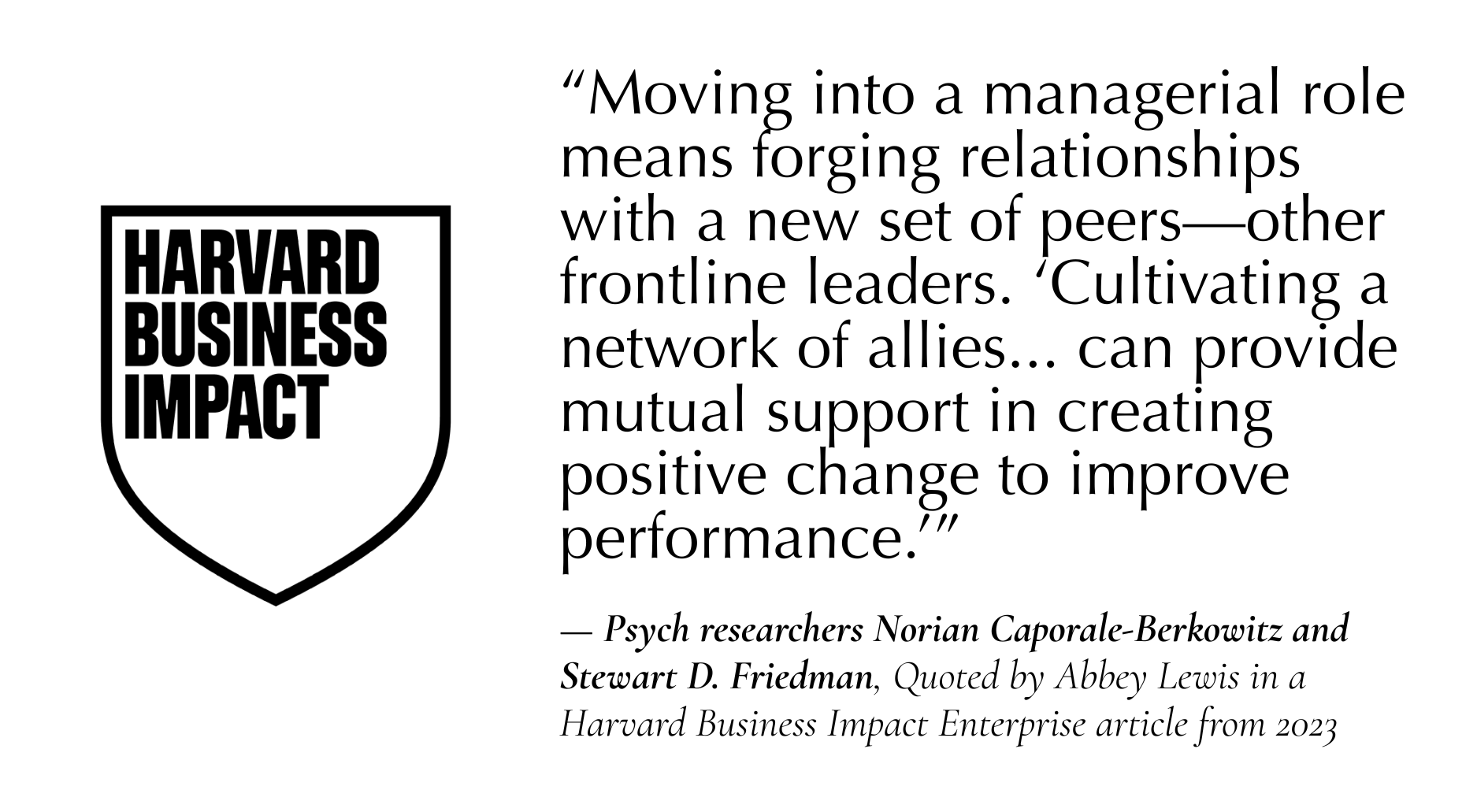
This concept applies to firm ownership. An owner who can talk to peers about a difficult client might make a better decision about boundaries. An owner who hears how another firm tracks project profitability might finally look at her own numbers differently. An owner who sees another designer talk openly about a messy hiring mistake might stop treating every leadership misstep as evidence that she’s just not cut out for this. Few of us learned anything about running a business while we were in school; we learned about design. The right peer connections will widen your horizons so you can be the best firm owner possible.
Peer support can also interrupt the isolation that makes business problems harder to evaluate. When you’re alone with your problems, every option can feel extreme. Keep the employee or fire her. Raise rates or stay safe. Take the project or turn it down. Spend money on help or keep doing it yourself. A trusted group of peers will help you see the middle options, the risks, and the questions you should ask yourself but haven’t even thought of.

Lewis also describes how weakened social networks can affect every facet of a leader’s life. The way she describes it above might sound overly intense, but it makes sense when you think about how much a successful, long-term business depends on support. Without peers, advisors, collaborators, and people who understand your work, you’re carrying too much alone.
You Don’t Have to Figure Everything Out Alone
Many firm owners assume they need more confidence before they can make the next decision. Others think they need more experience, more revenue, a better team, cleaner systems, or a more polished brand. Sometimes those things are true. Sometimes the missing piece is another owner who can help you sort through what’s really going on and what your actual options are.
That doesn’t mean every problem belongs in a group discussion. Sometimes, you’ll need an attorney, accountant, therapist, consultant, or private advisor. But plenty of firm ownership questions benefit from peer feedback. The answers to pricing questions, hiring questions, communication questions, project management questions, and leadership questions will be so much clearer when you hear how other owners have handled similar situations.
The DesignDash Community gives firm owners a place to be honest about the business side of design. There’s no need for performance. Here, we’re able to admit when we’re tired, confused, proud, overwhelmed, profitable, stuck, ambitious, or unsure without having to translate the entire context of running a design firm first.
Final Thoughts on Loneliness as a Design Firm Owner
Loneliness is common among firm owners, but it doesn’t have to define the way you run your business. Some of that loneliness comes from the structure of leadership. Some comes from the identity change that happens when you go from designer to owner. Some comes from trying to solve too many business problems without enough peer support.

If you feel isolated in your firm, start with what’s missing. Do you have people who understand pricing, payroll, staffing, procurement, client conflict, and growth? Do you have somewhere to ask questions before you make the same mistake for another six months? Do you have peers who can tell you what they tried, what worked, and what they would never do again?
You can still be the leader of your firm without being alone in every single decision. Join DesignDash to gain the support and insights you need to actually enjoy your firm moving forward.
Written by the DesignDash Editorial Team
Our contributors include experienced designers, firm owners, design writers, and other industry professionals. If you’re interested in submitting your work or collaborating, please reach out to our Editor-in-Chief at editor@designdash.com.
Related Posts

Day 6: DesignDash Focus & Flex Challenge
LIKE 0 LEAVE COMMENT 0 2 min read Summary Reflection Questions Journal

What is an Org Chart, and Why Do You Need One?
What is an org chart and why do you need one? We answer all your FAQs

Ground Yourself in the Present Moment with Zazen Meditation
Zazen meditation helps you ground yourself in the present moment, cult

Day 4: DesignDash Focus & Flex Challenge
It's Day Four of the Focus and Flex Challenge, and we're thinking abou

Women, In Their Own Words: Karin Bohn
Karin Bohn of House of Bohn reflects on meditation, film, operations,

Elegant Modernism: Who Was Pietro Belluschi?
Join us as we explore the impact of Pietro Belluschi's forthright yet