
The Biggest Hiring Myth Holding Interior Designers Back

 0
0
 0
0Summary
Reflection Questions
Journal Prompt
You know you need help. Your projects are growing, you’re doing too much yourself, and hiring another person would probably make a HUGE difference in your business. There’s just one problem, right? You haven’t documented all your processes, your onboarding plan consists of approximately three ideas in your head, and you’re pretty sure a new employee would have a thousand questions you couldn’t answer.
So you keep waiting until you’re more prepared to hire, even though you’re still doing all the work you NEED to pass on to somebody else.
In Episode 82 of the DesignDash Podcast, Laura Umansky and Melissa Grove tackle the biggest hiring myth they hear from firm owners in the DesignDash Community. Are you one of the firm owners who believes you need to have all your systems and processes figured out BEFORE you hire somebody? If so, this episode is for YOU!
You certainly need a plan for bringing another person into your business, but a good employee can actually help you create the systems you’re missing. And if you’re hiring your first designer or administrator, expecting yourself to have a fully documented operations manual before they clock in is a pretty ambitious requirement. (Nobody gets there alone.)
Five Things to Know Before You Make Your Next Hire
#1 Your Business Doesn’t Have to Be Perfectly Organized
Laura knows what reactive hiring looks like because she did A LOT of it when she first launched Laura U Design Collective. Her design studio and retail storefront attracted clients right away and she was enthusiastic about taking on the work. But eventually, she needed employees to help her manage all those projects, even though she hadn’t developed proper systems for delegating their responsibilities.
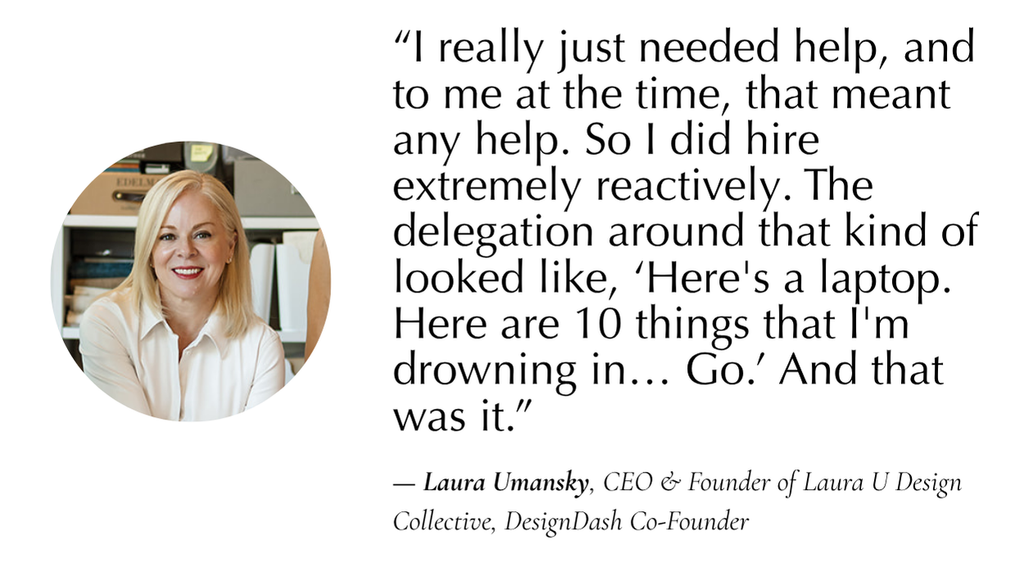
Twenty years of hiring, making mistakes, and refining her processes have changed how Laura brings people into her business. But she also sees designers in the Community worrying so much about hiring before they’re ready that they put off bringing anybody on at all.
You probably have more processes in your head than you realize, even if you’ve never written them down. You don’t just start from scratch every time you approach a recurrent task, right? You know how to onboard a client, prepare a presentation, place an order, and take a project from one phase to another because you’ve done all of those things a bunch of times in the past.
Whether it’s written down or not, there is a process behind all of these tasks. Your new employee will need to learn those processes, and in doing so, they might help you refine those processes. So you don’t need a completely finished employee handbook before you start interviewing, but you should know what help you need and what you expect your new employee to do. This brings us to our next section.
#2 Hire Someone Who Can Help You Build Your Systems
If you’ve been working alone for years, you probably have a very particular way of doing things. Your project information might be scattered across spreadsheets, emails, folders, and a collection of notes that make perfect sense to YOU (and only you). Turning all of that into a documented process sounds like another enormous project you don’t have time for.
Be upfront about what you’ve already documented and where you need help. Consider talking about this during interviews so you can find somebody who’s interested in creating processes alongside you.
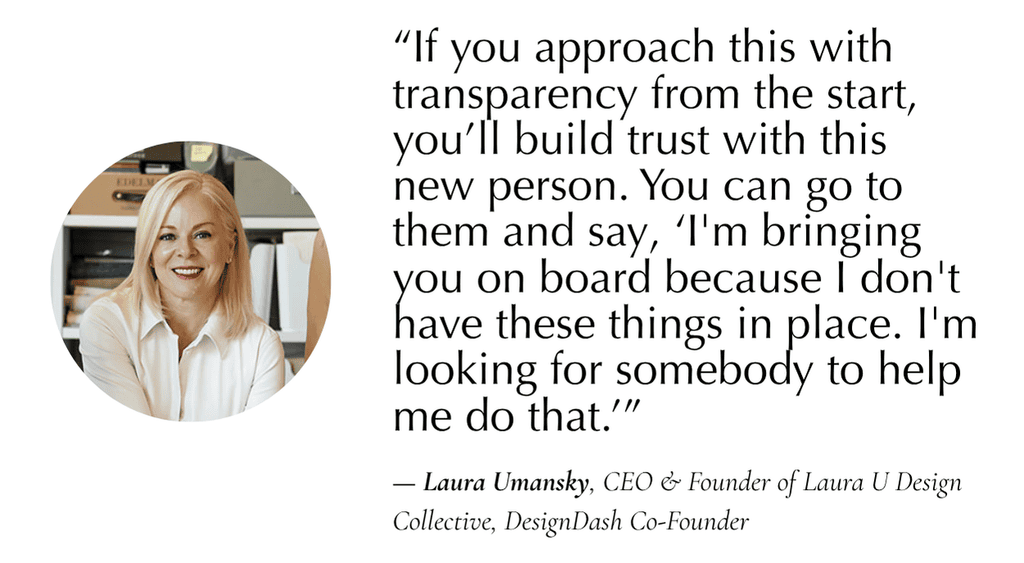
Your new hire can document the tasks she’s learning, point out information that’s hard to find, and suggest improvements once she understands how your business operates. You’ll still need to explain your standards and make the important decisions, particularly when a process affects your clients.
At LUDC, documenting processes has been a team effort. When Laura wanted to document the design process, different employees took responsibility for specific parts of the project, with a deadline and an agreed-upon location for the finished document. The designers who actually did the work helped create the instructions that future employees would use.
Give your new employee responsibility for documenting the processes she’s learning. She’ll probably ask questions you haven’t thought about since you were a new hire. Her notes could save you a LOT of back-and-forth when you onboard the next person.
#3 Make Time to Train Someone While You’re Both Doing Actual Work
Training another person can sound like a full-time job, especially when you already have clients, deadlines, and a business to run, which you obviously do! The idea of developing an elaborate onboarding program probably isn’t particularly appealing when you’re hiring somebody because you desperately need help RIGHT NOW.
Fortunately, you can train a new designer while you’re working on real projects, as long as you make time to give her direction and review her progress.
At LUDC, new employees have frequent check-ins during their first couple of weeks. After that, regular project audits help the team review deadlines, identify problems, and assign responsibilities.
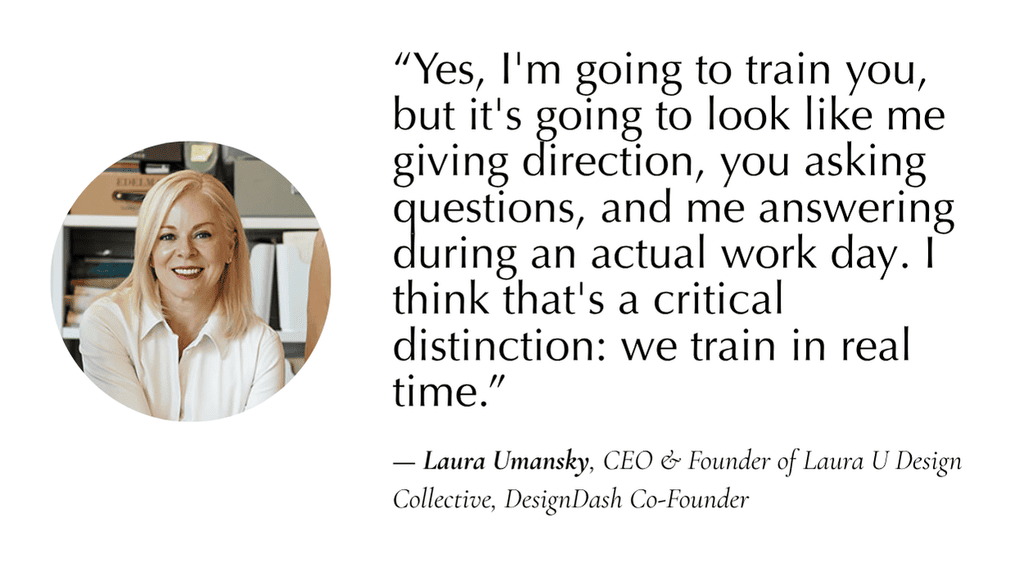
You can establish a similar routine in your own firm. Meet with your new employee at the beginning of the week to review active projects and decide who’s responsible for each task, then schedule another check-in midway through the week to answer questions and correct anything that needs attention before the work is due.
Some tasks will need more focused, planned-out training, especially if your employee is learning unfamiliar software or taking on responsibilities that affect project finances. But plenty of design training can happen while you’re reviewing drawings, choosing materials, preparing presentations, and working through actual client projects.
Put those meetings on your calendar and KEEP THEM THERE. If you hire somebody because you desperately need help, then spend the next month being too busy to answer her questions, neither of you is going to have a particularly wonderful time.
Fuel your creative fire & be a part of a supportive community that values how you love to live.
subscribe to our newsletter
*please check your Spam folder for the latest DesignDash Magazine issue immediately after subscription

#4 Stop Looking for Another You
When you’re trying to let go and trust somebody else with your projects, hiring a designer who thinks exactly like you will sound VERY appealing. She’ll understand your taste, approach problems the same way, and know precisely what you want without needing an explanation, right? Well, good luck finding her.
Instead, think about what your business actually needs because we’re certain there are tasks you absolutely hate doing (or don’t do very well) that somebody else excels at.
Maybe you’re brilliant at creative direction but terrible at documenting anything, or you’re great with clients and would appreciate somebody who genuinely enjoys managing spreadsheets. Someone with different skills and a compatible personality could make your life so much easier.
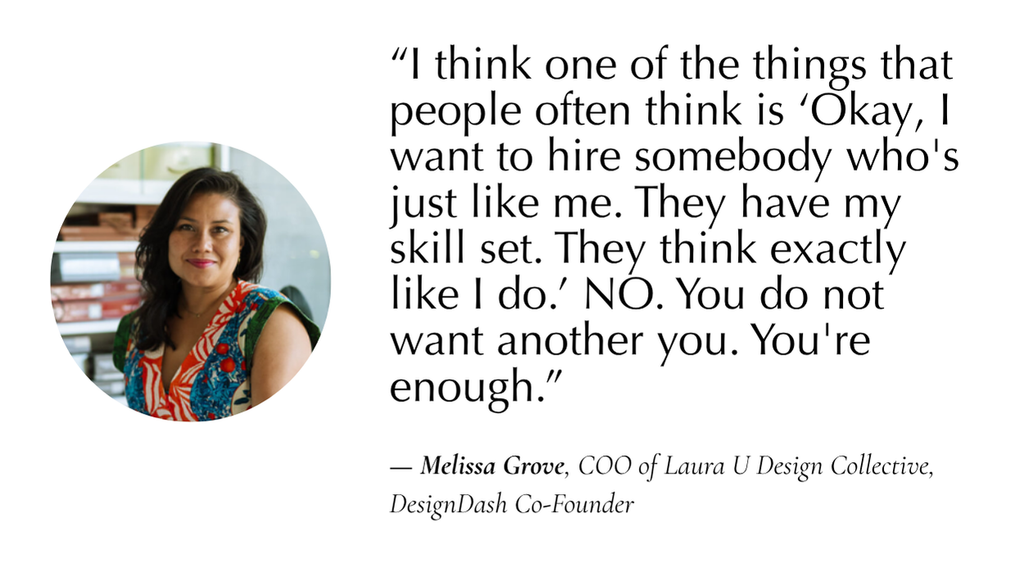
Think about the work you need somebody to take on and the kind of person who would actually enjoy doing it. If you’re hiring an administrator to establish your processes, look for someone organized who likes creating structure. If you need a designer who can independently manage projects, pay attention to how that person communicates, solves problems, and responds when something goes wrong.
You do NOT need a clone, we promise you that. Just look at Melissa; she’s learned a lot from hiring people whose personalities complement her own. She also pays attention to whether she and a candidate will work well together, since they’ll eventually need to trust each other with important responsibilities.
Your next hire should bring skills your firm needs, and you should actually LIKE working with that person. You’ll be spending plenty of time together while you figure out your processes, train, and work through the inevitable problems that come with client projects.
#5 Give People a Chance to Earn Your Trust
You’ve spent years developing your design expertise, building client relationships, and establishing your firm’s reputation. Now you’re supposed to let somebody you’ve known for two weeks make decisions on your behalf. Understandably, you might be a little nervous about that.
But if you’re personally reviewing every email, correcting every drawing, and controlling how your employee completes every task, how are you ever going to find out what she can do?
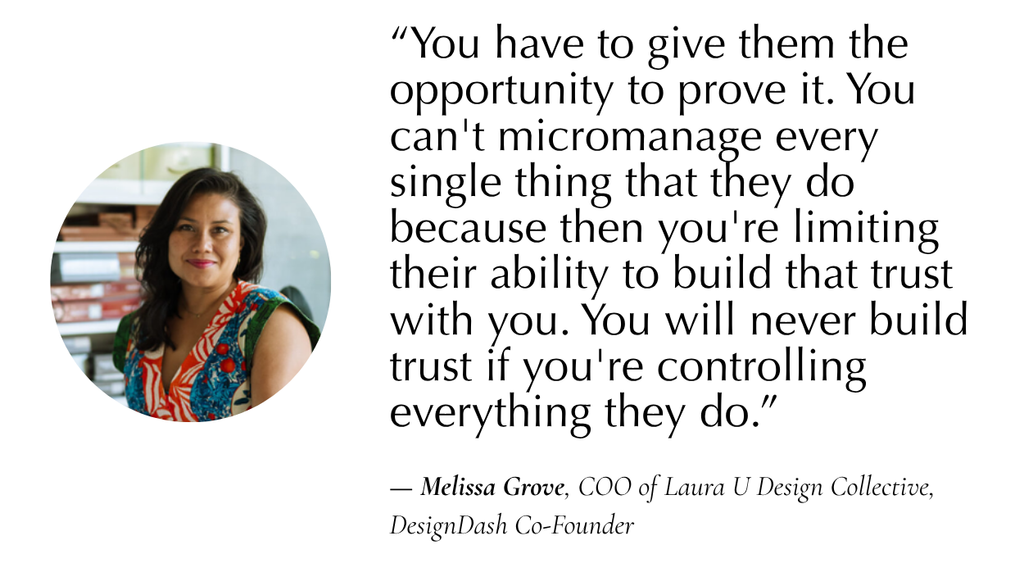
Start by assigning responsibilities with clear expectations, deadlines, and opportunities for feedback. Your new employee should understand what she can decide independently and which decisions need your approval. You can review her work at agreed-upon points without supervising every minute of the process.
And yes, eventually somebody will make a mistake. It might be a purchasing error, a missed detail in a drawing, or a difficult conversation with a client. Laura emphasizes the importance of taking responsibility and working with your employee to correct the problem. She also points out that you make mistakes yourself, so there’s no reason to assume every task would have gone perfectly if you’d done it instead.
Give your employees some independence, and pay attention to what they do when something goes wrong. You’ll learn a lot about how they work, and they’ll have a chance to show you that they can take responsibility without needing you to supervise everything.
Make Time to Meet With Your Team
After you’ve hired somebody, you’ll also need to make time to talk about how she’s doing. Project meetings are important, but your employee should have opportunities to talk about her own performance, professional development, and any problems she’s having at work without a client deadline taking over the conversation.
At LUDC, employees have regular project meetings, quarterly chats focused on their individual development, and annual performance reviews. Melissa might ask what worked well that quarter, what went wrong, or whether the employee has everything she needs to do her job. Sometimes they go out for coffee or lunch so they can talk away from the studio.
You can adapt that approach to the size of your own team. If you’re hiring your very first employee, you probably don’t need a complicated performance review system, but you should make time to check in about how the job is going and what that person wants to learn.
And please don’t cancel those meetings every time a client needs something. Your employee is helping you build your business, and she deserves some of your attention, too.
You can hire someone while you’re still figuring out your systems, and your new employee can help you improve them. Give her clear direction, make time for training, and gradually hand over more responsibility as you learn to work together.
Written by the DesignDash Editorial Team
Our contributors include experienced designers, firm owners, design writers, and other industry professionals. If you’re interested in submitting your work or collaborating, please reach out to our Editor-in-Chief at editor@designdash.com.
Related Posts
Spec-Only Projects: Should Designers Consider This Revenue Stream?
Thinking about adding spec-only design to your service offerings? Expl

Key Takeaways from “Billing Methods For Interior Designers” on the DesignDash Podcast
Learn about different interior design billing methods—from hourly an

Remodeling Costs in 2026: How Designers Can Explain to Clients
Remodeling costs in 2026 are shaped by labor shortages, supply chains,

Deceptive Advertising: Are There Words I Can’t Use to Describe My Work?
LIKE 0 LEAVE COMMENT 0 10 min read Summary Reflection Questions Journa

Is It Time to Update Your Company’s Mission Statement?
A great mission statement gives everyone who interacts with your busin

What Do I Do If My First Client Ghosts Me After I Send the Proposal?
Learn how to respond when a PNC goes silent after receiving a proposal