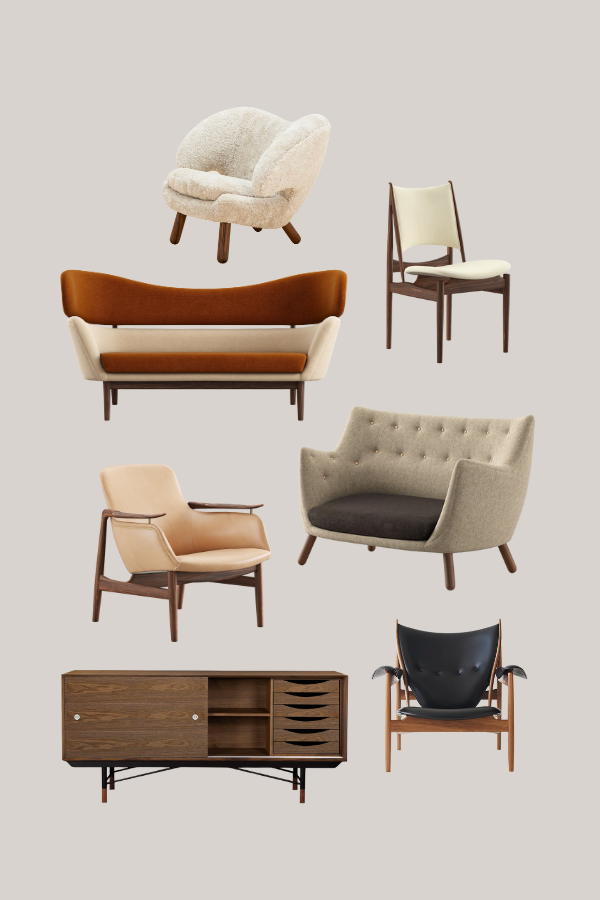
10 Finn Juhl Furniture Pieces That Embody Danish Modern Design

 0
0
 0
0Summary
Finn Juhl reshaped Danish Modernism by approaching furniture as sculpture by lifting forms off frames, embracing organic curves, and blending architectural structure with human-centered comfort. These ten pieces, from the Chieftain Chair to the France Chair, show how his work expanded the language of modern design and remains deeply influential in studios, homes, and contemporary manufacturing.
Reflection Questions
How might Juhl’s separation of structure and form (floating seats, hovering backs, sculptural silhouettes) influence the way you approach balance and proportion in your own work?
Where could a more expressive or biomorphic gesture enrich a room you’re currently designing without compromising function?
What does Juhl’s blend of craftsmanship and experimentation reveal about how tradition and innovation can coexist in modern interiors?
Journal Prompt
Choose one Finn Juhl design that resonates with you, whether the Chieftain Chair, the Poet Sofa, or a lesser-known piece like Sideboard No. 1955. Write about what makes its form, structure, or proportions compelling to you as a designer. How might you translate that sensibility (lightness, separation, curvature, rhythm) into a space or furnishing you’re creating now?
We recently discussed Gustavian design, which was an 18th and 19th century movement that pushed the Nordic countries away from the ornamentation of Rococo towards the streamlined aesthetic that would later define modernism. Today, we take a look at Danish Modernist Finn Juhl, who was active during the mid-20th century.
Finn Juhl’s work is iconic and emblematic of Danish Modern design, where he combined craftsmanship, biomorphic form, and architectural thinking. While many of his contemporaries pursued structural clarity above all else, Juhl treated furniture almost as sculpture. He explored the relationship between the human body and the surrounding space. His approach helped widen the vocabulary of Danish design during the mid-twentieth century, and many of his pieces still feel unexpectedly current today.
Juhl trained as an architect and carried that discipline into his furniture. You can see the influence in the way he considered proportion, balance, and tension when designing pieces like the Chieftain Chair and the Poet Sofa. Chairs appear to float above their frames. Sofas bend and rise in ways that echo modernist building forms. Even storage pieces are treated as compositions rather than basic utility, which is what truly set designer Finn Juhl apart from his contemporaries. He was not fully in line with the stricter functionalism associated with Børge Mogensen or Hans Wegner, and it is one of the reasons his work continues to capture our curiosity and interest today.
The ten pieces below help illustrate the range of Juhl’s thinking and his incredible impact on the Danish Modern Movement. Some are iconic, others are less well known, but each one demonstrates how Danish Modern design expanded through experimentation and subtle risk. Together, they demonstrate why his work continues to shape contemporary furniture design, from mass-produced dining chairs to small-batch studio pieces that follow his lead.
A Bit About Finn Juhl
Finn Juhl was born in 1912 in Denmark and trained as an architect at the Royal Danish Academy in Copenhagen, graduating in 1934. Although he originally hoped to become an art historian, he carried that early interest in art into his later work, which helps explain why Finn Juhl furniture often feels sculptural. After his studies, designer Finn Juhl spent a decade with architect Vilhelm Lauritzen while quietly developing his own furniture ideas on the side.

His breakthrough came in 1937, when he began a long collaboration with master cabinetmaker niels vodder. Together, they introduced a series of lounge chairs and armchairs at the Copenhagen Cabinetmakers’ Guild Exhibitions, including early versions of the pelican chair and the reading chair. These pieces were produced in very small numbers at first, since each model was manufactured by hand. Juhl continued refining his approach into the 1940s, and by 1949 he presented the chieftain chair, which helped define his place in the danish modern movement.
International attention followed quickly. In 1950, the Baker Furniture Company in America invited him to design a line for Baker Modern, introducing the baker sofa, tables, and storage pieces to a wider audience. By the early 1950s, Juhl’s work appeared in exhibitions in Chicago, New York, London, and other centres across Europe. He also designed the Trusteeship Council Chamber at the United Nations, where his furniture and interior elements helped represent Scandinavia on a global stage.

Juhl lived most of his life near Copenhagen, often testing new pieces in his own house, which later became part of a museum collection. After his death, his family entrusted the rights to his designs to Onecollection, now known as the House of Finn Juhl. The brand has since relaunched many of his iconic pieces, from the poet sofa to the 1955 sideboard, keeping juhl’s work accessible to new generations in europe, asia, and beyond. Today, he is credited with giving Danish furniture a softer, more expressive aesthetic in which wood, upholstery, and form come together with a level of detail and quality that still feels beautiful more than half a century later.
10 Finn Juhl Furniture Pieces That Embody Danish Modern Design
The Chieftain Chair (1949)
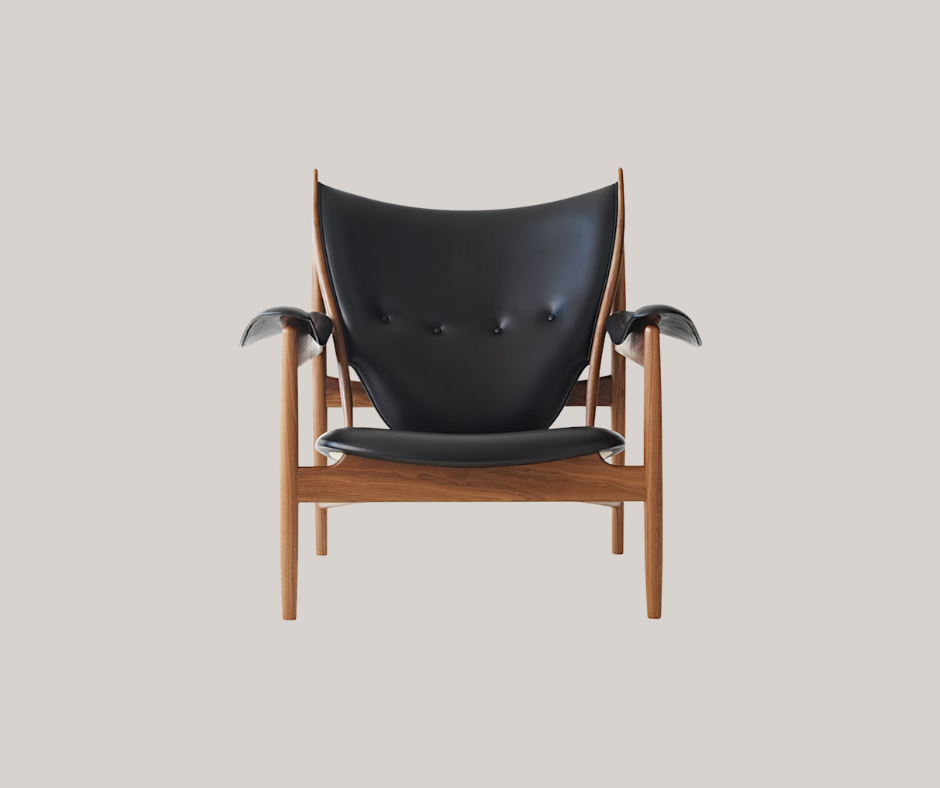
The Chieftain Chair is one of Finn Juhl’s most recognizable designs, partly because it captures the sculptural ambition that set him apart during the postwar years. Its sweeping seat and backrest appear to hover over the frame, a technique Juhl used to express the separation between structural support and the surfaces that touch the body. This approach was unusual at the time. Most Danish Modern furniture focused on exposing joinery or refining traditional forms, while Juhl leaned toward a freer, almost organic silhouette.
The chair premiered at the 1949 Cabinetmakers’ Guild Exhibition in Copenhagen and immediately drew attention. Its bold presence contrasted with the quieter pieces elsewhere in the hall, yet it stayed within the bounds of craftsmanship that the movement valued. The mix of leather, solid wood, and sculpted transitions between components positioned it as a statement piece, but not one removed from function. Today, it stands as an example of how Danish design could stretch into expressive territory while keeping an underlying architectural logic.
The 45 Chair (1945)
The 45 Chair is often cited as the moment when Finn Juhl truly defined his voice. The structure lifts the seat and back entirely away from the frame, creating a visual separation that emphasizes shape rather than construction. This gave the chair a lightness that set it apart from more traditional Danish designs of the same decade, many of which favored continuous wood frames or exposed joinery.
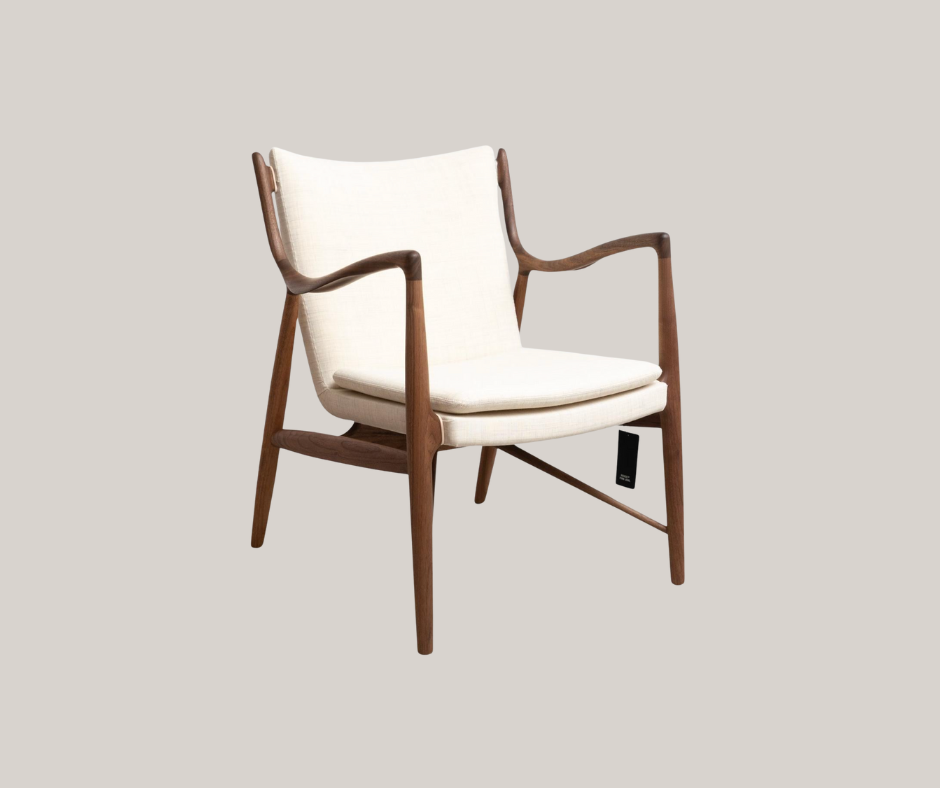
What makes the 45 Chair historically significant is the way it shifted expectations about how comfortable a modern chair could look. The curves follow the body in a natural way, and the armrests feel almost suspended. Juhl’s focus on organic form aligned with broader modernist interests at the time, yet the chair remained unmistakably Danish in its scale, craftsmanship, and attention to material quality. It remains one of his most studied works for good reason.
The Poet Sofa (1941)
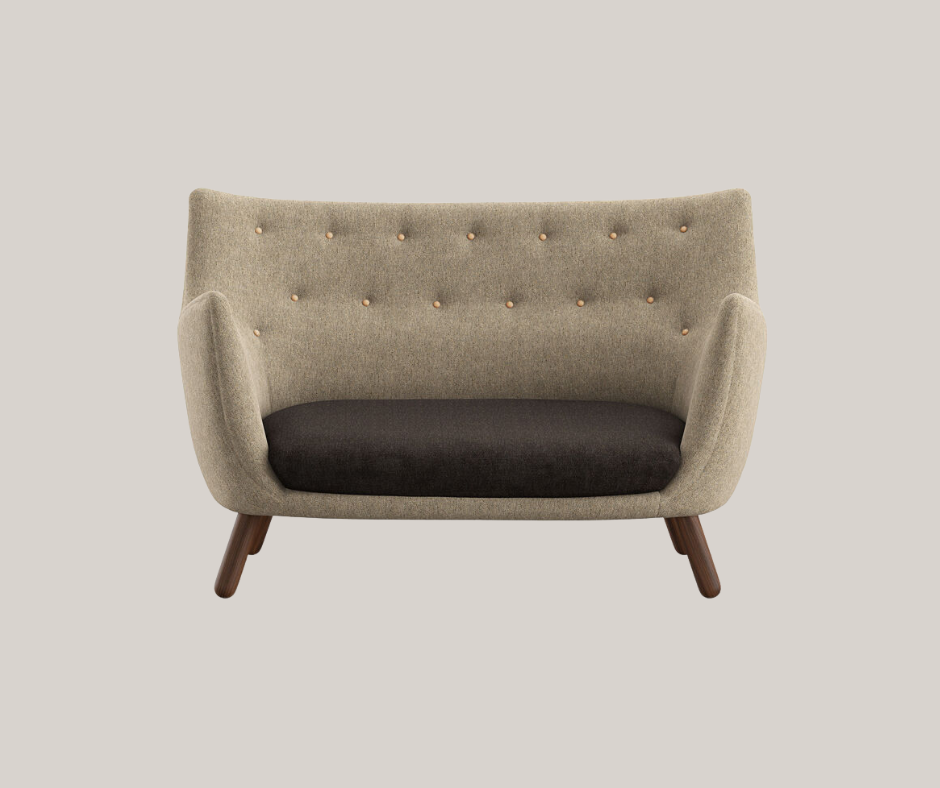
The Poet Sofa offers a softer, more intimate example of Juhl’s early work. Designed for his own home, the piece has an inviting silhouette built on a low, modest frame. The gentle rise of the back and the rounded seat edges show his interest in creating upholstered forms that felt warm rather than formal. During a period when many modernist interiors leaned angular, this sofa provided an alternative approach.
Fuel your creative fire & be a part of a supportive community that values how you love to live.
subscribe to our newsletter
*please check your Spam folder for the latest DesignDash Magazine issue immediately after subscription
Its name came later, when it appeared in a Danish cartoon that helped cement its cultural presence. The sofa reflects Juhl’s ability to merge comfort with a sculptural understanding of the human figure. It also showcases the way he used upholstery as a primary medium. While other Danish designers focused on wood craftsmanship as the defining element, Juhl often turned to the contours of fabric and padding as equal contributors to the overall form.
The Pelican Chair (1940)
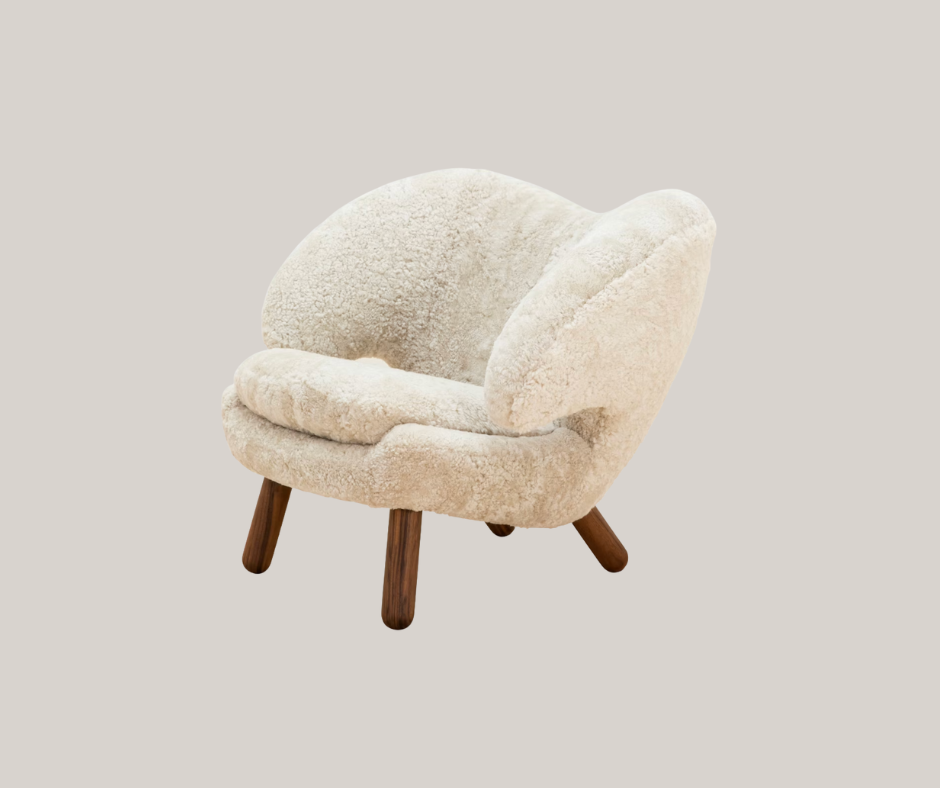
The Pelican Chair stands out as one of Finn Juhl’s most daring early experiments. Its rounded body and wing-like arms were strikingly unconventional for the era, when most Scandinavian furniture adhered to stricter lines and clearer structural expression. The chair’s playful yet controlled shape hinted at Juhl’s later interest in biomorphic forms. As Design Within Reach quotes, Juhl believed “‘A chair is not just a product of decorative art in a space, it is a form and a space in itself.’”
When introduced at the 1940 Cabinetmakers’ Guild Exhibition, the Pelican Chair drew mixed reactions. Some saw it as too expressive, while others recognized its potential as a more sculptural approach to seating. In retrospect, the chair marks an important step toward the broader acceptance of organic modernism in Denmark. The piece’s solid wood frame is almost hidden beneath the upholstery, which shifts the focus entirely to form and comfort; this is an intentional departure from functionalist ideals.
The Baker Sofa (1951)
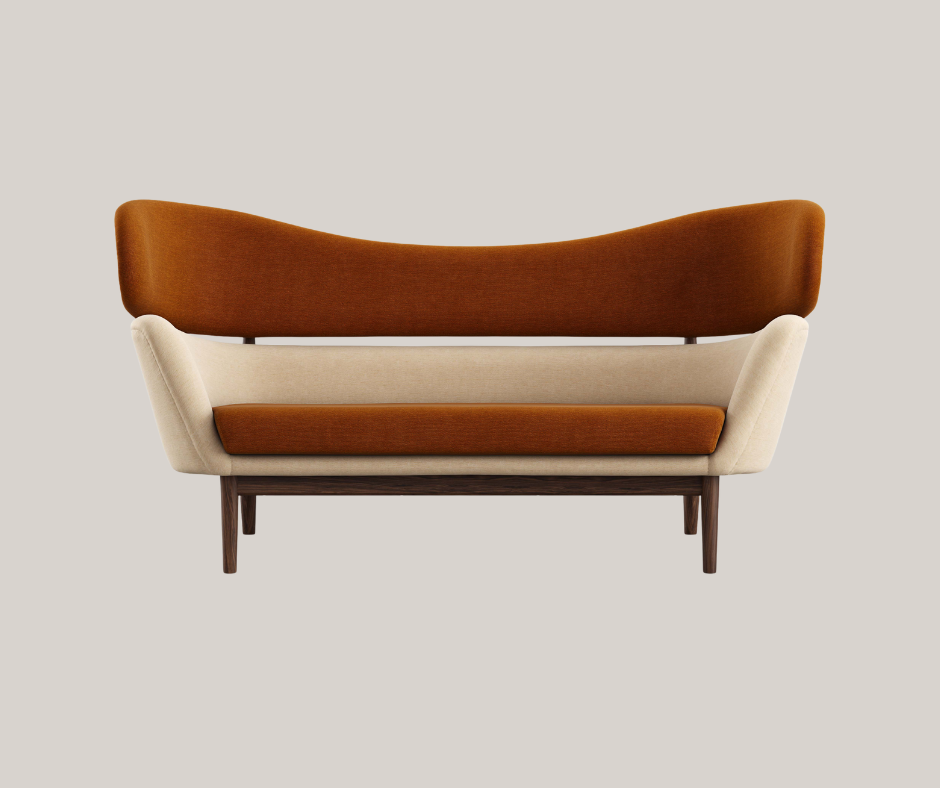
The Baker Sofa was developed for Baker Furniture in the United States, showing how Juhl’s ideas resonated beyond Denmark. It is still manufactured by the company and sold by House of Finn Juhl. The first piece produced by Juhl in the US, this design features a floating backrest divided into two sections, which gives the sofa a clear architectural presence. Rather than building a continuous, monolithic form, Juhl separated the elements to highlight how the sofa relates to space.
Its introduction helped widen appreciation for Danish Modern design in the American market. The Baker Sofa demonstrated how postwar furniture could be both sculptural and approachable. Its proportions remain remarkably adaptable, and many contemporary interpretations still draw from the same dividing line between back and seat. This piece also reflects Juhl’s interest in bridging handcrafted tradition with small-scale industrial production.
NV-53 (1953)
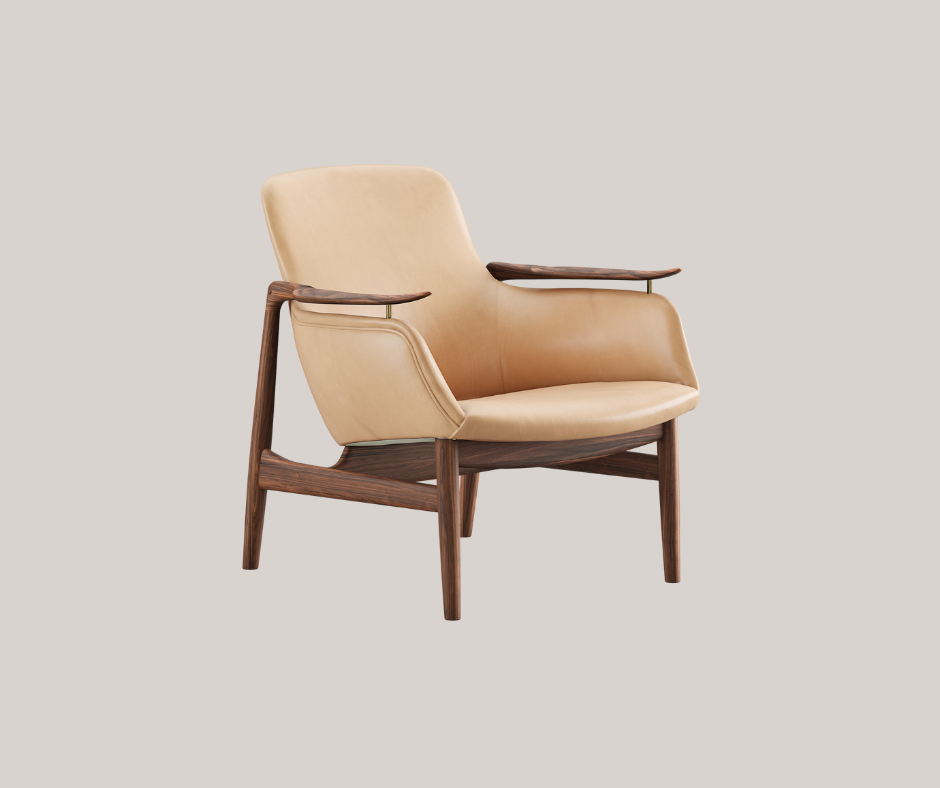
The NV-53 lounge chair illustrates Juhl’s sensitivity to the relationship between wood and upholstery. The frame curves around the seat in a way that feels deliberate yet relaxed. While not as iconic as the 45 Chair, it carries many of the same ideas like lifted forms, elegant transitions, and a preference for shapes that follow the human body.

The chair’s combination of teak and leather became a hallmark of mid-century Danish furniture. The NV-53 shows how Juhl explored new silhouettes while still respecting material constraints. It serves as a link between his earlier sculptural experiments and his more refined later work, making it an important example for understanding his development as a designer.
The Egypt Chair (1949)
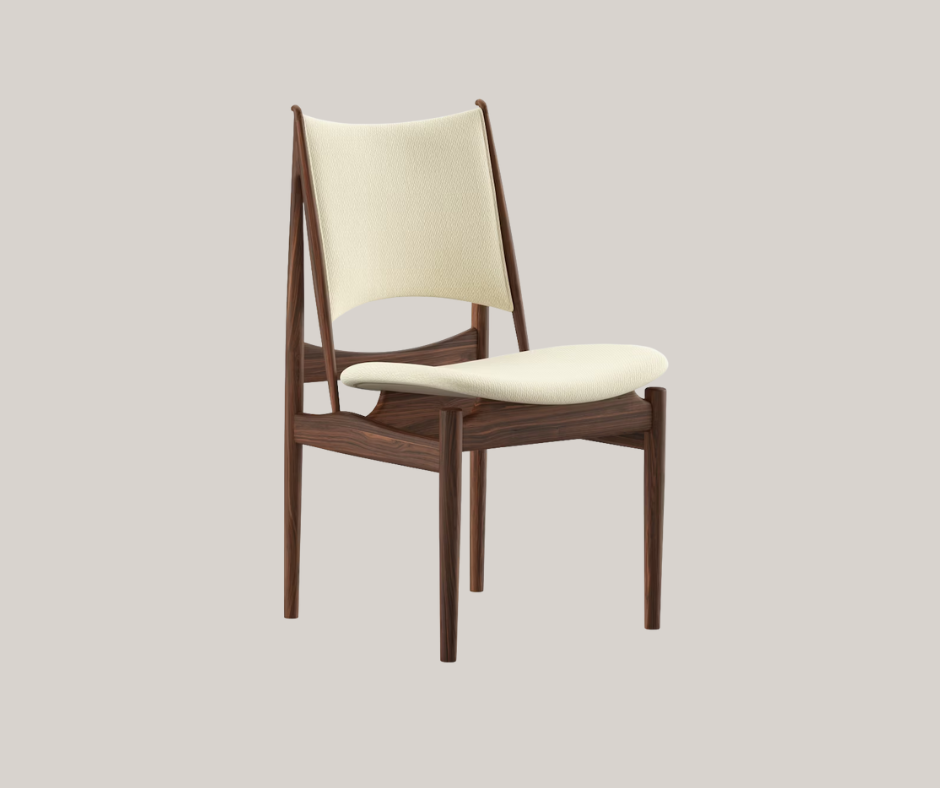
The Egypt Chair was inspired partly by the artifacts displayed at major European museums during the early twentieth century, which sparked renewed interest in ancient forms. Juhl interpreted these influences with a light touch and was actually inspire by pieces he saw at the Louvre while in France. The curved backrest and angled legs echo the posture and tension of older ceremonial chairs without imitating them.
Its debut at the Cabinetmakers’ Guild Exhibition revealed Juhl’s ability to engage with historical references while maintaining a modern sensibility. The chair shows an awareness of proportion and geometry that aligns with his architectural background. Even today, it reads as both familiar and distinctly contemporary, which speaks to the timelessness of his approach.
Sideboard No. 1955
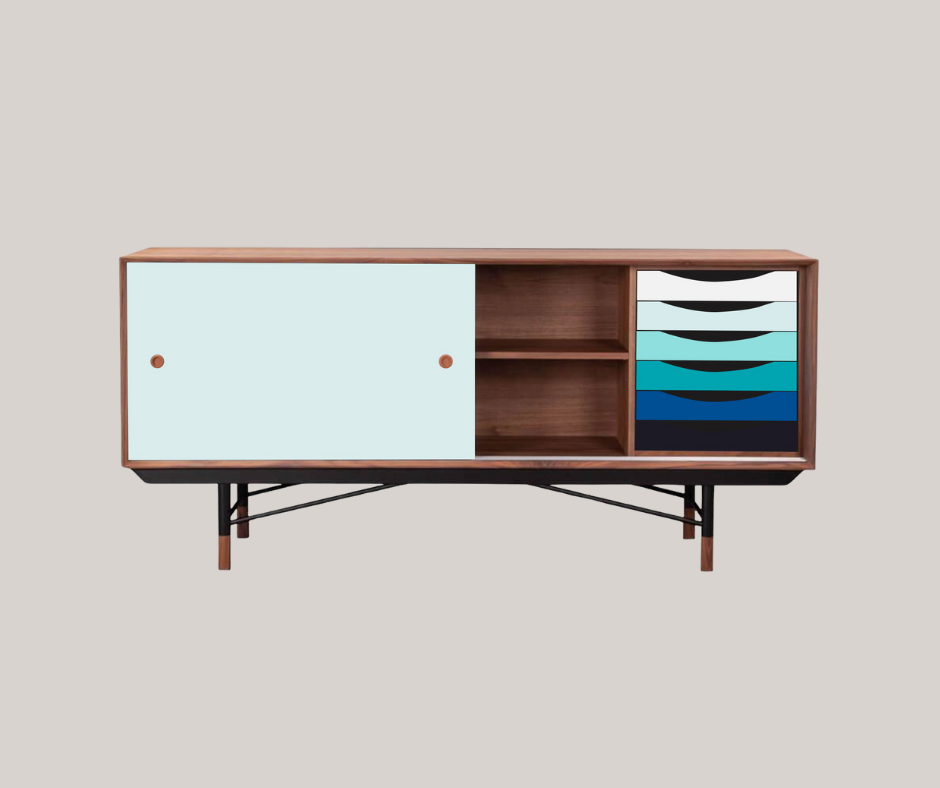
Sideboard No. 1955 highlights Juhl’s approach to storage as a compositional problem rather than a purely functional one. The sliding doors and contrasting drawer colors create a sense of rhythm, while the elevated frame keeps the piece visually light. By lifting the cabinet off the ground, Juhl gave it a presence closer to a freestanding object than a heavy storage block.
This sideboard also demonstrates his appreciation for color in small, intentional doses. Danish Modern design is often associated with natural wood tones, but Juhl used accent colors to add depth and personality. For example, Manhattan Home Design offers the sideboard in a variety of colors from Goethe’s color wheel (blue and yellow variations). The piece remains a favorite among collectors and historians because it captures his balance of modest materials, thoughtful composition, and architectural clarity.
FJ Panel System (1953)
The FJ Panel System reflects Juhl’s interest in applying architectural thinking to interior components. The modular panels offered a way to divide space and build custom storage solutions. Each panel was designed to work with shelving, cabinets, and desks, allowing homeowners and architects to assemble their own configurations.
This system illustrates Juhl’s broader ideas about flexible living environments. His belief in adaptable interiors aligns with the postwar interest in efficiency and human-centered design. Although not as widely recognized as his chairs or sofas, the panel system shows his range and underscores the influence of his architectural training.
The France Chair (1956)
The France Chair was created in collaboration with Fearnley France, which gives the piece its name. This partnership allowed Juhl to translate his ideas into a format suitable for more efficient production. The result is a chair that feels light, approachable, and balanced. It is still produced today by House of Juhl, as seen in the photo above from their Instagram account.
The France Chair’s frame, often produced in teak, supports a gently curved seat and back that follow the body’s shape. While simpler than some of Juhl’s earlier sculptural pieces, it maintains the same attention to proportion and movement. The chair became widely popular and helped cement Juhl’s influence outside Scandinavia, contributing to the international reach of Danish Modern design.
Written by the DesignDash Editorial Team
Our contributors include experienced designers, firm owners, design writers, and other industry professionals. If you’re interested in submitting your work or collaborating, please reach out to our Editor-in-Chief at editor@designdash.com.
Related Posts
Establish and Boost Business Credit as an Interior Design Startup
Even if you spend and borrow to support your firm, you might not have
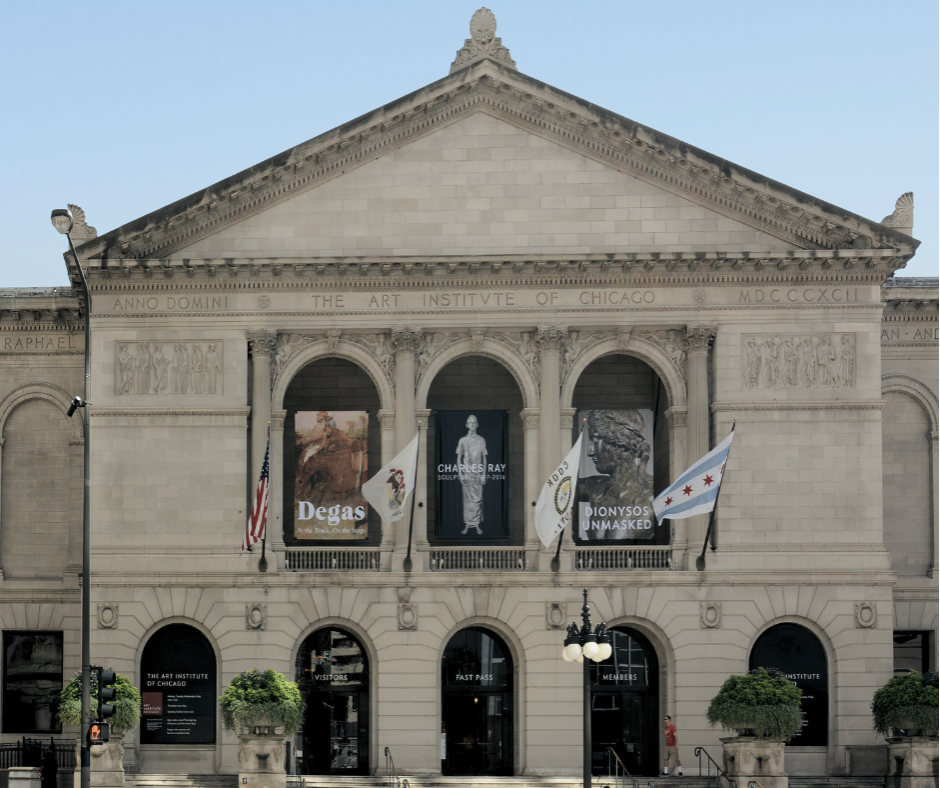
What’s On View at the Art Institute of Chicago During Design Chicago
Attending Design Chicago this October? From Pixy Liao to Paradise Lost
The Mid-Career Switch: How to Become a Medical Illustrator
Medical illustration is a specialized field that combines artistic ski
From Falkirk to Philadelphia: Exploring the Role of Public Art in Urban Renewal
Public art can transform urban spaces, foster community connections, a

What is Urban Sprawl and How Does it Impact Working Women?
Let's consider the many side effects of urban sprawl, including their
Design Spotlight: &tempel’s Stunning Renovation of Historic Park Lane Copenhagen
Moody, romantic, and androgenous with sharp masculine lines and femini