
Are Clients Pushing My Rates Down, Or Am I Priced Too High?

 0
0
 0
0Summary
Designers often mistake client negotiation for a sign that their pricing is too high, when it usually reflects the client’s budget, habits, or emotions (not the designer’s skill or value). Strong pricing relies on clarity, confidence, process, and positioning, and repeated hesitation from ideal clients (not isolated reactions) is the real indicator of whether it’s time to reassess.
Reflection Questions
Do you base your pricing decisions on your internal operations and clarity of process or on client reactions that may have nothing to do with your value?
Where might a shift in your communication, positioning, or delivery help clients better understand the transformation your work provides?
What emotional triggers (yours or your clients’) tend to influence your pricing conversations, and how could you separate those from the actual business data?
Journal Prompt
Reflect on the last few pricing conversations you had. Which parts of the interaction were truly about your rates, and which were shaped by the client’s personality, financial history, or negotiation habits? Write about one specific moment where clearer communication, stronger positioning, or a more confident delivery could have changed the outcome and how you might approach that situation differently moving forward.
Many design firm owners ask themselves whether a project’s final cost estimate reflects their worth or the client’s constraints. Lots of us walk into pricing conversations already feeling a bit defensive before anyone says a word. The industry has a long tradition of clients assuming creative work should be flexible in cost, while the designer is expected to remain endlessly patient. Rates reflect skill, yes, though they also reflect trust, context, and confidence with which you guide decisions.
We spoke with Laura Umansky and Melissa Grove earlier this week. They have watched countless designers navigate the awkward stretch between feeling ready to charge more and wondering if their market will actually support that choice. Remember: your rates aren’t judged by the numbers alone. They are also judged by the context around them: your expertise, your process, and the way clients feel while working with you. You can charge what you’re worth (and get clients to pay that rate) if you can articulate your value clearly, operate from an organized process, and attract clients who respect your boundaries.
And if clients try to negotiate, that’s very rarely a reflection of your worth. It’s almost always a reflection of someone else’s budget (or their need to “win”). But if multiple ideal clients hesitate at the same moment in your process, it’s time to evaluate whether the issue lies in your pricing, your positioning, or the way you’re communicating the transformation you deliver.
Why Pricing Conversations Feel More Emotional Than Practical

Designers often assume they’re alone in feeling uneasy about money. That’s not true at all. Most of the uncertainty around pricing comes from years of dealing with clients who view creative work as flexible while treating contractor bids as immovable. It creates a strange imbalance between you and the other professionals in your orbit. Designers end up cushioning every cost conversation out of fear they’ll be judged for charging what the work requires.
Fuel your creative fire & be a part of a supportive community that values how you love to live.
subscribe to our newsletter
*please check your Spam folder for the latest DesignDash Magazine issue immediately after subscription
Laura has seen this pattern play out so many times that she can almost predict that self-doubt. Most of the time a client isn’t questioning your worth. They’re wrestling with their own limits or trying to feel in control. Designers assume it’s personal, but in our experience it’s rarely that.
Pricing conversations usually reflect the client’s inner world more than your skillset. Though Melissa spearheads a different side of the business (she’s COO of Laura U Design Collective), she’s familiar with this push and pull, too. She recommends taking the emotion out of these awkward cost conversations by keeping an eye on competitor pricing.
“We investigate the market regularly, so we know we’re not priced too high. Just speaking to our industry can give us a clue on that.”
What both of them see, repeatedly, is that designers underestimate the impact of clarity. A nervous delivery makes an entirely fair price feel unsteady. A confident explanation makes a higher price seem completely logical and appropriate.
When Clients Push Back For Reasons That Have Nothing To Do With You
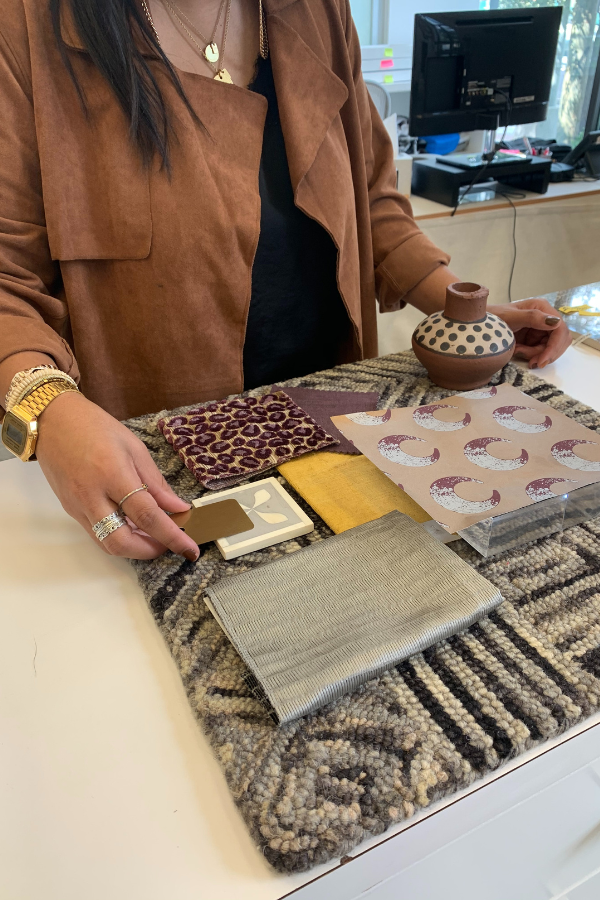
Money conversations stir up a wide mix of reactions. Some clients negotiate because they always negotiate. Some do it because a friend told them they should. Others are stretching a renovation budget they simply didn’t properly budget for.
None of that is about your talent or even your market research. It’s a financial instinct that spills into the design process and, unfortunately, impacts client relationships. You might think about it like a reflex for certain clients. Some people are raised to negotiate everything. They don’t see it as criticism. They see it as participation.
“If a client tries to negotiate, it’s almost always about their budget, not your worth.” —Laura Umansky, CEO and Founder of Laura U Design Collective
A designer who takes that personally will immediately assume the rate is too high and that they themselves have made a mistake. But Laura’s experience shows that many clients negotiate even when they fully intend to sign the contract at the original amount. It’s often a personality difference. But theres a different element at play here, too: the client’s personal financial history.
Clients bring their money stories into the project. Some fear spending. Some feel guilty. Others worry they’ll look careless. You’re dealing with emotions that have nothing to do with design. When a designer understands this, they stop assuming their rate is the primary source of tension between themselves and the client. In most situations, it isn’t.
So, How Do You Know When “The Price is Right”?

Pricing sits closer to a managerial decision than a creative one, and that unfamiliar territory makes designers uneasy. Many rely on client reactions as a proxy for accuracy, even though those reactions have very little to do with whether a firm’s pricing structure is sound. As Robert J. Dolan noted in this Harvard Business Review article, “Pricing is [an owner’s] biggest marketing headache. It’s where they feel the most pressure to perform and the least certain that they are doing a good job.”

A more reliable approach is to look at how the business operates under the current pricing. If the team can explain the service without hesitation, if deliverables move through the pipeline without unnecessary delays, and if clients follow the structure without friction, those are practical signs that the pricing aligns with the work.
“You know your pricing is solid when you can clearly articulate your value, your process is airtight, you’re booking clients who respect boundaries.” —Laura Umansky, CEO and Founder of Laura U Design Collective
Try to shift pricing evaluation away from the client’s mood and toward the firm’s internal performance. Client pushback, on its own, is not a diagnostic tool. A designer who bases pricing decisions on isolated negotiations ends up adjusting to individual personalities instead of real business needs. One client’s discomfort should never outweigh the evidence inside your firm. Still, repeated hesitation from the right clients deserves attention.
“But if multiple ideal clients hesitate at the exact same point, it’s worth re-evaluating — either your pricing, your positioning, or your messaging. Pricing isn’t just a number; it’s communication.” —Laura Umansky, CEO and Founder of Laura U Design Collective
Join Us in the DesignDash Community for More Answers
If questions about pricing, clients, and the business side of your firm keep piling up, consider applying to the DesignDash Community, where you’ll find a supportive place to sort through them with designers who understand. Members join workshops, take part in open discussions, and use practical tools that help them streamline operations and spend more time on design instead of wrestling with administrative chaos.
Fuel your creative fire, thrive with support from peers, & make 2025 your firm’s best year yet!
JOIN THE DESIGNDASH COMMUNITY

These conversations are honest and practical, and the resources are built for real firms, not hypothetical ones. Enrollment is closed for now, but a new group will open in the spring, and if you want support, clarity, and a community that treats your challenges seriously, it’s worth joining when our doors reopen.
Related Posts

Painted Ladies: All About San Francisco’s Victorian Row Houses
The Painted Ladies—an iconic ensemble of San Francisco Victorian Hou

Epistemic Injustice: How Feminist Philosophy Explains Why Women’s Voices Are Undervalued in Creative Industries
Epistemic injustice reveals why women’s voices are undervalued in cr

Iconic Demolished Buildings: A Glimpse into History’s Lost Marvels
Who among us has not stood before ancient ruins or modern skyscrapers

Our Favorite Winter & Fall Candles to Make Your Home Smell Amazing
Warm up your space with our favorite winter and fall candles. From ric

DesignDash Guide: How to Safely Store Off-Season Clothing
From separating certain fibers to choosing the right containers, here'

Bohemian Interior Design: Free-Spirited Style with Eclectic Charm
LIKE 0 LEAVE COMMENT 0 11 min read Summary Reflection Questions Journa