Five Vladimir Kagan Designs That Still Shape Modern Interiors

 3
3
 0
0Summary
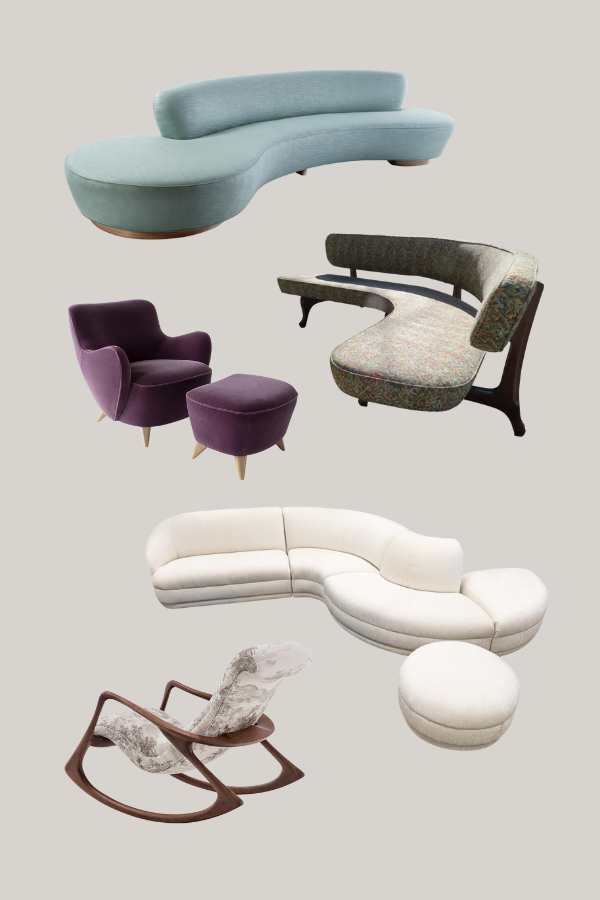
Vladimir Kagan’s legacy lives on through expressive, ergonomically informed furniture that blends sculptural curves with practical comfort; his Serpentine Sofa, Floating Curved Sofa, Contour Rocking Chair, Omni Lounge, and Barrel Chair continue to guide how contemporary designers shape space, movement, and mood.
Reflection Questions
How do Kagan’s curved forms challenge or expand your own assumptions about spatial flow, proportion, and movement within a room?
Where in your current work could sculptural expression coexist with functional clarity in the way Kagan consistently achieved?
What lessons from Kagan’s disciplined engineering (hidden bases, balanced massing, ergonomic shaping) might influence how you approach the technical side of your next design?
Journal Prompt
Reflect on a space you’re currently designing (or want to design). How might you reinterpret Kagan’s principles (sculptural form, human-centered comfort, and thoughtful spatial choreography) to create an environment that feels both visually dynamic and inherently livable? Write about one or two specific elements you’d redesign using this mindset.
Vladimir Kagan’s work sits at the intersection of sculptural form and practical design. Known for dramatic curves, top-notch engineering, and a consistent attention to how people actually experience space, he helped define an expressive branch of American modernism. His pieces were built around comfort and clarity rather than pure ornament, which is why so many of them are still relevant today.
As Architectural Digest’s Lindsey Mather notes in her roundup of interiors featuring his furniture, Kagan’s work appeared in homes across the world and earned a place in major museum collections like the Vitra Design Museum. From lounge chairs to coffee tables, his designs were collected by Marilyn Monroe, Andy Warhol, and others. However, the longevity of this work has less to do with celebrity and more to do with his ability to shape furniture that feels timeless rather than tied to a single era.
The five designs below show why his work continues to influence designers today. Please click on the furniture images below for more information on the products themselves.
A Bit About Iconic Designer Vladimir Kagan
Vladimir Kagan was born in 1927 in Worms, Germany, into a family that highly valued craft. His father, Illi Kagan, worked as a master cabinetmaker, and that early exposure shaped much of what came later for Vladimir. When his family left Germany in 1938, Kagan arrived in the United States as a young teenager. He first leaned toward painting and sculpture, then became an architecture major at the School of Industrial Art and later at Columbia University.

Training in His Father’s Workshop
By the late 1940s, he was working directly in his father’s woodworking shop. That experience grounded him in the practical side of construction. He joked later that his father encouraged precision and careful measuring while he relied more on instinct, but the workshop environment clearly set the standard for what he expected of himself.
Opening His First Shop
In 1949, he opened his first personal shop in New York. A year later he entered into the Kagan-Dreyfus partnership and established a presence on East 57th Street. His early projects included everything from seating for the Delegate’s Cocktail Lounge at the United Nations to pieces for the Monsanto House of the Future in California.
The range of work widened quickly, and his reputation rose alongside it. By the 1950s and 60s, his furniture was being purchased by clients across industries, including figures like Marilyn Monroe and companies like Walt Disney and General Electric. In 1956, he would meet needlework artist Erica Wilson, with whom he would create, build a family, and draw inspiration from.
Expanding His Design Language
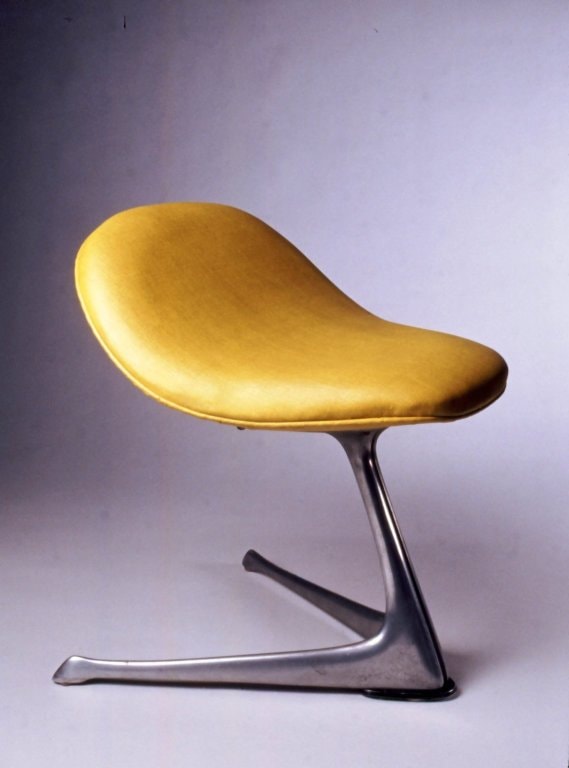
Kagan’s design language kept expanding. He introduced his first signature furniture collection, the Tri-Symmetric line, in 1949. Over the years he experimented with wrought iron, cast aluminum, and organically sculpted wood, moving between residential furnishings and large commercial commissions.
After the Dreyfus partnership ended in 1960, he continued producing new work through his own studio. A major fire in 1972 destroyed his New York factory, but he rebuilt and carried on, eventually forming the Vladimir Kagan Design Group in 1987 as a new consulting firm.
Dismantling and Rebuilding Kagan in the ’80s
As the US turned to bold, poppy designs of postmodernism, Kagan found his work at odds with the zeitgeist. He embraced deconstructivism and the experimentation that came with this movement. While he tried new silhouettes and alternative angles in his furniture, the economy had different plans for his company, and one of his showrooms went bankrupt in 1987.
The economy took a nosedive and his radical designs fell out of favor just as quickly as they had come onto the scene. Thankfully, the 1990s experienced a resurgence in our nation’s love of mid-century modern design, and Kagan’s work was once again revered.
Fuel your creative fire & be a part of a supportive community that values how you love to live.
subscribe to our newsletter
*please check your Spam folder for the latest DesignDash Magazine issue immediately after subscription
Teaching and Recognition
Teaching also played a role in his career. He held advisory positions, taught at Parsons, lectured widely on design, and received a series of honors, including multiple lifetime achievement awards. His work appeared in major museum collections, including the Vitra Design Museum, and helped shape the broader conversation around mid-century and modern design.
Legacy
Kagan died in 2016 at the age of 88. He left behind a long list of influential pieces, a studio that continued under his name, and a body of work recognized for its clarity, comfort, and sculptural presence. His three children carried forward elements of that legacy, and his furniture continues to be a consistent reference point for designers interested in strong geometry, curved forms, and the connection between craftsmanship and contemporary living.
5 Vladimir Kagan Designs That Still Shape Modern Interiors
The Serpentine Sofa
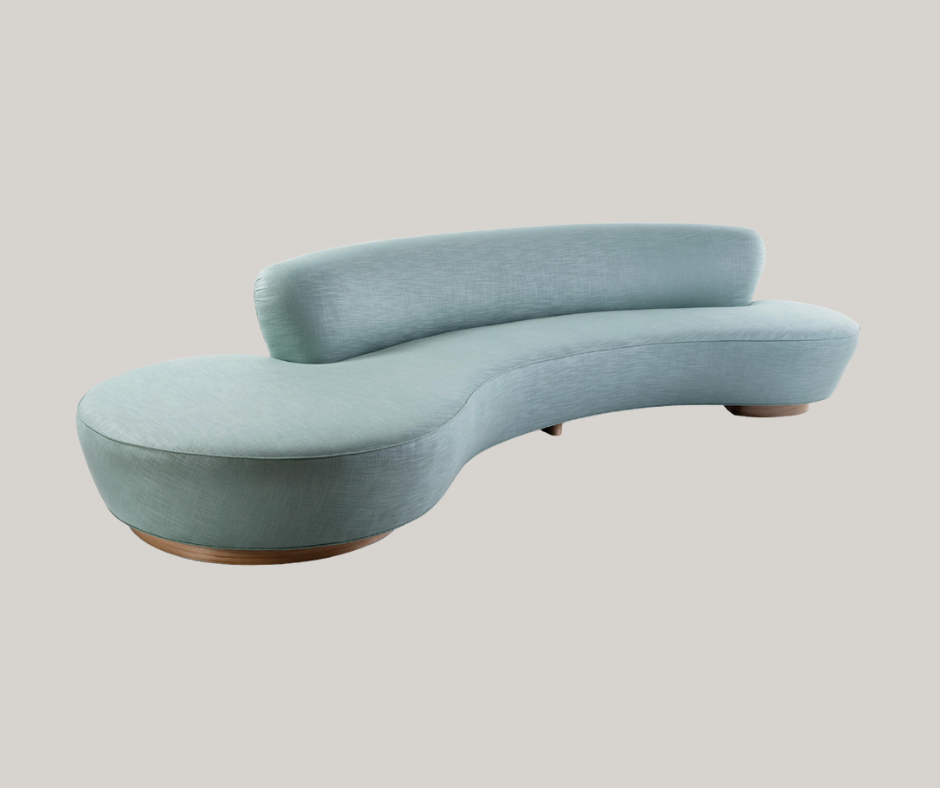
The Serpentine Sofa is probably the closest thing to a signature Kagan piece. He introduced it during a period when open plans and flexible seating were becoming more common. The curved footprint allowed people to sit at angles that encouraged conversation, and the shape softened rooms that relied heavily on right angles. It worked equally well in compact apartments and large living rooms, which explains why it appeared in so many Architectural Digest features over the decades.
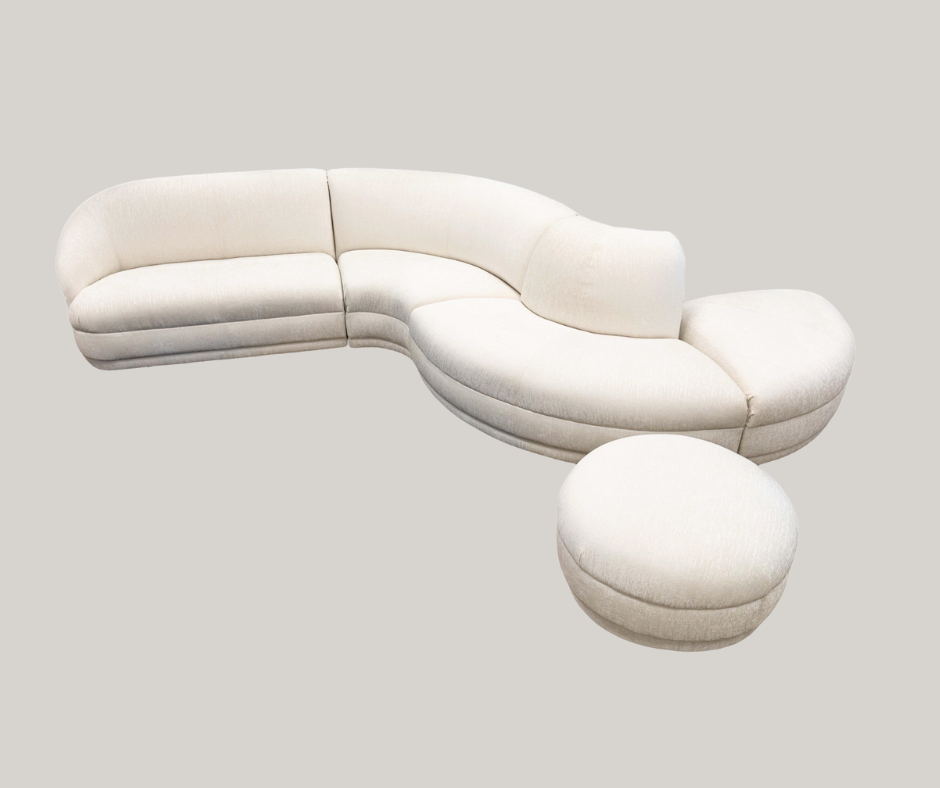
Now sold by Holly Hunt, designers today still use this sofa because it helps organize space without relying on rigid boundaries. A curved plane creates pockets of seating that feel natural and comfortable. Kagan understood that a sofa could guide movement through a room while staying visually light, and the Serpentine Sofa is one of the clearest expressions of that idea.
The Floating Curved Sofa
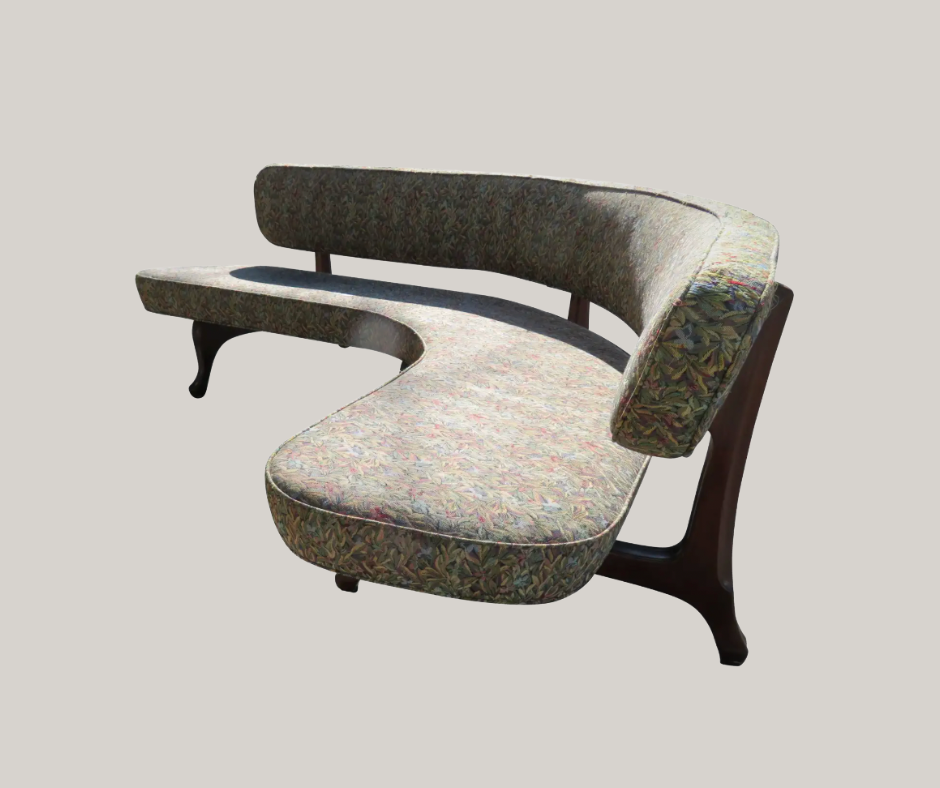
This sofa designed in 1952 pushes the curved concept further by giving it lift; it truly feels aeronautical. Kagan found ways to balance mass so the form felt grounded but not heavy. The base sits back just enough to make the seating line appear as though it floats. The effect is simple, although the engineering behind it required discipline and experience.
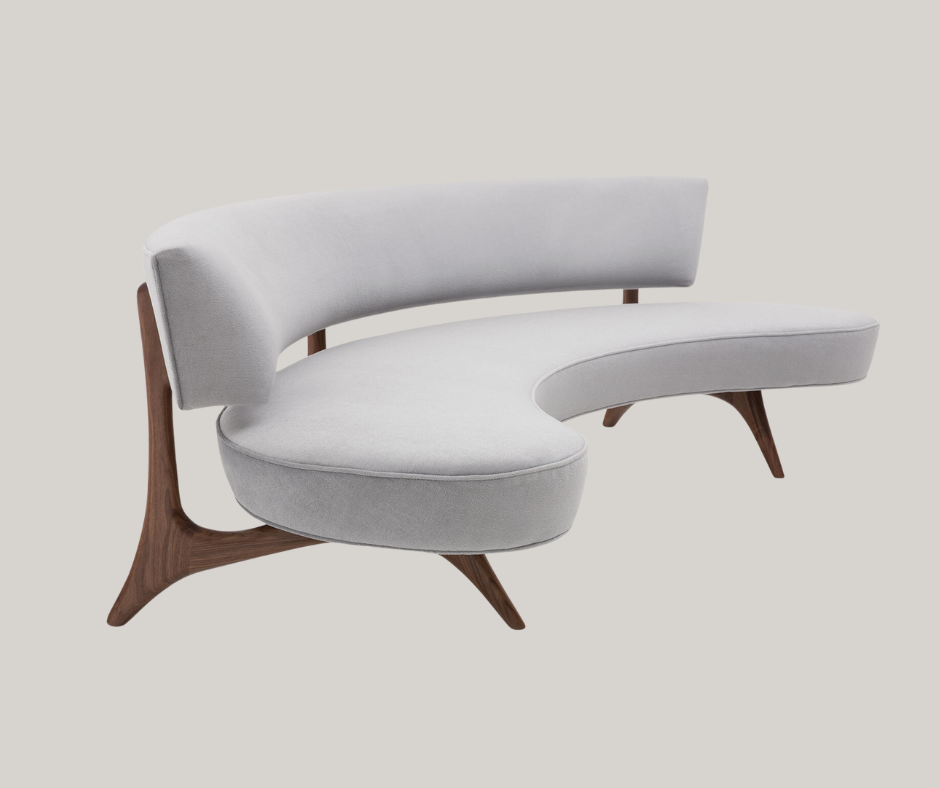
Today this design works nicely in interiors that need sculptural seating that still reads as functional. The shape is soft, and the proportions are controlled. Rooms with a lot of hard edges often rely on this form to introduce contrast without leaning into nostalgia. The piece fits contemporary interiors because it is expressive without overpowering the rest of the furnishings.
The Contour Rocking Chair
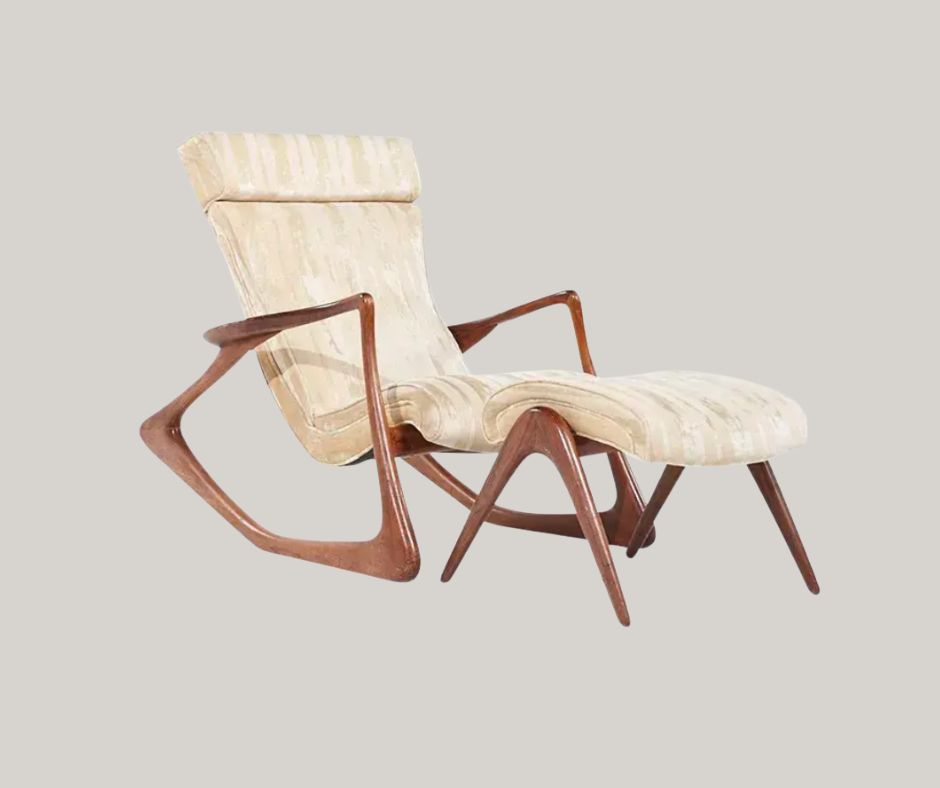
Kagan’s Contour Rocking Chair draws on experimentation with shaped wood and comfort-driven support. The spider-like lines are clean and the motion is smooth. He used his background in both sculpture and cabinetmaking to create a chair that reflects a clear understanding of how a body settles when reading or resting. It looks simple at first glance but the shaping and balance reveal how carefully it was drawn.
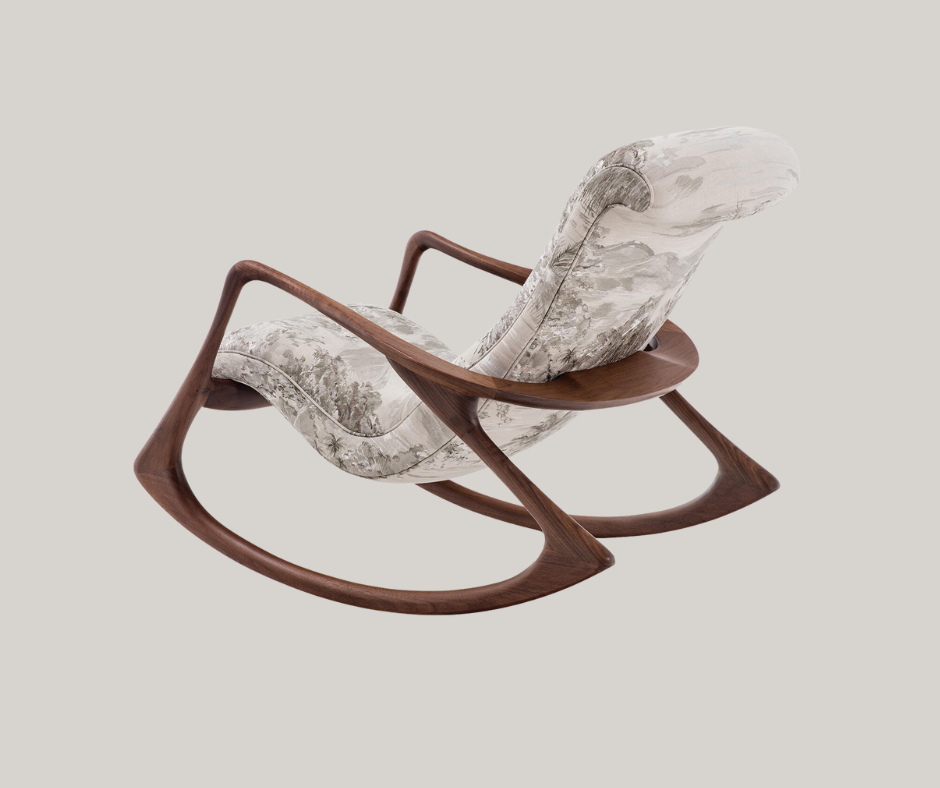
Designers still specify this chair when they want a single sculptural moment in a corner or reading area. It works in minimal interiors and in layered, eclectic rooms. It is one of those pieces that gives a room a sense of intentionality without calling too much attention to itself. Many vintage versions end up paired with contemporary desks, ottomans, or accessories because the form is adaptable.
The Omni Lounge
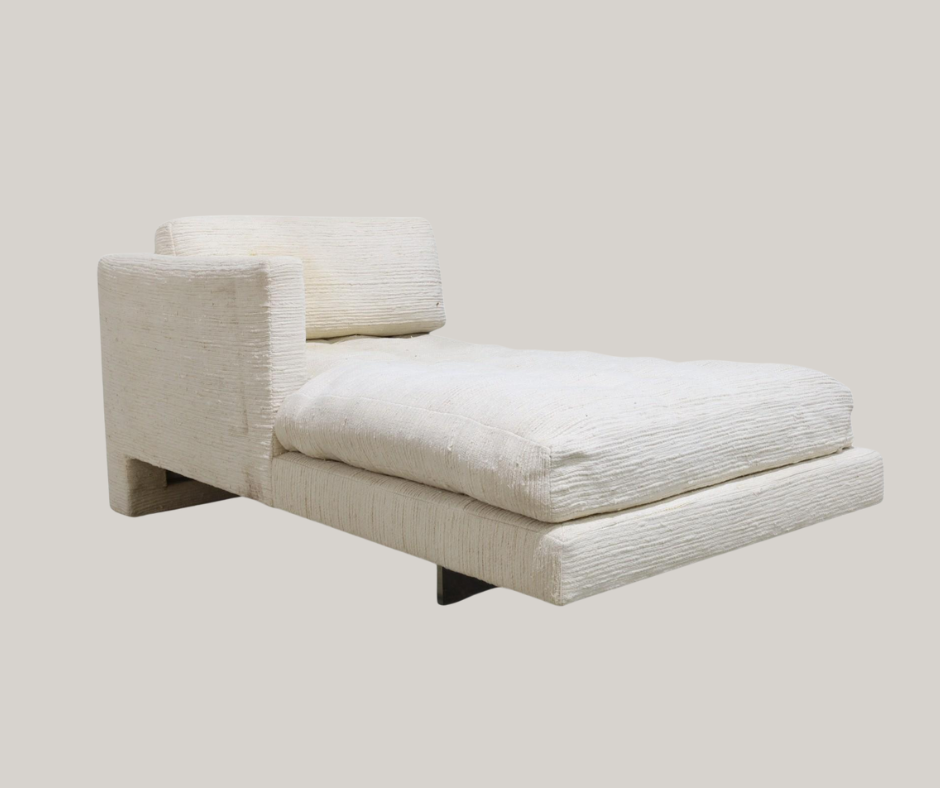
Comfort was always a primary focus for Kagan, and the Omni Lounge reflects that. He designed it for flexibility, allowing the user to shift positions without losing support. The low height lets it blend into rooms where sightlines matter. The form works with both fabric and leather, and the engineering holds up well even in busy households.
Part of his first Omnibus collection, the Omni Lounge still appears in modern projects because it allows long-term use without excessive bulk. Many clients want seating that feels relaxed without sacrificing structure. The chair’s proportions help with that. You can place it near a window or in a central seating area and it seems to settle easily into the arrangement.
The Barrel Chair
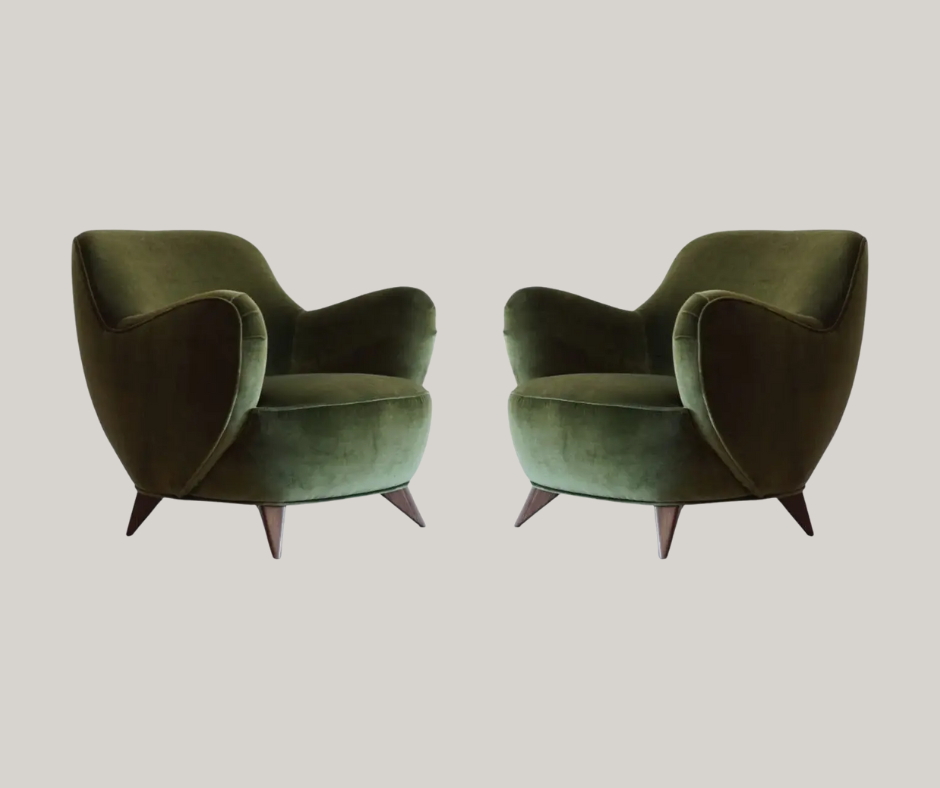
Kagan’s Barrel Chair uses clear geometry paired with interior curves that make the seat feel welcoming. The exterior form is stronger and more architectural, while the inside is shaped for comfort. This contrast helps the chair read well from several angles, which matters in rooms where the back of a chair is visible as often as the front.
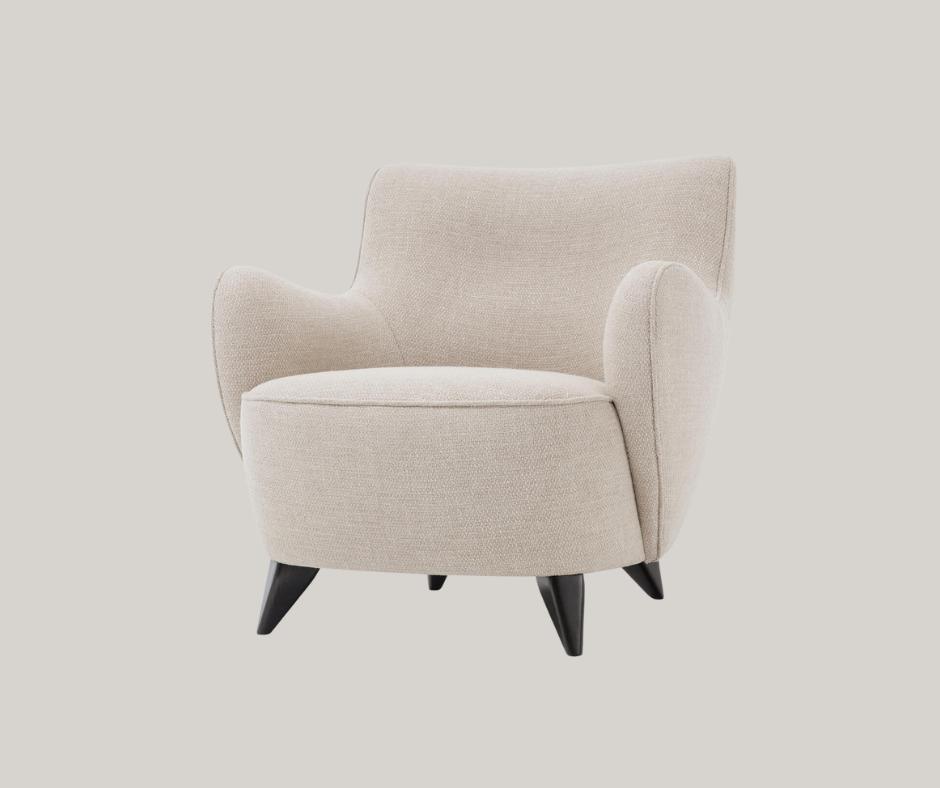
Designers still put these chairs in pairs because they hold their shape and suit both formal and casual settings. The scale works in compact rooms, and the curvature prevents the profile from feeling stiff. The Barrel Chair bridges the gap between sculptural presence and everyday usability.
Kagan’s Ongoing Influence
The ongoing influence of Vladimir Kagan design has less to do with nostalgia and more to do with how thoroughly he understood comfort, proportion, and structure. Many of his ideas came from the time he spent in his father’s shop learning how to work with wood. Others came from studying architecture and being exposed to different approaches to indoor space. The combination let him create furniture that felt fresh during the mid century period and still feels relevant now.
Many of his pieces remain in production, and vintage versions are widely collected. The combination of engineering, artistry, and practicality gave his work the kind of durability that designers look for when furnishing long-term homes.
Kagan’s role in shaping American modern interiors is still evident today. His designs help rooms feel expressive without losing function. They demonstrate how a thoughtful approach to proportion and comfort can outlast trends. And for many designers, they are wonderful reminders that furniture can be both sculptural and livable when the fundamentals are handled thoughtfully.
Written by the DesignDash Editorial Team
Our contributors include experienced designers, firm owners, design writers, and other industry professionals. If you’re interested in submitting your work or collaborating, please reach out to our Editor-in-Chief at editor@designdash.com.
Related Posts

Disappointing Gifts? Here’s How to Help Your Kids Handle Friends’ Luxury Presents with Grace
Help your child handle disappointing gifts gracefully. With our tips,
International Interior Design Awards and Application Deadlines
From the IIDA to the Gold Key Awards, these international design award

Landscape Architecture Programs: Where to Study, What You’ll Learn, and How to Start Your Career
Curious about obtaining an architectural landscaping degree? Learn all

Lughnasadh: Connecting with Nature and Gaelic Ancestry
Modern Celts in Scotland and Ireland honor Lugnasadh by feasting, play
Women’s Equality Day: Key Milestones in the Fight for Our Rights
How can you contribute to making equality the norm, not just the excep