Seven Luxury Italian Furniture Brands Interior Designers Adore

 9
9
 0
0Summary
Italian furniture continues to matter because it prioritizes proportion, material integrity, and longevity over novelty. Designers return to these brands not for spectacle, but for reliability. The pieces integrate easily with architecture, age well, and support projects that evolve over time rather than needing constant replacement.
Reflection Questions
Which furniture brands in your current sourcing rotation have earned your trust over multiple projects, and why?
When you think about scale and proportion in your own work, where do Italian brands help reduce uncertainty or risk?
Are there areas in your practice where long-term consistency matters more than visual impact, even if clients don’t immediately recognize it?
Journal Prompt
Think about a project where the furniture continued to feel right long after installation. What decisions contributed to that outcome? Consider how material choice, proportion, and brand reliability played a role, and where you might lean into those factors more intentionally moving forward.
Italian furniture has long boasted a reputation for excellence, but that reputation didn’t come from spectacle. It came from repetition. It came from legacy as decades of manufacturers refined the same categories of objects over and over again. Sofas, chairs, tables, storage. The basics. Though there are a few poppier brands with surprising aesthetics, on the whole, Italian brands rarely chase novelty for its own sake. Instead, they keep returning to familiar forms and asking where they can be tightened, clarified, or made more livable.
Interior designers continue to source from Italy for practical reasons as much as aesthetic ones. Italian furniture tends to cooperate with architecture rather than fight it. Pieces are scaled with real rooms in mind, not just showrooms. There is also a shared understanding across Italian brands that furniture has a long life. Designers respect this consistency. It makes specifying from Italy feel less like a gamble and more like a continuation of work that has already been tested in homes, not just photographed.
In this article, we honor seven of our favorite luxury Italian furniture brands, from Cassina and B&B Italia to Minotti and Flexform. Read on to learn more! We hope these pieces inspire you with their stunning silhouettes, material quality, and focus on functionality.
Why Italian Design Continues to Be the Absolute Best of International Furniture
Italian furniture design sits at a unique intersection that few other countries have balanced. On one side, there is deep industrial knowledge. Many brands grew alongside Italy’s postwar manufacturing boom when they developed close relationships with engineers, upholsterers, metalworkers, and wood specialists. On the other side, there is an ongoing conversation with architects and designers who expect furniture to support spatial ideas rather than competing with them.

This combination often produces pieces that understand and respect scale. A sectional will always seem deliberate rather than too oversized or inappropriately tiny. A chair will have structure without seeming too rigid. Even large storage systems and furniture programs tend to break down visually into smaller parts, which makes them easier to place in complex interiors. Designers importing Italian furniture are often responding to this clarity of thought and vision. It reduces risk.
There is also a cultural comfort with evolution rather than reinvention here. Italian brands revise pieces slowly. Oftentimes, a collection expands instead of being replaced. Clients may never notice these adjustments, but designers do. Over time, that reliability builds trust, even when lead times are long or logistics require patience, as is typical with sourcing furniture from overseas.
7 Luxury Italian Furniture Brands Interior Designers Adore
B&B Italia

Founded in 1966 by Piero Ambrogio Busnelli, B&B Italia emerged at a moment in luxury Italian furniture design history when manufacturers began working more closely with industrial research and engineering. The company invested early in material testing, particularly polyurethane foam, which allowed for new construction methods and a more controlled approach to comfort. That research-driven mindset positioned B&B Italia as a defining voice in postwar Italian modernism.
Interior designers often specify B&B Italia for seating that can define a room without overwhelming it. Sofas like Camaleonda or Charles adapt well to different layouts and uses. They feel intentional without feeling precious. The scale is dependable, especially in larger homes, hospitality projects, and other environments where furniture needs to last through constant use without obvious wear.
Cassina

Cassina began in 1927 as a family-run woodworking company in Meda, producing traditional furniture before shifting toward modern design after World War II. Its later partnerships with architects and designers who shaped twentieth-century modernism established the brand as both a manufacturer and a steward of design history.
Designers turn to Cassina when a project benefits from historical grounding. Pieces like the LC series or the Maralunga sofa bring a sense of continuity into contemporary interiors. They have visual weight and never feel merely decorative. The quality is obvious and we adore their curated selection of pieces. Cassina furniture tends to age in place, which suits projects designed to evolve rather than reset every few years.
Minotti
Founded in 1948, Minotti built its reputation through upholstery and a careful approach to detail, which are now hallmarks of any line the brand will create. The company’s long collaboration with Rodolfo Dordoni helped establish a restrained, architectural language that still defines much of the brand’s work today. As their branding describes, Minotti embodies a “story of Italian excellence.”
Minotti is often specified when a project requires cohesion across multiple spaces as they have lines for office spaces, hospitality, and residential. Sofas, lounge chairs, and tables relate easily to one another in proportion and finish. The furniture also wears really well over time, likely due to its relationship to material and form.
Poliform
Poliform emerged from the Brianzan woodworking tradition and formally launched as a brand in the early 1970s at the hands of Aldo and Alberto Spinellli in Como. From the beginning, it approached furniture as part of a broader domestic system rather than as isolated objects.
That systems-based thinking continues to draw designers to Poliform. Wardrobes, kitchens, and storage integrate cleanly with architecture. Sofas and tables are quite visually controlled, which leaves room for art, textiles, or existing pieces. Poliform often works best in homes where continuity matters more than statement moments.
Thankfully, there are many Poliform locations in the US, including one in West Hollywood, which offers installation for clients. If your clients adore contemporary Italian furniture, Poliform is the place for them!
Flexform
Established in 1959 by the Galimberti brothers, Flexform focused early on comfort and restraint, so pieces feel minimalistic without the harsh lines typically associated with that style. Instead of dramatic forms, the company concentrated on refining familiar seating types and materials over time.
Designers frequently recommend Flexform to clients who prioritize livability. Sofas and armchairs feel relaxed without appearing casual. Fabrics and leathers are chosen with daily use in mind. These pieces tend to settle into a home rather than compete with it.
Fuel your creative fire & be a part of a supportive community that values how you love to live.
subscribe to our newsletter
*please check your Spam folder for the latest DesignDash Magazine issue immediately after subscription
Molteni&C
Molteni&C dates back to the 1930s and has maintained close ties to architecture throughout its 80-year history. Collaborations with figures like Gio Ponti established a dialogue between furniture and building that continues through more recent partnerships.
This award-winning furniture feels measured and deliberate. Storage systems, tables, and seating align closely with architectural logic, which helps interiors feel resolved. Designers often specify Molteni&C when furniture needs to work alongside custom millwork or built-ins without completely overpowering the space.
Ceccotti Collezioni
Founded in Tuscany in the 1950s, Ceccotti Collezioni remains closely tied to woodworking traditions, which is why it often resonates with American and English clients who respect Arts-and-Crafts Movement values. The company emphasizes solid wood construction, careful joinery, and a slower production process.
Designers specify Ceccotti when a space benefits from material presence. Chairs, desks, and tables reward close inspection instead of shying away from it. The furniture works especially well in studies, libraries, and dining rooms where craftsmanship should be visible and tactile. We especially love the brand’s new “Tea House Collection.”

Final Thoughts
Italian furniture continues to earn its place in serious interiors because it handles complexity without drawing inappropriate attention to itself. These brands give designers a dependable framework upon which to create gorgeous, truly functional spaces.
The pieces work across different architectural contexts, tolerate daily use, and age without asking to be replaced. That reliability allows designers to focus on the broader composition of a space rather than compensating for furniture that demands constant justification. Over time, that kind of consistency is less of a preference and more of a professional standard.
Also Read…


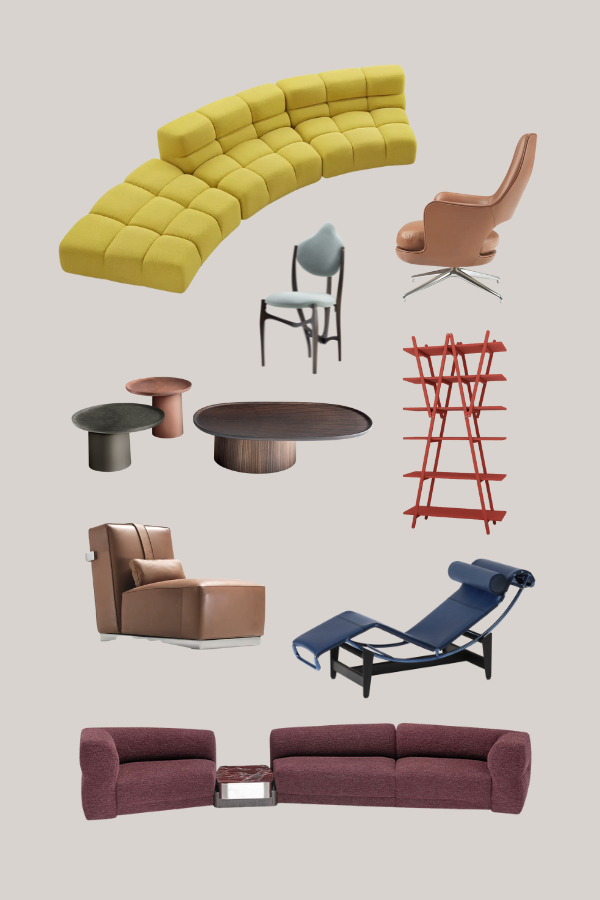
Products in the featured image in order of appearance:
- Tufty-Time 20 Outdoor by Patricia Urquiola for B&B Italia
- ELISEO by Antonio Citterio for Flexform
- Stellage 52 chair by Gabetti & Isola, Raineri for Ceccotti Collezioni
- Nuvola Rossa by Vico Magistretti, 1977 for Cassina
- Luisa by Vincent Van Duysen for Molteni&C
- 4 Chaise longue à réglage continu, 60 by Le Corbusier, Pierre Jeanneret, Charlotte Perriand, 1965 for Cassina
- ABCD Armchair by Antonio Citterio for Flexform
- Emile by Christophe Delcourt for Molteni&C
Written by the DesignDash Editorial Team
Our contributors include experienced designers, firm owners, design writers, and other industry professionals. If you’re interested in submitting your work or collaborating, please reach out to our Editor-in-Chief at editor@designdash.com.
Related Posts
How to Choose the Best E-Commerce Platform for Your Creative Business
Struggling to find the best e-commerce platform? We cover everything f

From Andalusia to the Almohad: A History of Moroccan Zellige Tile
You might shop for Zellige tile to adorn your kitchen backsplash, but

A Beginner’s Guide to Starting Your Antique or Vintage Jewelry Collection
Turning your wish list into a true collection of vintage jewelry is an
Best Furniture Design Schools and Programs in the US
These furniture design schools have consistently offered rigorous acad

DesignDash High Point Market 2025 Events
Join DesignDash + Vanguard Furniture for The Designers’ Workshop at