



What Does a “Successful” Firm Look Like Beyond Revenue?

 2
2
 0
0Summary
Revenue is often used as the primary measure of success in a design firm because it’s visible and easy to quantify. Over time, however, it becomes an incomplete indicator. A firm can be profitable while still feeling unstable, overextended, or overly dependent on the principal.
Research across business disciplines shows that financial metrics report outcomes, not causes. Nonfinancial indicators like pipeline predictability, role clarity, team stability, and operational reliability often reveal the firm’s health far earlier. Long-term success tends to rely less on how much a firm earns and more on how consistently and sustainably it operates.
Reflection Questions
How do you currently decide whether your firm is “doing well”? What indicators do you check first?
Where does your firm feel most fragile right now, even if revenue looks strong?
How predictable is your pipeline over the next three to six months?
Which decisions still require your direct involvement that probably shouldn’t?
Where does the firm rely on systems, and where does it rely on individual memory?
If revenue didn’t change for the next year, what would still need to improve for the firm to feel successful?
Journal Prompt
Think about a period when your firm felt easier to operate, even if it was smaller or less profitable. Write about what made that time feel manageable. Consider workload, communication, pace, and how decisions were handled.
Now write about the present. Where has complexity increased? Which challenges are tied to growth, and which are tied to structure?
Finally, describe what success would look like if it were defined by stability and clarity rather than income alone.
Revenue is the easiest thing to talk about when people ask how a firm is doing. It’s measurable. It’s defensible. It gives a quick answer when someone asks whether business is good or slow this year. For many owners, especially early on, revenue becomes the stand-in for everything else. If the numbers are up, things must be working. If they’re down, something must be wrong.
Over time, that descriptor starts to feel quite incomplete. A firm can bill well and still feel unstable. It can grow year over year and still rely on the principal’s constant attention to keep projects moving. There are studios bringing in strong revenue while operating in a permanent state of urgency. Others make less money but feel easier to run, more predictable, and far less draining. Your firm might be incredibly profitable, yet feel quite precarious. You might have felt more in control and more comfortable when your firm was half its current size.
That tension and discomfort is what prompted this conversation with Laura Umansky and Melissa Grove of Laura U Design Collective. We asked how their definition of success has changed over the life of the firm, and what they pay attention to now that revenue alone no longer entirely answers the question.
What Defines Success in a Design Firm?

In the early years, revenue answers everything; it is an indicator of survival. It tells you whether you can keep the lights on, pay yourself, and say yes (or no) to opportunities without checking your bank balance first. That phase is intense, and for many owners, all-consuming. The firm often absorbs every available hour, and separating work from life seems impossible.
Laura remembers that stage, and she does indeed describe being fully immersed. Running her firm then was defined by long days, constant problem-solving, and very little separation between business and personal life. At the time, it didn’t feel excessive, sacrificial, or unhealthy. It just felt necessary.

“I was obsessed when I started my firm,” she says. “I worked pretty crazy hours and just went all in for years. I think most entrepreneurs do the same thing.”
There was no clear boundary. The business followed her everywhere because it had to. She doesn’t look back on that period as a mistake, though, because it built the foundation that Laura U Design Collective still stands on today. But it also shaped how she now defines success now, which is quite a bit different than how she viewed it twenty years ago.
“Success now includes freedom, sustainability, health, and pride in how the business runs,” she says. “Not just how much it makes.”
What changed for Laura wasn’t the memory of that intensity. It was the realization that intensity cannot be the operating system forever. As the firm matured and the questions changed, Laura started to ask herself not “Can I make this work?” but “Can this keep working like this?”
Why Numbers Will Never Be Enough

Business research has been circling this idea for years. In a Harvard Business Review article, Christopher Ittner and David Larcker wrote that financial metrics are often assembled and assessed too late or too periodically to explain what’s really happening inside a company. By the time revenue reflects instability, the underlying issues have often been present for quite a while. They also fail to define the culture and reputation of a firm. As Ittner and Larcker explain:
“Nonfinancial indicators usually reflect realms of intangible value… that accounting rules refuse to recognize as assets.”
This is just as true in design firms as any other company. Revenue doesn’t tell the whole story: about financials or about firm culture. Cash flow can look healthy while projects feel chaotic. Sales can climb while margins erode. Growth can continue while stress compounds. Harvard Business School Online makes a similar distinction in its writing on performance measurement, noting that financial indicators show outcomes, while non-financial measures reveal drivers. One tells you what happened. The other hints at what’s coming.
Fuel your creative fire & be a part of a supportive community that values how you love to live.
subscribe to our newsletter
*please check your Spam folder for the latest DesignDash Magazine issue immediately after subscription
Firm owners don’t need dashboards to understand this. They feel it when decisions take longer than they used to. When every small issue requires principal involvement. When vacations feel risky for the firm. When the firm technically functions, but only if one person is constantly available.
What Healthy Firms Turn Their Attention To
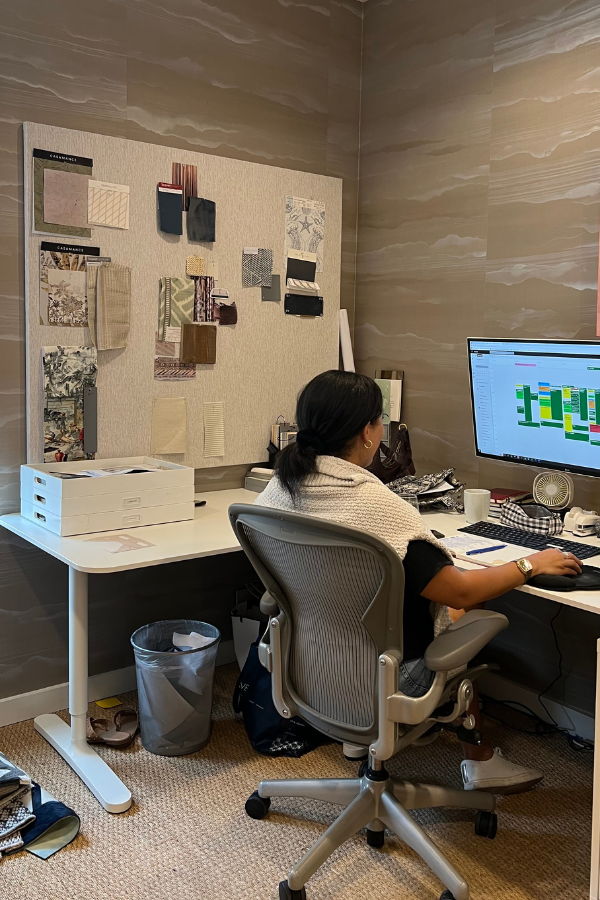
So, what are the nonfinancial indicators of a design firm’s success? We asked LUDC COO Melissa Grove this question. For her, the first signal has little to do with revenue targets or year-over-year growth. It’s their PNC (potential new client), current, and projected projects pipeline. Knowing what work is scheduled, what is signed, and what is realistically approaching gives a firm breathing room. It allows for planning instead of reacting. If you don’t have an active, predictable pipeline, this quarter’s revenue could mean absolutely nothing next quarter.
“A full sales pipeline is number one,” she says.
But she’s quick to point out that pipeline alone doesn’t create stability. A firm can be busy and still feel disorganized. What matters just as much is internal clarity. When staff members understand what their roles include and what they do not, work proceeds with fewer interruptions. Fewer questions funnel upward. Fewer decisions stall because no one is sure who’s in charge.

“A second marker is a team that knows what’s expected of them,” she says. “If your team has clarity in their roles and what defines success for them, you’re healthier than 80 percent of the firms out there.”
You won’t find clarity around roles or feelings about firm culture on a profit-and-loss statement. This valuable non-financial indicator presents itself in smoother installs, in fewer late-night emails, in project timelines that don’t require constant revision. When expectations are defined early, problems tend to surface earlier too, which is when they are still manageable.
A Broader Definition of Success Beyond Revenue

Across industries, research supports this broader view. Forbes Agency Council has written extensively about the limitations of evaluating businesses through sales alone. Revenue growth can conceal issues in retention, employee satisfaction, and operational efficiency. Those gaps tend to surface later, often at inconvenient moments. As Nataliya Andreychuk writes,
“Creating a comprehensive scorecard that involves a variety of qualitative and quantitative indicators can help you make more informed decisions that drive long-term sustainable success.”
Phoenix Strategy Group makes a similar case in its analysis of nonfinancial KPIs. Financial data looks backward. Nonfinancial indicators look forward. Retention rates, engagement levels, process reliability, and workload balance often predict long-term performance more accurately than top-line numbers. Employee engagement is particularly important here, as firm owners who struggle with retention know all too well. We must pay attention to how our employees feel about the firm and their day-to-day interactions with colleagues, clients, and bosses. As McLean & Company notes in this training deck,
“A human-first, empathetic, and collaborative approach to resolving challenges [is key to retention and productivity] [We must] move forward to address their actual needs, rather than our assumptions.”
For design firms, these indicators translate into very practical realities. How long it takes to onboard a new hire. How many projects rely on one person’s memory. Whether deadlines move every week or rarely change. How comfortable designers and procurement leads are sharing their concerns and challenges with managers. Whether the firm can pause and shift gears without panic. A successful firm, in this sense, is not one that grows endlessly or bills aggressively. It is one that functions without constant strain, where systems support people, and where leadership can step back occasionally without fearing collapse.
That version of success won’t fit into a spreadsheet, but it is the definition of a healthy firm with a long life ahead of it.

Related Posts

Cybersecurity Threats Every Creative Entrepreneur Should Be Aware Of
It’s Cybersecurity Awareness Month! This month, we will release a se


Taking a Sabbatical: How Stepping Back Can Propel Your Design Career Forward
Thinking about taking a sabbatical? Here's how stepping back can reign

DesignDash Guide: Planning for Maternity Leave as a Freelancer
Freelancing offers flexibility and autonomy, but when it comes to plan


Immersive Interiors: How Virtual and Augmented Reality are Changing the Design Industry
From allowing clients to walk around spaces before they are built to e

POST COMMENT
You must be logged in to post a comment.