What Is Desert Modern Design? Exploring the Palm Springs Style

 0
0
 0
0Summary
Desert Modern design grew out of mid-century Palm Springs as a climate-driven adaptation of modernism, shaped by heat, light, and landscape rather than pure form. At its best, it prioritizes shade, airflow, material durability, and outdoor living, treating the desert not as scenery but as an active design constraint. The style endures because its core principles remain relevant wherever climate, performance, and regional specificity matter.
Reflection Questions
When you describe a project as “modern,” what environmental or climatic pressures are actually shaping the design, and which ones are being ignored?
How often do your material choices respond to performance over time rather than first impressions under ideal lighting?
Where in your work does the site act as a real constraint, not just a visual reference?
Journal Prompt
Think about a project you admire that feels deeply tied to its location. What specific environmental conditions influenced its layout, materials, or proportions? Now compare that to one of your own projects. Where did you respond to place in a meaningful way, and where did convenience or habit take over instead? Write through the tension rather than trying to resolve it.
Desert Modern design refers to a body of architecture and interiors developed primarily in the American Southwest in the mid-twentieth century. It is most closely associated with Palm Springs, California, where climate, landscape, and postwar optimism converged to produce a distinct approach to modern living. The style adapts modernist principles to desert conditions. It is modernism for arid places, prioritizing shade, airflow, material durability, and a close relationship between indoor and outdoor space.
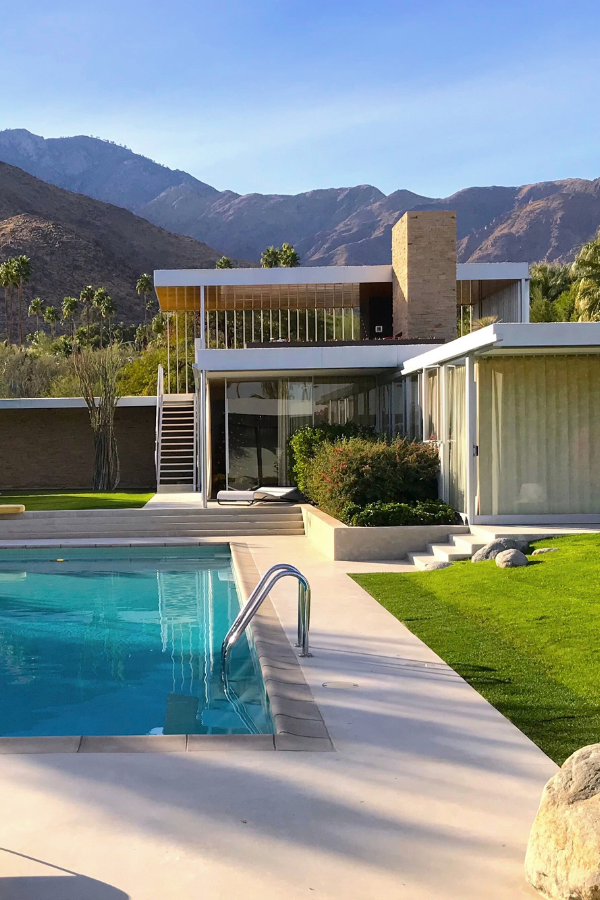
You could argue the style sits inside midcentury modern, but it has its own priorities rooted firmly in place. Unlike International Style modernism, which often treated buildings as objects placed onto a site, Desert Modern responds directly to its environment. The desert is not a backdrop but an active design constraint. Desert Modern homes tend to emphasize shaded outdoor rooms, breezeways, and a flowing plan that makes indoor and outdoor living feel continuous.
Learn all about Desert Modernism below.
Where It Came From
Desert Modernism is closely tied to Palm Springs and the Coachella Valley, especially during the postwar boom when architects, developers, and clients treated the desert as a place in which to test their new and improved ideas of American living. In this Visit Palm Springs piece, Randy Garner writes that the Coachella Valley’s “dramatic geographic surroundings” helped inspire the mid-20th-century design approach now called Desert Modernism.

Of course, practicality was a concern, too. The desert imposed clear requirements. Heat demanded shade. Bright light required control rather than elimination. Large temperature swings made material choice critical. In the same Visit Palm Springs article, the style is described through the usual modernist toolkit, but always with a desert focus: deep roof overhangs, flat or gently sloped roofs, screened outdoor rooms, and buildings oriented to reduce solar gain. Here, modernism was tempered to meet the reality of desert living.
Contributors to the Desert Modern Style
Several architects shaped Desert Modern’s identity through residential and civic projects in Palm Springs and surrounding areas. Perhaps most notably, Richard Neutra brought a refined, climate-conscious modernism to Southern California, where he emphasized health, light, and orientation. His desert work translated European modernist ideas into forms better suited to heat and openness.
Albert Frey also worked extensively in Palm Springs and is often considered central to the style. His houses integrated steel construction, compact plans, and strong connections to the landscape. Frey’s own residence, built into a rocky hillside, is still one of the clearest statements of Desert Modern thinking.
In addition, Donald Wexler explored prefabrication and mass housing adapted for desert climates. His steel houses and public buildings demonstrated how modern design could scale without losing environmental sensitivity.
Developers also played a key role, which makes sense given how minimally Palm Springs had been built-up before the mid-century. Builders like the Alexander Construction Company helped bring Desert Modern ideas to a wider audience through tract housing that balanced efficiency and affordability with architectural ambition.
The Architectural DNA of Desert Modern (And Why Today’s Versions Often Miss the Mark)
At the building level, Desert Modern feels easier to spot than to define, especially when trying to pick it apart from other forms of modernism. Desert Modern architecture draws heavily from mid-century modernism but shifts emphasis away from formal purity toward livability. Plans are typically horizontal, hugging the landscape rather than rising above it. Rooflines extend outward to create shade and define outdoor zones.
Structural systems are often legible, with beams and posts left visible. You’ll see low rooflines, strong indoor-outdoor connections, and glazing that frames landscape as a “primary feature” rather than background. The buildings feel settled into their sites. Mountains, sky, and horizon become part of the interior experience.
In this Fireclay Tile article, Ted Ryan points to that goal of “blending in”, noting that Desert Modern architecture is associated with low-pitched roofs tucked into sites and a preference for integration over visual dominance. It’s a helpful reminder, because a lot of contemporary “desert” work is now “spectacular” rather than respectful of the landscape. Mid-century Desert Modern usually had better manners than that.
Desert Modern Interior Design
Desert Modern interiors often succeed or fail solely on material choice. Sunlight in the desert is unforgiving so glossy finishes and fussy textures can look cheap and aggressive. The material palette that makes the most sense tends to be straightforward and natural: plaster, stone, concrete, terracotta, warm woods, and metals used sparingly.

We should note, though, that in this article from the Los Angeles Times, Sara Kitnick says “Terracotta is a gamble. Always has been.” We all know how true that is at the project level. Warm hues can look incredible for ten minutes and then go wrong under cool LEDs or shadow shifts. Desert Modern designers deal with that by using earthy color in moderation and letting the surface of a material do most of the work. Chiming in again, Klitnick refers to a successful design in which walls “aren’t painted terracotta. They are terracotta,” pointing to rammed earth pulled from the site and its tonal changes across the day.
As for decor, upholstery tends toward natural fibers and leather. Window treatments are minimal, often relying on overhangs and screens instead of heavy drapery. Wood appears in ceilings, cabinetry, and furniture but it is minimally ornamented.
Landscape and the Outdoor Room
Desert Modern is as much about the site plan as the sofa. Outdoor rooms are incredibly important here because they extend living space, they offer shade, and they create microclimates. That’s why the style keeps returning to courtyards, patios, and pools, even in newer interpretations.
The landscaping version of Desert Modern is typically consistent with the architectural logic: space, structure, and a limited palette of hardscape materials. In Homes & Gardens, Sarah Wilson summarizes the ethos as “minimalism, straight lines, and plenty of open space,” with buildings that try to dissolve the boundary between interior and exterior using large glass walls.
Desert Modernism’s Contemporary Relevance
Interest in Desert Modern has grown steadily over the past two decades. Preservation efforts in Palm Springs, increased attention to climate-responsive design, and renewed appreciation for mid-century architecture have all contributed. The style aligns closely with current conversations about sustainability, passive cooling, and regional specificity.
Designers today borrow selectively from Desert Modern rather than replicating it wholesale. Deep overhangs, indoor-outdoor planning, restrained palettes, and honest materials appear in contemporary homes well beyond the desert. The lessons travel, even if the aesthetic remains rooted in place.
What People Get Wrong About Modern Desert Design
The most common miss is turning Desert Modern into a “Southwest theme.” Too much terracotta, too many motifs, too many distressed accessories. The home starts to feel like a set rather than a space with a point of view. Kitnick’s warning about terracotta is basically a polite way of saying “step away.” Either be literal and embrace the natural environment or back off.
Fuel your creative fire & be a part of a supportive community that values how you love to live.
subscribe to our newsletter
*please check your Spam folder for the latest DesignDash Magazine issue immediately after subscription

Another miss is ignoring performance. Desert Modern comes from heat, sun, and exposure. If you select materials that cannot handle UV, temperature swings, or dust, your stunning Desert Modern living room will look aged and haggard pretty quick. The style’s reputation for longevity comes from basic discipline: fewer finishes, better finishes, and details that age well instead of disintegrating or feeling dated.
Why It’s Having Another Moment
Desert Modern keeps resurfacing because it aligns with how many clients want to live right now: fewer partitions, more light, more outdoor time, and materials that do not feel synthetic. But it only works when it stays tied to climate and site. Otherwise, it’s just midcentury cosplay.
In this article from the LA Times, Sara Kitnick quotes Kendle saying, “Color isn’t decoration… it’s geology, it’s climate, it’s memory.” That’s a great way to frame the whole category. Desert Modern design, at its best, treats the environment as the entire brief.
Featured image: Kaufmann Desert House, Palm Springs. Photo by Pmeulbroek, CC BY-SA 4.0, via Wikimedia Commons.
Written by the DesignDash Editorial Team
Our contributors include experienced designers, firm owners, design writers, and other industry professionals. If you’re interested in submitting your work or collaborating, please reach out to our Editor-in-Chief at editor@designdash.com.
Related Posts

How to Publish an Interior Design Portfolio
LIKE 0 LEAVE COMMENT 0 13 min read Summary Reflection Questions Journa

Everything You Need to Know About the NCIDQ Exam
We outline the structure of the NCIDQ Exam, explain how to study for i

DesignDash Fall Décor Photography Contest
Submit your photos for our Fall Décor Photography Contest!
10 Iconic Buildings from the Gothic Architecture Movement
Explore 10 of the most iconic Gothic buildings that define medieval Go
Japandi Interior Design: The Perfect Blend of Japanese and Scandinavian Style
LIKE 0 LEAVE COMMENT 0 10 min read Summary Reflection Questions Journa
What is a Horticulturist, and How Do I Become One?
Let's explore the required education, many specializations, and potent