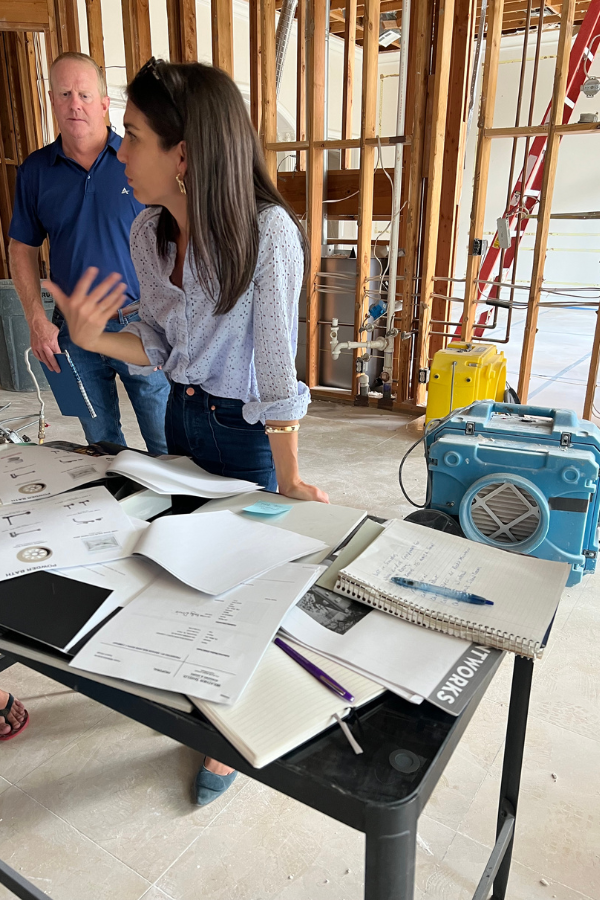
Why Remodeling Is 2026’s Housing Industry’s Strongest Sector

 0
0
 0
0Summary
Remodeling is outperforming new single-family and multifamily construction in 2026, even though growth isn’t uniform across the country. California, Texas, and Florida account for more than 20% of total U.S. remodeling spending, while Michigan, Virginia, North Carolina, Alabama, and Washington have posted some of the largest recent gains. Aging homes, mortgage-rate lock-in, rising home equity, and aging-in-place projects are all keeping money focused on existing houses.
Reflection Questions
- Which remodeling trends are most visible in your own market right now: aging-in-place work, whole-home renovations, deferred maintenance, or homeowners choosing to renovate instead of move?
- Are you paying attention to total remodeling spending in your state, or would growth rate and per-capita activity give you a better picture of local demand?
- How could an older housing stock in your area influence the types of services, specialties, or project scopes your firm emphasizes over the next few years?
Journal Prompt
Look at the housing stock in your primary market and consider why homeowners there may be choosing to renovate in 2026. Write down the local factors that seem most relevant, including home age, mortgage rates, home equity, aging-in-place demand, and the cost of moving. Then consider whether your current services reflect the kinds of projects those homeowners are likely to pursue.
If you’ve been following the housing market this year, you’ll know that remodeling is one of the more encouraging parts of an otherwise difficult residential construction picture. High mortgage rates continue to discourage moves. New-home builders are dealing with expensive land, materials, and financing, while multifamily developers are still cautious about starting projects. Homeowners, meanwhile, are putting money into houses they already own.
In May, remodeling was the only private residential construction category to post a monthly spending increase, according to the National Association of Home Builders. Improvement spending rose 0.9% from April and 8.1% from the previous year.
The NAHB Remodeling Market Index registered 61 in the second quarter of 2026. Anything above 50 means a larger share of remodelers describe conditions as good rather than poor. By comparison, the NAHB/Wells Fargo Housing Market Index for new single-family homes fell to 34 in July. The Multifamily Production Index registered 44 in the first quarter. These surveys measure different parts of residential construction, but remodeling businesses are clearly working in a different market from many companies that depend on new construction.
Still, the national numbers raise a question for both investors and designers. NAHB recently reported that California, Texas, and Florida alone account for more than one-fifth of U.S. remodeling activity. Does that mean the renovation market is really being driven by three states? Not exactly. Those states dominate total spending, but the states posting the largest recent increases are a very different group.
Why Remodeling Has Taken Such a Large Share of Residential Construction
America’s Housing Stock Is Older
Let’s start with the houses themselves. According to NAHB’s 2026 remodeling outlook, the typical U.S. home was 41 years old in 2023, compared with 31 years in 2006. A house that has been standing for four decades may need new windows, HVAC equipment, plumbing, electrical work, roofing, or major interior updates. Some homeowners undertake several of those projects at once, while others address problems as they come up. Either way, an aging housing stock creates a steady stream of work that doesn’t depend on new-home construction.
Mortgage Rates Are Keeping Owners in Place

Many homeowners also don’t have much financial incentive to move. Someone who refinanced at a very low mortgage rate several years ago may look at current borrowing costs and decide that renovating makes more sense than selling the house and financing another one.
NAHB economist Eric Lynch has identified this mortgage-rate lock-in effect as one of the forces supporting remodeling. Home equity accumulated during the post-pandemic rise in home values gives many owners another way to pay for the work.
Jennifer Castenson explored the same issue in Forbes this spring. She looked at housing age, mortgage lock-in, aging in place, climate-related repairs, and accumulated equity as reasons more money is going into existing homes. Remodeling’s share of residential construction spending increased from 33% in 2007 to 44% in 2025, while the number of remodeling firms grew from 69,000 in 2000 to 128,000 at the beginning of 2025.

Aging in Place Is Adding More Remodeling Work
Older homeowners are contributing to demand as well. NAHB reports that 56% of remodelers perform home modifications related to aging in place. Nearly three-quarters said requests for aging-in-place features had increased significantly or somewhat over the previous five years.
Bathroom remodels, kitchen renovations, and whole-house projects were the three most common project types reported for 2025. Some of those projects are aesthetic, but others address accessibility, maintenance, safety, or a house that no longer works as well for the people who live there.
None of these pressures depends on a particularly strong home-sales market. A homeowner can postpone a move for years and still decide that an inaccessible bathroom needs to change, an outdated kitchen needs a larger renovation, or a 30-year-old mechanical system has reached the end of its life.
California, Texas, and Florida Are the Largest Markets, But That’s Only One Measure
Three States Account for More Than One-Fifth of Spending

NAHB introduced its State Projections of Remodeling this year to estimate remodeling spending at the state level. Remodeling expenditures aren’t directly measured for every state, so NAHB developed a statistical model that starts with national improvement spending and uses several state indicators to estimate market share and total dollars.
According to the first-quarter 2026 figures released by NAHB in August, California accounted for 8% of the national remodeling market, or approximately $22.2 billion. Texas represented 7.3%, or about $20.2 billion, and Florida represented 5.5%, or $15.4 billion. Together, those three states accounted for 20.8% of U.S. remodeling activity. New York followed at 4%, while North Carolina represented 3%.
The scale of those markets helps explain the totals. California, Texas, and Florida have large populations and substantial inventories of owner-occupied housing. California also has an expensive housing market, so major renovations can add significant dollar volume.
Fuel your creative fire & be a part of a supportive community that values how you love to live.
subscribe to our newsletter
*please check your Spam folder for the latest DesignDash Magazine issue immediately after subscription

The Fastest-Growing States Are Somewhere Else
Total spending doesn’t tell us where remodeling activity is increasing most quickly. NAHB’s first-quarter estimates put Michigan first, with remodeling spending up approximately $638 million, or 10.1%. Virginia followed with an increase of roughly $422 million. North Carolina added about $324 million, Alabama gained approximately $312 million, and Washington increased by around $269 million.
California can therefore have the country’s largest remodeling market without being its fastest-growing one. North Carolina is especially interesting because it ranks among the largest states by total remodeling dollars and among those with sizable recent gains.
Remodeling Isn’t Growing in Every State
Ten States Were Already Posting Declines
The national headline needs some context. Remodeling is outperforming other parts of residential construction nationally, but every state isn’t following the same path. NAHB reported that the number of states with negative remodeling growth on a four-quarter moving average increased from five in the fourth quarter of 2025 to ten in the first quarter of 2026. Inflation-adjusted remodeling spending had still increased by more than 10% between 2023 and 2025, but early 2026 data already showed declines in parts of the country.
NAHB Remodelers Chairman Elliott Pike specifically pointed to the Midwest and Mid-Atlantic, where aging houses and increasing home equity are supporting remodeling activity. That helps explain why Michigan and Virginia ranked so highly in the latest state estimates.
Per-Capita Activity Changes the Map Again

Population provides another way to look at the market. An earlier NAHB analysis of home-improvement loan applications found California at the top when applications were counted in total. Once NAHB adjusted for population, Rhode Island, New Hampshire, Maine, Idaho, and Utah led in applications per 1,000 residents. California fell below the national average on that measure.
So a state can lead the country in remodeling dollars without having the highest level of homeowner activity relative to its population. Total market size, recent growth, and per-capita loan applications tell us different things about where renovations are happening.
Local housing conditions are especially important for residential architects and interior designers. A national increase in remodeling spending says very little about the types of projects happening in a particular city, the age of nearby housing, or how much equity homeowners have accumulated there.
Remodeling Can Lead Housing Without Experiencing a Boom
Harvard Expects Growth to Slow
There is an important caveat to all of this. Harvard’s Joint Center for Housing Studies expects remodeling growth to lose momentum over the next year. Its July Leading Indicator of Remodeling Activity projects approximately $519 billion in annual homeowner improvement and repair spending through mid-2027. Year-over-year growth is expected to slow to 0.5% by the second quarter of next year.
That forecast doesn’t contradict the idea that remodeling is housing’s strongest sector. A market can slow and still perform better than new single-family and multifamily construction.
In its broader 2026 housing outlook, NAHB forecasts 3% inflation-adjusted remodeling growth this year and another 2% in 2027. The organization expects remodeling expenditures to be 19% higher in 2030 and 32% higher by 2035.

The Long-Term Pressures Aren’t Going Away Soon
The reasons behind those projections extend well beyond one strong quarter. America’s housing stock will continue aging, and millions of owners still have mortgage rates that make moving expensive. Older adults are modifying houses so they can stay there longer, while substantial home equity gives some households the money to undertake larger projects.
The geography adds another layer to the story. California, Texas, and Florida represent extraordinary amounts of remodeling spending, but Michigan, Virginia, North Carolina, Alabama, and Washington tell us where expenditures have recently increased. Older housing markets in the Midwest and Mid-Atlantic deserve attention alongside the large Sun Belt states that usually dominate conversations about residential growth.
A homeowner who decides against moving may spend that money elsewhere in the house instead. One family might finally renovate a kitchen after living with the original cabinetry for 20 years. Another may reconfigure a primary bathroom for an older parent, replace failing windows, or add enough space to make staying in the house practical for another decade. Those projects have very different budgets and motivations, but all of them direct money toward existing housing rather than a new purchase.
Remodeling doesn’t have to post extraordinary growth to remain the strongest part of housing in 2026, and the state data makes clear that the expansion isn’t uniform. What has changed more substantially is the share of residential investment going into houses that Americans already own.
Written by the DesignDash Editorial Team
Our contributors include experienced designers, firm owners, design writers, and other industry professionals. If you’re interested in submitting your work or collaborating, please reach out to our Editor-in-Chief at editor@designdash.com.
Related Posts

Paisley Print Wallpapers Inspired by the Ancient Persian Symbol
From Persian boteh origins to today’s wallcoverings, we trace the pr

Staging Spaces: Should You Diversify into Real Estate Staging or Stick to Interior Design?
LIKE 0 LEAVE COMMENT 0 6 min read Summary Real estate staging offers i
Five Public Companies Interior Design Firms Should Watch
Wayfair, RH, Williams-Sonoma, Home Depot, and Mohawk Industries all em

Could Design & Architecture Firms Benefit from Tariff Refunds?
A recent court ruling could lead to tariff refunds, but what does that

Where Can I Take Online Photography Classes in Different Disciplines?
Ready to produce stunning images that resonate with viewers and advanc

Spotlight on Storytelling: Why We Love the WhatsHerName Podcast
The Whatshername podcast is a global women's history podcast hosted an