
How Do Other Designers Handle Retainers and Deposits?

 8
8
 0
0Summary
Retainers and deposits do not signal distrust in your client. Rather, they provide clarity, improve cash flow, and keeping projects moving. Established firms typically charge an upfront design retainer, bill hourly against it, and require deposits for furnishings or procurement. The percentage varies by scope, but the common thread is consistency: strong billing systems protect the designer, guide the client, and create a smoother project from start to finish.
Reflection Questions
Does your current billing structure genuinely support your workload, cash flow, and team or are you making exceptions that create confusion or risk?
Where could you add more clarity around what retainers or deposits cover, so clients understand the value and timing of each payment?
How might shifting to a more transparent, standardized system (hourly billing, phased invoicing, or structured deposits) improve your client experience and operational stability?
Journal Prompt
Think about a recent project where billing actually went well or where it felt stressful. What part of your retainer or deposit structure helped the process, and what part created unnecessary friction? Write out the payment structure you wish you had in place for that project, and outline one step you can take this month to move closer to a billing system that supports your firm with confidence and consistency.
Payment structures vary across the industry, but the firms that run smoothly all share one thing in common: their billing process is clear from the beginning and they don’t make exceptions to their “rules”. When you’re starting out, asking for a retainer, a deposit, or an initial installment might make you feel uncomfortable; don’t you trust your clients?
But these payments don’t just ensure your client is invested; they also ensure you are able to make purchases, coordinate with vendors or partners, and proceed to the next phase of the project without delay. The details matter, and the structure you choose will influence every part of the project that follows. In this Q&A, we chat with Melissa Grove and Laura Umansky of Laura U Design Collective (they’re also DesignDash Co-Founders) to gain insights on how the most successful firms handle retainers and deposits.
Why Many Established Firms Start With a Retainer
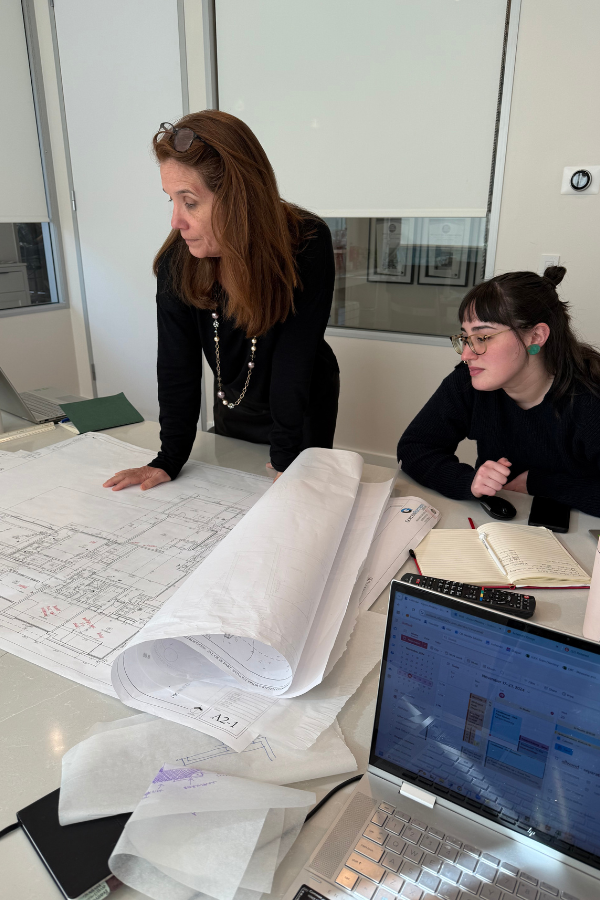
Many established firms begin with an upfront retainer that covers the first phase of design time. Laura describes a similar system in place at Laura U Design Collective.
“We keep it simple and transparent. For design services, we start with an initial retainer, then all work is billed hourly according to our professional fee schedule. The retainer acts as a prepayment: we apply our design time against it until it’s exhausted, and then we invoice monthly for all work completed in the prior month.”
The retainer reserves a spot for that project on the firm’s schedule, but it also confirms that the client understands the commitment required. It supports the early stages of a project, which often involve a surge of design time. When the retainer is treated as a prepayment, there is no confusion about what it covers or when the first invoice will come due.

Laura’s team uses an hourly model for a reason. “Our hourly model is intentional. It’s the only way to be fairly compensated for your actual time and to scale a design team without eroding margins. Flat fees rarely reflect the true complexity of custom residential design.” Hourly billing protects both the designer and the client when a project scope evolves. It also keeps the workload transparent, which limits possible disagreements later on.
How Deposits Work for Furnishings and Procurement

Furnishings and procurement require a different approach because they involve large, tangible orders. Some firms collect half of the total cost at the beginning. Others divide it into several smaller installments tied to production or delivery. Laura describes their structure this way.
“For furnishings, we collect 50 percent upfront, with the remaining balance paid in one or two additional tranches depending on the project’s scale and timeline. All furnishings are paid in full before installation.”
This protects cash flow and prevents possible delays. It also ensures that the client understands when financial decisions must be made. Furnishings often involve long lead times and multiple vendors. A clear deposit schedule keeps the project moving and prevents last-minute confusion near installation.

Laura explained the intention behind it, noting that “The entire system is designed to protect cash flow, maintain clarity, eliminate ambiguity, and ensure the firm is paid for the work being done.”
How Much Should You Ask for Up Front?
Not every firm uses the same percentages, particularly when the work involves construction administration or long design phases. Melissa, who is COO at LUDC, notes that variability is unavoidable.
“We ask for 20–50 percent of the initial estimate in time billing invoicing or for whatever we would consider the first 3 months of invoicing. Projects including construction administration are impossible to accurately quote (you just never know how intensive it may be!), so the 3 month rule usually works.”
Her reasoning reflects how unpredictable construction phases can be. Designers may need thirty hours one month and ten the next. A deposit tied to the first three months of anticipated work avoids underbilling early on and helps the designer commit the right amount of time.
Fuel your creative fire & be a part of a supportive community that values how you love to live.
subscribe to our newsletter
*please check your Spam folder for the latest DesignDash Magazine issue immediately after subscription

This approach also prevents delays caused by unclear expectations. When the deposit reflects the early workload, the designer can focus on moving the project forward instead of waiting for approvals or chasing overdue payments.
Creating a Structure That Supports the Work

There is no single payment system that fits every firm. The right structure depends on the type of projects you take, the amount of client management required, and the pace at which your team works. What matters is that the system provides enough stability for the firm and enough clarity for the client. Retainers and deposits are tools, not obstacles. When used well, they reduce friction, prevent misunderstandings, and keep the project on track.

Other Articles in This Series


Related Posts

Where Can I Take Online Photography Classes in Different Disciplines?
Ready to produce stunning images that resonate with viewers and advanc

Just Beneath the Surface: Incredible Underwater Architecture
Dive into a world of wonder with incredible underwater architecture. E

Female Designers Optimizing Corporate Spaces with Feng Shui
From Marie Burgos to Debra Duneier, female designers are optimizing of

DesignDash High Point Market 2025 Events
Join DesignDash + Vanguard Furniture for The Designers’ Workshop at

10 Tips for Growing Your Online Presence in a Crowded Creative Market
Learn to define your niche, optimize your website, leverage social med

How to Use Florals to Make Every Interior Install Feel Editorial—Without a Stylist
From layering and scale to tonal palettes and context-driven design, t