
Key Takeaways from Our Interview with Libby Langdon

 11
11
 0
0Summary
In this DesignDash Podcast episode, Libby Langdon talks with Laura Umansky and Melissa Grove about career pivots, High Point Market, licensing, and the business mechanics behind a long-running product brand. The conversation moves between personal reinvention and practical strategy, with Libby explaining how she built licensed collections, why she writes down goals, and what designers often miss about product partnerships. The episode is especially relevant for firm owners thinking about brand expansion, licensing, or a second revenue stream beyond client work.
Reflection Questions
How clearly can I describe my own brand in a few words that would guide product, partnerships, and client-facing decisions?
Where in my business am I waiting for the “right time” instead of building the foundation for the next opportunity?
What parts of a possible product line appeal to me most: the creative work, the added revenue, or the visibility that comes with it?
Journal Prompt
Think about one professional pivot that changed your work, even if it did not look promising at the time. Write about what ended, what opened up, and which skills from your earlier life still shaped the next chapter. Then write down one goal for the next six months, one year, and two years, and describe what would need to happen for each one to move off the page and into your business.
Libby Langdon has built one of the more recognizable brands in interior design, but her path into the industry didn’t start in a studio. In our conversation, she talked about working as an actress and producer, going through a divorce, and then stepping into makeover television at exactly the moment her life had broken open. Libby triumphed into a successful career in interior and product design to become one of the most respected names in our industry.
Podcast hosts Laura Umansky and Melissa Grove asked questions every firm owner wants answered as Libby talked about High Point from the exhibitor side, the work of selling a collection after it launches, the financial logic behind licensing, and the difference between a good partner and a bad one. Listen to this DesignDash Podcast episode if you’re curious about product design, but also if you’re trying to build a business that can support your current goals and your future ambitions.
Introducing Libby Langdon
Libby Langdon is an NYC-based interior designer, author, television personality, and product designer known for what she calls “easy, elegant, everyday style.” Through Libby Langdon Interiors and a growing group of licensed collections, she has built a business that spans upholstery, case goods, lighting, wall decor, and accessories. Her current partners include Fairfield Chair, Crystorama, Paragon, and A&B Home.
In this DesignDash Podcast episode, Libby joins Laura and Melissa to discuss how she moved from television into interiors, how she built licensing into a real business line, and why product work only succeeds when the designer treats it as a real job instead of a side project. The takeaways below pull out the parts of the conversation that firm owners can actually use.

Key Takeaways from Our Conversation with Libby
#1 A major pivot can become the start of your real career
Libby’s entry into interiors came after her marriage ended and her life changed all at once. At that point, she had worked in television and film, and she first thought she might move toward food media. That idea didn’t gain traction, but a makeover show did. She auditioned for Design Invasion and landed a role that required her to host and design under real-life pressure. What’s striking here is the attitude she brought into such a major career change. In accepting that shift, what changed was not her résumé but her tolerance for risk.
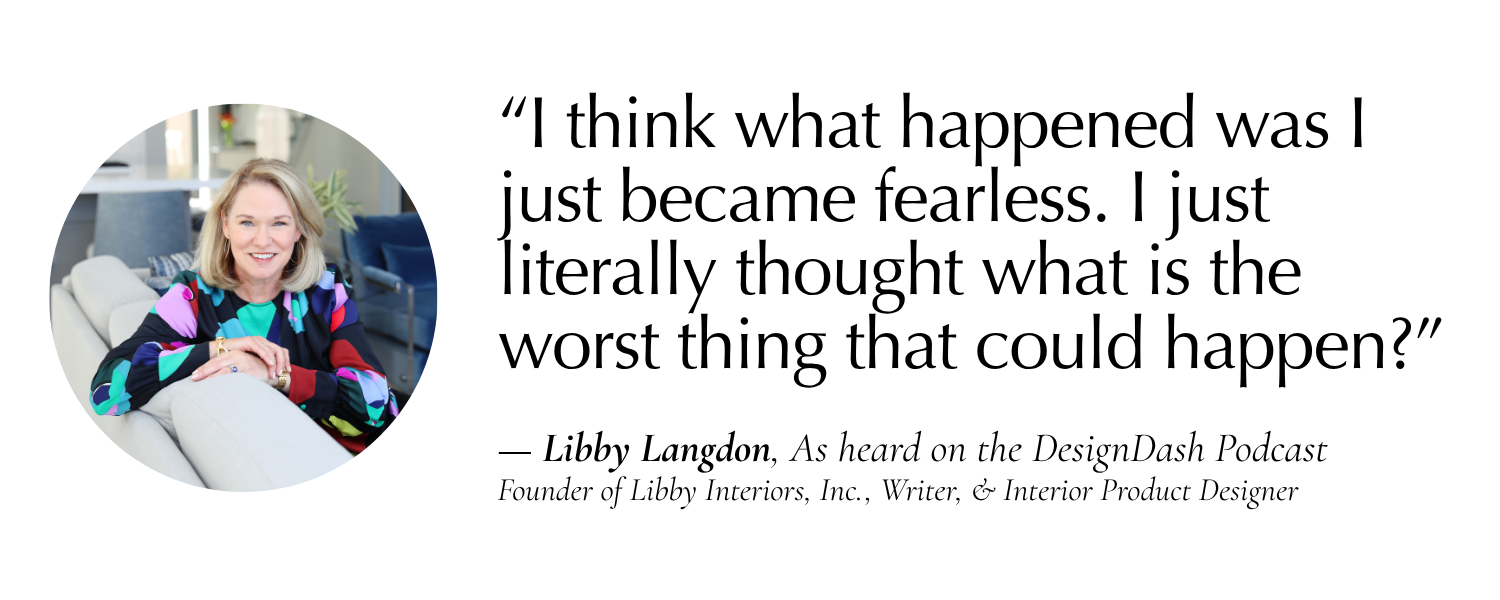
Time and time again, Melissa and Laura have talked about how business success depends heavily on one’s personal risk tolerance, and Libby shows how true that is. Later, in the episode, she said, “If a big pivot is coming up, people just like run screaming into the void. It’s all good.” That’s easy to laugh at, but it is also a serious business point. Libby didn’t wait until she felt fully credentialed. She used the skills she already had, like on-camera experience, production logic, problem solving, etc., and let those skills shine in an entirely new field.
Takeaway for Firm Owners
A pivot will never start with certainty, but a little indecision is okay. The timing might be right and the pressure could be immense, but what really matters is your attitude, your understanding of the risks, and your willingness to use the skills you already have in a new context.
Fuel your creative fire & be a part of a supportive community that values how you love to live.
subscribe to our newsletter
*please check your Spam folder for the latest DesignDash Magazine issue immediately after subscription

#2 High Point looks very different when you are the one selling
Many designers experience High Point as buyers, speakers, or guests. Libby experiences it from the other side. She arrives before Market opens, sets up her section in the Fairfield showroom, walks the sales reps through new introductions, explains finishes and materials, and then spends long days talking to designers and retailers. Her description of that schedule strips away some of the fantasy and shows just how much effort goes into product launches because launching is just the beginning. You also have to actually sell.
“I’m there working it. I’m selling. It’s constant. You’re constantly trying to get ahead of it and figure out what are people liking, what are they not liking, what are buyers stopping and taking pictures of, what are they zipping past as they’re going through the showroom?”
Melissa, one of the podcast’s hosts and DesignDash co-founder, points out that when she goes to High Point, she is there buying, maybe speaking, maybe exploring showrooms, but she’s not necessarily selling. Her trip is tiring, too, sure, but it’s still very different from standing inside a showroom and being responsible for how a line attracts, captures, and sells attendees in real-time.
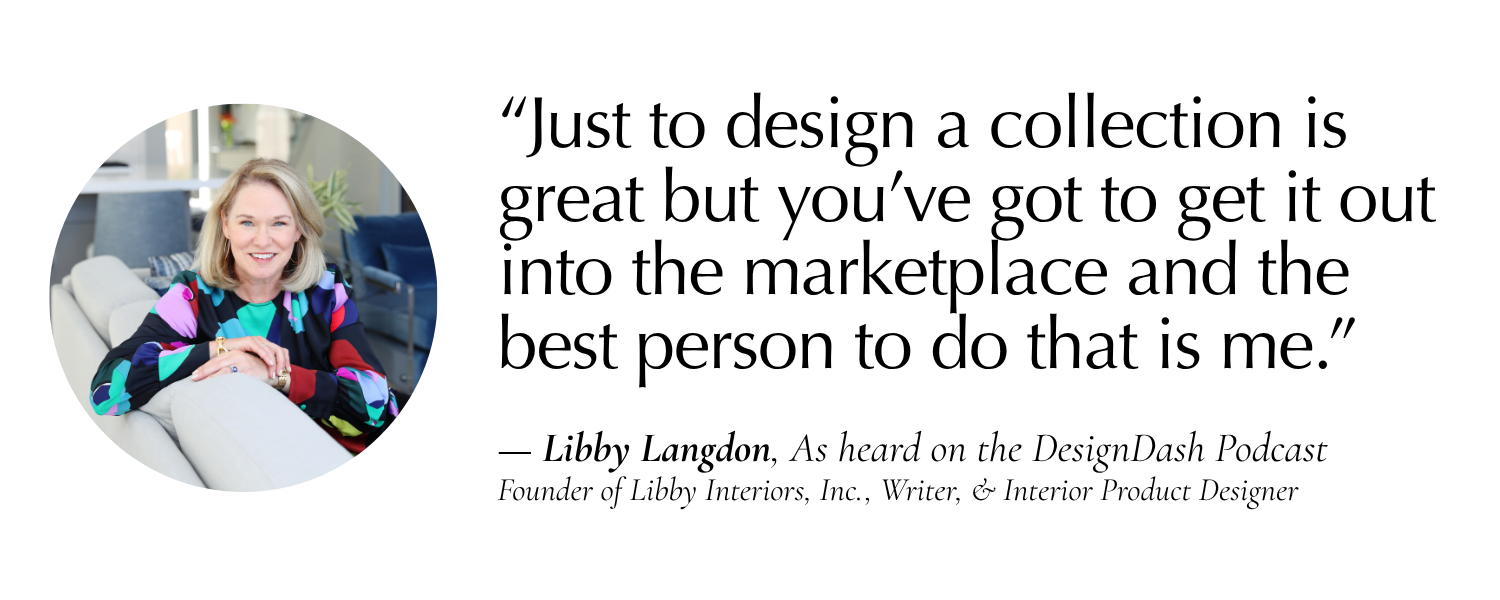
Laura and Melissa have both experienced market in different ways, but Libby reminds us that visibility is only one part of the job. Launching a line is one thing. Building demand for it is another. Libby says some people with collections zip in for a few hours and then disappear, but that’s not her approach. She is there from early morning through evening. Debuting your product line isn’t the glamorous finish line we all imagine it to be; instead, it’s the start of another job entirely.
Takeaway for Firm Owners
A product line doesn’t sell itself once it’s installed in a showroom. If you want licensing to produce real revenue, you have to be visible and engage with buyers, partners, and reps.
#3 Real homes teach designers what people will actually spend money on
Libby’s first design work happened in ordinary houses under unusual time pressure, and that early exposure still shapes the way she thinks about product and pricing. The makeover shows gave her confidence under pressure, more television experience, and access to real homes across the country. All of that meant real budgets, real habits, and real people making choices with their own money. That access completely changes your understanding of what people actually need from the interiors they actually live in.
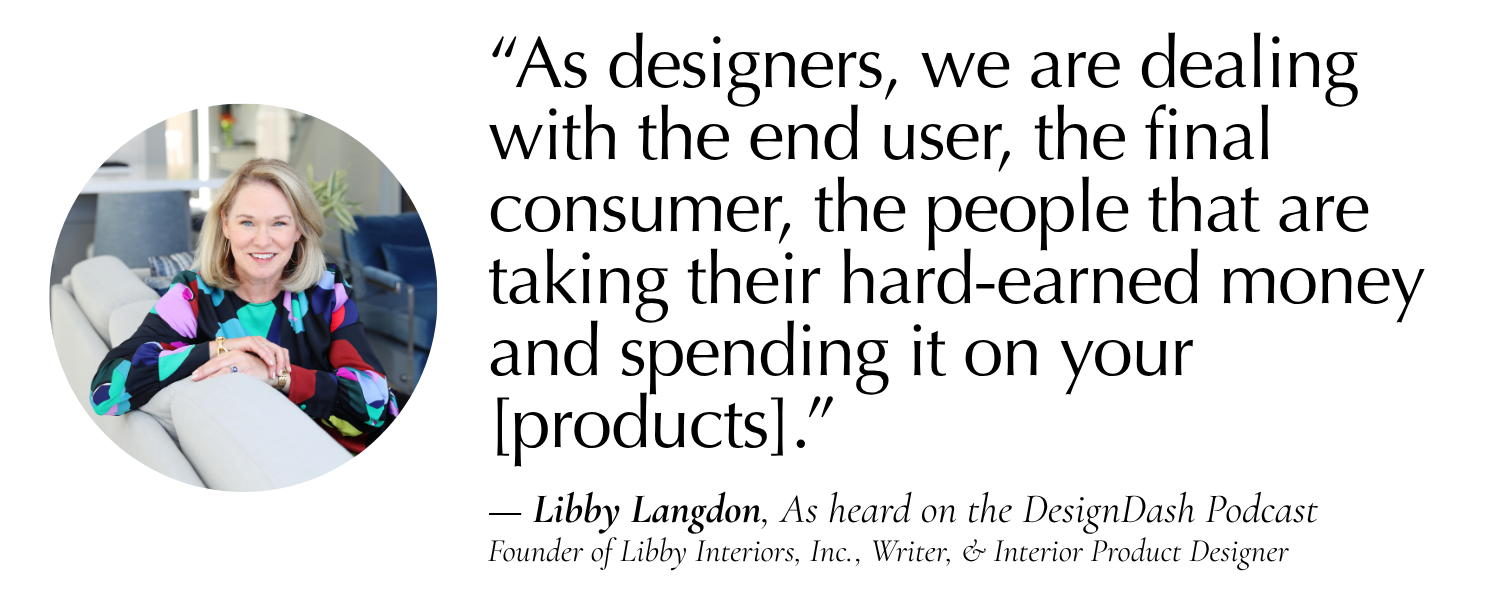
“I think the other thing that was great about doing that show is it got me traveling into real people’s homes across America. I think that definitely informs a lot of the product that I design for sure.”
That changes the way you think about interior products. Each product can’t just be clever, photogenic, or interesting to other designers. Someone has to want it badly enough to buy it, use it, and live with it. Libby ties that awareness directly to the way she approaches licensing, and you can hear how much of her work is shaped by what clients actually “choose and use”.
Takeaway for Firm Owners
The closer you are to real client behavior, the sharper your judgment becomes around price, practicality, and what belongs in your brand.
#4 Goal-setting is a real business tool
Libby may be open to risk, but she’s also very disciplined. Libby is a planner and a goal setter; she’s specific and results-oriented, so she’s not talking about goals in a broad or motivational way. She writes them down, gives them a timeline, and keeps them readily available so she’s always revisiting. Six months, one year, two years, four years, six years.
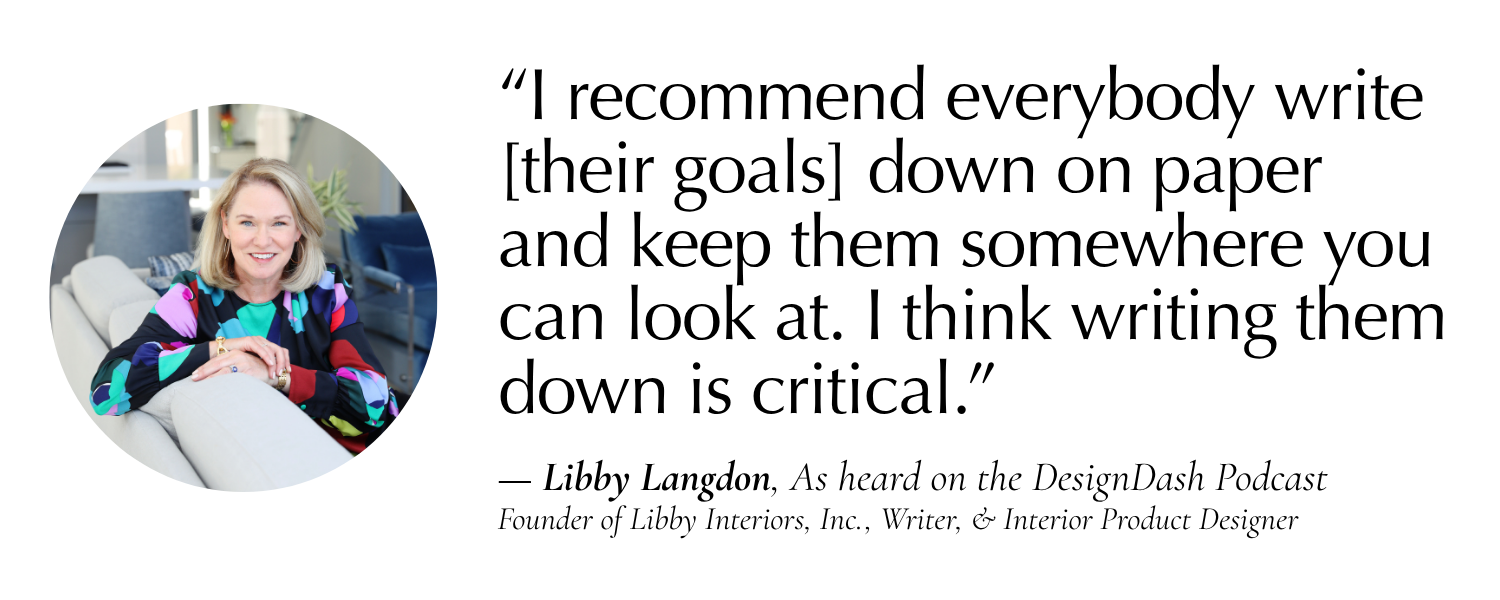
As Libby puts it, “I’m a big goal setter. That for me is really kind of the beginning. And I do it in September because I have that back to school mentality. But I write down what do I where do I see myself in six months, one year, two years, four years, six years. And by setting those goals and actually writing them down and keeping them in your desk and looking at them I think just keeps you on track.”
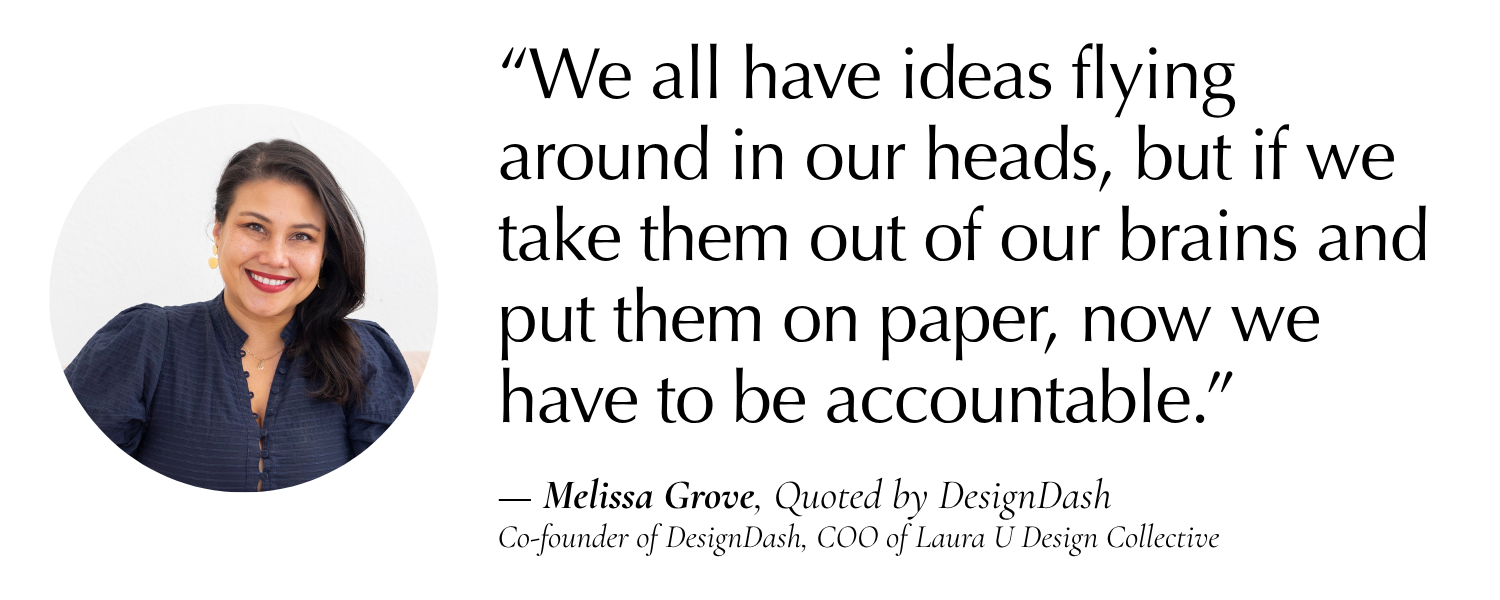
Melissa and Laura agree but point out that the month itself is arbitrary. In the DesignDash Community, December is scheduled as vision month, but there’s nothing especially sacred about January or September. You could do it now. Just take an idea out of your head, put it out into the universe, and place it on your desk.
Takeaway for Firm Owners
A written goal is much more concrete than a half-formed ambition “percolating” in your mind. It gives you something to return to, something to measure against, and something to drive you forward.
#5 A clear lane makes licensing easier to pursue and easier to protect
Libby didn’t pursue product design with a vague idea of “doing a collection someday.” She spent time figuring out what her brand actually was, and once she had language for that, she made a business case for product launches. We wanted to talk to Libby about how she “honed her lane” because so many designers in the DesignDash Community still wrestle with imposter syndrome or worry that they’re not formally trained enough to branch into product.

As Stacey Garcia told us in another podcast episode, “You could have a degree in interior design and have worked in a firm and when you hang your virtual shingle, you may still feel like an imposter.” According to Stacey, “You don’t have to have the formal training as long as you’re working with people who do so you don’t make mistakes.” But there’s another element to this, and that’s brand clarity. You can hand off the technical elements to someone else, but you can’t borrow someone else’s brand.
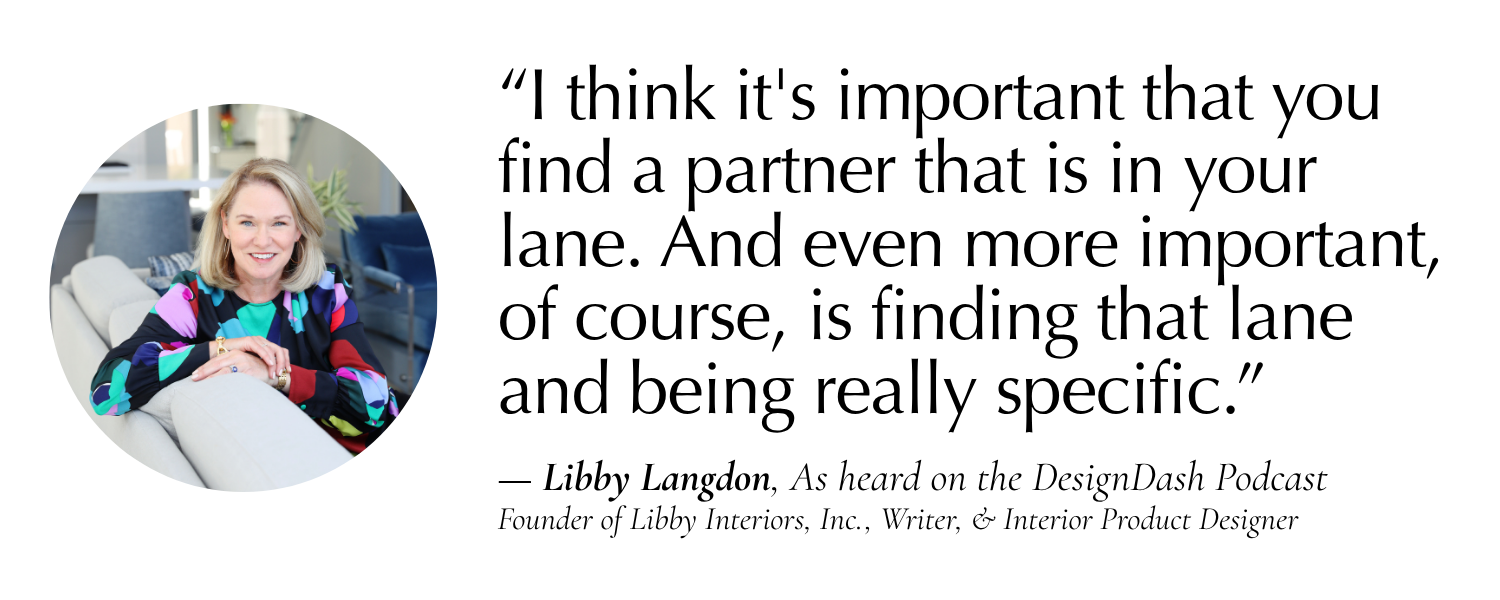
To that point, Libby’s “lane” is “Easy, elegant, everyday style.” Every word matters. “Easy” is her personality and her approachability. “Elegant” is elevated design that still works for real life and real budgets. “Everyday” is the client. Kids, pets, red wine, actual living. As she explains, “Once I sort of boiled down my jam into those four words, everything just became really clear and really easy for me as I was moving through the path of licensing.”
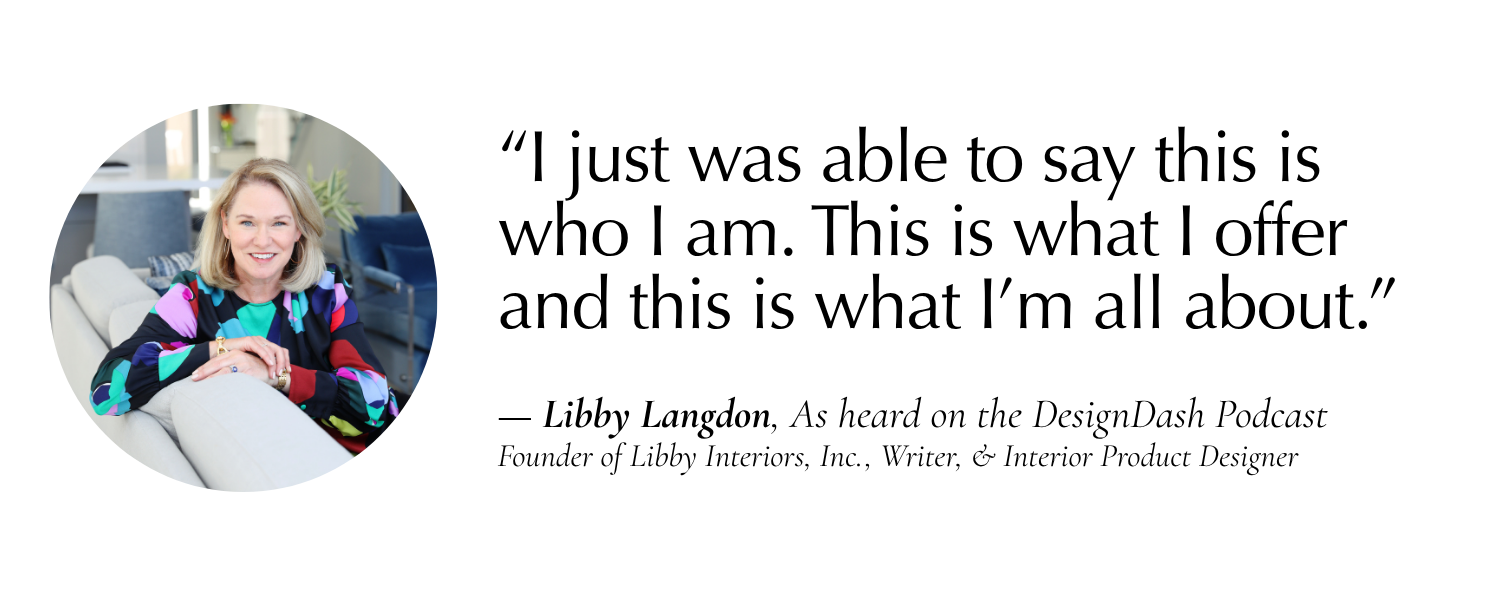
A lot of business frustration starts when a designer has taste but no language for that taste. Libby had both. She could describe her work in a way that a manufacturer, a client, or a buyer could understand. That level of clarity saves time, but it also protects you. It keeps you from saying yes to partnerships or clients who aren’t appropriate for your firm or your brand.
Takeaway for Firm Owners
Before you pursue licensing, be very specific about your lane. If you can describe your brand clearly, you’ll have a much easier time finding the right partner and saying no to the wrong one.
#6 A product line needs the right partner and the right internal support
Libby is very open about the fact that not every licensing deal is a good one, referencing an unsuccessful partnership that came through a licensing agent who was more interested in closing a deal than finding the right fit. This partnership culminated with a product she would never have used in her own projects. She gives one example that’s almost comical because it’s just so extreme: “I designed like a leather and nickel magazine rack and it was like $900 and I was like, ‘Oh, this is not good.’”
We’re also thankful to Libby for laying out what actually happens during licensing deals and product design. Her office handles CAD work for lighting. She’s thinking about wattage, tubing, dimensions, and how pieces break down for shipping. She’s also thinking about containers, quantities, and whether a design can actually make money once it goes into production. Not every firm owner is going to be in a place to accept the opportunity to create a product line in the first place. You might want to, but can your team handle your absence?
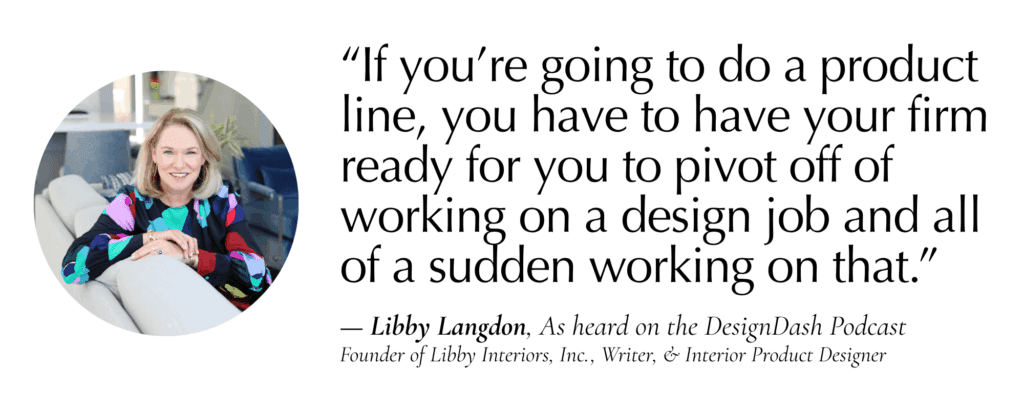
Later, she says, “Product doesn’t wait. The manufacturer is not going to wait. They’re going to say, ‘We need this information right now,’ and I drop everything.” Laura jumps in here with her own story about a failed product partnership from years ago, and Melissa points out that the team structure now is very different.
Many of us will somewhat dismiss that operational piece because we are so enamored with the idea of launching a product line. But most who pursue licensing aren’t stepping away from their firms to do it. They’re adding another layer to a business that requires regular client work, meeting deadlines, coordinating installs, sourcing everything for projects, and managing a team.

Libby makes it very clear that product development isn’t something you handle on the side when you have free time. If a manufacturer needs answers, they need them now. That means a firm owner must have a mature team that can keep projects moving, answer questions, and absorb some of the day-to-day pressure when the owner’s attention is diverted. Otherwise, the line may launch, but the rest of the business will stop in its tracks.
Takeaway for Firm Owners
A product line needs a great idea, a partner who fits your market, a price point that makes sense, and a team that can fill in for you after production starts.
Listen to the Full Episode with Libby Langdon
Libby’s career is unusual and unique, but the business lessons she’s learned along the way are not. Risk tolerance, visibility, product-market fit, goal-setting, team structure, and brand clarity all come up in this episode because they represent the real work behind a firm’s growth. A product line may look glamorous from the outside, but Libby makes clear that licensing asks for discipline, strong partnerships, and a firm that will keep operating when your attention is split.
If you’re thinking about growth in a similar way, whether that means expanding your firm, refining your positioning, building stronger systems, or preparing for new revenue streams, DesignDash Growth Studio was built for exactly that stage of business. Over six months, Growth Studio walks interior designers through the five pillars of a scalable firm: People, Profit, Promotion, Process, and Purpose. If you’re ready to build a more profitable, structured, freedom-driven business, join the waitlist for the next cohort and start planning your next move with more clarity.

Related Posts

How to Honestly & Effectively Design for Clients with Different Budgets
Interior design is full of challenges, but managing different client b
We Still Love Pattern Mixing in Maximalist (& Minimalist) Interiors
Pattern mixing may not seem as sleek or controlled as the trendier “

How to Say “No” to Client Requests That Blow Up the Budget
Learn how to say “no” to client requests that break the budget wit

How to Transform Your Design Firm In the Next 6 Months
In Episode 94 of the DesignDash Podcast, Laura Umansky and Melissa Gro
Boost Your Bottom Line: Real Talk from the DD Community
LIKE 0 LEAVE COMMENT 0 4 min read Summary Reflection Questions Journal

International Interior Design Awards and Application Deadlines
From the IIDA to the Gold Key Awards, these international design award