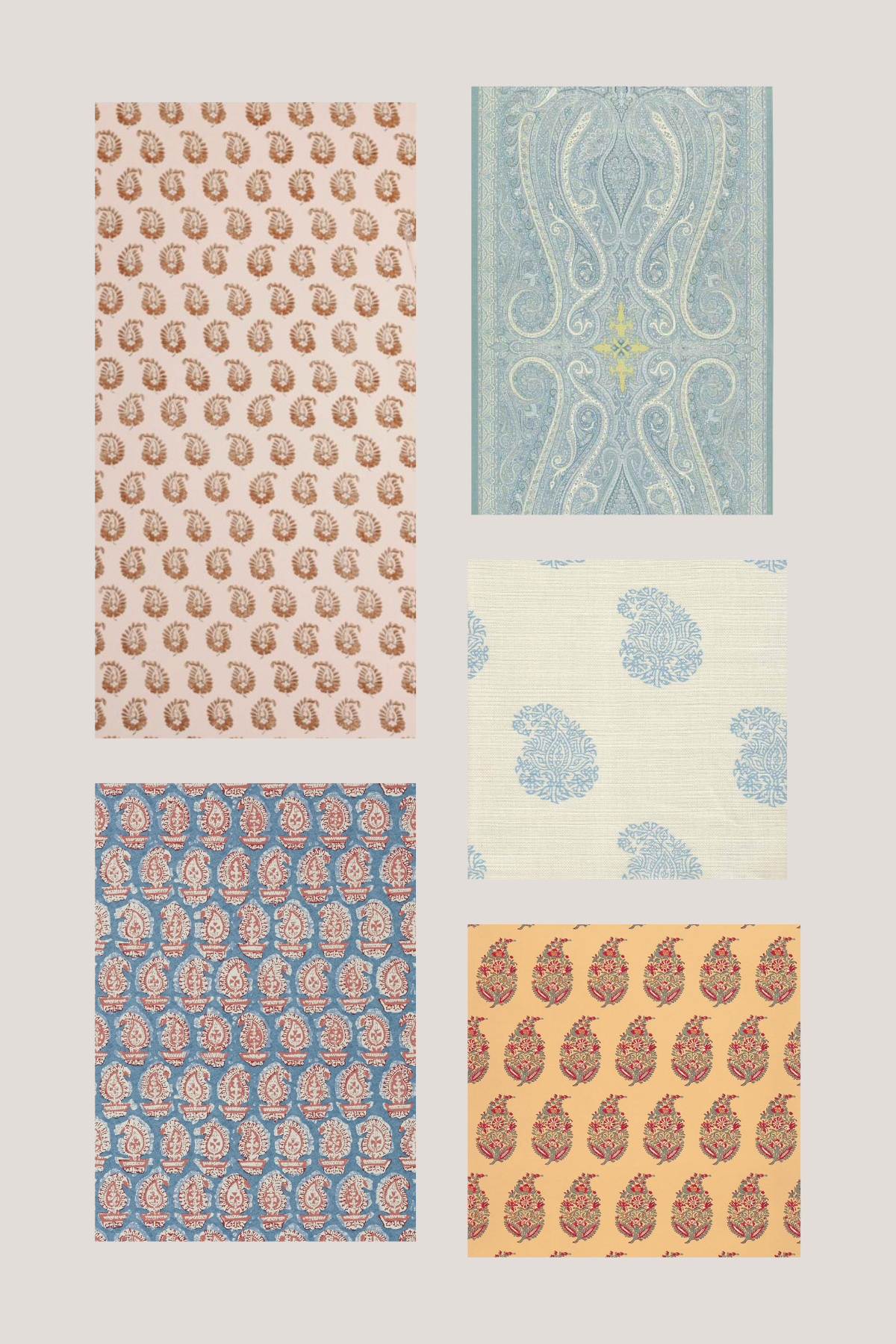
Paisley Print Wallpapers Inspired by the Ancient Persian Symbol

 4
4
 0
0Summary
Paisley wallpaper has a much longer history than its British name suggests. This article traces the motif from its Persian boteh origins through Kashmiri shawls, British imitation, and later fashion revivals, then looks at five wallpapered rooms that use paisley in very different ways, from soft natural neutrals to denser, more formal repeats.
Reflection Questions
Which of these rooms uses paisley in a way that feels most convincing to you: small and restrained, or large and highly decorative?
How much contrast does paisley wallpaper need around it? Does it work better for you with quieter upholstery and millwork, or with stripes, florals, and other competing prints?
When you look at these spaces, does paisley strike you as more traditional, more bohemian, or more flexible than that?
Journal Prompt
Think about a room you know well that could support wallpaper. Would paisley make sense there? Write through the scale, color, and density you would choose. Then write about what would need to sit beside it: upholstery, drapery, art, trim, wood tone, painted millwork, or bedding. Be specific about whether you would want the wallpaper to be the loudest pattern in the room or part of a more layered mix.
Depending on the space and the scale of the print, paisley wallpaper can appear bohemian, formal, Anglo-Indian, or even slightly psychedelic. This somewhat uncommon range is part of the reason that the Persian motif has lasted so long in furniture fabrics, fashion, and wallcoverings. It has had a long history, much longer than the British name suggests.
The name is British, but the icon is far older. The Met describes its boteh form, now called paisley in English, as an ancient Persian design associated with tree-of-life imagery and inspired by buds, cones, and palm fronds. By the late 18th and 19th centuries, the motif had become closely associated with Kashmiri shawls, then with European imitations woven in places like Paisley, Scotland. It is from that Scottish town that the English word originated.

A Brief History of Paisley, Which Began as Boteh
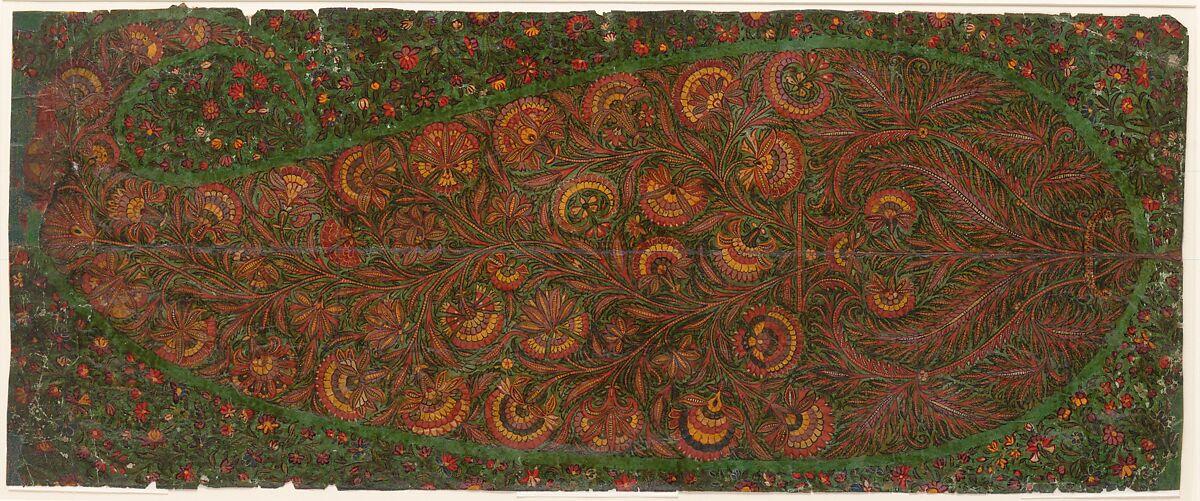
The motif now called paisley in English began as boteh, or buta, a much older form in Persian and South Asian art. The Met describes boteh as an ancient Persian design associated with tree-of-life imagery and inspired by buds, cones, and palm fronds. Other scholars connect it to the cypress tree, a leaf form, or a floral spray.
RISD’s research on the Indian boteh motif notes that its exact origin is still debated. One line of thought traces it to ancient Near Eastern wing or leaf forms that developed into a cypress or tree-of-life image. Another places it in Persian art of the 1600s, where a single flower flanked by leaves developed into the more familiar curved motif.
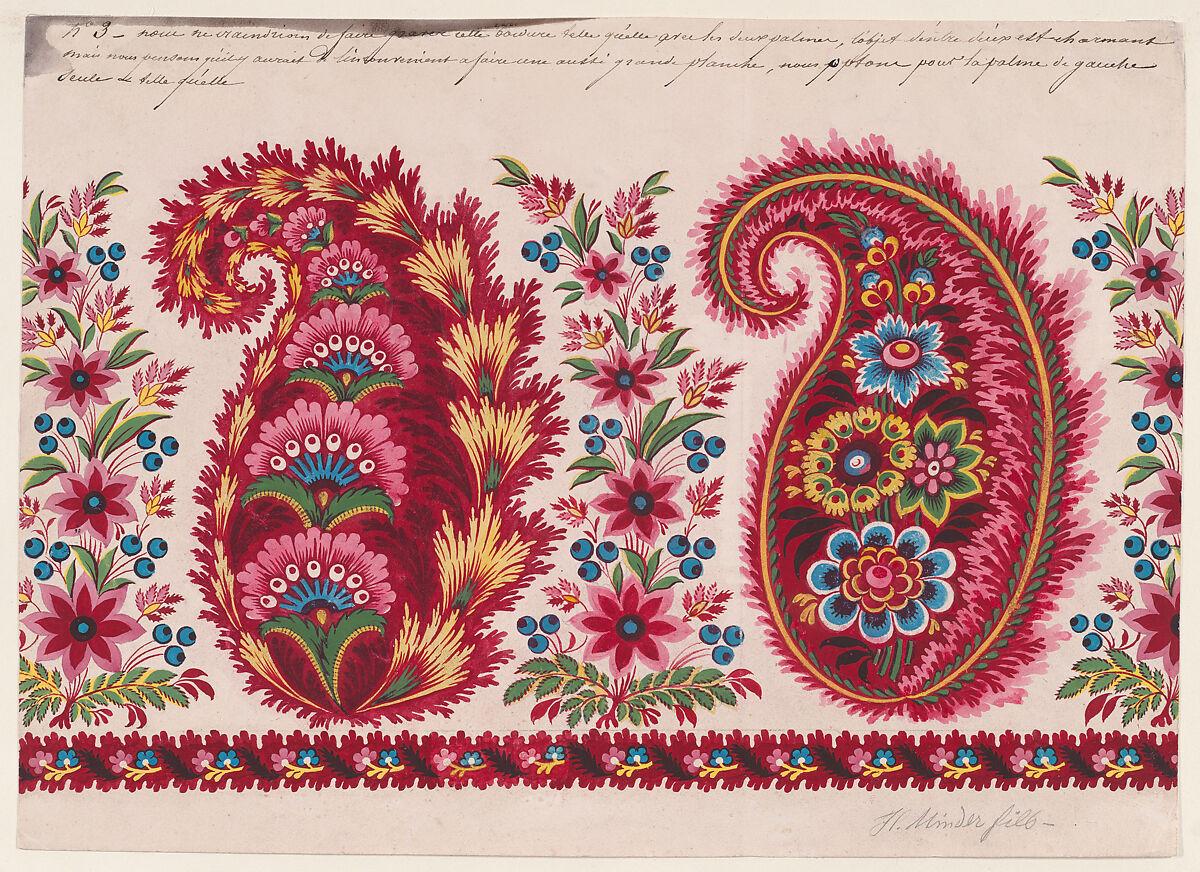
Before it was called paisley, the motif had already traveled widely through Persian, Indian, and Central Asian textile traditions. It appeared in woven, embroidered, and printed cloth, and it was especially closely associated with Kashmiri shawls by the late 18th and early 19th centuries.
The Met’s design sheet Motif from Kashmir Shawl: Pheerozee (Turquoise Color), No. 23 (pictured above just under the header), dated about 1822 to 1823, is one of a group sent from Kashmir to England by William Moorcroft for use in the British shawl industry. That object records a later stage in the motif’s history, when Kashmiri design was being studied and adapted for European manufacture, not the beginning of the motif itself.

The motif also appears in other South Asian textile traditions beyond Kashmiri shawls. The Met’s Sari-length textile from Bangladesh, Dacca, dated to the 19th to early 20th century, is a jamdani muslin sari with deep blue in-weave patterning and bold kalkas, or mango motifs, at the corners. The museum notes that this form is better known as the teardrop motif later made famous in so-called paisley shawls of Kashmiri workmanship.
Circulating the Paisley Print Throughout Europe

From the late 18th century, manufacturers in Britain began producing Cashmere-style imitation shawls, and Paisley, Scotland, became one of the main centers for machine-woven versions. Before the Scottish town gave the motif its English name, it was often referred to more directly as the “Cashmere shawl design.” The V&A Dundee notes that these British imitations became widely known as Paisley shawls, even as Indian originals continued to be admired for their delicacy and complexity.
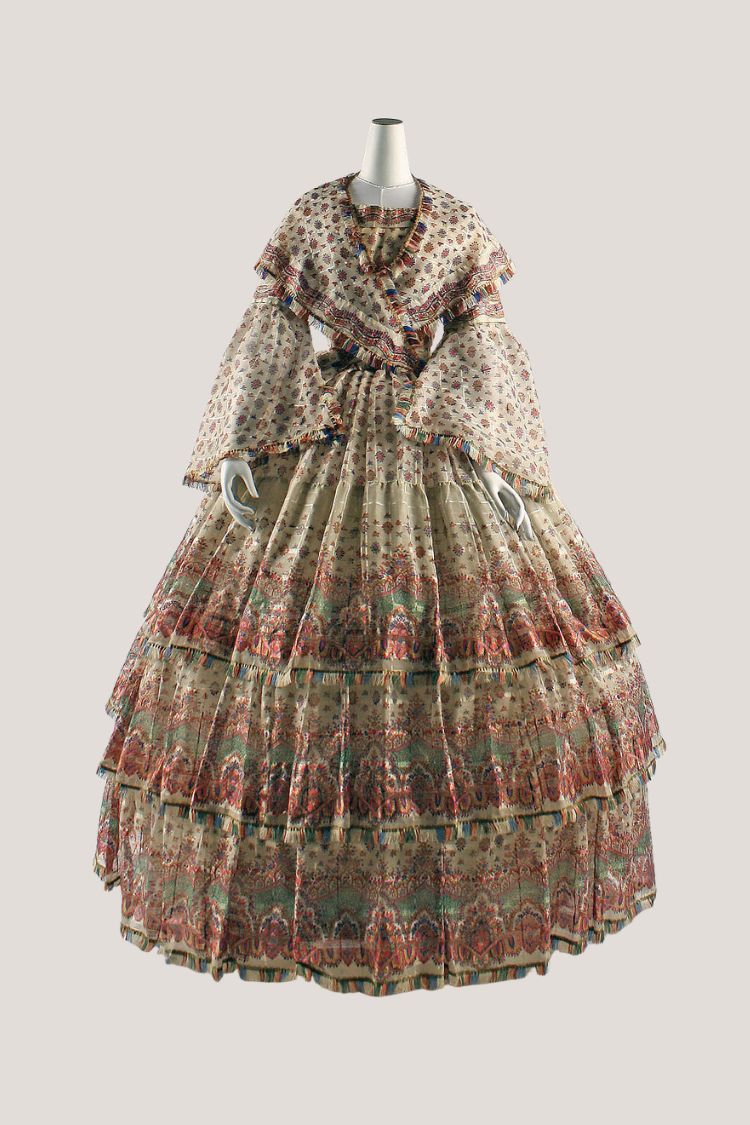
By the mid-19th century, imitation shawls were also being criticized in British design writing. Suchitra Choudhury writes in V&A Dundee that design reformers and critics treated many of the cheaper copies as aesthetically inferior. A report in the Journal of Design and Manufactures in 1851 complained about “inferior imitations” and mocked the “sham Cachmere or Norwich shawl” as a kind of visual falsehood. The criticism was not only about pattern. It was also bound up with class, taste, and the broader British concern that industrial manufacture had scale but not art.
Fuel your creative fire & be a part of a supportive community that values how you love to live.
subscribe to our newsletter
*please check your Spam folder for the latest DesignDash Magazine issue immediately after subscription

19th Century Paisley and Future Fashion Infusions
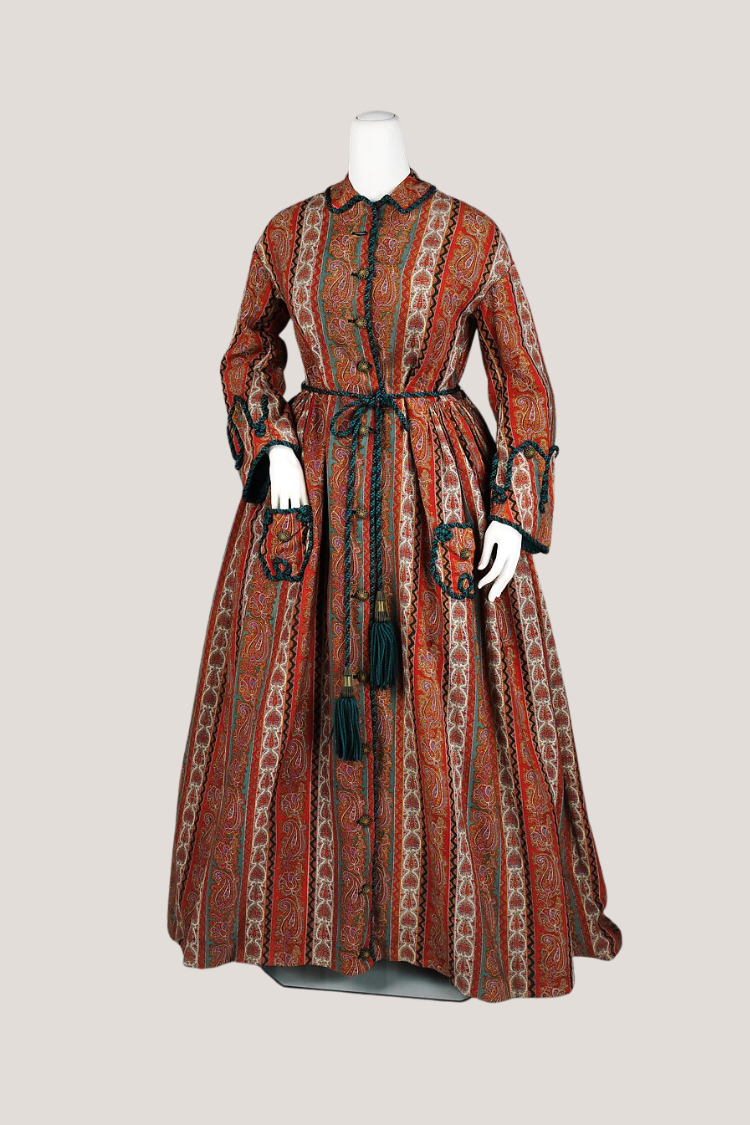
By the 19th century, the motif had also moved beyond shawls and into European textile design more broadly. Later it entered bohemian dress, Liberty fabrics, 1960s psychedelia, and rock-and-roll styling. BBC Culture traces that longer afterlife from Persian and Indian origins through Scottish textile production and into the wardrobes of Oscar Wilde, the Beatles, and later fashion brands.
Paisley was taken up by Arthur Lasenby Liberty, adapted by William Morris and the Arts-and-Crafts movement, and pictured in the work of Pre-Raphaelite artists including William Holman Hunt. In that period it also became, as the article puts it, shorthand for “sophisticated, arty bohemianism.” The pattern had another major revival in the 1960s through the Beatles and psychedelic fashion, and it later stayed in circulation through designers and musicians from David Bowie and Prince to Etro.
Five Paisley Wallpapers by Today’s Designers
Paisley reached wallpaper much later than it reached textiles. Cooper Hewitt notes that the motif appears on some wallpapers around 1900, though its larger wallcovering revival came in the 1960s, after a much longer life in shawls, dress fabrics, and printed textiles.
Rajasthan Paisley by Schumacher in a Room by Lauren Elaine Interiors
Lauren Elaine Interiors uses Schumacher’s Rajasthan Paisley across every wall of this sitting room. The wallpaper wraps the room in a warm tan ground with evenly spaced boteh forms in coral red, pink, and muted blue. Delicate and intricate, each paisley is packed with floral detailing, but the repeat is small enough that the wall still seems neutral even with the amount of color in the print.
Lauren Elaine Interiors pairs that wallpaper with a pink-and-white striped sectional and ottoman, pleated pink shades on the sconces, woven Roman shades, and black-framed botanical prints. Pattern is everywhere, but the wallpaper still sings because the print is orderly and the background color is soft. The paisley is tighter and more repetitive than other motifs in this space, which makes the room feel cohesive rather than over-designed.
Bangalore Paisley by China Seas Pictured in a Space by Jenny Keenan
Jenny Keenan uses China Seas’ Bangalore Paisley on the bedroom walls of this Sullivan’s Island beach house. The wallpaper covers the room in a soft cream ground with small paisley forms printed in natural tan. The print is gentle in both scale and color, which gives the wall a light, even pattern instead of a high-contrast one. It also leaves room for the wood bed and the larger floral textiles.
Keenan pairs the wallpaper with leafy green drapery, a faux bamboo bed, a floral bench at the foot of the bed, and a green pleated lamp shade on the bedside table. The room has a lot of pattern, but the wallpaper keeps the mix from appearing too tropical, too thematic, or too busy because the paisley is restrained and the palette is similar to the wall color.
Pasha Paisley by Schumacher Pictured in a Space by Martyn Lawrence Bullard
Martyn Lawrence Bullard uses Schumacher’s Pasha Paisley on the walls of this room in the Doheny Mansion. The wallpaper fills the wall panels in a pale taupe and cream palette, with a large vertical paisley repeat that stretches from molding to molding. The print is more formal than the smaller-scale examples in this article. Each boteh is elongated and densely worked, with a central medallion and a border taken from an antique shawl.

Bullard pairs that wallpaper with cream-painted millwork, a tufted chaise in pale velvet, dark wood tables, and a mix of carved and metallic accessories. There’s also a Taj Mahal pillow embroidered in gold and silver thread, which perfectly suits the wallpaper’s more courtly, textile-heavy reference points. The paisley is large, but the colorway is subdued, so the walls still recede behind the furniture and architectural trim.
Cypress Paisley Wallpaper by 36 Bourne Street Pictured in a Space by Sally Wilkinson
Sally Wilkinson uses 36 Bourne Street’s paisley wallpaper above the white paneled wainscot in this Chelsea flat bedroom. The print covers the upper wall in a soft cream ground with a very small repeating boteh in brown and muted olive. The scale is tight and the palette is restrained.
Wilkinson pairs that wallpaper with white bedding, a floral headboard in green and blue, a dark wood bedside table, antique lamps, and a green lampshade. There is a lot going on in the room, but the wallpaper keeps the upper wall active and still lets the furniture and textiles stay clear. The small repeat also works well with the wainscot. It gives the bedroom another layer of detail without making the walls feel too busy.
Gada Paisley by Anna French Pictured in a Space by The House Upstairs
The House Upstairs uses Anna French’s Gada Paisley on the bedroom walls from top to bottom, so the print sits close behind the bed and fills nearly the whole view. The wallpaper has a dark blue ground with a tight repeat of small pink and cream boteh forms. The scale is compact, and the spacing is close, which gives the wall a dense patterned surface rather than a looser scattered one.
That wallpaper is paired with mustard curtains, a black metal bed, blue-and-white bedding, a yellow lamp base, and framed botanical prints with green borders. The room has a lot of color, but the wallpaper keeps the palette tied together because the pink in the print picks up the pillow, the blue picks up the bedcover, and the small repeat keeps the wall from overpowering the furniture.
Written by the DesignDash Editorial Team
Our contributors include experienced designers, firm owners, design writers, and other industry professionals. If you’re interested in submitting your work or collaborating, please reach out to our Editor-in-Chief at editor@designdash.com.
Related Posts

These Are the Best Museum Programs for Children
When properly designed, the children’s programs at museums can offer
Understanding the Importance of Branding for Interior Designers
LIKE 0 LEAVE COMMENT 0 7 min read Summary Reflection Questions Journal

Retro-Futurism Revisited: How Y2K Aesthetics Are Making a Design Comeback
Rediscover the playful, over-the-top Y2K aesthetic as it makes a bold

Women, In Their Own Words: Rhonnika Clifton
Enjoy insights from Rhonnika Clifton as she shares her journey from se

Building Better Communities: Principles & Practices of New Urbanism
For the last several decades, the principles of New Urbanism have enco

These Are the Best Interior Design Programs in the Midwest
Learn all about the 5 top CIDA-accredited interior design programs in