



What to Delegate First When You’re Ready to Grow

 0
0
 0
0Summary
Reflection Questions
Journal Prompt
Hiring somebody doesn’t automatically give you more time. Oftentimes, it does the opposite at first because it means there’s another person to train, answer, review, and manage while you’re still doing everything you did before.
This is why the order of delegation matters.
If you’re preparing to grow your firm, start with responsibilities another person can take on without needing years of your experience or access to every client relationship. Then, as that person understands the business better, you can hand over more higher-stakes tasks.
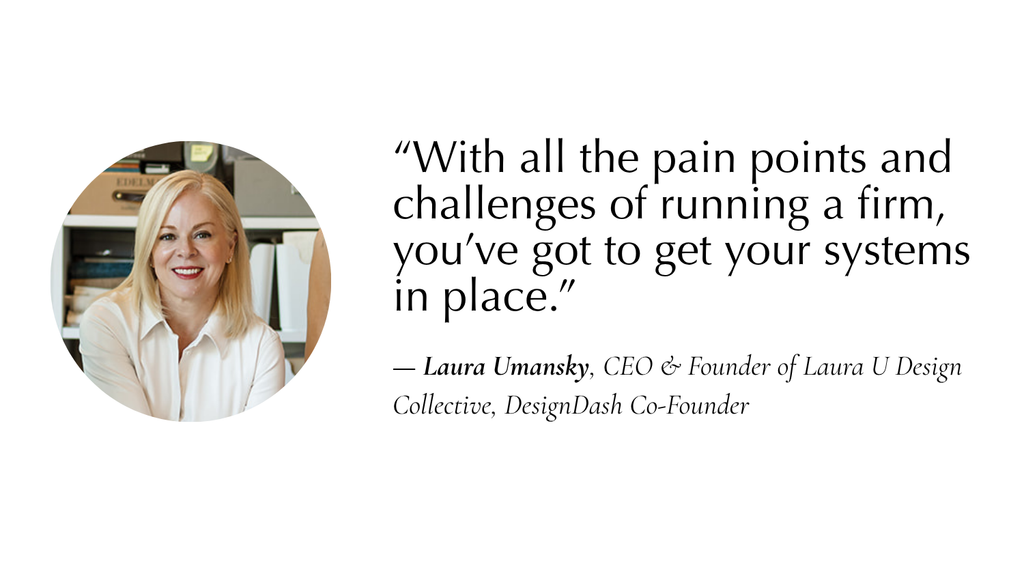
But you can’t even begin to delegate unless you have proper systems. You need systems in order to grow your firm because one person can’t keep directing every task, decision, and problem forever.
And that’s what we’re covering today.
Five Things to Delegate, in This Order
#1 Start With Work You Repeat CONSTANTLY
Look for work you do again and again in roughly the same way. You already know the steps, you know what a good outcome looks like, and you could probably explain the process without too much prep.
In practice, this might mean preparing a standard document, updating project information, organizing samples, entering project data, checking an order status, or doing another recurring task inside your process. The specific job will vary by firm.
If you can teach somebody how to do it and check the finished work fairly quickly, you have a good first delegation candidate.
You also don’t need to write a 75-page operations manual before handing anything off. In fact, Melissa Grove thinks your employees should help document processes as they learn them. After all, they’re the ones learning. Their perspective can help you create simple, thoughtful, digestible SOPs that any new hire will get along with.
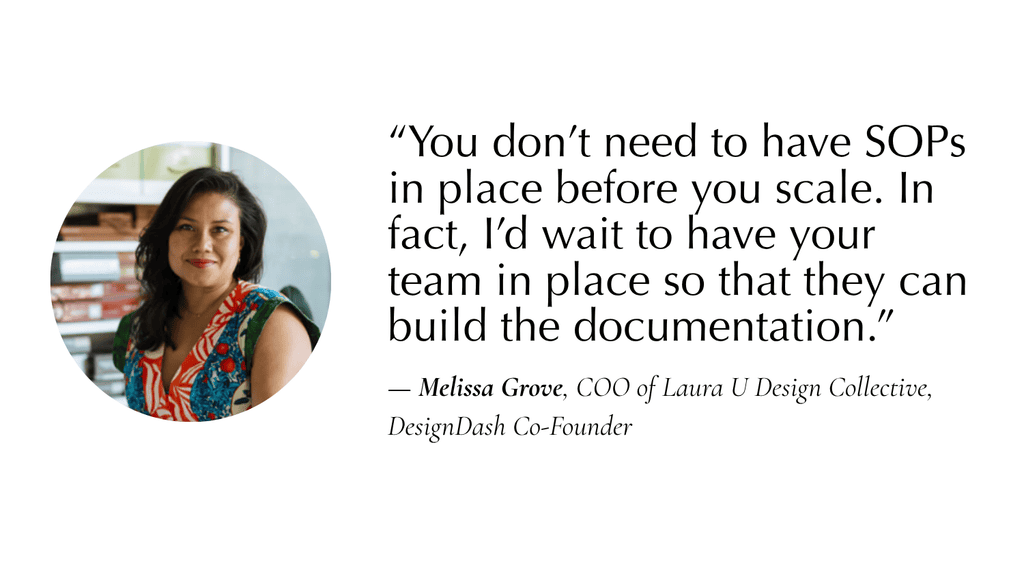
Have someone on your team do the work, write down the process together, and revise the instructions after pointing out all the little things you forgot to mention the first time.
#2 Next, Delegate the Work That Interrupts You Constantly
Some jobs don’t take hours at a time. They steal ten minutes here, eight minutes there, and another fifteen minutes right when you’re finally concentrating on something else.
I’m sure a few examples sprung to mind just now. Like a team member asks where to find a document, or a vendor needs a routine answer, or somebody wants to confirm a date, or a project can’t move forward because one small piece of information is in your brain and no one else’s.
Those interruptions add up, and they’re especially irritating because you usually know the answer. (Usually ONLY YOU know the answer.) Answering the question yourself can seem faster than teaching somebody else how to answer it. But that siloed thinking can keep you involved in hundreds of small decisions way after your firm has enough people to make them.
Pay attention to questions you answer over and over. Those are often processes that could easily be assigned to somebody else.

#3 Then Hand Off Preparation Work
Once somebody understands your firm a little better, start delegating work that preps a decision for you. That might mean researching options before you review them, assembling information for a presentation, preparing a first draft, updating drawings, organizing selections, or pulling together the information you need before making an important call.
You’re still making the decision, but someone else is doing the gruntwork needed to get you there.
This stage will take patience and compassion because your employee’s first attempt probably won’t match what you would’ve produced. You have more experience and much more context. Correct their work, explain why, and give that person another chance to do it.
If you keep taking the task back whenever somebody needs correction, you’ll be doing first-pass work FOREVER. A groundhog day of menial tasks.
Fuel your creative fire & be a part of a supportive community that values how you love to live.
subscribe to our newsletter
*please check your Spam folder for the latest DesignDash Magazine issue immediately after subscription

#4 Then Delegate Routine Decisions
Eventually, your employee should be able breeze right through prep work and start making decisions herself. But she’ll need rules in order to make choices that align with your firm’s culture.
Who can approve what? Which problems absolutely MUST come to you? What can a project manager decide without checking first? At what point does a design issue need feedback from a supervisor?
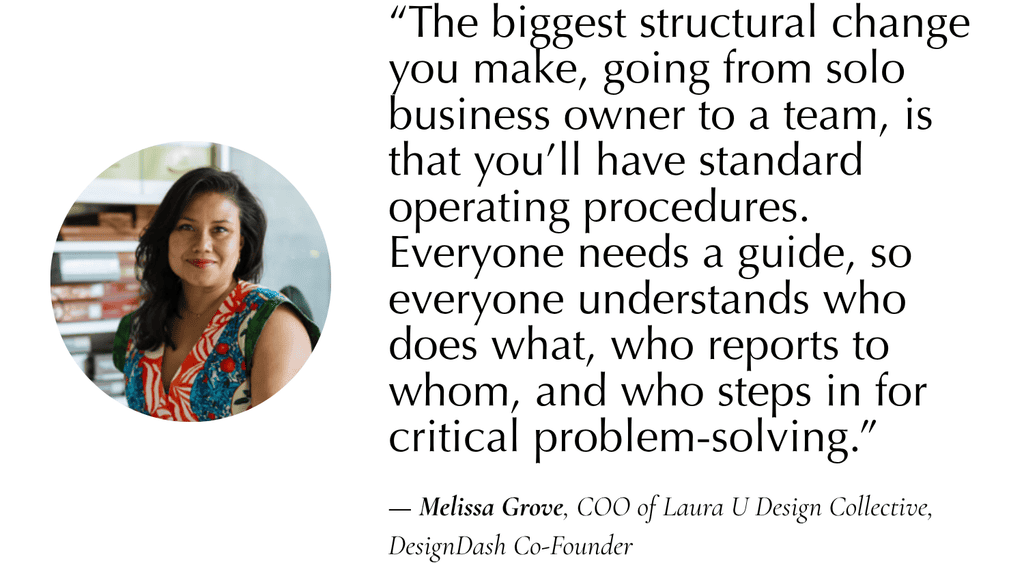
At some point, delegation has to include permission to make a decision.
#5 Delegate More Client-Facing Responsibility After the Team Knows Your Standards
Client-facing work usually needs more context than the earlier stages of a project’s development. The person representing your firm needs to understand your communication style, your expectations, the project history, and which problems should come to you immediately.
So give people more client responsibility as they prove they understand those things. Not before.
That might start with meeting confirmations and straightforward project updates. Later, a project manager might answer more complicated questions, lead portions of meetings, coordinate directly with consultants, or resolve normal project issues without involving you.
By then, she should also be able to identify the dividing line between her authority and yours.
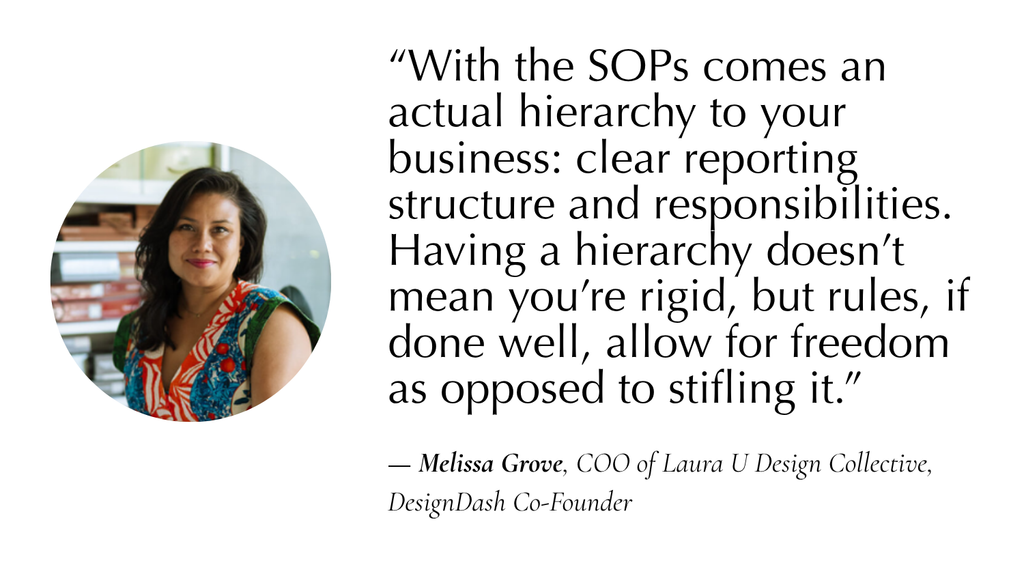
Your Job Will Change as You Delegate More
Eventually, you’ll be delegating pieces of the job you used to think of as your job. And that can hurt a little bit.
You might spend less time sourcing and more time reviewing. You might stop answering every client question and spend more time training the person who does. You might spend less time solving individual project problems because you’re responsible for making sure the team knows how to solve them.
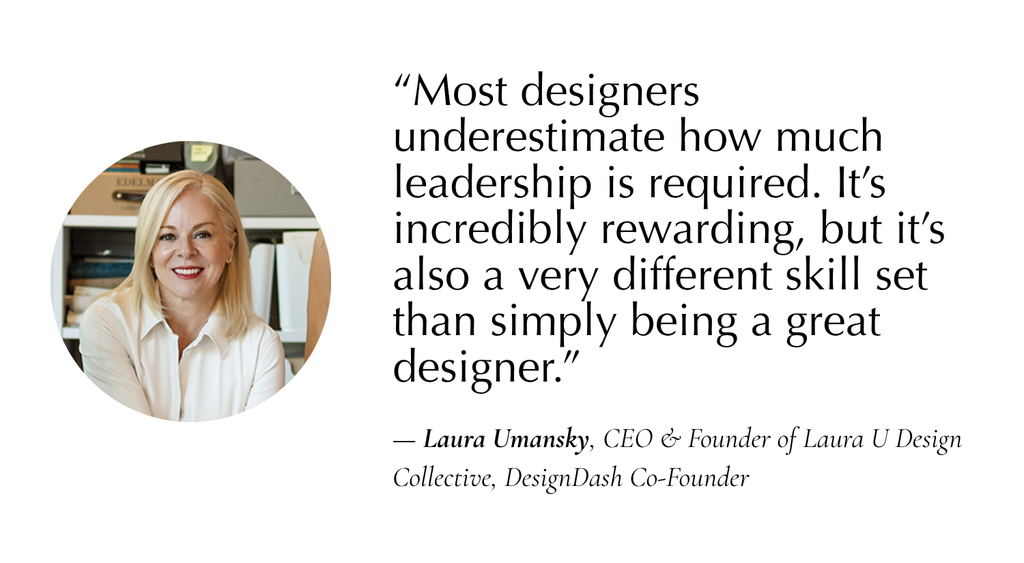
You don’t have to hand somebody your entire job the Monday morning they start. You can go at your own pace as long as you respect the fact that you’ve made a hire, and that hire deserves respect, autonomy, and the opportunity to grow.
Written by the DesignDash Editorial Team
Our contributors include experienced designers, firm owners, design writers, and other industry professionals. If you’re interested in submitting your work or collaborating, please reach out to our Editor-in-Chief at editor@designdash.com.
Related Posts

Do Personality Tests Actually Help You Hire Design Firm Employees?
Can personality tests improve design firm hiring or just complicate it

Talking to Kids About Your Career
LIKE 0 LEAVE COMMENT 0 10 min read Summary Reflection Questions Journa


Design Firm Friday: Explaining the Invisible Costs Clients Don’t See
Clients see fees and furniture, but hidden costs like freight, storage

Mid-Career Switch: How to Become an Event Planner With No Experience
If you've ever dreamed of orchestrating unforgettable experiences, a m

DesignDash Magazine: Kara Duffy Talks Dream Business Building
Kara Duffy shares her 6-step framework for building your dream design

POST COMMENT
You must be logged in to post a comment.