
Will Hiring More Designers Actually Increase My Profit?

 0
 0
Summary
Reflection Questions
Journal Prompt
You’ve got enough work to justify another designer, and your current team could certainly use the help. But before you post that job listing, you probably want to know whether another salary will actually make your firm more profitable.
In Episode 88 of the DesignDash Podcast, Laura Umansky and Melissa Grove tackle this issue because it comes up frequently in the DesignDash Community. Their answer is yes, provided you understand what you’re hiring for, how much of that employee’s time you can bill, and what the additional person will cost your business.
There are a few surprises in this episode! Including the fact that your junior designers might generate MUCH better profit margins than your senior staff, even when those senior designers bill at much higher hourly rates. And hiring someone who doesn’t bill clients at all could be a smart financial decision, too.
Here’s what to calculate before you commit to another salary.
Five Things to Calculate Before Hiring Another Designer
#1 What Kind of Firm Are You Actually Trying to Build?
Before you start calculating salaries and hourly rates, decide what you want your firm to look like. Maybe you want a small studio with three people where you’re still closely involved in every project. Or maybe you’re building a larger team with senior designers, directors, administrative staff, and several projects underway at once.
Each of these structures will have very different payroll requirements, and the profitability of each hire will depend partly on the role that employee plays within your team.
For example, a junior designer who can take on production work might make perfect sense for a three-person studio, while a larger firm could need another senior employee who can oversee projects, make important design decisions, and train less experienced designers.
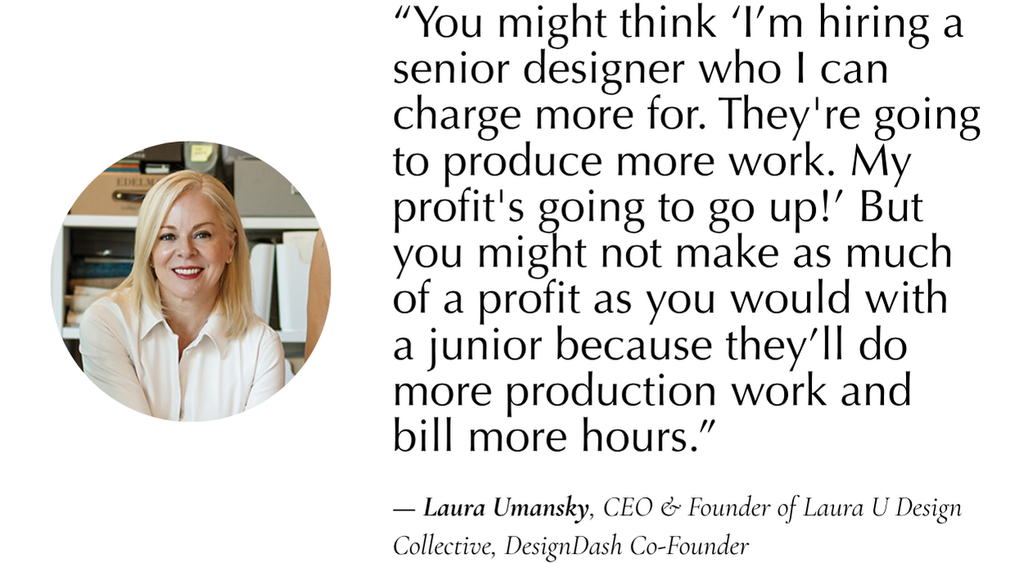
Your hiring decisions should reflect the business you actually want to run. Think about the work your new employee will do, how that person will fit into your existing team, and whether you have enough paid projects to support the additional salary. You can then calculate what that particular hire could contribute to your firm’s profitability.

#2 Calculate How Much of Their Time You Can Actually Bill
At Laura U Design Collective, we use something called a utilization rate to calculate how much of an employee’s working time can be billed to clients.
A junior designer might spend almost all her time sourcing, pricing, preparing drawings, managing selections, and completing other project work. A director, meanwhile, might spend a BIG part of her time mentoring employees, attending leadership meetings, managing your firm’s finances, and helping develop new business.
You’re paying both employees for their time, but their billable hours will look VERY different. Melissa explains how this affects profitability at LUDC.
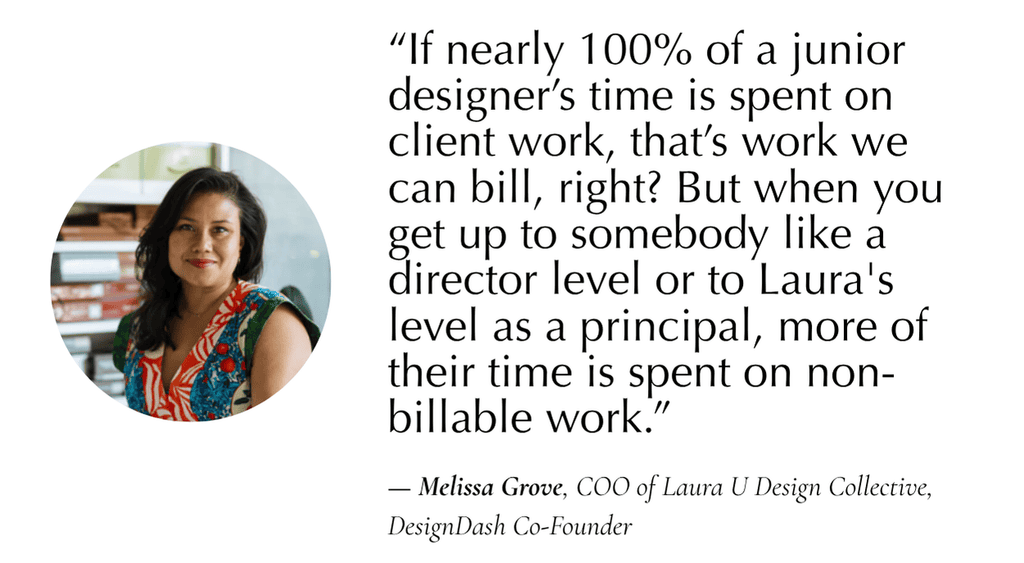
A junior designer’s utilization rate at LUDC can approach 100%, while someone in a senior leadership role might bill a LOT less of her time. That difference can have a bigger effect on profitability than the employee’s hourly billing rate.
Consider the example discussed in the episode: a principal bills $300 an hour but spends only 20% of her time on billable work, while another designer bills $150 an hour and charges 90% of her time to clients. Despite the principal’s much higher rate, the second designer generates more billable revenue over the same number of working hours.
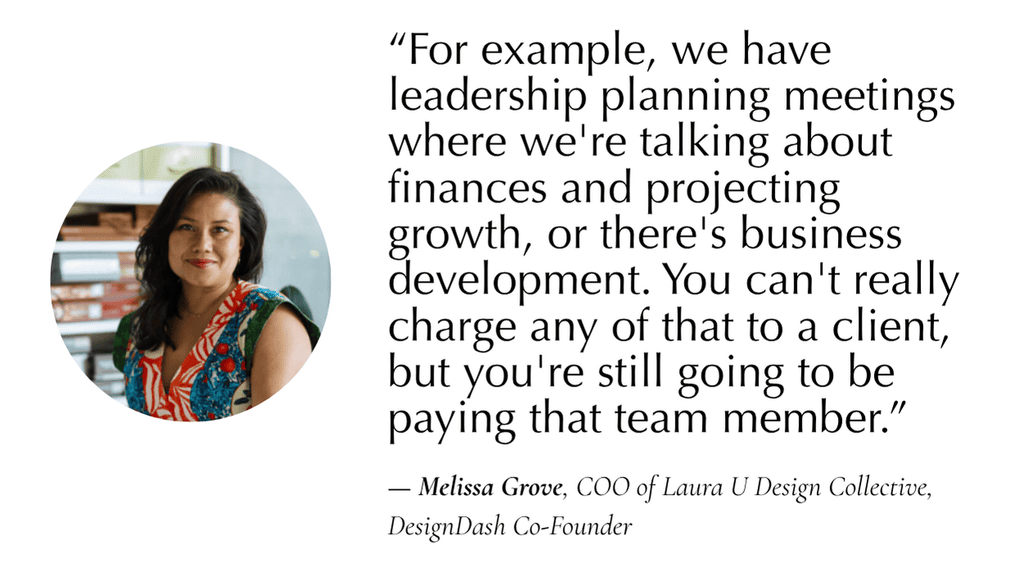
A higher hourly billing rate won’t automatically give you a heftier profit margin. Before hiring, estimate how many hours that employee can realistically charge to projects after accounting for meetings, training, administration, and all the other responsibilities that come with the role.
#3 Consider the Profitability of Your Entire Team
If junior designers can spend almost all their time on billable work, should you just hire a bunch of them and watch the money roll in?
Well, somebody has to manage them. And if that person is YOU, you’d better account for all the time you’ll spend supervising their work, answering questions, reviewing presentations, and helping them manage their projects.
In the episode, we chat about what would happen if you hired ten junior designers simply because each one had a 90% utilization rate. You might generate plenty of billable hours from those employees, but you’d also need somebody experienced enough to oversee all ten. If you take on that responsibility yourself, your own utilization rate could drop dramatically.
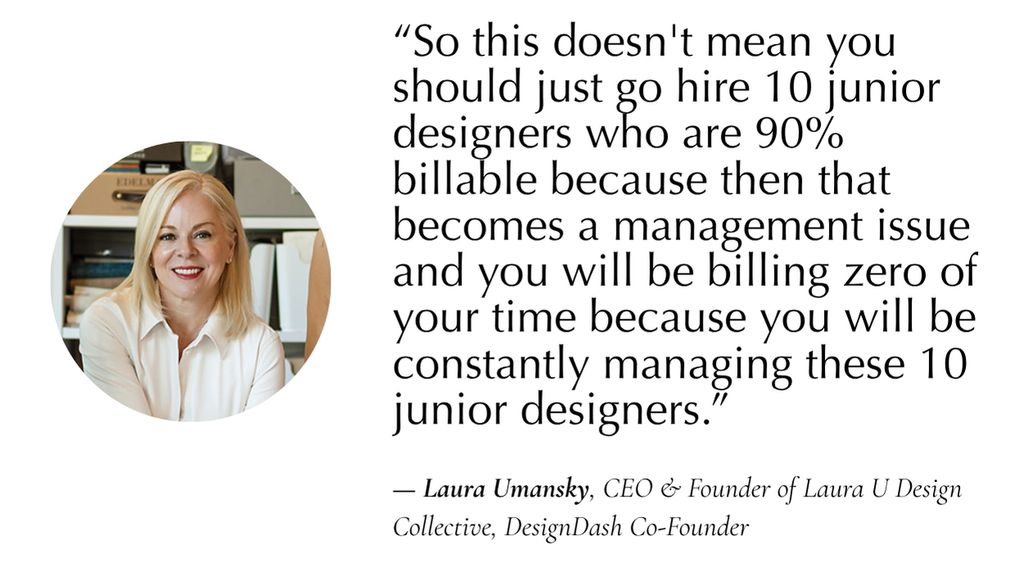
Melissa estimates that a junior designer at LUDC might generate a profit margin around 70%, while the target for a director is closer to 30%. Those are estimates from their particular business, and the episode doesn’t provide a universal formula for calculating them. Your numbers will depend on your salaries, billing rates, workload, and expenses.
Calculate the profitability of the team you want to build before hiring for individual roles. How many junior designers can your senior employees supervise effectively? How much billable work will those senior employees complete themselves? And how much additional project work can your team reasonably accommodate?
Fuel your creative fire & be a part of a supportive community that values how you love to live.
subscribe to our newsletter
*please check your Spam folder for the latest DesignDash Magazine issue immediately after subscription

#4 Account for Employees Who Don’t Bill Clients
Your accountant, administrator, marketer, or procurement manager might never generate the same kind of billable revenue as a designer. They can still make an enormous contribution to your firm’s profitability.
LUDC employs full-time staff across accounting, marketing, and administration, and it also works with contractors. Smaller studios can consider freelancers, agencies, and part-time professionals when there’s enough work to justify support but perhaps not enough for another full-time salary.
An accountant is a good example of someone whose contribution goes beyond the hours she can bill. Melissa discusses how operational support can give a designer more time to work on projects and develop new business, even when they’re not directly billing.
An experienced accountant can help you avoid some VERY expensive errors, particularly if your firm purchases hundreds of thousands of dollars in furnishings. A marketing professional could help you find more clients, while an administrator might take enough routine work off your plate that you can spend considerably more time on billable design work.
LUDC’s approach to procurement is another interesting example. Its procurement employee bills for some project-related responsibilities, including site visits, but the firm doesn’t charge clients for every hour spent troubleshooting orders or resolving problems. Because LUDC also charges a markup on furnishings, that revenue contributes to the cost of procurement support.
Think about how each role contributes to profitability before deciding whether you can afford it. That contribution could come through billable hours, fewer purchasing errors, additional clients, or more of your own time available for design and business development.
#5 Calculate What That Employee Will Cost Before Making an Offer
If you’re seriously considering another hire, it’s time to make a spreadsheet.
Start with the proposed salary and the employee’s expected hourly billing rate, then estimate how many hours she’ll actually spend on billable client work. Account for the time she’ll need for meetings, training, and other responsibilities, along with the additional employment costs your firm will incur.
Then look at how the hire will affect the profitability of your entire team. A director who spends substantial time managing other designers could make it possible for several employees to complete more billable project work. An accountant could help your business collect fees you’re currently missing, while another designer could give you the time to develop relationships with prospective clients.
You need reliable financial reporting to make any of these calculations, which is one reason Melissa places so much importance on professional accounting support.
If you don’t currently know how profitable your employees are, start there before adding another person to your payroll. A good bookkeeper or accountant can help you understand your existing financial performance, estimate the implications of another salary, and work out what your business can realistically support.
You should know roughly how much revenue your new employee needs to generate before you make an offer. And if the position won’t generate billable revenue directly, you should understand how it will support the people who do.
Before You Hire, Run the Numbers
If you’re thinking about hiring another designer, ask yourself:
- How much additional billable work can my firm support?
- What’s the proposed employee’s hourly billing rate?
- How many hours can I reasonably expect her to bill?
- How much supervision and training will she need?
- Will hiring her reduce another employee’s billable hours?
- Could an administrative or operational hire help my existing team generate more revenue?
- How will this position affect my firm’s overall profitability?
Hiring more designers can absolutely increase your profit, and you don’t necessarily need to hire the person with the most experience or the highest billing rate to make that happen. Your existing team, your projected workload, and the kind of business you want to build should all factor into the decision.
Make sure you can explain how another employee will contribute to your firm’s profitability before you commit to another salary. Watch the rest of this episode to get even more fabulous advice from Melissa and Laura!
Written by the DesignDash Editorial Team
Our contributors include experienced designers, firm owners, design writers, and other industry professionals. If you’re interested in submitting your work or collaborating, please reach out to our Editor-in-Chief at editor@designdash.com.
Related Posts

“But I’m So Busy!” Why Your Full Calendar Might Not Mean a Healthy Design Firm.
Tracking unbilled hours, refining project time, adjusting pricing, and

Should You Ever Take On a “Friend Favor” Project as a New Design Firm Owner?
Learn how to navigate “friend favor” design requests without under

Celebrating Powerful Women in Commercial Real Estate
From Camille Renshaw of B+E to Zainab Mohammed of WASL, women are maki

Should I Rent an Office or Just Work From Home in My Firm’s First Year?
Learn whether a home studio or a rented space makes more sense in your

Get to Know the DesignDash Team Through a Q&A at Our 2024 Holiday Party!
From favorite traditions to proudest moments, get to know the team and

The Secondary Art Market: Understanding Resale Value
Learn all about how the secondary art market functions and how to get