



Is Your Design Firm Too Small to Serve New Clients?

 0
 0
Summary
Reflection Questions
Journal Prompt
There’s a point at which being busy costs you business.
You’re booking projects months in advance, your senior designers are full, and a new inquiry comes in that checks almost every box. The budget’s workable. The timeline is reasonable. The client seems lovely. You’d take the project in a second if somebody on your team actually had room for it.
So you put her on a wait list. Then another “perfect fit” inquiry comes in. And another. Eventually, you have to ask whether your firm is dealing with an unusually busy stretch or whether you simply don’t have enough people for the amount of work coming through the door.
You have to figure this out because the solutions to each issue are VERY different. A temporary crunch might call for a later start date, some schedule rearranging, or outside help with a specific task. A firm that has been booked five or six months out for most of the year probably needs a bigger conversation about hiring.
Before you add another salary, though, make sure you know which problem you actually have.
Five Signs Your Design Firm Might Be Too Small for the Work Coming In
#1 How Long Is Your Wait List, REALLY?
A wait list can work extremely well for an interior design firm, especially when a client reaches out early enough in the planning process. A major renovation usually has plenty of moving pieces before construction begins, but your design work needs to be timed WITH the architect, builder, permitting, selections, documentation, and everything else.
So a client who wants to work with your firm can sometimes wait a month or two for a formal start. But there’s a point where the delay starts to interfere with the project itself.
LUDC uses wait lists with clients they genuinely want to work with. They take a retainer, give the client an actual place in the queue, and stay in contact before kickoff. One client even expanded the scope while waiting because the extra planning time gave them room to think bigger about the project.
Pull up the inquiries you received this year and look at the start dates you were quoting. Were you two months out in February, four months out by June, and five months out again in October? That tells you something different than one unusually packed summer.
Also pay attention to whether clients are willing to wait. A two-month delay probably isn’t much of a problem if your ideal clients keep signing anyway. Six months can be a much bigger ask, especially for somebody who already has an architect, builder, or construction schedule in motion.
Your waitlist should buy you a bit of time. But if it’s turned into the place where great projects go to die because your team has no opening for half a year, take that seriously.
Fuel your creative fire & be a part of a supportive community that values how you love to live.
subscribe to our newsletter
*please check your Spam folder for the latest DesignDash Magazine issue immediately after subscription

#2 Pay Attention to the Projects You HATE Turning Down
Being booked doesn’t automatically mean you’re understaffed. Design firms are supposed to turn projects away.
If somebody wants a two-room furnishing project when your firm only takes full-home work, losing that inquiry tells you nothing about capacity. Same goes for the client whose budget is half your minimum or who wants design completed before your team could reasonably finish the first presentation. You don’t need another employee so you can say yes to projects you shouldn’t be taking anyway.
The projects worth counting are the ones you would have signed if somebody on your team had room to take them on.
In Houzz Pro’s yearly finance checklist, writer Hope Dorman includes workload alongside the more obvious financial questions about expenses, profitability, and pricing. A firm can have a perfectly healthy year on paper and still be leaving a significant amount of GOOD business behind because the team is already full-up.
Go back through the projects you referred out or declined this year and be ruthless about which ones actually belonged in your firm. If you had the capacity, would you have wanted the client? Did the scope fit the work you’re trying to do more of? Was the budget where it needed to be? Would the project have been profitable? Then put a rough dollar amount next to the ones you lost.
Turning away one $75,000 design engagement over the course of a year probably isn’t a reason to add a full-time salary. Turning away five projects in your sweet spot because nobody can take them is a very different conversation.
The number of inquiries coming in isn’t nearly as important as the number of GOOD projects slipping past you.

#3 Find the Bottleneck Before You Add Another Designer
A firm can run out of capacity without actually being short on designers.
Your senior designers could have room while procurement is completely buried. Your junior team could have plenty of hours available but everything is waiting for a senior-level review. You could have enough people to design the projects and nowhere near enough project management support to keep them moving. Or the real bottleneck could be YOU because every presentation, drawing set, and client decision still has to make a trip across your desk.
Hiring another designer won’t fix all of those problems.
LUDC usually has around 14 projects going at once, with senior and junior designers organized into pods. Their master project list lets Laura and Melissa look across those teams and see where the workload is actually piling up instead of assuming that a busy studio simply needs more bodies.
Take every active project and look at the next six months. Who is leading it? Where is it in design or construction? What major presentations, drawing packages, procurement pushes, site work, and installations are coming? More importantly, WHO will be doing each of those things?
This is where you can identify expensive hiring mistakes BEFORE making them.
If six projects are stalled because everything needs principal approval, another junior designer gives the principal MORE work to review. If your design team has room but purchasing is drowning in quotes, acknowledgments, freight problems, and receiving schedules, another designer doesn’t solve that either.
Figure out where your team is getting stuck. Then hire for THAT job.
#4 Don’t Hire for One Project. Hire for What Comes After It
A spectacular project can make another salary seem reasonable and justifiable.
It’s large, it could run for two years, the budget is exactly where you want it, and it’s the kind of house you already know will be valuable to the portfolio. The only problem is that your existing team can’t take it on.
Take that exciting new project out of the equation for a minute. Would you still need this person?
If your senior designers have been overloaded for six months, your wait list keeps growing, and several other strong projects are sitting in the pipeline, the answer could very easily be yes. If the entire hiring case disappears without this ONE client, you’re trying to solve a temporary workload problem with a permanent employee.
That distinction also helps you decide whether some outside help would be enough. Laura talks about using contractors for clearly defined work like CAD drawings or 3D renderings, while keeping client-facing project leadership with salaried employees who already know the firm’s processes and standards. A six-week production crunch and a shortage of people who can independently run a two-year project are not the same staffing problem.
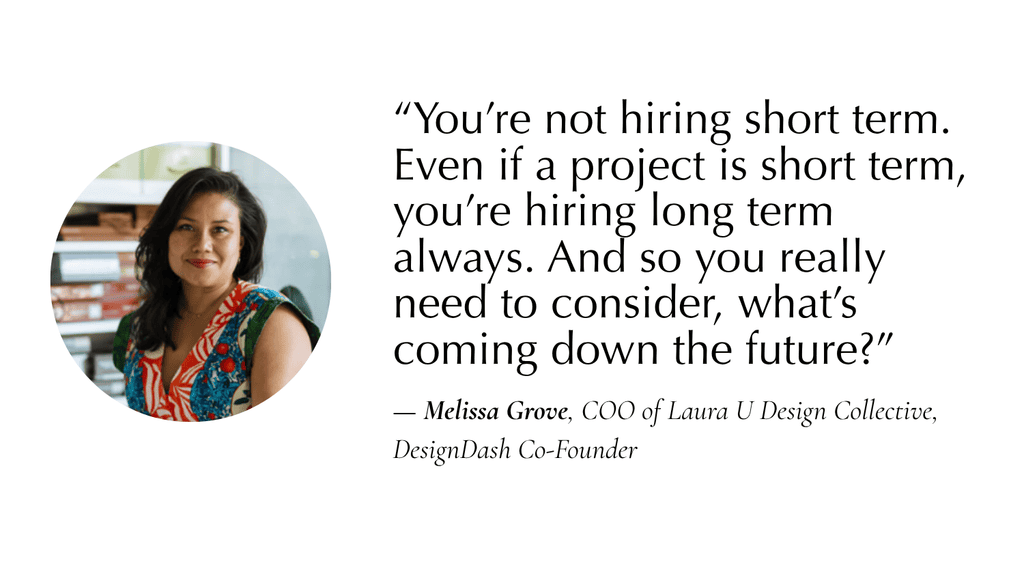
Look past the project that started this hiring conversation. What work will this person be doing six months from now? A year from now? If you can answer that without referring back to the same client every time, you’re probably looking at an actual role instead of a panic hire.
#5 Decide Whether You Want a Bigger Firm or Just Better Projects
There’s one more question buried underneath all of this. Do you actually WANT to grow your team?
A full pipeline doesn’t mean you’re obligated to build a larger firm. You could raise your project minimum, concentrate on larger scopes, accept fewer clients, keep a longer wait list, or simply refer out more work. There’s no rule saying every firm with more demand has to turn itself into a bigger organization.
But if you DO want the additional revenue, make sure you understand how many clients and projects you’ll need to accomplish that. In a Business of Home article about planning for 2027 before Q4 ends, Pearl Collective co-founder Gail Doby turns a revenue target into something much more concrete.
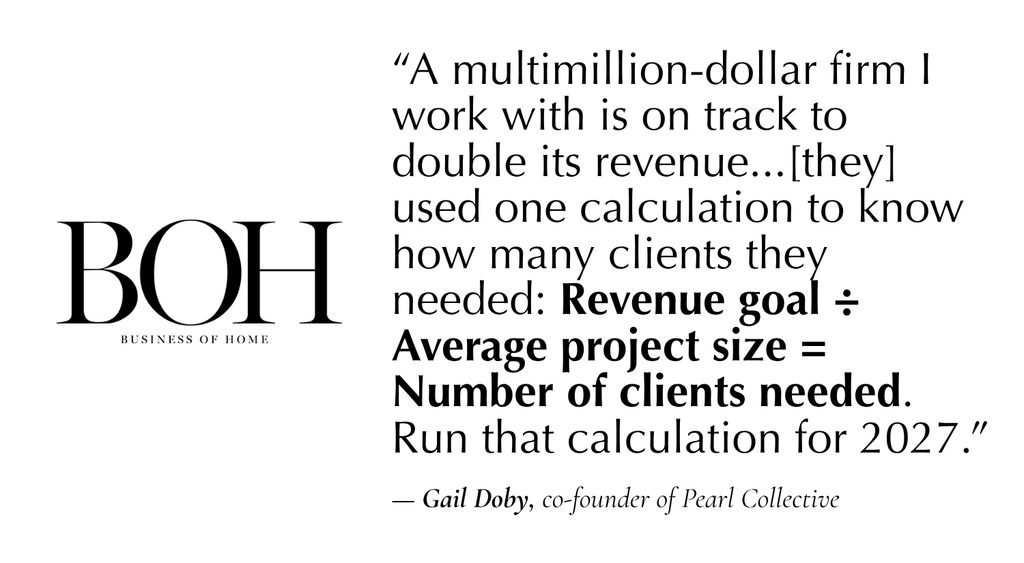
Say your target calls for ten projects at roughly the size you’re doing now. That doesn’t mean ten lovely blank spaces beginning January 1. You could already have six projects carrying into the new year, several of them heading into extremely active phases. January does NOT clear the master project list.
Now compare the number of clients your financial plan assumes with the number of projects your team can actually support at one time.
And be realistic about employee time while you do it. Forty hours on payroll does not equal forty hours available for client work. Team meetings, internal reviews, training, PTO, business development, management, and the inevitable project problem that eats half a Tuesday are all taking hours too.
If your 2027 goal only works when every designer spends virtually every working hour billing clients, the problem isn’t going to wait until December to introduce itself.
You Don’t Have to Grow, but You DO Have to Decide
A waitlist by itself doesn’t mean you need another employee, and neither does one huge project, one awful month, or the fact that everybody complains about being busy during installation week.
Look for patterns across the whole year. Now’s a great time to start as we wrap up October.
How far out have you consistently been booking? Which projects did you lose because the team was full? Where is work actually backing up? Would another person have enough to do after the project that started the hiring conversation? And does the amount of work you want to take next year even fit inside the team you have now?
If the only way you can keep saying yes to the right clients is by pushing starts farther out, sending great projects elsewhere, or putting yourself back on every project that nobody else can take, you need to expand.
Written by the DesignDash Editorial Team
Our contributors include experienced designers, firm owners, design writers, and other industry professionals. If you’re interested in submitting your work or collaborating, please reach out to our Editor-in-Chief at editor@designdash.com.
Related Posts

Job Hunting: What Can You Do with a Studio Art Degree?
Stereotypes about the limited scope of job opportunities for fine art


13 Project Management Tools with Invoicing Features to Ensure You Get Paid
From all-in-one platforms like Teamwork to accounting software like Fr

Cybersecurity Law: Am I Legally Required to Protect Client Data from Cyber Attacks?
As an interior designer, you might have asked yourself which cybersecu

Brand Myths Debunked: Why Trying to Appeal to Everyone Could Be Killing Your Business
Trying to appeal to everyone might be hurting your business. Learn how

5 Tasks You’re Doing Right Now That Should Be Someone Else’s Job
If you’re still personally responsible for every invoice, delivery u

POST COMMENT
You must be logged in to post a comment.