
What Should Your Design Contract Say About Late Payments and Non-Payment?

 1
1
 0
0Summary
An effective (and protective) design contract establishes clear expectations for when invoices are due, what happens if payment arrives late, and how both parties will proceed if an account becomes delinquent. This article explores the payment terms every interior design contract should address, why those provisions protect both the client and the firm, and what steps designers can take when invoices remain unpaid.
Reflection Questions
How clearly does your current contract explain payment deadlines and late payment procedures?
Have you ever continued working on a project after invoices became overdue? What influenced that decision?
Does your invoicing process encourage prompt payment before problems arise?
How would several overdue invoices affect your firm’s payroll, purchasing schedule, or tax obligations?
Which payment policies protect your business while still treating clients fairly?
Journal Prompt
Think about a time a client paid later than expected. Looking back, did your contract explain exactly what would happen next? If not, what language would have made that conversation easier for both of you?
As firm owners, we hope to spend a lot more time designing interiors, managing our teams, or developing our businesses than acting as collections agents. We enter this profession because we enjoy creating beautiful homes, solving complicated design problems, collaborating with our talented peers, and building relationships with our clients. Conversations about overdue invoices, finance charges, or collections don’t usually rank among anyone’s favorite parts of running a firm.
Unfortunately, invoices don’t always get paid when they’re supposed to. Sometimes a payment slips through the cracks because a client overlooked an email or forgot an upcoming due date. Other situations are more complicated (or more insidious). Construction delays might interrupt a project’s schedule. A client could encounter unexpected financial difficulties. Occasionally, someone simply refuses to pay.
Whatever the reason, an unpaid invoice affects both your bank balance and your actual operations. Interior design businesses continue paying employees, consultants, software subscriptions, insurance premiums, taxes, and vendors whether client payments hit their accounts on time or not. Projects that involve furniture procurement or custom fabrication introduce another layer of complexity because designers often commit to purchases before receiving final payment from the client.
A well-written contract can’t prevent every payment dispute, but it can establish expectations before work begins, reduce misunderstandings when questions arise, and give both the designer and the client a clear framework for resolving problems professionally. Here’s what to include and how to react when clients don’t meet your terms. As always, our take isn’t a replacement for professional legal or accounting advice.
Why Explicit Payment Terms Are Absolutely Necessary in Design Contracts
One unpaid invoice doesn’t exist in isolation. Interior design firms continue paying employees, consultants, software subscriptions, insurance premiums, rent, and taxes whether clients pay on time or not. Procurement introduces another layer of responsibility. Designers often place orders for furniture, lighting, plumbing fixtures, and custom millwork weeks or even months before installation. Those vendors generally expect payment according to their own schedules regardless of whether the designer has collected from the client.
That timing difference explains why payment clauses are absolutely necessary in your client contracts, even when you know the client well and would never expect them to stop paying on time. The reality is that businesses have to operate on predictable cash flow. Vendor invoices hit your inbox on time, right? Payroll runs on schedule. Tax payments have filing deadlines. A contract can’t eliminate those obligations, but it can establish expectations that help prevent unnecessary disputes before they affect the project.
Clear payment terms also benefit clients. Very few people enjoy uncomfortable conversations about overdue invoices, particularly when expectations were never established in the first place. A contract that explains when payment is due, whether a grace period applies, when work pauses, and how late fees are handled gives both parties the same point of reference if questions arise later. That protects the relationship just as much as it protects the business.

Your Contract Should Explain Exactly When Payment Is Due
Every design firm structures billing a little differently. Some invoice monthly, others bill according to project milestones, and procurement-heavy firms often collect deposits before placing orders. Whatever system you use, your contract should explain it clearly enough that neither party has to guess what happens next.
The Better Business Bureau recommends outlining “all the details about when payment is due and what happens if the payment isn’t received on time” before work starts. In addition to the invoice due date itself, you’ll also need to explain when invoices are issued, how long clients have to pay them, whether a grace period applies, what happens if payment becomes overdue, and whether work will pause until the account is brought current.
A Clear Payment Due Date
Every invoice should include a specific due date rather than vague language that leaves room for interpretation. Whether your firm invoices upon receipt, Net 15, Net 30, or according to project milestones, consistency makes it easier for everyone to understand expectations.
Many designers also explain why payment deadlines exist. Design projects continue moving long before installation day arrives. Furniture orders are placed, consultants are scheduled, fabrication begins, and subcontractors expect payment according to their own timelines. Your payment schedule should support the pace of the project rather than interrupt it.
A Grace Period
Not every late payment should receive an immediate penalty. Sometimes an email lands in spam, a check sits on someone’s desk awaiting signature, or a client simply overlooks an invoice during a particularly busy week.
You can choose to build a short grace period into your contracts before assessing late fees or pausing work if you wish to do so. While some states require grace periods and others do not, offering several business days before enforcing penalties often preserves goodwill without weakening your policies. The important part is that the timeline is documented in advance so everyone understands when an invoice is officially classed as overdue.
Your Late Fee Structure
If your firm intends to charge late fees, your contract should explain exactly how they’re calculated. It’s common to charge between 1 and 2 percent of the overdue balance each month, though the amount permitted varies by state and should always be verified before drafting your agreement.
More importantly, clients shouldn’t encounter late fees for the first time after they’ve missed a payment. The policy needs to be in the contract, should appear on your invoices, and should be communicated before the project begins. When everyone understands the expectations from the outset, late fees become part of the firm’s standard operating procedures rather than an emotional response to a difficult situation.
Fuel your creative fire & be a part of a supportive community that values how you love to live.
subscribe to our newsletter
*please check your Spam folder for the latest DesignDash Magazine issue immediately after subscription

And What Happens If You Never Get Paid
Perhaps the most overlooked clause is also the most important. Your contract should explain what happens if an invoice remains unpaid after reminders, grace periods, and late fees have all failed to resolve the issue.
That might include suspending design services, delaying procurement, withholding deliverables, referring the account to collections, or pursuing legal remedies if necessary. None of us actually want to resort to these measures, but documenting them gives both parties a shared understanding of how unresolved payment issues will be handled.
As the Better Business Bureau notes, payment policies should be used as a professional business framework rather than a punishment. Establishing those expectations before the project begins often prevents far more difficult conversations later.
What to Do If a Client Doesn’t Pay
Even well-written contracts can’t guarantee that every invoice will be paid on time. Sometimes a payment is overlooked. Sometimes an accounting department processes invoices more slowly than expected. Occasionally, a client encounters financial difficulties during the project. There are also situations where someone actually chooses not to pay.
How you respond should already be addressed in your contract. Once payment becomes overdue, your job is simply to follow the process you’ve already established rather than creating a new one in the middle of the project.
Start With Clear, Gentle Communication
Before assuming a payment dispute exists, reach out. Confirm that the invoice was received, reference the due date, and ask whether there’s anything preventing payment. In many cases, a courteous reminder resolves the issue quickly because the invoice was overlooked or delayed somewhere in the approval process.
Houzz Pro recommends taking the same measured approach. Rather than immediately assuming the worst, the platform encourages designers to contact clients promptly with a friendly but direct reminder after a payment deadline has passed.
Tyra Johnson, founder of Tyra Johnson Interiors, explained that these conversations actually start way before an invoice teeters into overdue territory. Her firm discussed payment schedules, late payment policies, and the effect overdue balances may have on project timelines before billing in an interview with Business of Home‘s Lizzy Reisinger back in 2023.
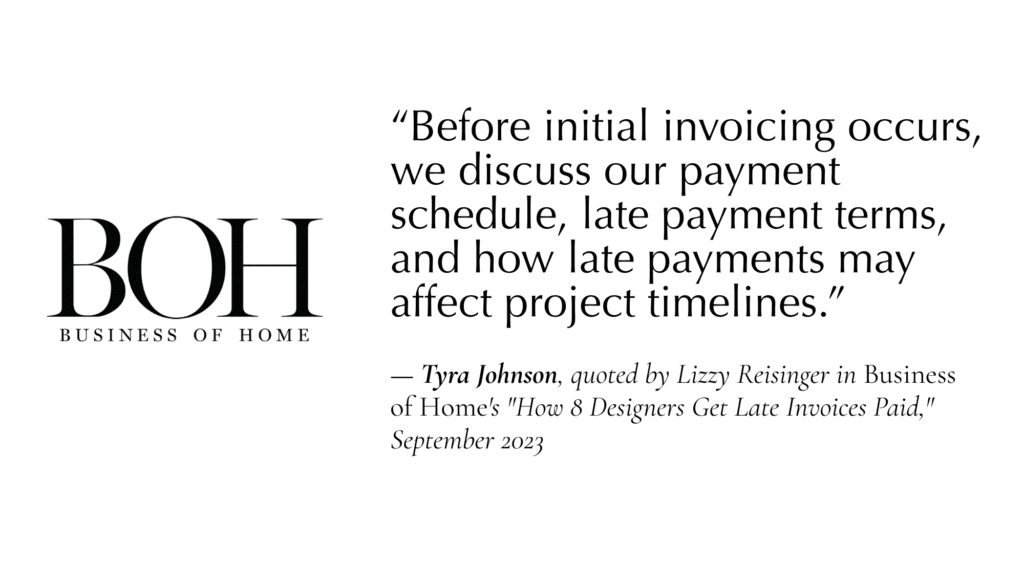
Those early conversations give both parties the same expectations from the outset. When a reminder is necessary later, everyone already understands the process because it was discussed before you started working on the project.
Know When to Pause Work
If reminders don’t resolve the issue, refer back to your contract. Many firms reserve the right to suspend design services, procurement, purchasing, site visits, or project management until outstanding invoices have been paid.
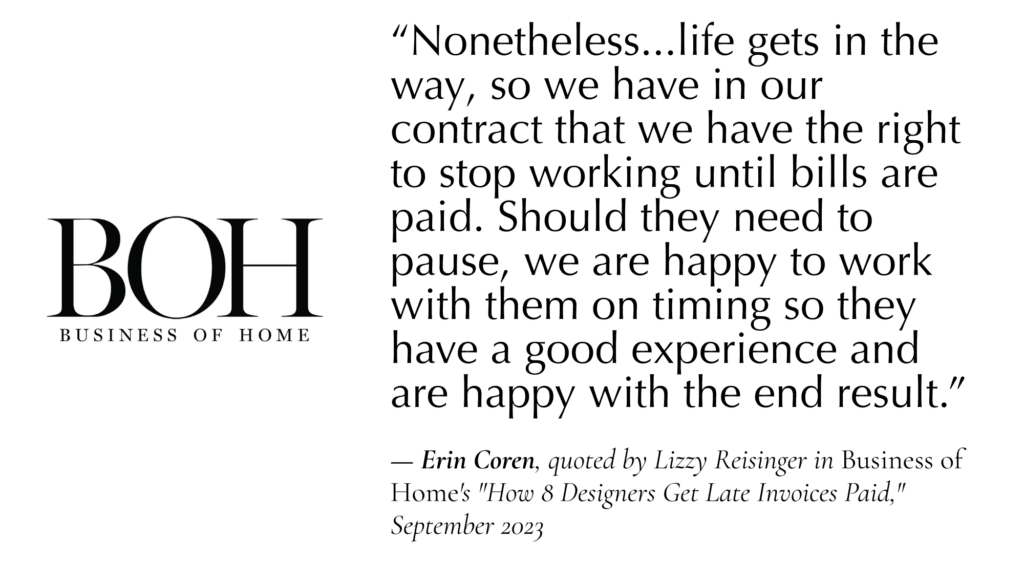
Pausing work isn’t a decision most designers enjoy making. At the same time, projects continue moving whether invoices are paid or not. Furniture orders are placed. Consultants submit invoices. Employees continue working. Vendor deadlines don’t disappear because a client payment is overdue.
The Better Business Bureau recommends addressing this possibility before work begins by explaining in your contract whether services will be suspended if invoices become overdue. When clients understand that policy from the beginning, pausing work becomes part of the agreed-upon process rather than a decision made in the middle of a disagreement.

Don’t Jump Straight to Legal Action
Fortunately, most overdue invoices never progress beyond reminders and a few difficult conversations. If payment still hasn’t arrived, however, your response should continue following the procedures outlined in your contract rather than becoming more reactive.
Houzz Pro recommends escalating gradually. That might involve additional written reminders, a formal demand letter, working with a collection agency, or pursuing legal action if the situation ultimately requires it. Each step gives both parties another opportunity to resolve the issue before additional costs and complications arise.
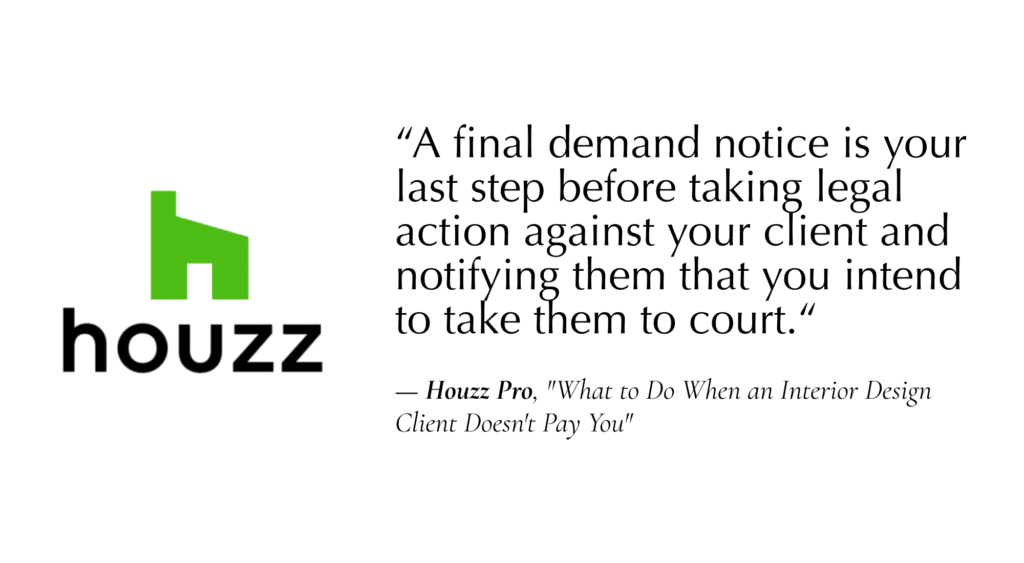
Most firms hope they never reach this stage. Clear contracts, consistent communication, and well-defined payment policies resolve the overwhelming majority of late-payment situations long before attorneys or collections become necessary. Like every other part of a successful project, payment expectations are easiest to manage when everyone understands them from the very beginning.
Written by the DesignDash Editorial Team
Our contributors include experienced designers, firm owners, design writers, and other industry professionals. If you’re interested in submitting your work or collaborating, please reach out to our Editor-in-Chief at editor@designdash.com.
Related Posts

Make Your Own Schedule Jobs for Creative Women to Consider
From graphic design to freelance writing, here are fourteen creative j

Is Your New Hire the Problem, or Is It You?
Is your new hire the problem or are you? Here’s what to check before

LACMA and Elaine Wynn Collaborate On First Las Vegas Art Museum
In 2028, visitors to the Strip and Sin City locals will welcome the La

Why ‘Ghosting’ at Work Won’t Work: How to Gracefully Decline Social Invitations
Instead of ghosting at work, learn how to gracefully say no, set bound

The CEO’s Listening List: Best Business Podcasts For Women
From Women at Work by Harvard Business Review to The Unmistakable Crea

How to Attract High-End Hospitality Projects as an Interior Designer
Learn how to attract high-end hospitality design projects with these 7