Who Was Sister Parish and How Did Her Work Impact American Interiors?

 2
2
 0
0Summary
This article looks at how Sister Parish helped shape a distinctly American approach to interior design by combining pedigree, comfort, pattern, and domestic ease. It traces her path from decorating her own farmhouse in Far Hills, New Jersey, to becoming one of the most influential decorators of the 20th century, with work that touched the Kennedy White House, the founding of Parish-Hadley, and the larger visual language of American interiors.
The piece also considers why Parish still matters now, especially as floral prints, layered textiles, painted furniture, and more collected-looking rooms have returned to the center of design conversations. It is especially useful for designers interested in the long history behind today’s interest in pattern, comfort, heritage, and houses that feel lived in rather than overly controlled.
Reflection Questions
How do I balance polish and comfort in my own work without letting a room feel too formal or too casual?
Which older design references, materials, or traditions do I keep returning to, and what does that say about my taste?
What makes a room feel lived in and personal rather than newly installed and overly finished?
How do I use pattern, color, and decorative detail in a way that feels confident instead of crowded?
What parts of Sister Parish’s approach still feel relevant to the kind of interiors I want to create now?
Journal Prompt
Write about a room, either one you have designed, one you grew up in, or one you still remember vividly, that felt both beautiful and deeply lived in. Describe the details that gave it that feeling: the fabrics, the furniture, the lighting, the arrangement, the signs of daily life. Then think about where that atmosphere came from. Was it taste, memory, habit, inheritance, improvisation, or something harder to name? Finish by writing about how you might create that same kind of warmth and permanence in your own work or home without simply copying the past.
Sister Parish entered American decorating through a side door, which is part of why her work still feels so authentic and alive rather than dutiful or dull. Steven M. L. Aronson wrote in Architectural Digest that her interiors were “refreshingly unstudied, unself-conscious, and unstrained.”
Even decades later, designers, design enthusiasts, and editors keep returning to her work because of how distinctive it was at the time. Parish had social access, strong clients, and excellent taste, but that’s not the whole story. Plenty of decorators had moneyed circles around them. Sister Parish had a sharper eye for the elusive yet essential balance between discipline and serendipity, grandeur and ease, pedigree and domestic life.
She was born Dorothy May Kinnicutt in 1910, then picked up the nickname Sister as a child. Later she married Henry Parish II, and her early business worked under the name Mrs. Henry Parish II, Interiors. That detail belongs in the story because it places her in a very specific world of East Coast privilege, family houses, inherited furniture, and women whose names were often tucked behind their husbands’ names even when they were the ones doing the work.

How Sister Parish Built Her Career
Her decorating career began at home. After her marriage, she worked on the farmhouse she shared with Henry Parish II in Far Hills, New Jersey. The house caught people’s attention because it looked fresh but not brand-new. She used striped paper, ticking, painted floors, and simple furniture in a way that cut through the darker, heavier rooms many people still expected from a “proper house”. Friends noticed, then friends of friends noticed, and that was enough to start her business.
In 1933, with family finances under pressure during the Depression, she opened a small decorating office. Though its beginnings were quite modest, the business grew quickly because Sister Parish knew how to change a house without draining it of character. She could work with antiques people already owned, add cheaper fabrics or painted pieces, and transform interiors during a painful, constrained period in our history. She understood that not every room needed expensive furniture in every corner.

What Made Sister Parish’s Style Distinctive
The label most often attached to her is “American country”, which is true but a bit narrow. Parish borrowed from English and French decoration, but she cut that formality with a more relaxed American sensibility. She used chintz, botanical prints, hooked rugs, rag rugs, quilts, wicker, painted furniture, and striped fabrics. In the 1999 Architectural Digest piece on Parish, Steven M. L. Aronson writes that her rooms were “refreshingly unstudied, unself-conscious, and unstrained,” then goes on to list the details that kept turning up in her work: “luscious chintz,” “humble mattress ticking,” “hooked rugs,” “botanical prints,” “painted lampshades,” “white wicker,” “patches of quilts,” and “bales of baskets.”
She mixed all those materials confidently within a single space. An Aubusson rug could sit in the same room as baskets, dog pictures, painted furniture, and floral cottons without any of it looking fussy. Aronson reflects that “A Sister Parish room overflowed, to be sure—but buoyantly,” and that her living rooms were “comfortable for 40, comfortable for four.” His words get at the scale and spirit of her work. These were great American houses, but they were real, they were functional, and they were special.
Describing her as “the last of America’s grand dame decorators,” this editorial from 1stDibs notes that “Parish’s rooms had warmth and character, as well as a sense of permanence.” Providing timeless designs that also have individuality and personality is no easy feat, but Parish was able to create such spaces.
The White House, Parish-Hadley, and the Projects People Remember
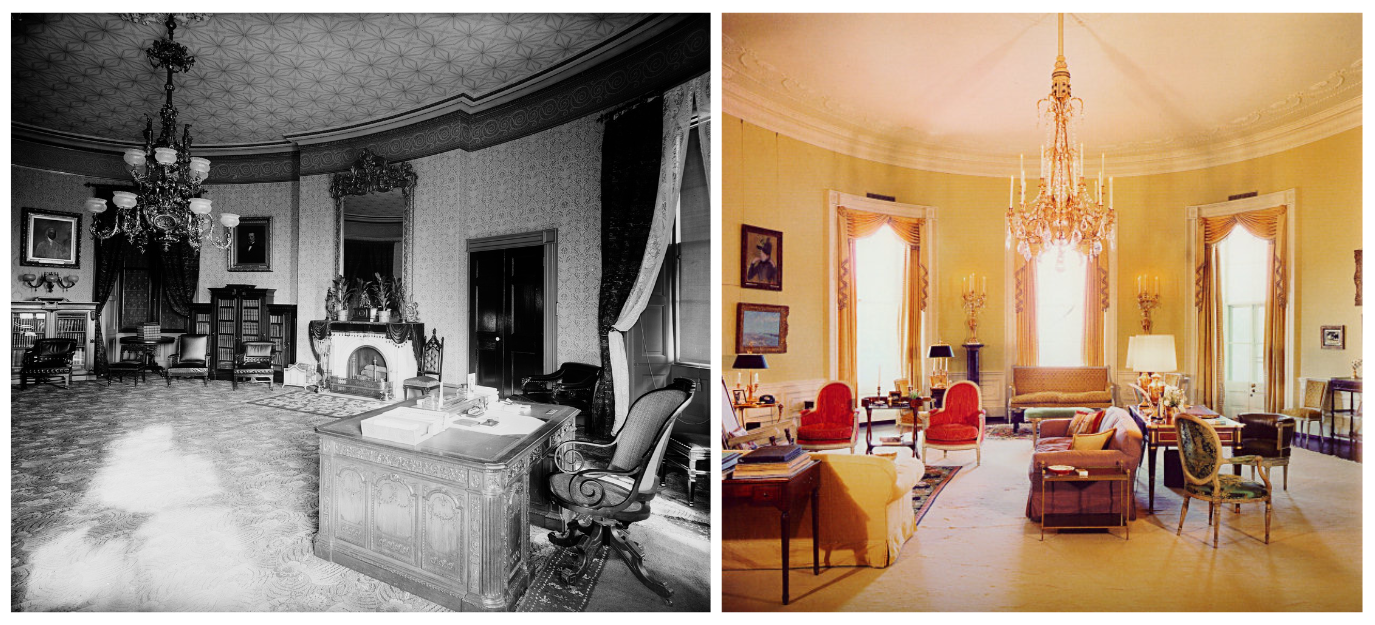
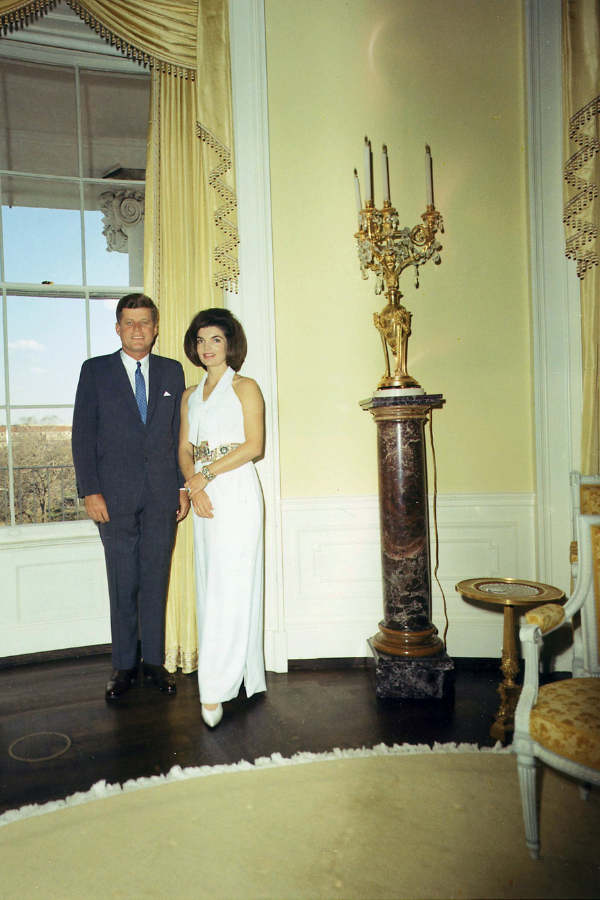
The commission that pushed Sister Parish into national view was the Kennedy White House. She had already worked for Jacqueline Kennedy in Georgetown, and after the 1960 election Jackie brought her in to help with the family quarters. One newspaper ran the headline “Kennedys Pick Nun to Decorate White House.”
Unfortunately, the White House project ended badly. The 1stDibs editorial confesses that the collaboration “was not a happy one,” and repeats the story that Parish may have been dismissed after scolding Caroline Kennedy for putting her feet on the upholstery. It also notes the dispute over unpaid decorating bills. Even so, the publicity changed the scale of her reputation. As the same article notes, the White House job “definitely widened the appeal of her American Country look.”
Albert Hadley entered Sister Parish’s story at the right moment. Aronson writes that Parish had become so busy, and the projects so complex, that she brought him in to handle “all the architectural design work,” including floorplans and curtain treatments. Two years later, she made him a partner, and the firm became Parish-Hadley. Hadley later described her method as “baroque” and “freewheeling.”
The firm also became a training ground for a remarkable group of younger designers. Mark Hampton, Bunny Williams, David Easton, Mariette Himes Gomez, David Kleinberg, Thomas Jayne, and Brian McCarthy were among those who passed through Parish-Hadley. By then, Sister Parish had become part of the professional lineage of American interior design.
Fuel your creative fire & be a part of a supportive community that values how you love to live.
subscribe to our newsletter
*please check your Spam folder for the latest DesignDash Magazine issue immediately after subscription

Why Sister Parish Still Belongs in Interior Design Now
Much of Parish’s decorative language has come back into fashion, even if the names around it keep changing. Botanical prints, floral fabrics, chintz wallpaper, wicker, painted furniture, quilts, and rooms with more than one pattern have come back into style after our brief flirtation with minimalism.
In both the 1999 Architectural Digest article by Steven M. L. Aronson and the 2016 1stDibs profile by the editors, Parish is quoted saying, “Innovation is often the ability to reach into the past and bring back what is good, what is beautiful, what is useful, what is lasting.” She didn’t chase novelty. Instead, she took old forms, old fabrics, old furniture, and old habits of domestic life, then put them to work again.
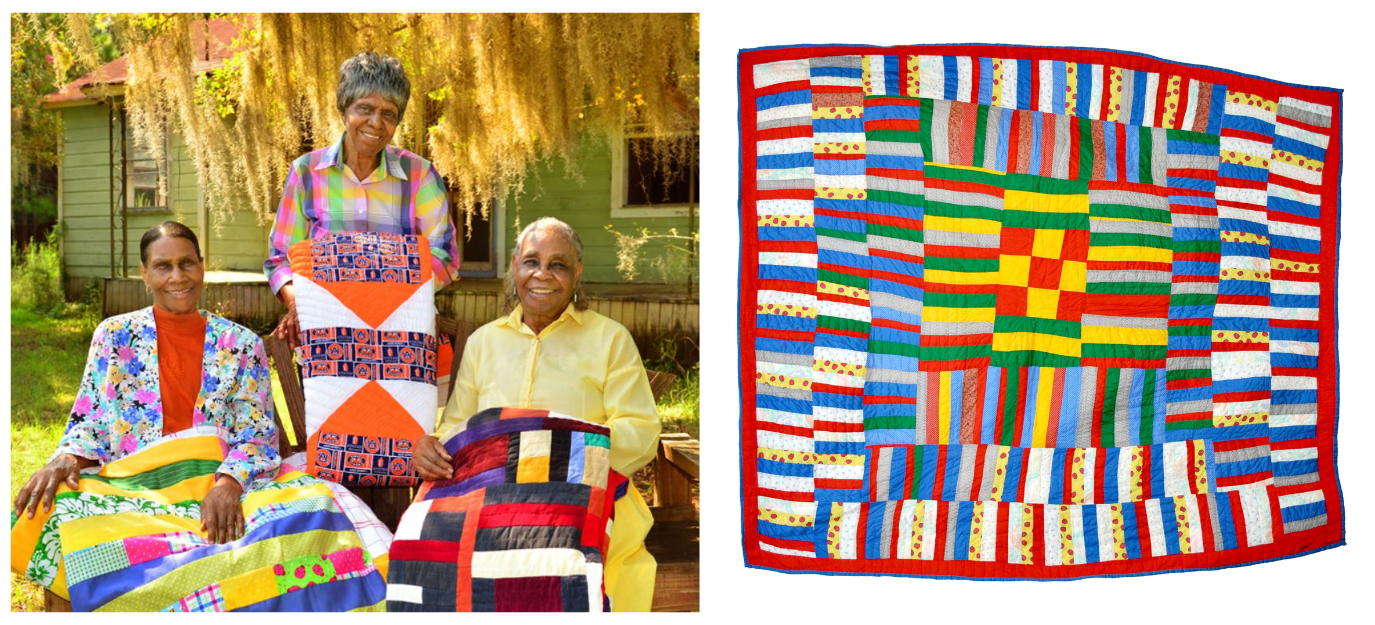
Her work with quilts belongs in this section of our article, too. Parish and Hadley worked with quilters from Selma, Alabama, through the Freedom Quilting Bee in the late 1960s, helping move patchwork into high-style interiors and magazines. Parish took objects linked to household craft and put them in front of a richer audience without scrubbing away their origin.
Billy Baldwin once said her bedrooms were “the most attractive, seductive, and luxurious … of any decorator in America.” Aronson, writing in Architectural Digest, gave the other half of the picture when he wrote that her living rooms were “comfortable for 40, comfortable for four.” Put those together and you understand her impact. Sister Parish knew how to decorate a room that looked polished enough for a magazine without ignoring the needs of daily life.

Sister Parish Today
Today, Sister Parish’s legacy lives on in the iconic American heritage textile brand known for producing timeless and effortless designs adored by interior design firms and homeowners across the US. Founded in 1933, Sister Parish Design is still a family business and still female-owned, with its fourth generation currently in the C-Suite. Susan Crater and her daughter Eliza Crater Harris run the fabrics and wallcovering brand, honoring its namesake at every turn.
To learn more about the legendary American interior designer who didn’t shy away from comfort amidst all the stunning patterns and materials she employed, head to the Sister Parish Design website here.
Written by the DesignDash Editorial Team
Our contributors include experienced designers, firm owners, design writers, and other industry professionals. If you’re interested in submitting your work or collaborating, please reach out to our Editor-in-Chief at editor@designdash.com.
Related Posts
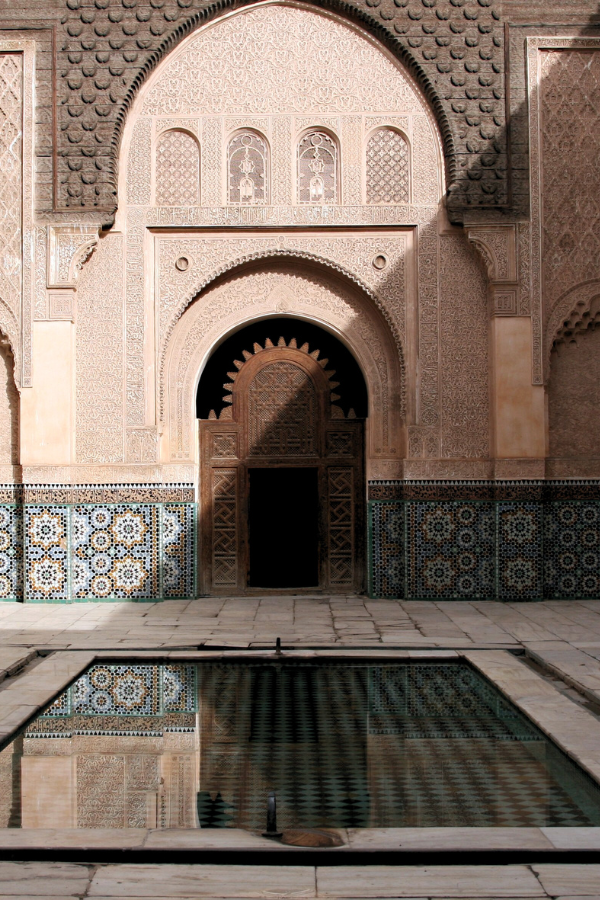
From Andalusia to the Almohad: A History of Moroccan Zellige Tile
You might shop for Zellige tile to adorn your kitchen backsplash, but

5 Ways to Prepare Your Business for Holiday Sales as a Creative Entrepreneur
This time of year can be so financially stressful, but finding creativ


Social Media for Interior Designers
LIKE 0 LEAVE COMMENT 0 8 min read Summary For interior designers, soci

Why Do We Give Chocolate on Valentine’s Day? Thank the Victorians!
From the Aztecs' ceremonial use to its transformation into a symbol of

DesignDash Fall Décor Photography Contest
Submit your photos for our Fall Décor Photography Contest!