7 Brands Exhibiting at London’s 2026 Surface Design Show

 0
0
 0
0Summary
Surface Design Show 2026 brought together nearly 200 exhibitors focused on architectural surfaces rather than finished products. This article highlights seven contributors, including Rehau, Krion, Armourcoat, Andra Munro Designs, Signature Walls & Stucco, 2tec2, and Squire & Partners, whose work spans engineered materials, handcrafted finishes, woven flooring, and material research installations. Together, they reflect how contemporary interiors rely on both industrial manufacturing and human craftsmanship.
Reflection Questions
When selecting surface materials, how much of your decision comes from past project experience versus manufacturer research or technical documentation?
Which finishes or materials in your current sample library do you understand at a fabrication level, and which ones do you specify primarily from appearance alone?
Journal Prompt
Think about a recent project where a surface material played a major role in the final outcome. Write about how you chose it. Did the decision come from performance requirements, supplier relationships, aesthetic goals, or timeline pressures?
Then consider whether you would specify the same material again after seeing how it performed in use.
This month, almost two hundred brands dedicated to surface material innovation across architecture and interiors presented at the Surface Design Show in London. Unlike Salone del Mobile or Maison&Objet, SDS’s impact in our industry is less about global consumer brands and more about specifier influence. Rather than spotlighting consumer-facing companies, SDS focuses on material design. We hope this means you will discover a few new innovators in reading this article. From Krion to 2tec2, the following brands and contributors exhibited at London’s 2026 Surface Design Show, which took place from the third through the fifth of February this year.
7 Brands & Designers Exhibiting at London’s 2026 Surface Design Show
Rehau LTD (Stand 364)
Rehau Ltd exhibited at stand 364 during SDS26. The company operates internationally as a polymer specialist producing architectural surface systems, furniture components, and building solutions developed through industrial manufacturing and materials engineering. It also develops solutions for automotive, medical, and other industries.
On its own site, Rehau describes interior surface collections like RAUVISIO as engineered polymer panels designed to replicate glass, metal, or matte lacquer finishes while maintaining dimensional stability and impact resistance. Production relies on controlled extrusion and lamination processes developed within the company’s manufacturing network. Rehau emphasizes precision tolerances and compatibility between substrates, edging systems, and fabrication workflows, which allows fabricators to work within coordinated systems rather than mixing unrelated components.
The company’s broader history dates back to postwar Germany, where it began as a plastics processor before expanding into architectural applications. That industrial origin still affects how the brand presents itself. Technical documentation, fabrication guidance, and lifecycle performance data appear alongside aesthetic finish options throughout its product literature.

Krion Solid Surfaces (Mezzanine Stand 220)
Krion Solid Surfaces exhibited on the mezzanine level at stand 220. Krion is part of the Porcelanosa Group and manufactures mineral-based solid surface materials composed primarily of alumina trihydrate combined with resin binders.
According to Krion’s own product documentation, sheets can be thermoformed, seamlessly joined, and repaired through sanding because color runs through the full thickness of the material. The company also highlights antibacterial properties achieved without applied coatings, positioning the material for healthcare, hospitality, and public environments where hygiene standards affect specification decisions.
Krion’s research communications often reference the company’s circular manufacturing goals. Offcuts can be reprocessed, and several product lines incorporate recycled content to be less wasteful and more eco-friendly. The brand also develops facade systems and ventilated cladding applications; they have expanded the use of this material beyond interior countertops into architectural envelopes.
Armourcoat (Stand 305)
Armourcoat exhibited at stand 305 and presented finishes produced and installed through its in-house network of craftspeople. Founded in the UK during the late twentieth century, this company focuses on mineral-based wall finishes manufactured using natural raw materials including lime, marble aggregates, and earth pigments.
Armourcoat’s website outlines a vertically integrated process that includes formulation, manufacturing, specification support, and on-site installation. Many finishes are applied by trained artisans rather than general contractors, which allows for tighter control over texture and final appearance. Product families include polished plaster, clay lime plaster, acoustic plaster systems, and sculptural cast panels fabricated off site.

Project documentation on the brand’s site references hospitality, cultural, and commercial interiors across Europe, the Middle East, and North America. Armourcoat frequently collaborates with architects and lighting designers during early design stages to coordinate surface reflectivity and acoustic performance alongside visual finish.
Andra Munro Designs (Throughout)
Andra Munro Designs appeared throughout the show rather than at a single stand location. The UK-based studio produces porcelain lighting installations and sculptural wall works developed through ceramic fabrication techniques.
According to the designer’s studio materials, Munro originally trained in interior design before moving into lighting and object design. Her work combines slip-cast porcelain elements with integrated lighting components. Each piece is assembled from individually formed ceramic parts that diffuse light through thin porcelain surfaces.
Studio documentation describes collaborations with galleries, hospitality projects, and private commissions. Installations by the studio often explore repetition and modular assembly, which allows large-scale chandeliers or wall compositions to grow from small handcrafted units. Porcelain firing processes and glaze experimentation form a central part of development, which positions Andra Munro Designs somewhere between lighting design and ceramic practice. Hers was one of the more art-forward exhibits at the show this year.
Fuel your creative fire & be a part of a supportive community that values how you love to live.
subscribe to our newsletter
*please check your Spam folder for the latest DesignDash Magazine issue immediately after subscription

Signature Walls & Stucco (Stand 106)
Signature Walls & Stucco Ltd exhibited at stand 106. Here, it presented decorative plaster and microcement surface applications developed for residential and commercial interiors.
The company’s own portfolio highlights hand-applied finishes ranging from Venetian plaster to contemporary microcement systems applied across walls, ceilings, and wet areas. Project case studies document installations in hotels, private residences, and retail environments, with emphasis placed on surface continuity across corners and junctions.
Signature Walls & Stucco describes its work as installation-led rather than product-led. Materials are selected and adapted depending on substrate conditions and project requirements. Training and craftsmanship feature prominently in company messaging, particularly around achieving consistent finishes across large surfaces where variation can become visible under artificial lighting.
2tec2 (Stand 227)
2tec2 exhibited at stand 227. The Belgian manufacturer produces woven flooring constructed from vinyl-coated fiberglass yarns woven on industrial looms and finished as roll flooring or tiles.
Company materials explain that the flooring combines textile construction methods with resilient flooring performance standards. The woven structure allows dimensional stability while maintaining a textured surface appearance. Acoustic absorption, slip resistance, and easy cleaning are recurrent technical themes across product documentation.
2tec2 manufactures in Belgium and emphasizes closed-loop recyclability through its “Recover” program, which allows installation waste and used flooring to be returned for material recovery. The brand frequently collaborates with architects and workplace designers, and its case studies include offices, airports, hospitality interiors, and healthcare environments.

Squire & Partners (Throughout)
Architecture practice Squire & Partners contributed the central installation “Stone Tapestry,” which was presented throughout the show environment. This installation explored natural stone from the British Isles through varied finishes and fabrication techniques.
Squire & Partners’ studio publications describe ongoing research into material sourcing and regional craft traditions. Their practice often integrates material experimentation into exhibitions alongside built projects; they use installations like Stone Tapestry as a way to test fabrication processes at full scale.
Stone Tapestry brought together multiple stone types processed through different surface treatments, which allowed visitors to compare texture, reflectivity, and tooling marks directly. The installation connected architectural research with material manufacturing to reinforce SDS’s emphasis on surfaces as constructed elements rather than decorative afterthoughts.
Final Thoughts on Surface Design Show 2026
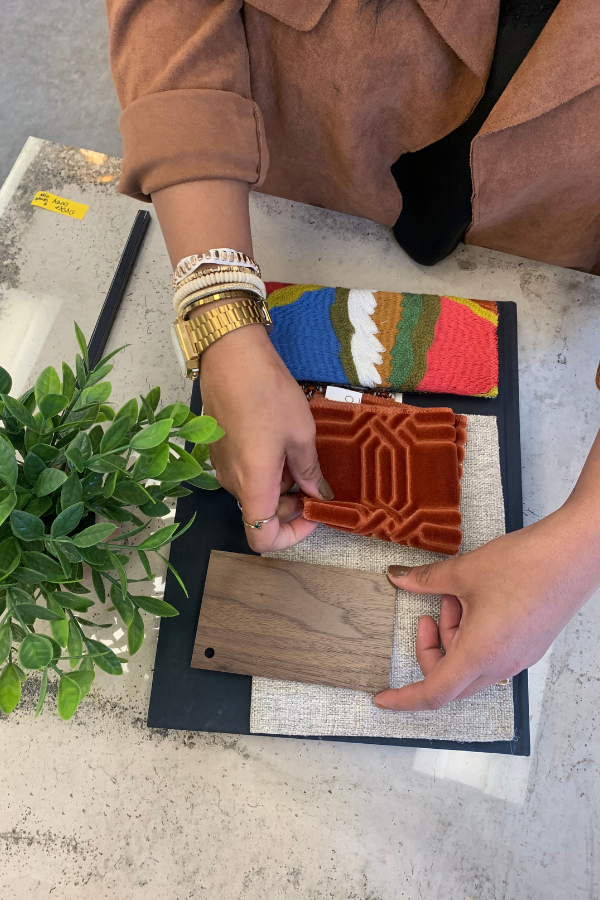
Some of us have the misconception that Surface Design Show is entirely industrial. But every year, artisan finish specialists, independent designers, and architecture studios gather alongside industrial manufacturers to share the same platform because all contribute to how surfaces are conceived and fabricated for today’s interiors.
Some exhibitors focus on engineered consistency. Others concentrate on hand application or material experimentation. The overlap between those approaches is part of what makes SDS special, and particularly useful for architects and designers bridging the gap between concept drawings and the reality of living with these materials.
Written by the DesignDash Editorial Team
Our contributors include experienced designers, firm owners, design writers, and other industry professionals. If you’re interested in submitting your work or collaborating, please reach out to our Editor-in-Chief at editor@designdash.com.
Related Posts
Does Your Design Contract Need An Accessories Budget Clause?
Should your interior design contract include a minimum accessories and
Sustainable Interior Design: Celebrating Eco-Conscious Designers
Prioritizing human health, the natural world, and careful allocation o
Our 10 Favorite Cocktail Recipe Books for Your Client’s Home Bar
From Tequila Mockingbird to The Savoy, these recipe books will inspire

What is Orange Wine? An Ancient Method Makes a Modern Comeback
Orange wine actually refers to a distinctive and ancient style of wine
Miniature Marvels: Art & Architecture of Ancient Egyptian Models
From intricate boat models to detailed household scenes ensuring comfo

Taking a Sabbatical: How Stepping Back Can Propel Your Design Career Forward
Thinking about taking a sabbatical? Here's how stepping back can reign