AI Images, Instagram, and an Interior Designer’s Duty to Disclose

 2
2
 0
0Summary
Artificial intelligence can generate interior images that look convincingly real, but when those images appear on Instagram without context, viewers may assume they represent completed work. Because design is a portfolio-driven profession built on visual credibility, unlabeled AI-generated rooms can blur the line between concept and built project. Disclosure doesn’t require rejecting AI but clarifying what kind of image a viewer is seeing. As synthetic imagery becomes more common, designers may need to decide how much transparency their audience deserves.
Reflection Questions
When you post an image of a room online, what do you believe viewers assume about it: concept, inspiration, or completed work?
At what point does a speculative or AI-generated image begin to function like portfolio photography in the eyes of a potential client?
How might the widespread use of photorealistic AI imagery change how clients evaluate credibility, authorship, and experience in the design profession?
Journal Prompt
Think about the last ten images you posted publicly.
For each one, ask yourself:
Does this image represent a built project, a concept, or inspiration?
Would a viewer who discovered your account for the first time understand that distinction without explanation?
If AI tools were involved in generating or modifying the image, what level of disclosure would feel honest to you and why?
Write a short reflection on how you want your visual work to represent your practice going forward. Consider what transparency, authorship, and credibility mean for you as a designer in an era where images can be generated instantly.
Interior design has always depended on imagery. Long before Instagram, designers used photographs, tear sheets, sketches, sample boards, and renderings to communicate taste and possibility. Instagram compressed all of that into a faster public format. An interior is posted, saved, shared, and judged in the space of a few seconds. A viewer may never read the caption. This is more concerning now than when designers first adopted Instagram because artificial intelligence can generate rooms that appear quite convincingly photographic, even when the room does not exist, the furniture does not exist, and no client approved the selections.
Let’s pause. We aren’t shaming AI users. The design industry is no longer debating if AI has staying power or whether software that adopts it will keep changing studio workflows. That question was asked and answered a while ago. The far more difficult question we’re all mulling centers around representation. If a designer posts an AI-generated interior on Instagram, what is the viewer supposed to understand from that image? Is it a mood study, a speculative concept, a digital collage, a rendering, a fake portfolio piece, or something in between? Fact or fiction? Final result or first draft? The answer shifts depending on the caption, the context, and the account posting it.
Two things can be true at once: AI can be useful in a design office, and AI imagery can still create a trust problem when it enters a public feed without context. We’re not asking whether designers should ever touch AI but whether the profession can afford to blur the line between concept work and built work in a space where clients already struggle to tell the difference.
Why This Question is Now Impossible to Avoid
AI-generated content is now common and convincing enough online that platform leaders are no longer discussing a ban on it but rather asking how to identify real-life images instead. That sounds dramatic, but it’s not far from the reality of scrolling on Instagram, Facebook, or TikTok today. A photorealistic room can appear between a real kitchen renovation, a furniture ad, and a designer’s installation video, all in the same minute. Figuring out which is “real” takes time few of us have and context that might not be readily available.
In an article for Forbes from January 2026, John Brandon writes that Instagram head Adam Mosseri believes there is now “an abundance of AI-generated content” online and that “it will be more practical to fingerprint real media than fake media.”
It’s essential that designers carefully weigh their use of AI because, to us, Instagram is not a neutral gallery wall but a portfolio platform, a marketing channel, a referral engine, and, at times, a credibility test. Homeowners browse it while looking for ideas, but they also browse it while evaluating firms. When an account posts an image of a room, viewers often assume one of two things: either the room was designed and built by that firm, or the image at least reflects a level of design authorship that connects to real, produced work. Once synthetic interiors begin circulating without labels, that assumption no longer rings true.
A viewer might say the distinction should be obvious. Sometimes it is; think twisted chair legs, impossible windows, odd stair geometry. Those still surface on the grids of inexperienced AI users. Yet the software is improving at a pace that makes it nearly impossible to say with absolute conviction that something was human-made. A year ago, many AI interiors looked wrong somehow; they were still a bit uncanny. Now, some of them look polished (or messy) enough to pass the test. Instagram is built on quick glances rather than minutes of careful dissection, which is a primary issue here.
AI in a Design Office Is Not “One Thing”
One reason this conversation goes nowhere fast is that too many people treat AI as a single category, but it’s not. AI now ranges far and wide in terms of application. The ethical questions change depending on what the software is doing and where its output appears. Drafting an email summary, searching vendor catalogs, organizing procurement data, testing a few aesthetic prompts, and posting a fabricated sitting room to a public audience are not equivalent acts. They should not be discussed as though they are.
We have already discussed this distinction in our writing around AI and procurement. Administrative automation tends to raise one set of questions; public imagery raises another. The first usually concerns labor, efficiency, and office process. The second touches authorship, trust, and representation. A firm may use AI every day to tighten up internal workflows and still have a principled objection to posting AI-generated rooms without disclosure. Actually, that position seems fairly reasonable.
The procurement side is useful here because it gives us a clean comparison. Our article on AI in procurement argued that software can speed up repetitive tasks but cannot replace judgment, vendor knowledge, or the sort of project memory that keeps expensive mistakes from slipping through. That same logic applies to imagery. AI can generate an image quickly. It cannot prove that the room is buildable, budget-conscious, or tied to an actual project. It certainly cannot prove that the person posting it knows how to get from image to installation.
What Designers Are Actually Posting
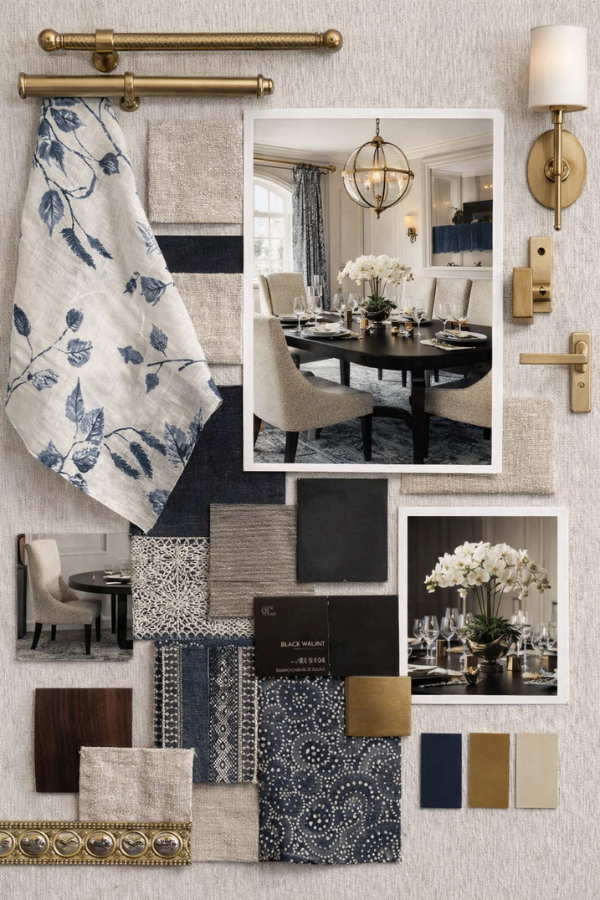
However, not every AI image posted by a designer functions the same way. The first category is the least controversial. An AI-assisted mood board or concept collage like the one pictured above that we used ChatGPT to generate usually acts purely as inspiration. The image may blend references, atmospheric lighting, furniture silhouettes, and materials into one visual direction. Designers have done versions of that for years with magazine clippings, Photoshop, and digital boards. A viewer may still deserve context, but the image is not usually masquerading as a completed room.
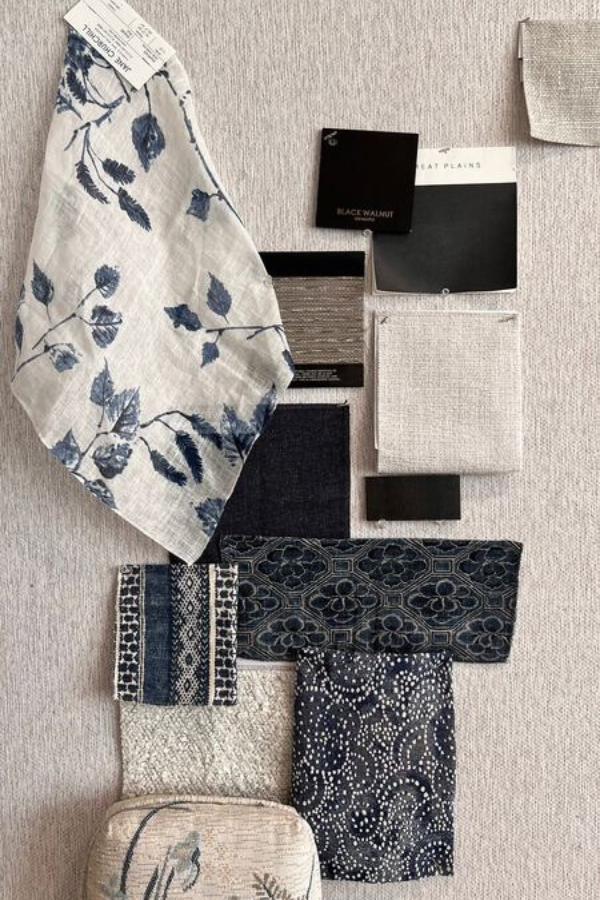
The second category is much more complicated. AI-generated mock-ups or concept rooms depict full spaces, often with complete architecture, furnishings, styling, and lighting. These images may be useful during early ideation. A designer may use them to test proportion, palette, or mood before committing to hard selections. In a private presentation, where the designer is present to explain what the image is and what it is not, that use makes sense. The problem starts when the image leaves that controlled setting and enters a public feed.
The third category is the one that creates the most unease for designers and potential clients alike. These are entirely fabricated interiors presented in a portfolio-like environment. The room was never built. Sometimes it was never designed for a client. Sometimes the furniture does not exist in any manufacturable form. Yet the image is posted in the same visual stream as real project photography. If there is no label, the average viewer has little reason to assume it belongs to a different category.
This difference matters more in design than it might in a looser visual field because we produce real, functional spaces, often restricted by licensing, permitting, and more. Interior design might be rooted in taste and aesthetics, but it is equally defined by fitting furniture into real circulation paths, handling budgets, coordinating contractors, resolving dimensions, and specifying materials that can survive actual use. A fabricated room might suggest design fluency, but it cannot demonstrate competence under real-world constraints.

Why Disclosure Matters in a Portfolio-Driven Profession
Some people hear “disclosure” and assume the demand is punitive or anti-technology. But that isn’t the best way to frame these guard rails, as disclosure is really about category control. If the image is speculative, say that. If it is AI-generated, say that. If it is a rendering, say that.
Clients hire designers because they want someone who can translate taste into a room that can be built, furnished, and used. Portfolio images help communicate that value proposition, but once synthetic rooms are mixed into those feeds without clear language, viewers can misread what exactly is being offered. A person may think they are seeing evidence of past work when they are actually seeing aesthetic possibility generated by software. Those are two very different things.
Several designers and educators are already drawing that line publicly. Their reasoning isn’t always the same, but it overlaps in important ways. In an article for Business of Home from March 2026, Jen Fernandez reports that Kligerman Architecture & Design follows what it calls a “Human Start and Human Finish Rule,” which states that “No AI-generated image leaves the office as a final deliverable.”
That policy is stricter than what every firm will adopt, but it’s worth noting because it ties authorship to professional accountability. A final deliverable should be traceable to human judgment, human checking, and real-world feasibility. In the same Business of Home article, Joe Carline says, “If an image in a mood board is AI-generated, it must be labeled.” Carline doesn’t treat disclosure as a grand ethical performance; to him, labeling is providing necessary context. The viewer sees the image and also knows what kind of image it is. That seems fair.
Privacy, Intellectual Property, and the Problem Beneath the Image
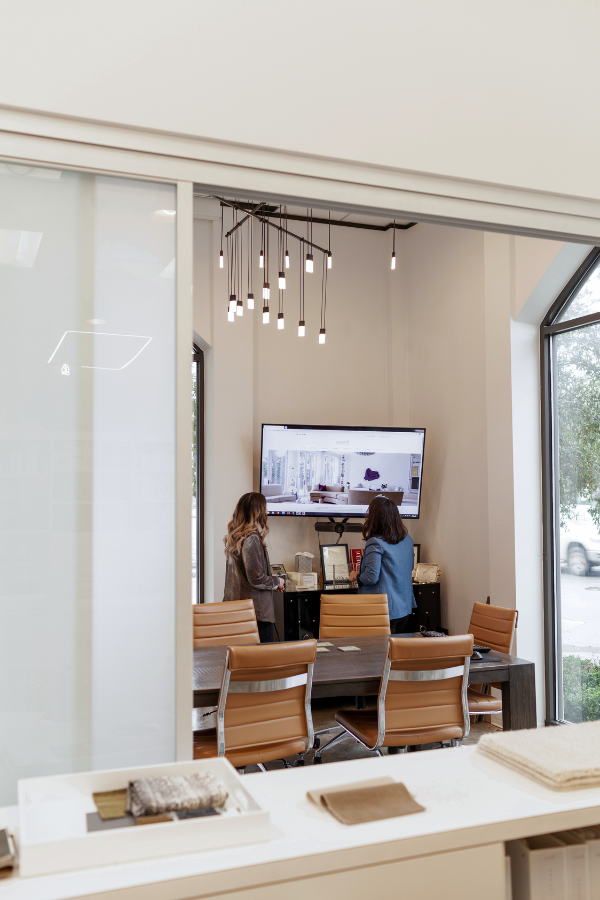
The social media question also sits on top of deeper problems. A generated room image may look harmless when it lands in a feed, but its production may involve inputs that are not harmless at all. Design firms deal with private floor plans, addresses, budgets, family routines, security details, and client communications. Feeding any of that into public models raises obvious confidentiality concerns.
In the same Business of Home article, Jen Fernandez reports that Kligerman Architecture & Design has “a strict ban on uploading client-specific data into public AI models to protect client confidentiality.” Many firms are still learning how to use these tools and what their implications are at the same time they are uploading personally identifiable information. The convenience is real, but so is the risk. A designer trying to generate a concept board from a client’s floor plan may think primarily about efficiency. A client might think about privacy very differently.
Fuel your creative fire & be a part of a supportive community that values how you love to live.
subscribe to our newsletter
*please check your Spam folder for the latest DesignDash Magazine issue immediately after subscription

Then there is the question of training data and intellectual property. Generative systems draw from vast scraped image sets that include work made by photographers, stylists, architects, and designers who were never asked whether they wanted their work folded into these models. That doesn’t mean every AI output is a legal violation, but it does mean that claiming uncomplicated authorship over a generated room image is harder than some users admit.
Authenticity As a Design Question, Not Only a Moral One
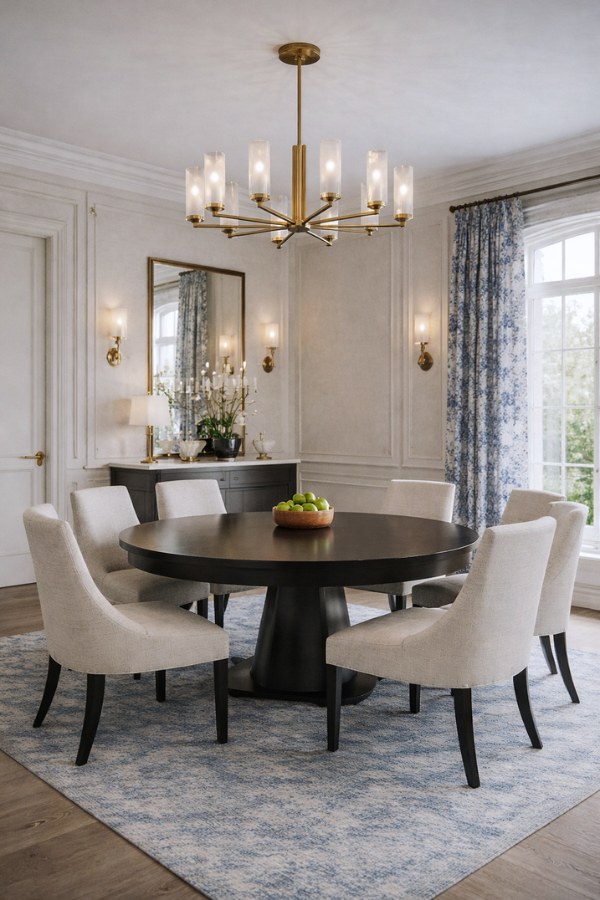
People tend to discuss authenticity as a solely ethical question. Design has its own version of this problem. A room image can be polished and still empty of the decisions that make design persuasive in real life. It may solve no actual client need. It may sidestep cost, procurement, durability, code, site conditions, awkward dimensions, family habits, and all the other friction that produces the final space. A generated room may look resolved because software has no reason to struggle with those things unless a user tells it to.
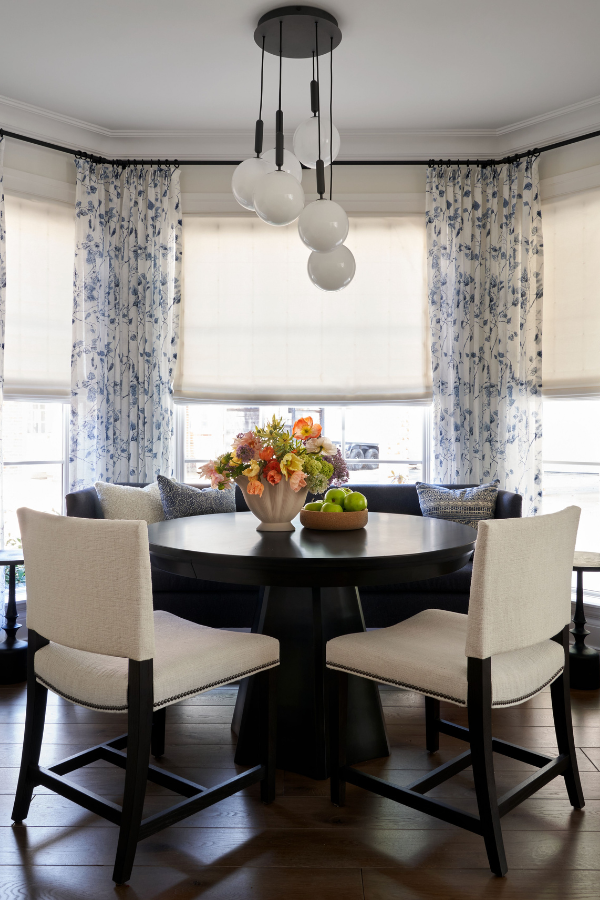
PHOTOGRAPHY: PAR BENGTSSON, STYLING: WALKER WRIGHT, DESIGN: LAURA U DESIGN COLLECTIVE
That’s one reason so many of us are wary of AI in the design industry. “Cheating” is an issue, but we’re also worried that frictionless image-making will create a false impression of originality and authority. It may also impact how clients understand the complexity of the design process.
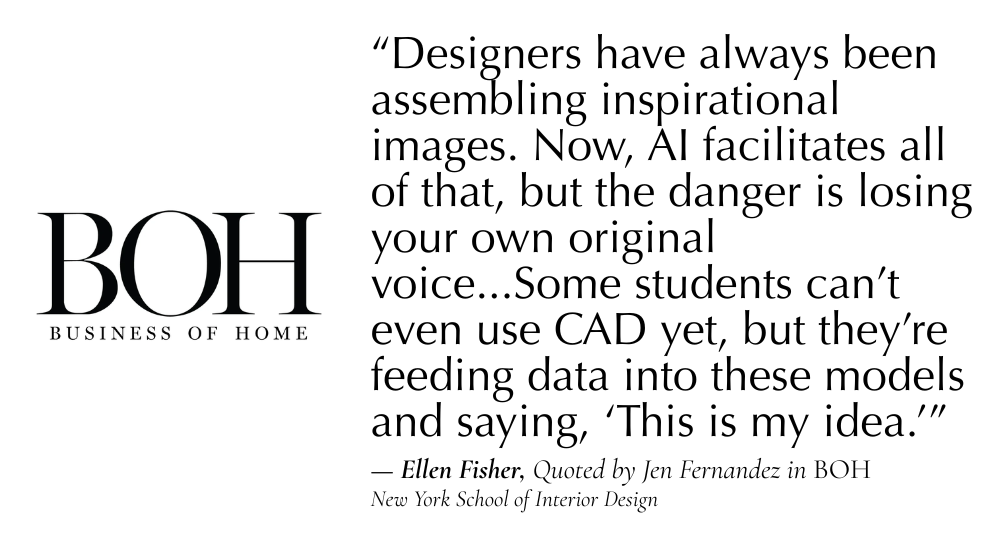
This shifts the discussion away from software and toward authorship. Interior design has always borrowed, referenced, and adapted, yet authorship still matters. A designer’s point of view is not only a matter of generating attractive images but a reflection of choices made under pressure, through revision, through trying something and finding that it does or does not work. AI flattens that.
Why Instagram Makes the Ethics Harder Than a Client Presentation

A client presentation contains context. There is a conversation, a sequence, samples on the table, markup on drawings, maybe a note that says the image is conceptual and the extent of the millwork or the flow of the layout will change. Instagram strips that away, especially when AI is involved. It pushes images into a stream where they compete for attention with built projects, polished product photography, and sponsored content. Context falls out first.
That is why a post that might feel harmless in a studio environment can become misleading in public. The designer may intend the image as visual shorthand for a “mood”. The viewer may interpret it as completed work. The account may not intend deception, but ambiguity doesn’t need malintent. All it needs is an image realistic enough to invite incorrect assumptions.
This is where a platform’s culture matters too. Instagram rewards visual immediacy and clarity over nuance. Polished portfolio language and loose inspiration language often sit right next to each other. Some accounts already mix sketches, site photos, and polished final photography on their grids. Add AI interiors to that mix without labels, and the taxonomy breaks down further. The room may never have existed, but the platform gives it the same social standing as a finished project.
That broader uncertainty is part of why Mosseri’s comments matter so much. The “abundance of AI” content does indeed create a moderation problem for platforms, but it also creates an interpretation problem for viewers and a credibility problem for professions that rely on image-based trust. In design, some images indicate process and ideation, while others clearly represent real, complete interiors.
Existing Disclosure Precedents Are Narrow but Needed
Interior design is not currently under a Meta policy requiring disclosure for ordinary organic AI posts the way political advertisers are under separate rules. Still, Meta’s policy is important because it acknowledges a principle that applies to most users and can help guide us even if AI image disclosure isn’t strictly required.
In Meta’s updated guidance on AI and digitally altered advertising, the company states that disclosure is required when advertisers use AI to depict “a realistic-looking non-existent person,” “a realistic event that didn’t happen,” or altered footage of a real event, while disclosure is not required for immaterial edits like resizing, cropping, or color correction. Now, this applies to ads only, but any representation of your business could read like an ad.
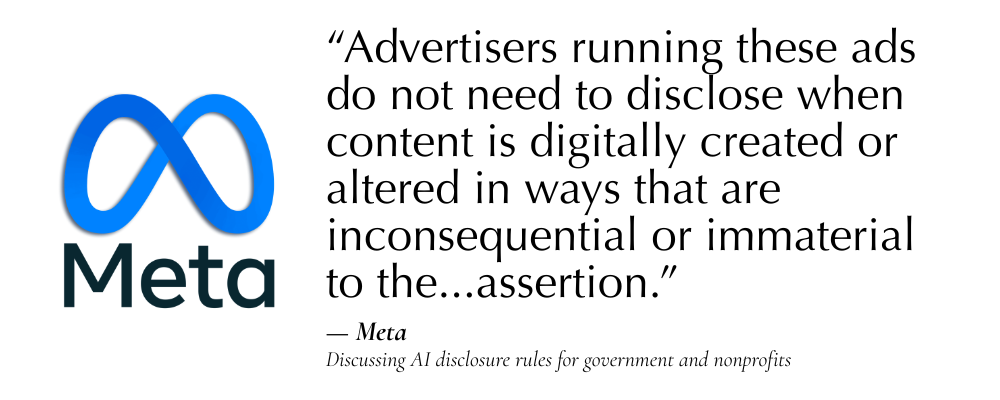
This policy clearly draws a line between routine edits and reality-altering fabrication. A designer adjusting brightness or removing a cord from a project photo is doing something different from posting a room that never existed but looks as though it did. The first case resembles normal image improvement, maybe edited to look more like the “real room”. The second changes the ontological status of the image. The thing depicted is not a photographed room but a generated one.
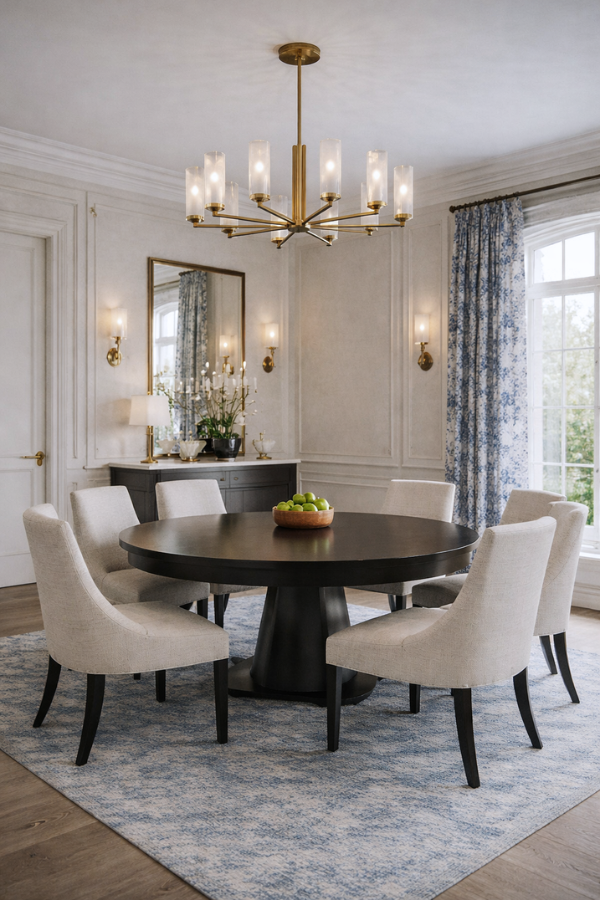
Ask yourself: is posting an AI-generated interior like the one in our featured image without disclosure that it was not human-made “inconsequential or immaterial” to what your firm claims to offer clients on Instagram? A design profession that depends on visual credibility should probably take that distinction seriously even before platforms force it.

The Best Case for Disclosure
The argument for disclosure is fairly modest. It doesn’t require designers to reject AI. It doesn’t require a public apology every time a concept image is posted. It simply asks for a distinction when a client or publication might misunderstand the origins of the image.
That threshold is obvious when three conditions are met: the image is photorealistic, the space does not exist physically, and the post context makes it easy for a viewer to read the image as completed work or portfolio photography. In that situation, a short label is entirely reasonable. “AI concept image.” “AI-generated mood study.” “Conceptual visualization created with AI.” None of those phrases are heavy-handed, nor do they undercut your messaging. They simply tell the viewer what kind of image is on their screen.
But disclosure matters for a second reason. It protects designers who have done the exhausting, mentally-taxing work of building a body of real projects. A public feed where synthetic rooms and project photography look interchangeable can flatten the distinction between imagination and execution. That is not good for clients, and it is not particularly good for the profession either.
The Best Case Against Mandatory Disclosure
Of course, we also take the opposing side seriously. Designers have used conceptual imagery forever. Sketches don’t come with warning labels. Renderings don’t always come with disclaimers. Digital collage, Photoshop composites, hand-painted perspectives… all of that predates current AI debates. Someone might reasonably ask why AI should be treated as categorically different.
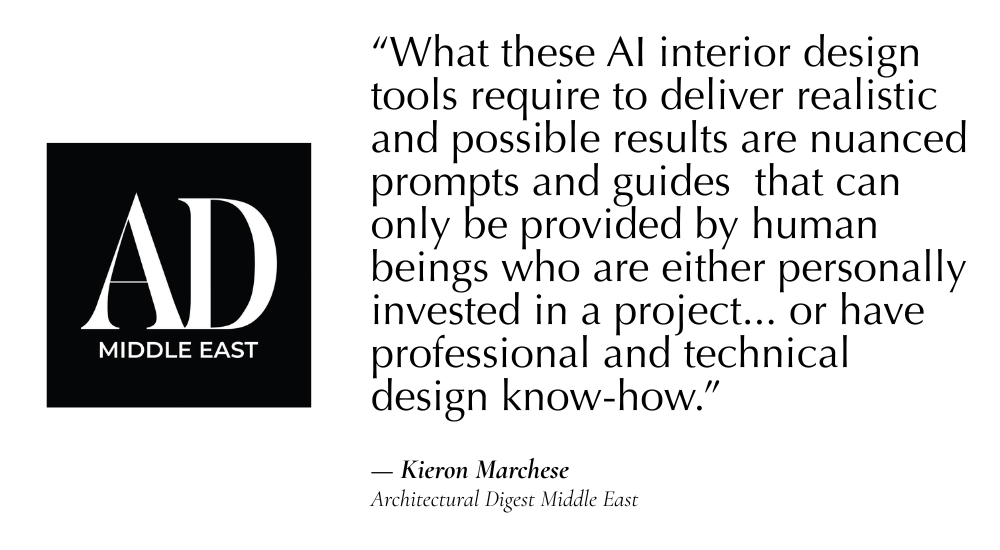
As Kieron Marchese points out in an article for Architectural Digest Middle East, “These AI tools are not going to put your favourite interior designer out of business; but they might just help them design better, faster.” Marchese also argues that no one can produce convincing results using AI tools without real design experience, expertise, and knowledge. But that’s not really the issue, is it? The issue is honesty and transparency about what a client can reasonably expect when a space is complete.
Part of the answer lies in realism and speed. Older conceptual tools often looked conceptual. They did not usually pass as finished photography unless a firm worked hard to make them do that. AI lowers the barrier to photorealism and makes image production so easy that the pressure to post without explanation rises with it. AI changes not only the picture but the social condition around the picture.
Still, the anti-disclosure argument is not absurd. A designer posting an obviously speculative concept board to a casual audience may feel that a disclaimer is unnecessary clutter, or worse, a stain on her reputation. There is some merit to that; a universal rule for every minor use of AI would likely be clumsy. The better standard is a bit narrower. The more realistic the image and the more portfolio-like the setting, the stronger the case for labeling it.
Final Thoughts on AI Design Imagery on Instagram
AI will probably be a mainstay of the industry, whether as a supportive technology in procurement software and bookkeeping or as a generator during concept development. A few will refuse it almost entirely, until it is so interwoven with everyday tools that we cannot disentangle it. But the technology itself truly isn’t the most interesting part anymore. The more pressing issue concerns how synthetic images circulate in public, what viewers will assume from them, and how that will be attributed to your work.
A room that never existed (like the one pictured above) can be useful; it can suggest an atmosphere, a palette, a furniture profile, a direction. What it cannot do on its own is stand in for completed, real-world work without raising questions about authorship and trust. Designers don’t need to wholly reject this technology to draw that line. We can be transparent and nuanced at the same time. We’re not AI, after all.
Written by the DesignDash Editorial Team
Our contributors include experienced designers, firm owners, design writers, and other industry professionals. If you’re interested in submitting your work or collaborating, please reach out to our Editor-in-Chief at editor@designdash.com.
Related Posts

Retro-Futurism Revisited: How Y2K Aesthetics Are Making a Design Comeback
Rediscover the playful, over-the-top Y2K aesthetic as it makes a bold

Consequential Yet Controversial: All About Italian Futurism
Let's explore the complexity of Italian Futurism, delving into its pol

From Paris to New York: These Are the Most Stunning Art Deco Apartments in the World
From the iconic skyscrapers of New York City to the beachfront beautie

Cybersecurity Threats Every Creative Entrepreneur Should Be Aware Of
It’s Cybersecurity Awareness Month! This month, we will release a se

How to Design Romantic Interiors Without Falling Prey to Clichés
Learn how to design romantic interiors that feel intimate, sensual, an
Five Vladimir Kagan Designs That Still Shape Modern Interiors
Learn more about 5 iconic designs that reveal why Kagan's timeless app