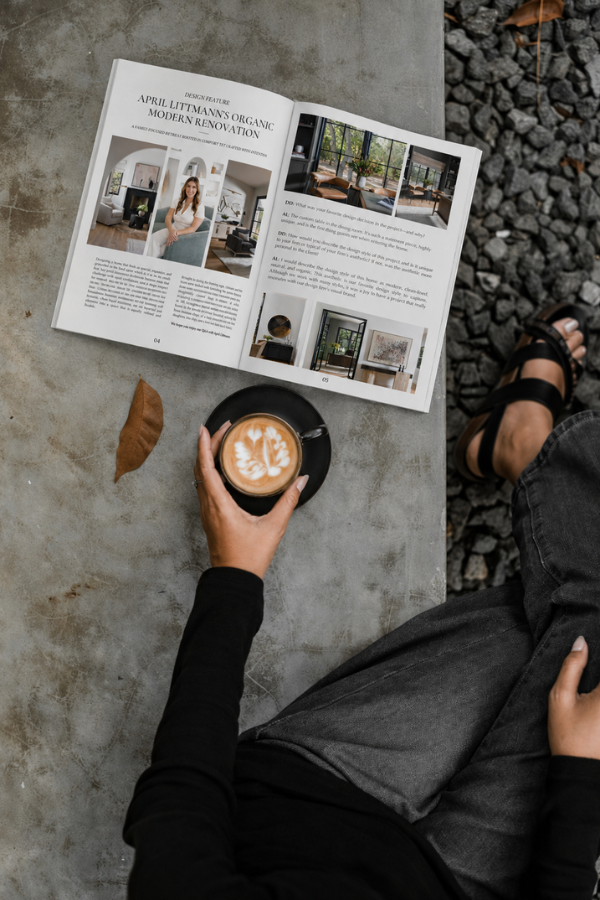
Designers Today Editor Andrea Lillo Explains How to Get Projects Published

 6
6
 0
0Summary
Interior design projects need more than beautiful photos to get published. Editors need a clear project storyline, strong images that work for print or digital layouts, accurate credits, product sources, and easy contact information. Timing and fit also matter, so a “not right now” does not always mean the project was wrong for publication.
Reflection Questions
What finished project in your portfolio has the strongest story behind it, not just the strongest photography?
If an editor visited your website today, could they quickly find your email address, your point of view, and enough information to understand your firm?
Do your project files include photographer credits, product sources, vendors, and notes about the client brief or design challenge?
Journal Prompt
Choose one completed project you would like to pitch. Write a short project storyline that includes the client’s brief, the main design challenge, the most interesting sourcing or furnishing details, and why the project might be relevant to a publication’s readers. Then list what you still need before sending it: images, credits, sources, permissions, or a better contact page.
As Jennifer Fernandez writes in this article for Architectural Digest, “The editorial business can often feel like a secret society with its own set of rules, preferred players, and obscure social codes.” Unfortunately, that’s quite accurate; who you know seems to matter just as much as how beautiful and functional your projects are. But it’s no reason to feel awkward or ill-equipped, and it’s certainly no reason to avoid submitting your work for publication.
In an episode of the DesignDash Podcast, co-founders Laura Umansky and Melissa Grove met with Andrea Lillo, the Executive Editor of Designers Today, to discuss how best to position one’s projects for publication. We’ve pulled out our top three takeaways from this conversation but encourage you to listen to the full episode for more of Andrea’s valuable advice.
Three Takeaways from Our DesignDash Podcast Episode on Getting Published
#1 Give Editors a Project Storyline Instead of Just Sending Photos
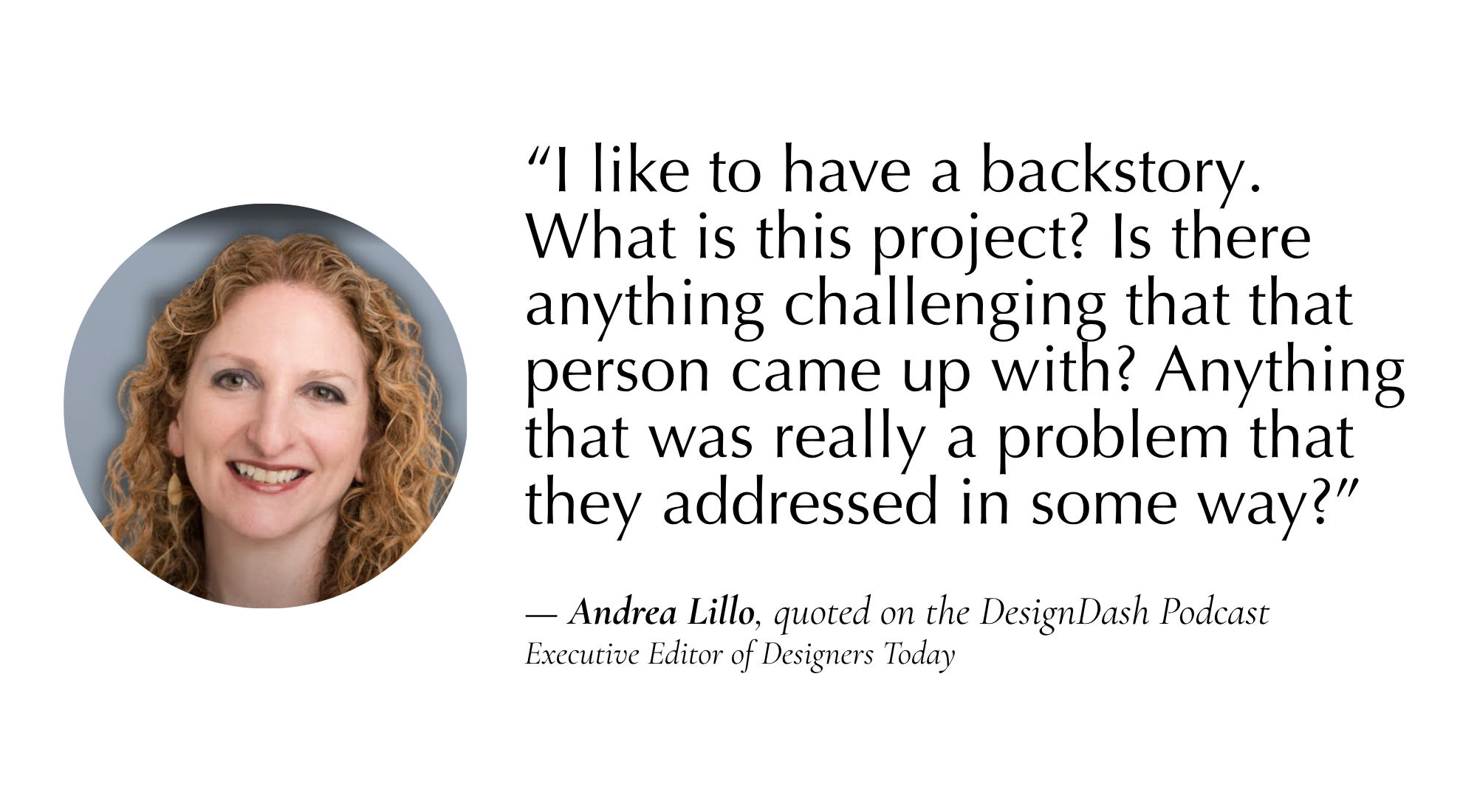
Beautiful images are absolutely necessary, but they usually aren’t enough on their own. Editors are looking at the space, of course, but they’re also looking for the story behind it. What was the challenge? What did the client need? Which choices solved a problem? Which furnishings, makers, vendors, or materials deserve credit? If your submission is just a folder of images with no context, you’re making the editor do too much work.
Pitching a project to an editor is not the same as submitting it for an award. An award submission might lean heavily on photography, categories, and a short design statement because judges are evaluating the project against a specific set of criteria. An editor is looking for a publishable story. They need to know what happened in the project, why it’s relevant to their readers, what problem the designer solved, and whether there are enough details to build an article around it.

The images might get the editor’s attention, but the backstory, sources, credits, and project context help them understand where the project could fit in their magazine or digital archive. A beautiful room with no narrative means the editor has to guess at all the rest. A beautiful room with a clear renovation challenge, unusual client request, regional angle, product story, or business lesson gives them more to work with.
Before submitting, gather all practical information too. Editors might ask for product sources, photographer credits, designer credits, location, square footage, vendors, and whether the project has already been published elsewhere. If you have to chase all of that after an editor replies, you might lose momentum, especially if the issue is already being planned.
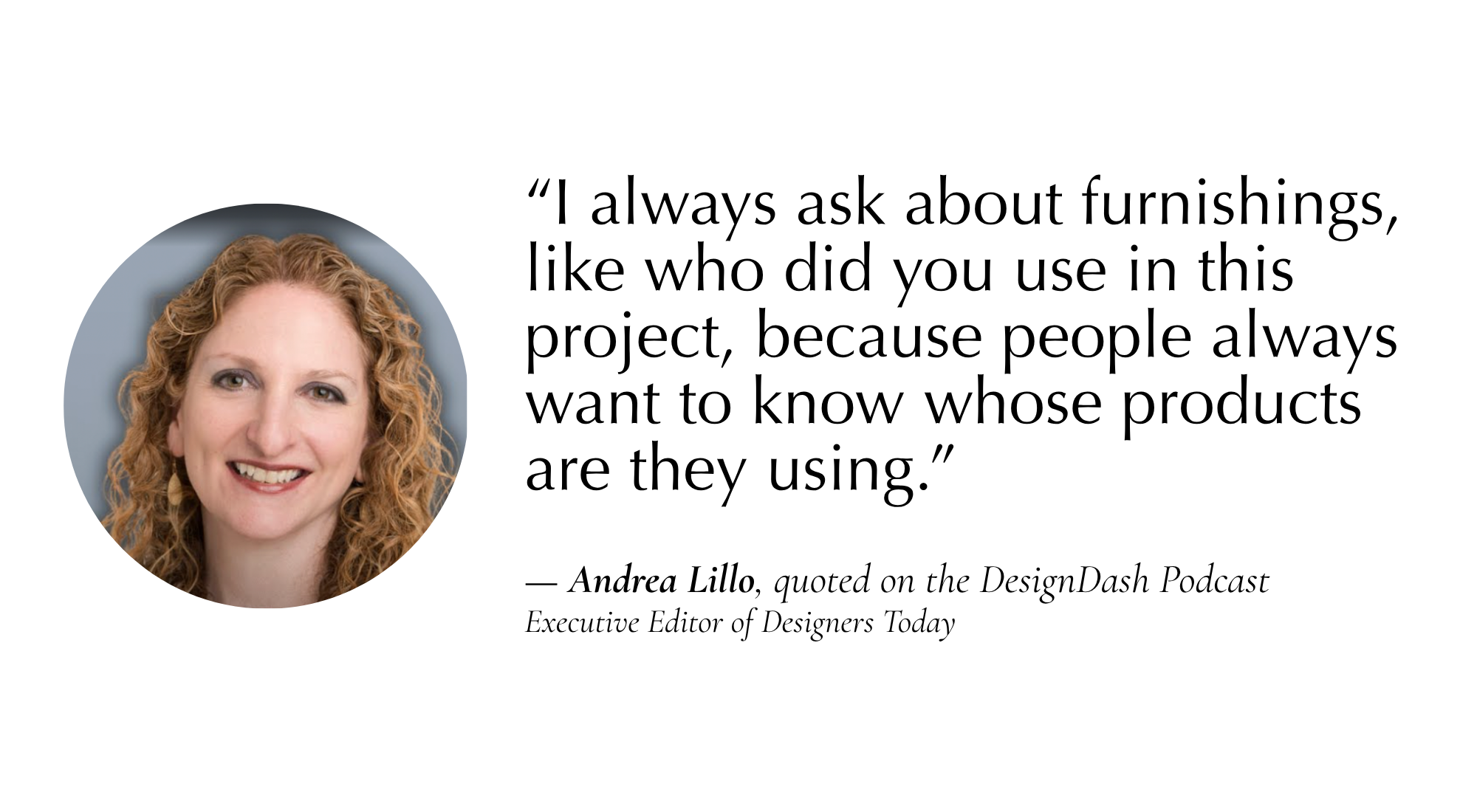
This is an excellent reminder for firm owners to track sources while the project is underway rather than trying to reconstruct everything months after install. Keep a project document with furniture, lighting, fabric, wallcovering, tile, art, and styling sources, even if you’re not sure whether you’ll ever pitch the project.
Photography also has to be submitted with editorial use in mind. A room might be stunning in person and still difficult to use as a cover, opener, or vertical crop. Editors are often thinking about page layout, text placement, issue structure, and whether the image can be cropped without losing the room. If you’re investing in project photography, ask your photographer for a mix of wide shots, verticals, details, and cleaner angles that leave some breathing room for editorial layouts.
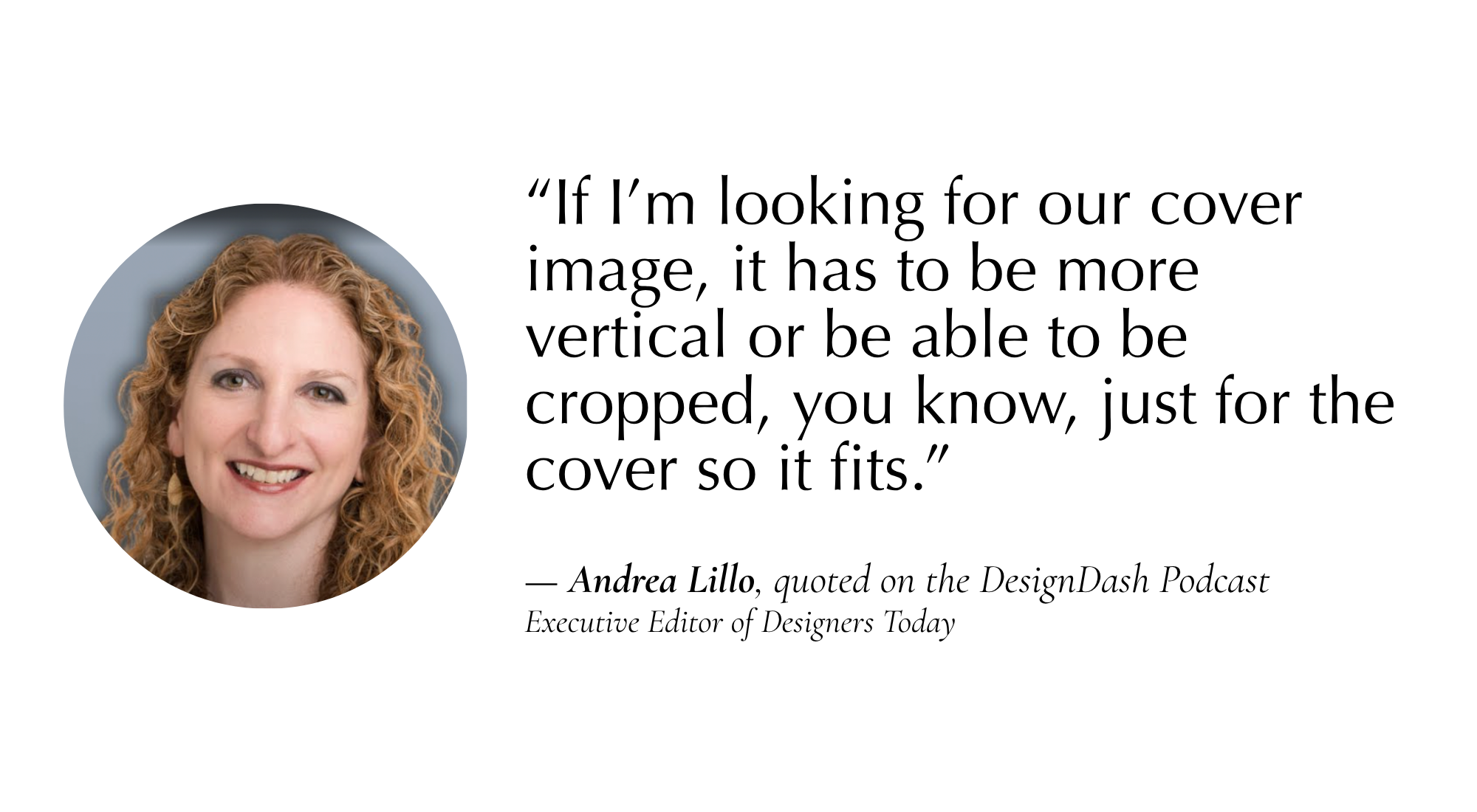
You can still submit a generous image gallery, but organize it. Name files accurately. Include photographer credit. Separate verticals from horizontals if that helps. Add a short project description with the most important design choices, client goals, and any sourcing notes. The easier you make the review process, the more attention the actual design can receive.
Fuel your creative fire & be a part of a supportive community that values how you love to live.
subscribe to our newsletter
*please check your Spam folder for the latest DesignDash Magazine issue immediately after subscription

#2 It’s Not Always About You. Timing, Format, and Fit Have a Huge Impact.
A project can be exceptional and still not fit the issue an editor’s planning. So even though that can be frustrating, especially when the project has already been photographed, styled, organized, and pitched, don’t take it personally. Editors are working with editorial calendars, print deadlines, regional focuses, business topics, room types, trend packages, and other stories already in progress. They’re also dealing with print limitations that digital publishing doesn’t have.
Print space is finite. A publication might love the project but have no available pages for it in that issue. Another project might work better because the images support the feature better, the angle fits the theme, or the timing lines up with a regional focus already underway. A pass doesn’t automatically mean the work was poor or unpublishable.
If an editor expresses interest but can’t place the project immediately, keep fostering the relationship, but don’t pester. Send a polite follow-up later. Share future projects that fit the publication. A project that wasn’t right for one issue might fit a digital feature, regional roundup, room-specific story, or later print package.
Andrea also explains that editorial selection often depends on what the publication needs at that particular moment. Sometimes the issue needs one region, one room type, one kind of image, or one story, and everything else has to wait.
Format still matters, but it shouldn’t take over your whole submission strategy. Editors need images that work on the page or screen, which is a bit different from how you format an online portfolio. In general, this means vertical options, clean angles, strong compositions, accurate credits, and enough variety for the editor to build a feature around your project. If every image has the same crop or the strongest room only exists in one awkward angle, the project probably won’t be published. Although, you always have the option of submitting to round-up articles!
Bathrooms and living rooms are good examples because they’re common editorial stumbling blocks. A bathroom might be beautifully designed, but if a toilet interrupts the space, that image will be much harder to publish, even though we all know bathrooms have toilets! A living room might function perfectly well for the client and their family, but a TV over the fireplace can dominate the photograph. No one wants to see an AD feature with a big blackhole in the middle of the space. You don’t need to pretend those things don’t exist in real homes, but you do need to find alternative angles that deprioritize those elements visually.
Before sending the pitch, edit your gallery. Lead with the best images instead of packing in every image. Remove near-duplicates. Keep the most editorial angles near the top. Include verticals when you have them. If a room has a TV, toilet, awkward crop, or visible distraction, either skip that image or include a better alternate. Editors know homes have plumbing and televisions, but they don’t want to see them!
#3 Make Yourself Extremely Easy to Contact and Even Easier to Understand
If you want editors, writers, podcast hosts, and producers to reach out, make sure they can actually reach you. A client inquiry form might make sense for prospective clients because you need to know budget, scope, timeline, location, and whether the project fits your firm. But an editor probably isn’t going to fill out a full consultation form to ask about a project feature. They need an email address. That can be a general inbox. It can be info@yourfirm.com, press@yourfirm.com, or another address monitored by someone on your team. Just make it easy to find.
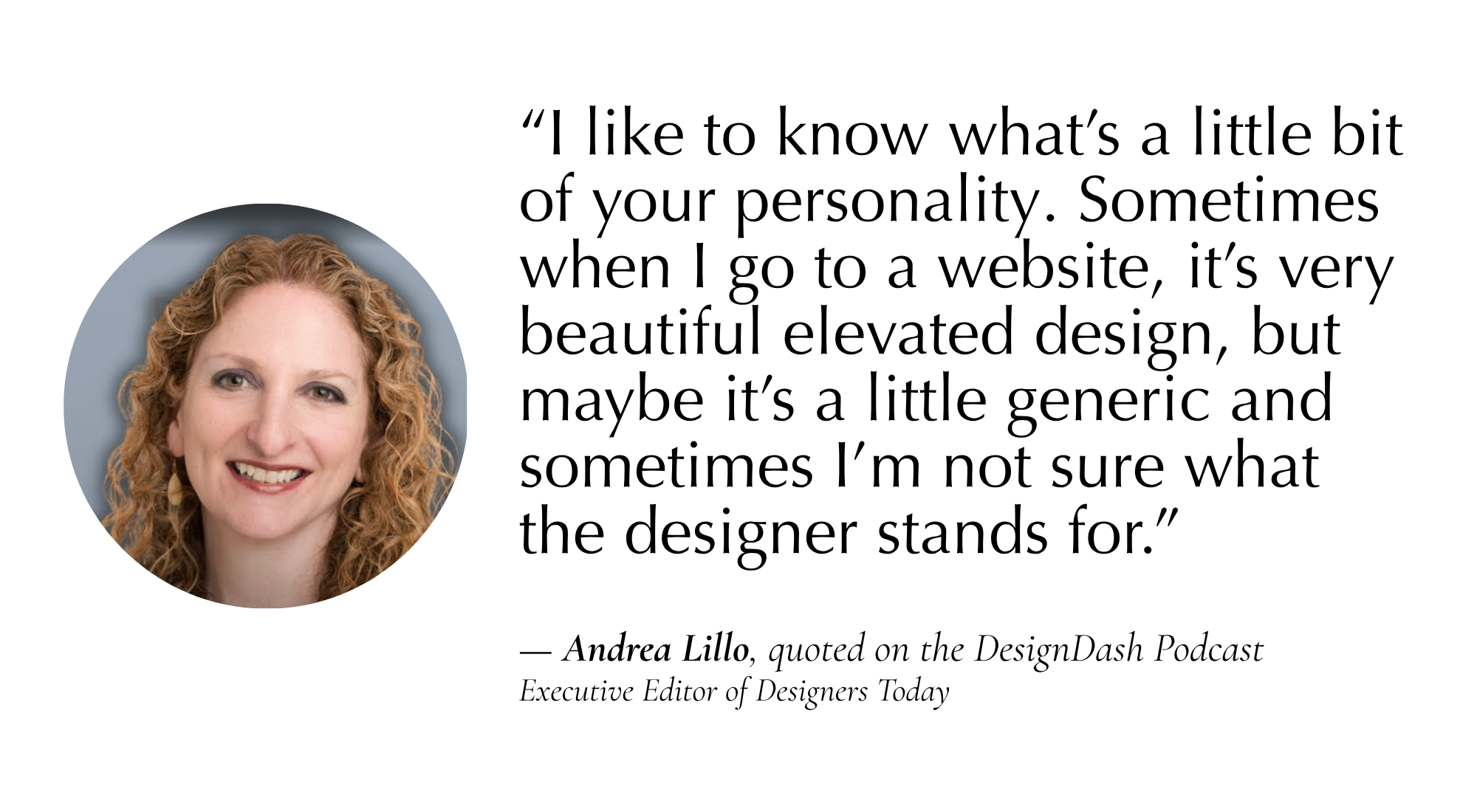
Your website should also give an editor some sense of who you are before they email you because that’s why they’ll email you in the first place. Beautiful images are essential, but your work shouldn’t be wrapped in boilerplate copy that could belong to any firm in any city. If every page says some version of elevated, timeless, bespoke, thoughtful, and curated, an editor might still love the images but have no real sense of your point of view.
Andrea specifically talks about wanting to understand a designer’s personality. That doesn’t mean your website has to be overly casual or filled with quirky facts for the sake of it. But it should communicate what you care about, what kinds of projects you take on, how you think about clients, and what makes your firm different from the next beautiful portfolio in the editor’s inbox.
That same advice applies to your pitch. A short, specific email will usually be stronger than a vague one. Name the project, include the location, and credit the photographer. Say whether the project has already been published. Add a few lines about the client’s brief, the renovation challenge, the materials, the vendors, or the details you love the most.
Don’t make the editor dig through your entire site to figure out whether there’s a story there. Give them the essentials right away, then link to a cleanly organized folder of images. If the project has a great kitchen, an unusual sourcing story, a complicated renovation, or a regional angle that fits the publication, say that.
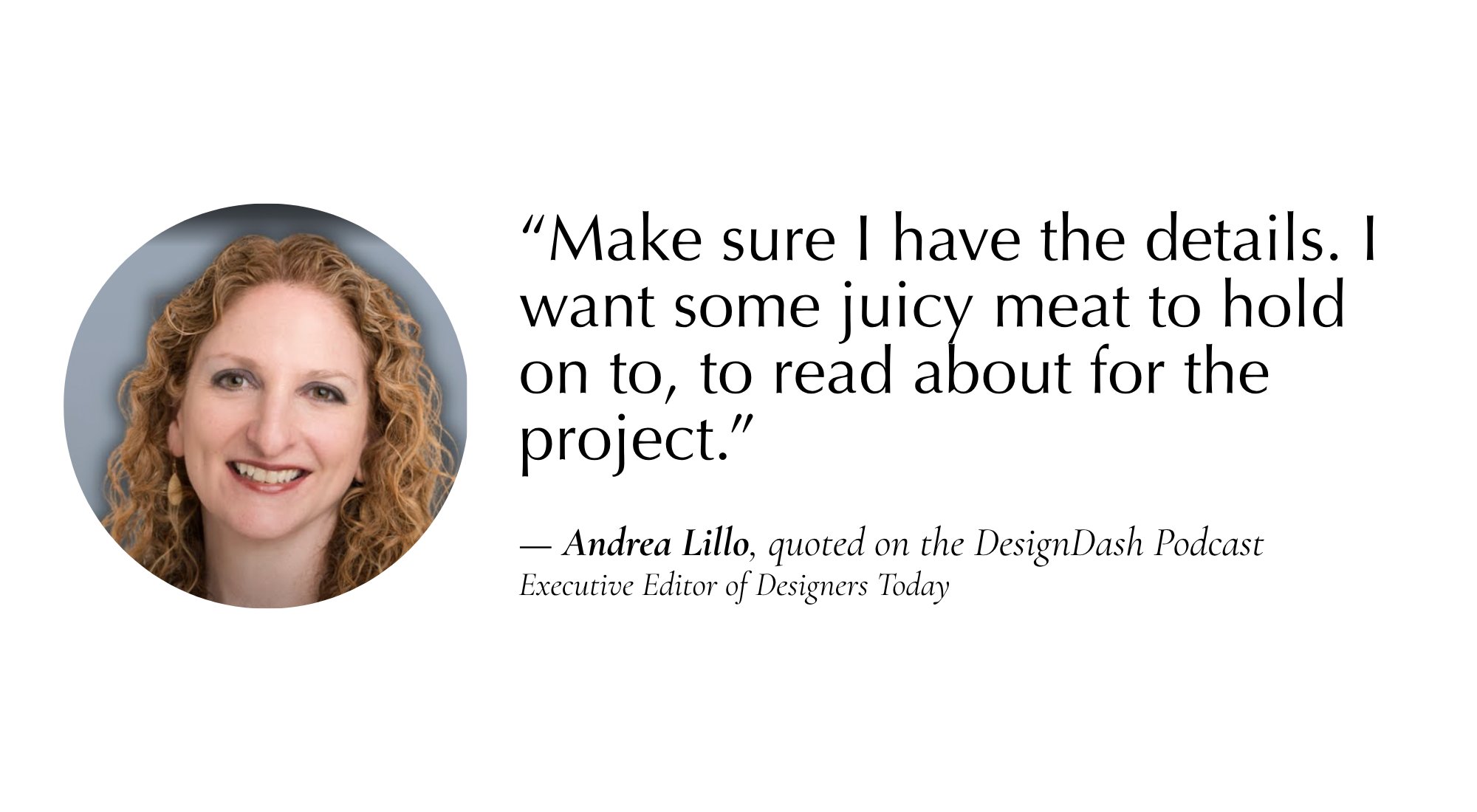
Personality helps here too. Andrea mentions fun facts, and while that might sound small, those details can help an editor understand the person behind the portfolio. Maybe your firm has a background in hospitality. Maybe you specialize in historic homes. Maybe your projects are influenced by travel, art collecting, antiques, or your clients’ family histories. Those details should be easy to find somewhere on your website or in your pitch.
You also have to be patient after you send the first email. Editors receive a lot of pitches, and they’re balancing print deadlines, digital content, events, interviews, and issue planning. A slow response doesn’t always mean the project was rejected or ignored. Send a thoughtful follow-up, but don’t flood their inbox because you didn’t hear back right away.
Before you pitch, look at your website the way someone send a press inquiry would. Can they find your email address? Can they understand what kinds of projects you do? Can they see your point of view? Can they tell who leads the firm, where you work, and how to reach you? If the answer is no, fix all of that before you pitch a project.
Final Thoughts on Getting Published as an Interior Designer
Getting published isn’t totally in your control, which is annoying but true. An editor might love your project and still have nowhere to put it right now if the next issue is already be mapped out. The project might be too similar to something they just ran. The images might be impossible to crop for publication. You can’t control all of that, and you’ll drive yourself crazy trying.
What you can control is the quality of your pitch and the accessibility of your firm. Send strong photos. Give the project a storyline. Include credits, sources, and photographer information. Make sure your website has an actual email address and a point of view. Edit out the distracting images before the editor has to. Follow up without pestering. Foster the relationship, especially if the first answer is “not right now” rather than a hard no.
Inside DesignDash Growth Studio, we talk a lot about visibility and marketing because it’s something firm owners know they need but often don’t know how to pursue. Getting published can feel intimidating, but Andrea’s advice makes the process much more concrete and approachable. Prepare the project well, pitch it explicitly, and make it easy for the editor to get in touch.
Written by the DesignDash Editorial Team
Our contributors include experienced designers, firm owners, design writers, and other industry professionals. If you’re interested in submitting your work or collaborating, please reach out to our Editor-in-Chief at editor@designdash.com.
Related Posts

These Are The Best Master of Urban Planning Programs in the U.S.
From M.I.T. to Cornell, the Master of Urban Planning (MUP) programs li
Age of Opulence: French Rococo Interiors and Architecture
With ornate detailing, light colors, and playful themes, French Rococo

Tunes for Tots and Teens: The Best Music Platforms and Apps for Kids of All Ages
Whether a toddler lullaby or an age-appropriate pop hit for your tween

Don’t Miss These June 2026 Design, Art, and Architecture Events
We've rounded up six June 2026 design, art, and architecture events, i

Unique Mother’s Day Card Ideas to Show How Much You Care
Here are 17 creative and heartfelt Mother's Day card ideas that offer
What’s On View at the Art Institute of Chicago During Design Chicago
Attending Design Chicago this October? From Pixy Liao to Paradise Lost