Why Your Design Team Should Go to Galleries, Museums, and Art Fairs

 0
0
 0
0Summary
If you expect your team to make strong decisions about art, materials, color, and composition, they need exposure. Museums, galleries, and art fairs give designers better references, better instincts, and better language to use with clients. Paid time to look at art should be part of the job.
Reflection Questions
Does your team have time during the workweek to engage with art, or is it something they’re expected to do on their own time?
Are your designers confident when talking to clients about art, or do those conversations feel vague and reactive?
Are your projects pulling from a wide range of references, or starting to feel a little too familiar?
Journal Prompt
Think about the last time your team felt stuck on a design decision. Was it about scale, color, material, or composition? Now ask yourself where they could have seen a better reference for that decision in real life. What would change if that kind of exposure was built into their schedule?
Designers are expected to have a point of view. Clients look to your team to make decisions about art, materials, color, composition, and scale with absolute clarity and confidence. This level of judgment comes from exposure rather than sitting at a desk or pulling from the same set of references over and over again.
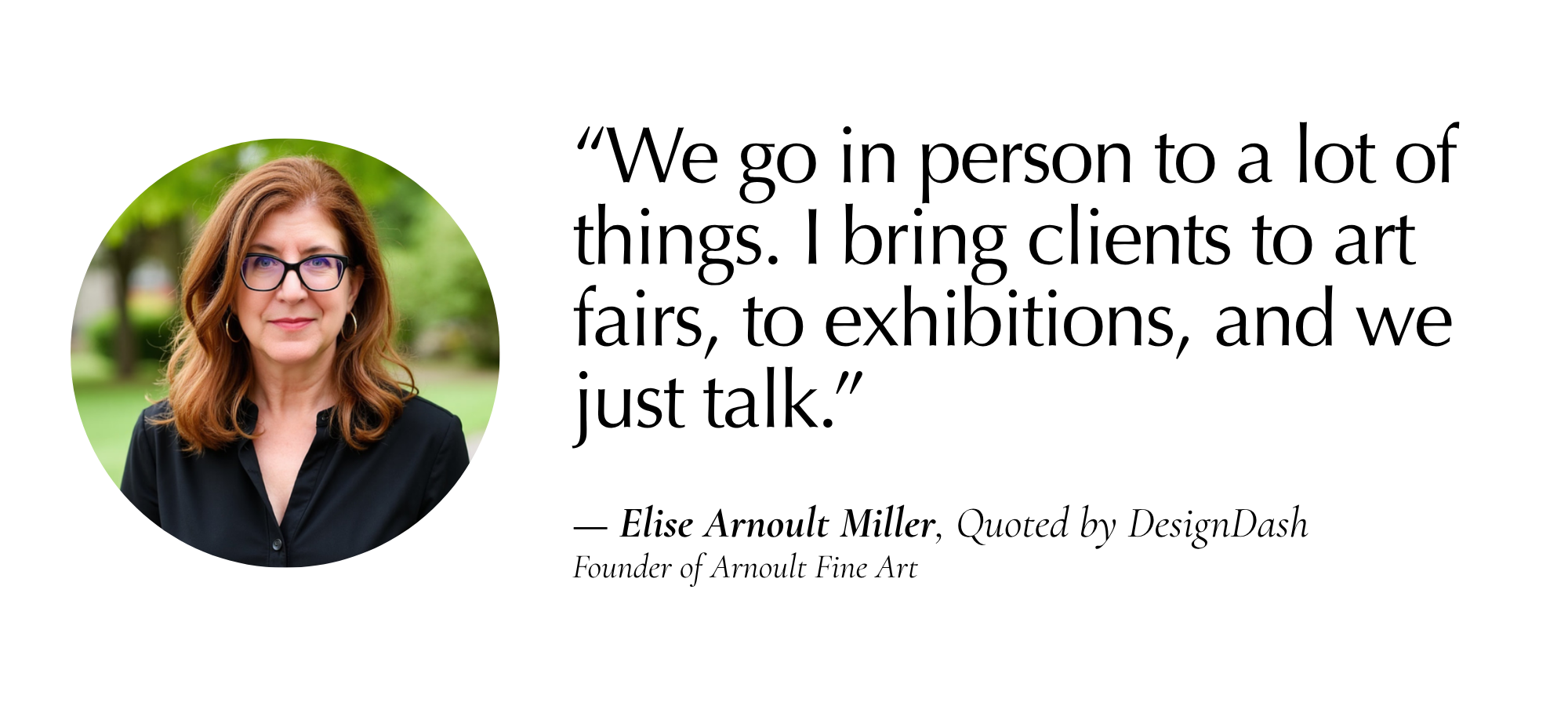
Advisor Elise Arnoult Miller, founder of Arnoult Fine Art and recent DesignDash Podcast guest, reminds designers that the more art you consume, the better. Galleries, art fairs, exhibitions, and artist talks should be part of their jobs rather than something squeezed in after hours. So, should your team be spending paid time doing this? Yes! Here’s how art exposure sharpens taste, improves sourcing, and elevates client work.
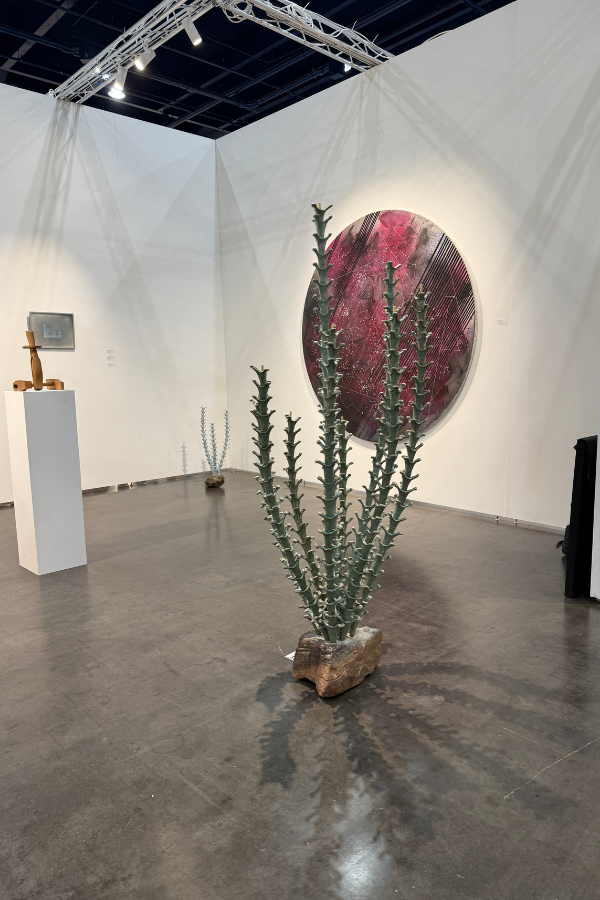
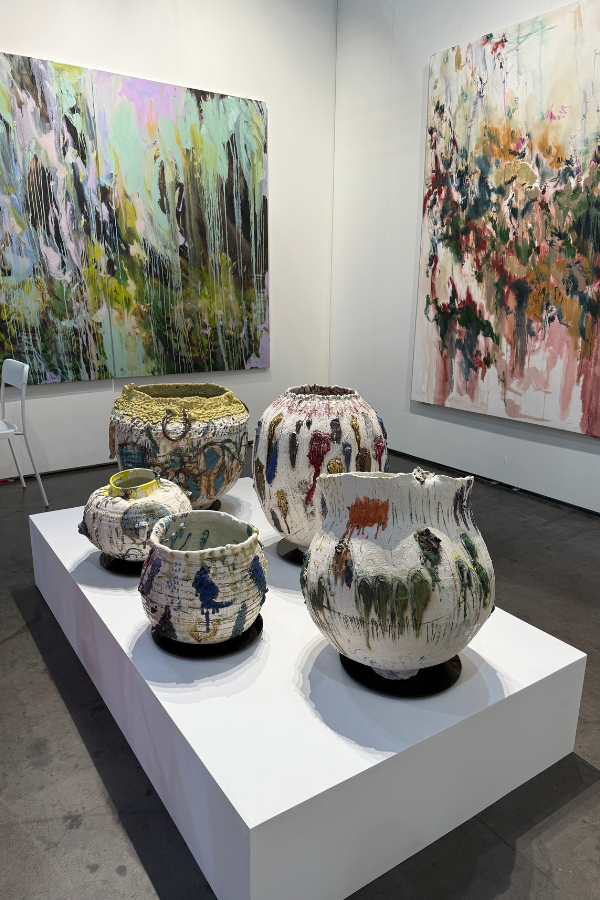
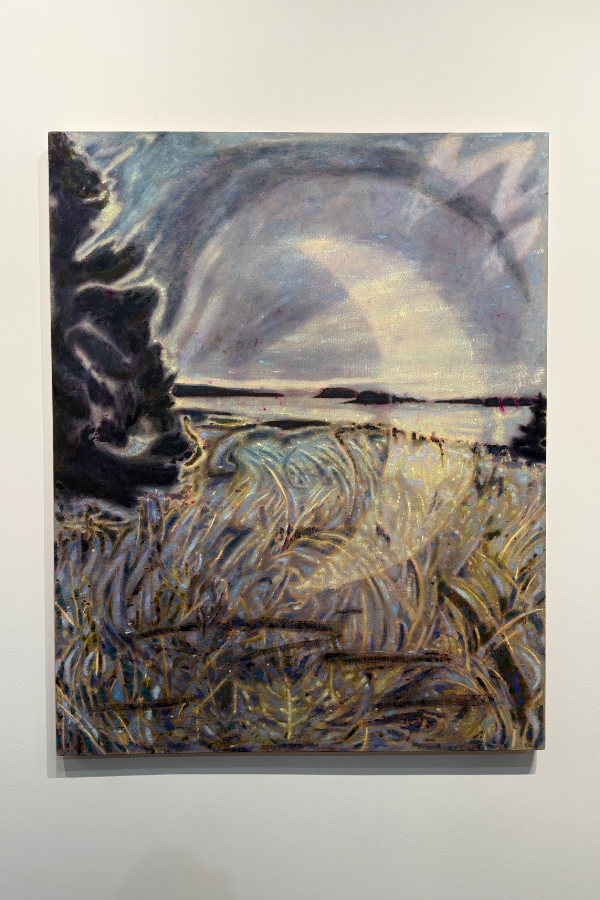
*All of the photos featured in this article were taken by the Laura U Design Collective team at an Untitled Art fair in Houston in 2025.

Five Reasons Why Your Design Team Should Go Look at Art
#1 Art sharpens your team’s taste and judgment
Does paid gallery time sound indulgent? It shouldn’t if you think about what your design team actually does for your firm and its clients. They’re selecting artwork, sure, but they’re also working with gallerists and art advisors, designing gallery walls, and crafting spaces in which art may be one of the most personal and expensive decisions in the project.
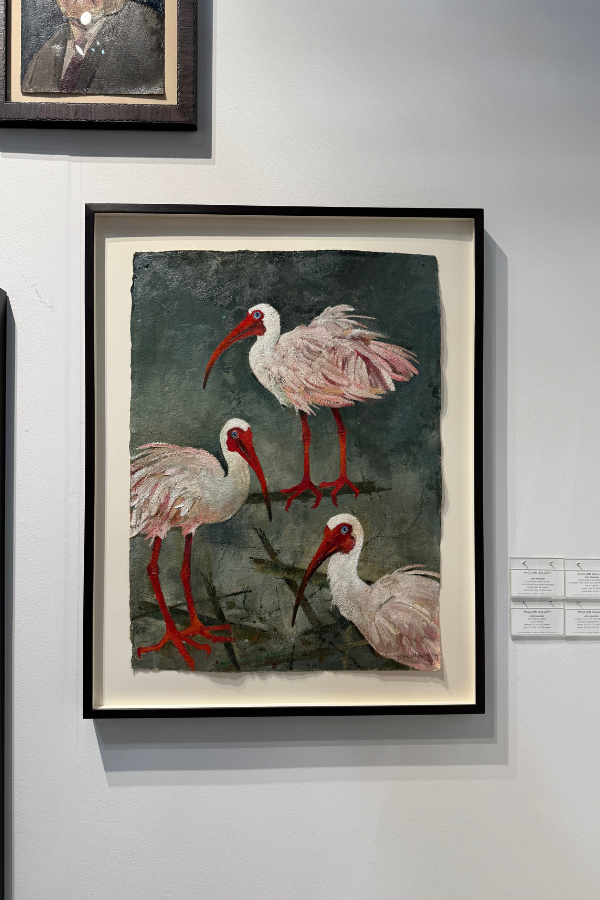
Plus, art touches all. Art is in the hand-painted or block-printed wallcoverings your team chooses, the fabrics they finger through, the joinery of a dining table, the millwork on a client’s ceiling, and so much more. Art is scale, texture, tonality, juxtaposition, color theory, and proportion. Truly, art is everything. It influences everything and draws from everything. As such, viewing art every chance they get sharpens your team’s taste and judgment.
One museum visit won’t change how a designer sees, but regular exposure gives your team a much wider internal reference library. This is especially important for luxury clients. They’re not hiring your firm to simply fill blank walls or choose the safest piece over a console; they probably already have an art collection that either needs companion pieces or fresh curation. They’re trusting your team to know where each piece should go, what should go with it, and how any new art should respond to the client’s existing collection.
Paid gallery time also gives designers language to use with clients and colleagues. They come back with better ways to talk about scale, medium, placement, and emotional response. That makes client presentations stronger because your team isn’t just saying, “We like this piece here,” when talking about art and interior design. Instead, they can explain why a work belongs in that specific space, why it’s worth considering, and what it adds to the client’s home.
#2 Art exposure makes your team better at sourcing for clients
Your designers don’t have to become art advisors, but they should know how to find the right people. Luxury clients may already own art, want to start collecting, or need help understanding why the piece they love online might not work above a 96-inch console in their formal living room. Your team needs enough exposure to ask better questions and know when to bring in a specialist. Elise says designers shouldn’t be expected to track the entire art world themselves.
This is why it’s worth paying your team to attend gallery visits, art fairs, and exhibition openings. Your team can meet gallerists, art advisors, artists, framers, and fair organizers before a client needs something urgently. Those relationships become part of the firm’s sourcing network, just like a trusted workroom, lighting rep, or antiques dealer.
This also helps your team understand what kind of partner each client might need. One client may need an advisor who can help build a serious collection over years. Another may need a gallerist with access to contemporary photography. Another may need access to conservators, preparators, or exhibition specialists who can reframe, reinstall, or build around pieces they already own. Paid gallery time gives your designers more names, more context, and more confidence when those questions arise.
#3 Art exposure helps designers understand their clients’ taste
As we briefly touched upon earlier, viewing art and attending artist talks helps designers expand their vocabulary and storytelling abilities. It also helps them understand different types of taste. Your designers need to understand what a client is drawn to, what the client is rejecting, and whether the objection is about color, subject matter, scale, medium, price, or fear of making the wrong choice.
Adopt this exercise with your team before they take it to clients. When your team walks through a museum, gallery, or art fair together, they can practice the same thing. What do they like? What is expected or unexpected? What piece would they fight for in a client presentation? What piece would be wrong for one client but perfect for another?
Fuel your creative fire & be a part of a supportive community that values how you love to live.
subscribe to our newsletter
*please check your Spam folder for the latest DesignDash Magazine issue immediately after subscription

A designer who can explain why a painting belongs above a console will be better able to explain why a dining chair should have a certain silhouette, why a patterned textile can handle more color, or why a more challenging piece might be better than the safer option. Luxury clients don’t always need a designer to agree with their first reaction, but they do need someone who can listen, interpret, and guide the decision without making the client feel wrong for having an opinion.
Art exposure also helps designers separate personal preference from client taste. Your team may love a raw, conceptual piece, while the client wants something softer, figurative, or tied to a particular memory. If you understand how to interpret someone’s particular taste instead of criticizing it, you’ll end up respecting it instead of rejecting it.
#4 Art exposure keeps your firm’s work from repeating itself
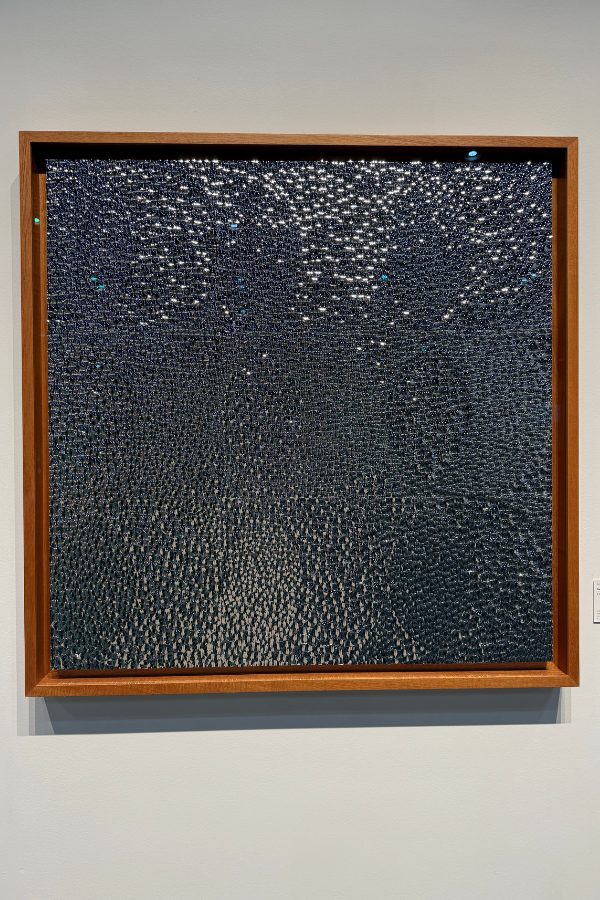
Every firm has habits. Certain palettes, vendors, silhouettes, materials, and compositions repeat because they work, because clients like them, or because the team knows how to execute them well. That’s not necessarily a problem, as consistency can be part of your firm’s point of view. But if your team only pulls from the same sources and the same references, your projects will start to echo each other a little too much.
Spending time amongst art (both old and new) interrupts that cycle. Your team might see a textile installation that changes how they think about pattern, a ceramic work that inspires a new material pairing, or a contemporary painting that makes a familiar palette more interesting. Exposure matters a lot.
If your firm serves luxury clients, each project needs its own point of view. A repeat client shouldn’t feel like they’re receiving a version of the home you just installed for someone else (or worse, one you’ve already given to them!). A new client shouldn’t be able to predict every space by looking at your last portfolio shoot. Your team needs new inputs if you want the work to keep developing.
This is especially true when your firm has a recognizable aesthetic. You shouldn’t entirely abandon what you do well, but you have to keep expanding the references your design team calls on. Paid art time gives your team a reason to look past that vendor portal, saved Instagram folder, or showroom they already know.
Your designer may not come back from an exhibition and specify a print they saw that day for a client you’re working with right now. But they’ll probably return to the studio with a better color pairing, a different sense of scale, or a new way to think about negative space. And what more could you want?
#5 Art exposure enriches your team in every way
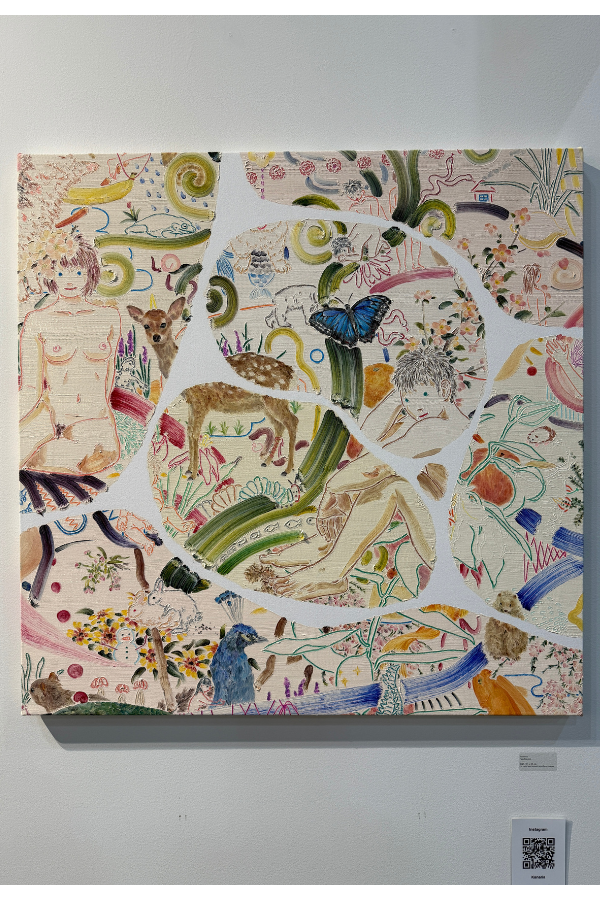
Design work can feel a bit limiting if your team only moves between drawings, samples, emails, and installs. There’s always another deadline, another revision, another issue to solve. Paid time to visit museums, galleries, and art fairs pulls your team out of that cycle and gives them something different to engage with. We liken this to looking up from your computer and out the window a few times each day. It helps your mental health to gaze at nature, yes. But lifting your eyes from your computer also helps recalibrate your vision.
Art educates, agitates, inspires, and soothes. Your designers might see a piece that challenges what they thought they liked, another that immediately feels familiar, and another that they can’t quite explain but keep thinking about on the drive back to the studio. Keeping their curiosity alive will make them happier people and more effective designers.
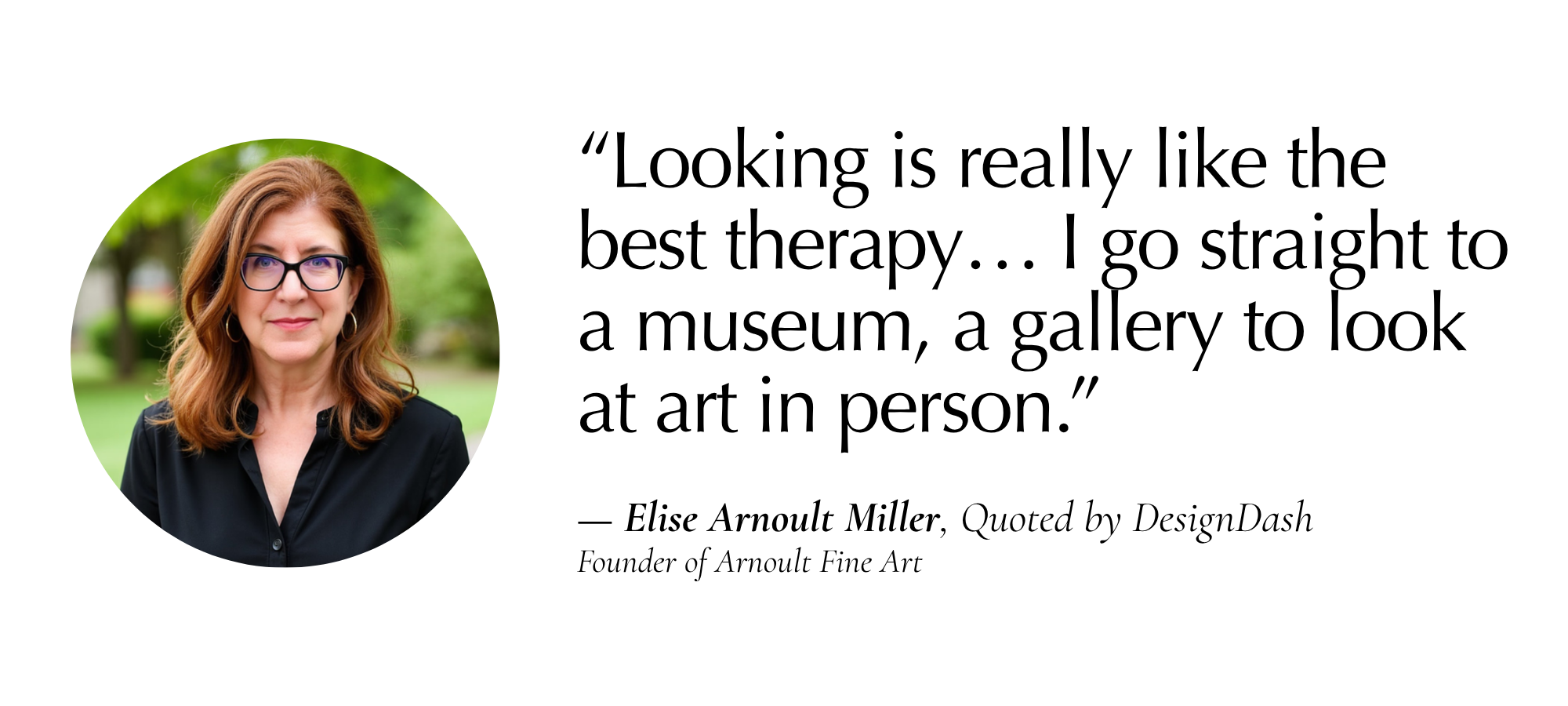
Pleasure is important. It’s an end in and of itself. Your team doesn’t need to turn every museum visit into a client presentation or every gallery opening into a sourcing trip, so don’t put pressure on them. Sometimes they just need to look, ask questions, react, disagree, and let their brains focus on something else for an hour or two.
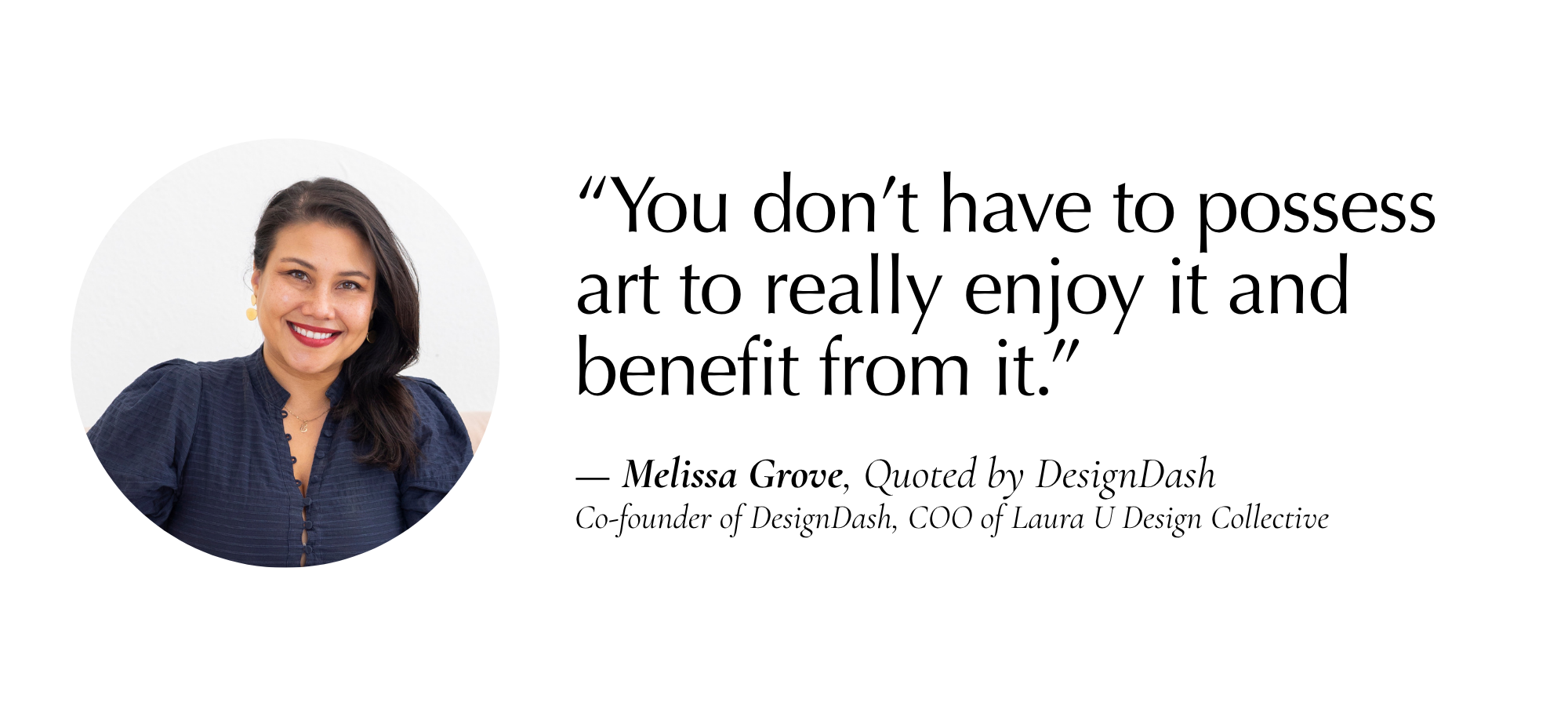
Designers are often trained to evaluate everything through acquisition, specification, or installation. But you can love a piece without buying it. You can learn from a sculpture without having a client for it. You can take in an exhibition and let it inform your work later in a way you might not see right now.
Paying your team to engage with art tells them that their creative development is part of the job. It gives them time to be curious without immediately converting that curiosity into a deliverable. That makes them better designers.
Join DesignDash Growth Studio for Perspective and Inspiration

If you want your team to have time for museums, galleries, art fairs, and creative development, your firm needs the structure to make that possible. Inside DesignDash Growth Studio, we help interior designers build around the five pillars of a scalable business: People, Profit, Promotion, Process, and Purpose. That includes clarifying roles, strengthening operations, and building a firm that can support both client work and the perspective your team needs to keep growing.
Related Posts

The Science of Acoustics: How Sound Influences Interior Design
Sound is a powerful yet often overlooked element in interior design. E

The Fascinating Life of Architect & Designer Florence Knoll
Read about the remarkable life of interior designer Florence Knoll. Ex
How to Authentically Reflect Your Clients’ Culture in Home Design
Learn how to authentically reflect your clients’ culture in home des

Does Leading a Firm Mean Stepping Back from Design?
Does growing a firm mean giving up design work? Laura Umansky and Meli


Flora and Fauna: Painters from the Barbizon School
Originating in the village of Barbizon near the Forest of Fontaineblea