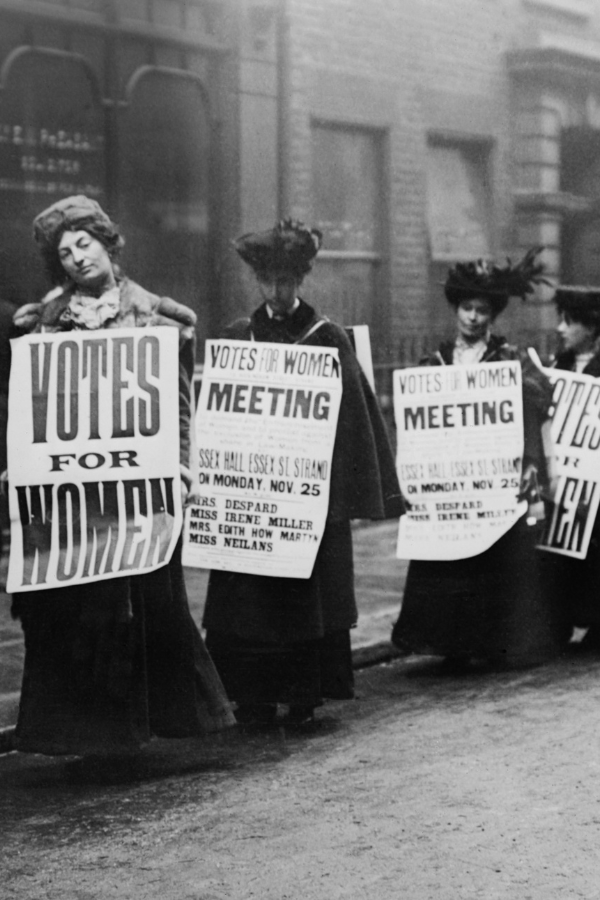
Should Firm Owners Take a Political Stance Online?

 2
2
 0
0Summary
There’s no single “right” way for design firms to handle politics on social media. The key is to be intentional. Separate your personal and business voice, decide whether neutrality supports your positioning, and think through the potential impact of what you share before you post.
Reflection Questions
Where do your personal views currently show up online, and is that placement intentional?
Does your firm benefit more from neutrality or from taking a visible stance?
How might your current social media approach influence the types of clients you attract?
Journal Prompt
Think about a recent moment when you felt unsure about posting something on your business account. What factors were you weighing? Client perception, personal values, timing, team dynamics? Write out how you made the decision and whether you’d handle it the same way next time.
Should you post your personal political takes on your firm’s social media accounts? That’s an incredibly loaded question, but designers are being asked, directly or indirectly, where they stand, what they believe, and whether their business accounts should reflect that. Some firms take clear positions, others stay neutral, and many land somewhere in between depending on their personal convictions (or their clients’).
In this episode of the DesignDash Podcast, co-founders Laura Umansky and Melissa Grove talk through how they approach this issue at Laura U Design Collective. Do you take what your clients feel about each issue into account? Do you post how you feel regardless of what clients, team members, or partners might think? Or do you relegate personal opinions to private social media profiles? Of course, the real issue isn’t just what you post.
Melissa and Laura’s conversation focuses on how you define the boundaries between your personal voice and your business, how you respond to cultural inflection points, and how those choices impact the clients you attract over time.

Two Takeaways from Episode 92 of the DesignDash Podcast
#1 Your business and personal voice don’t have to be the same
One of the first things Laura explores in this episode of the DesignDash Podcast is how she separates her personal social media from her business presence. She doesn’t do this in a rigid or overly structured way but in a way that reflects how she actually uses each platform. Her business accounts are always focused on the work. Her personal account has more flexibility, though even there, she’s selective.
She doesn’t post constantly, and she doesn’t treat social media as a running commentary on everything she thinks. When something does feel worth sharing, she’s intentional about where it goes and how visible it is.
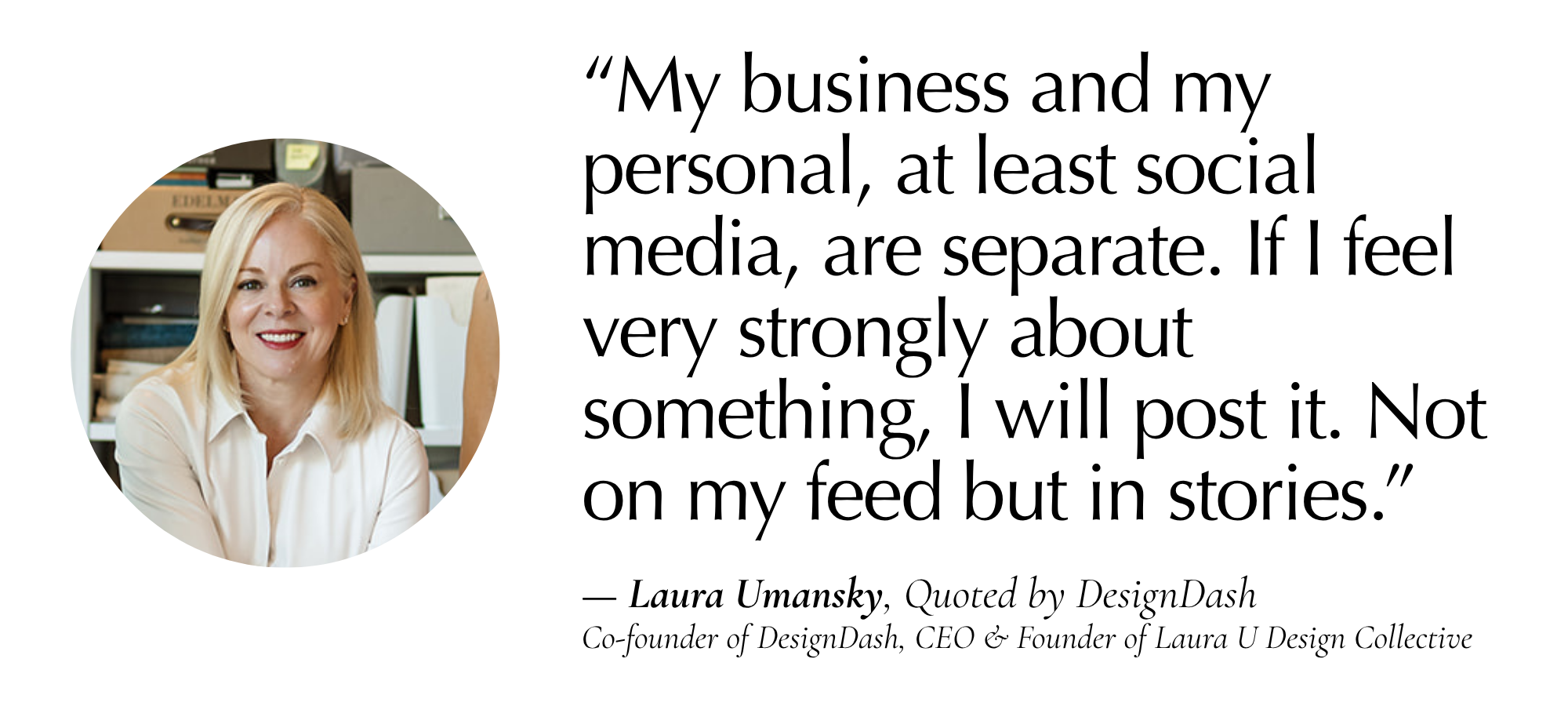
That distinction between feed and stories is key, especially if you aren’t very familiar with Instagram and other platforms. Posts on your feed are more permanent, more visible, and more tied to how someone experiences your brand over time. Stories are more immediate and less fixed. Laura leverages both to create a boundary without needing a complicated system behind it.
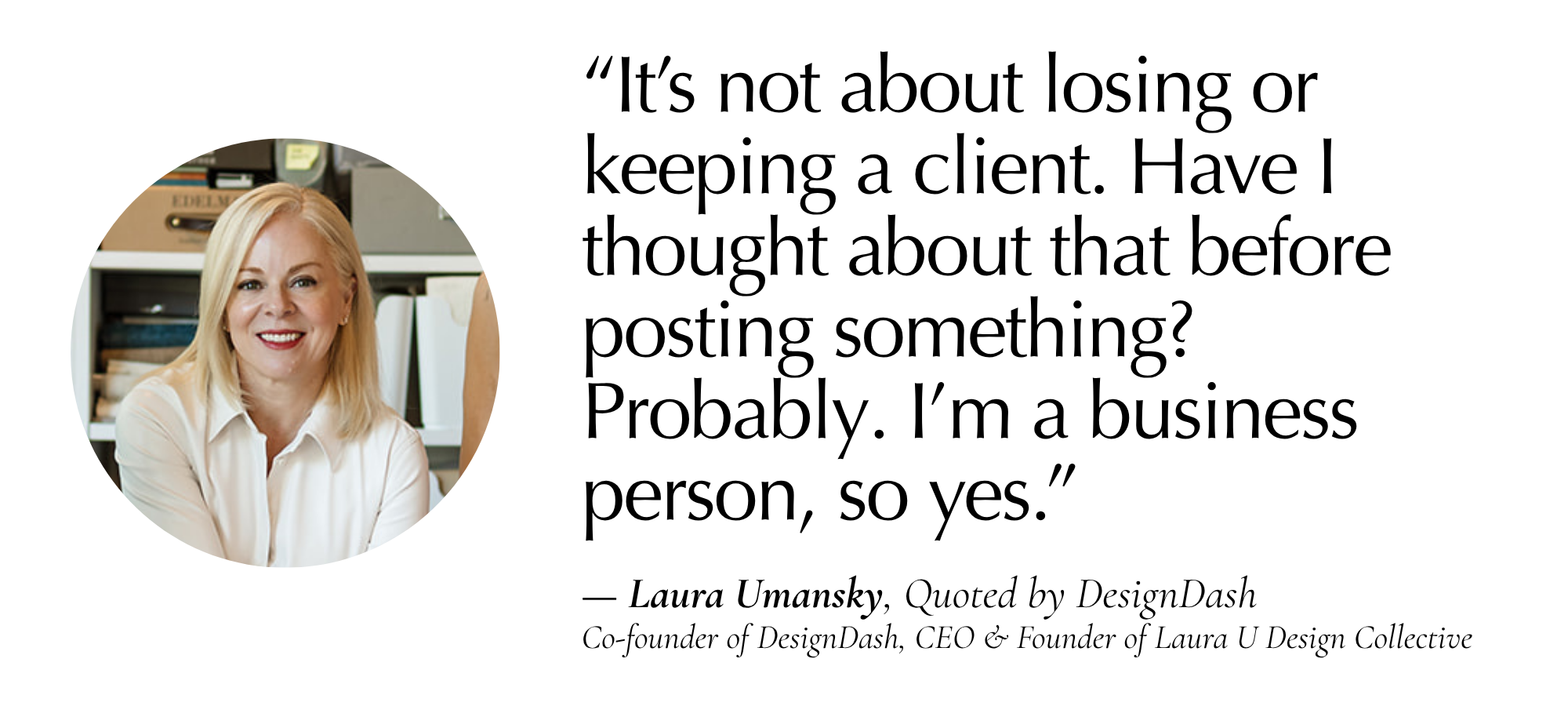
At the same time, she’s not pretending that the business side of her exists in a vacuum. Clients follow along. Prospective clients see what you post. There is always some level of overlap, even if the accounts are technically separate.
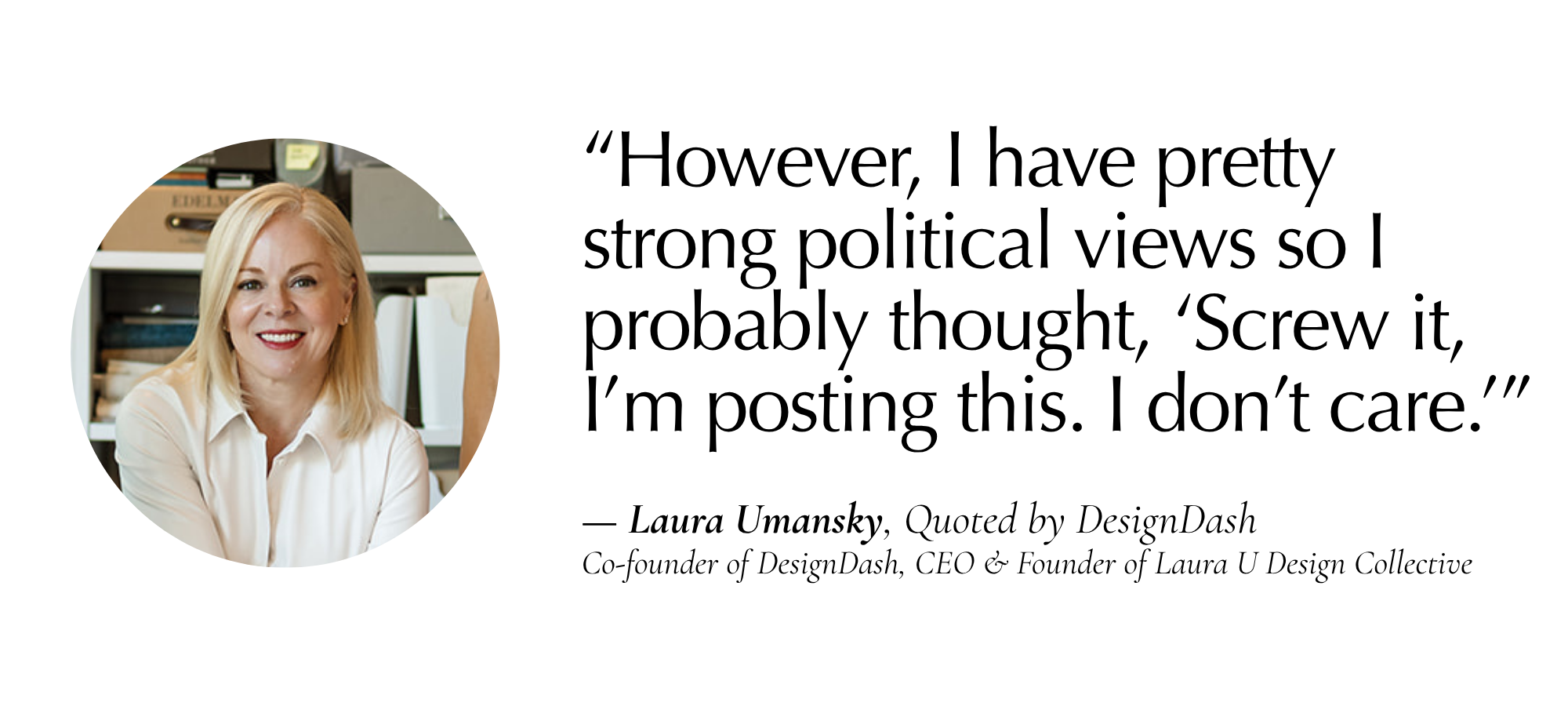
A firm owner can be aware of client perception and still decide that certain issues are worth speaking about. Laura’s not pretending that posts live in a vacuum, but she’s also not letting client reaction control every personal choice she makes online.
Your business account, personal account, feed, stories, LinkedIn, and private circle don’t have to abide by the same rules. A story will behave differently from a feed post. A personal account can have more wiggle room than a firm account (consider making it private if you really want to let loose). Don’t make the mistake of treating every platform as if it has the same audience and the same consequences.
This approach is nuanced and somewhat difficult, but it makes the decision less all-or-nothing. You can keep the business presence focused on the work while still making thoughtful choices about where your personal views get published. Your boundary doesn’t have to be super explicit or rigid, but it does need to be considered before the next news cycle, trend, or comment section forces an answer.
Takeaway for Firm Owners
Define where your business voice ends and your personal voice begins. Don’t leave that boundary undefined.

#2 Neutrality is a business decision rather than a default
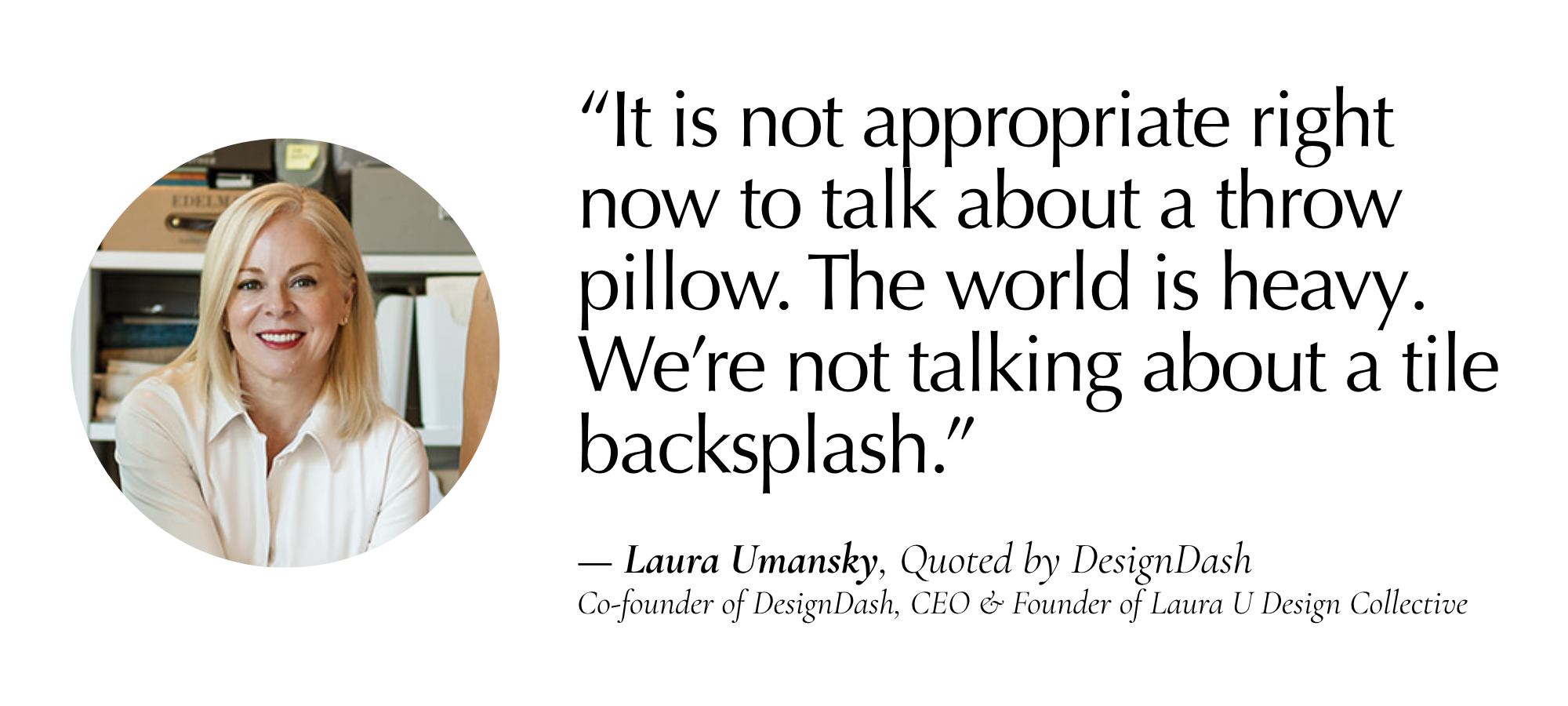
Melissa and Laura spend a lot of this episode talking about the difference between taking a thoughtful pause and making a public political statement. Those are two very different choices. A firm might decide not to post during a tragedy because a photo and caption announcing your freshly completed design project would be incredibly tone-deaf. But that pause certainly isn’t the same thing as publishing a position on a candidate, party, policy, or cultural debate.
Timing is part of judgment. Your scheduled content may be beautiful, but that doesn’t mean it belongs in the feed on a particular day. Melissa notes that her marketing team at Laura U Design Collective has indeed paused posting because the news cycle made normal content feel out of place.
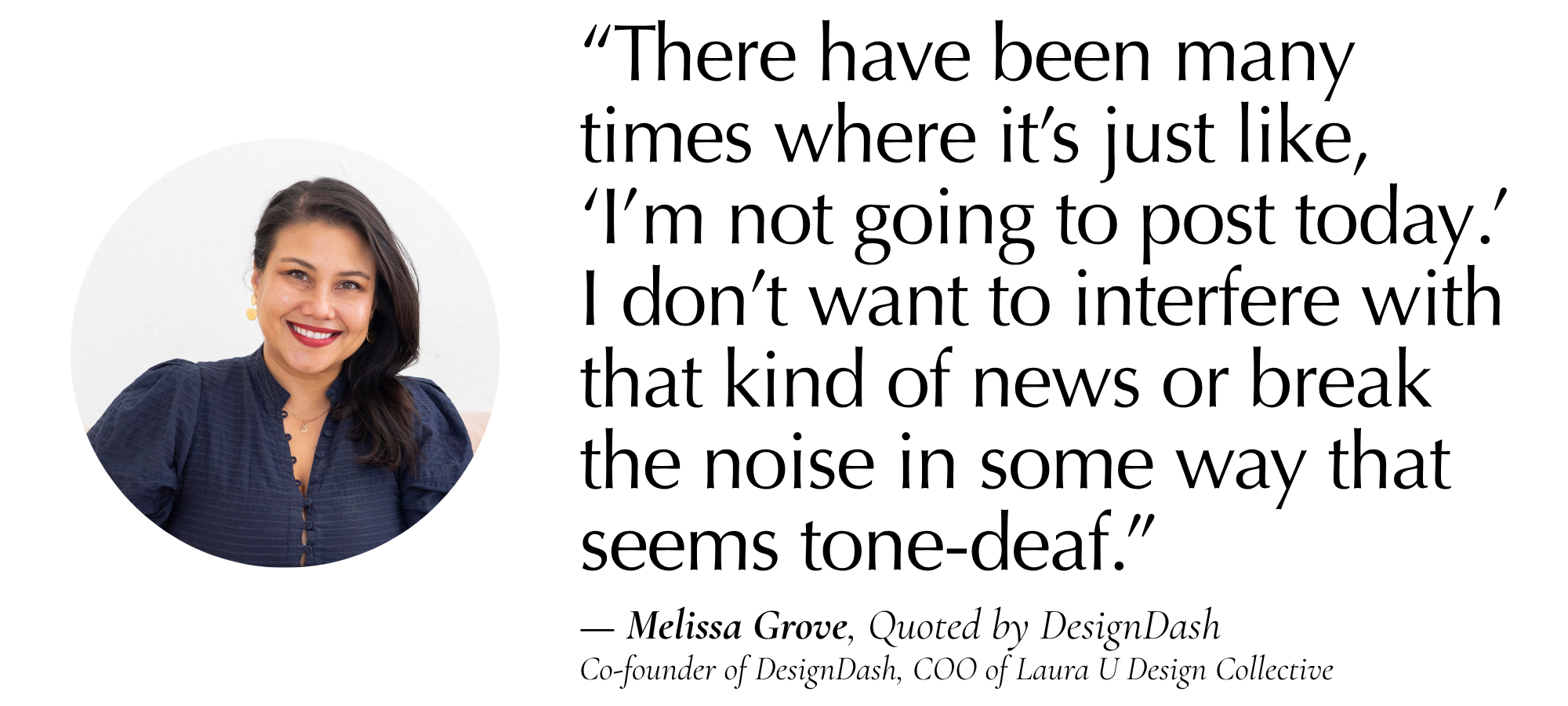
That’s an editorial decision and an ethical one. It says that the firm is paying attention without actually commenting on anything political. Laura agrees that there are days when talking about design would feel inappropriate.
But a lot of firm owners (and even their marketing leads) get a bit stuck here. Silence can be thoughtful, avoidant, strategic, empathetic, or all of the above depending on the moment. Posting can be brave, self-indulgent, clarifying, alienating, or completely appropriate depending on the audience and the message. The hard part is knowing which one you’re doing (and who you’re talking to).
Melissa frames neutrality through the way Laura U Design Collective operates as a luxury residential firm. Like any design firm, their work is relationship-driven and personal. Clients invite the team into their homes, into their budgets, and into a long decision-making process. In that kind of business, the firm has decided that the business account should stay focused on the work, the clients, and the values that actually guide the firm.
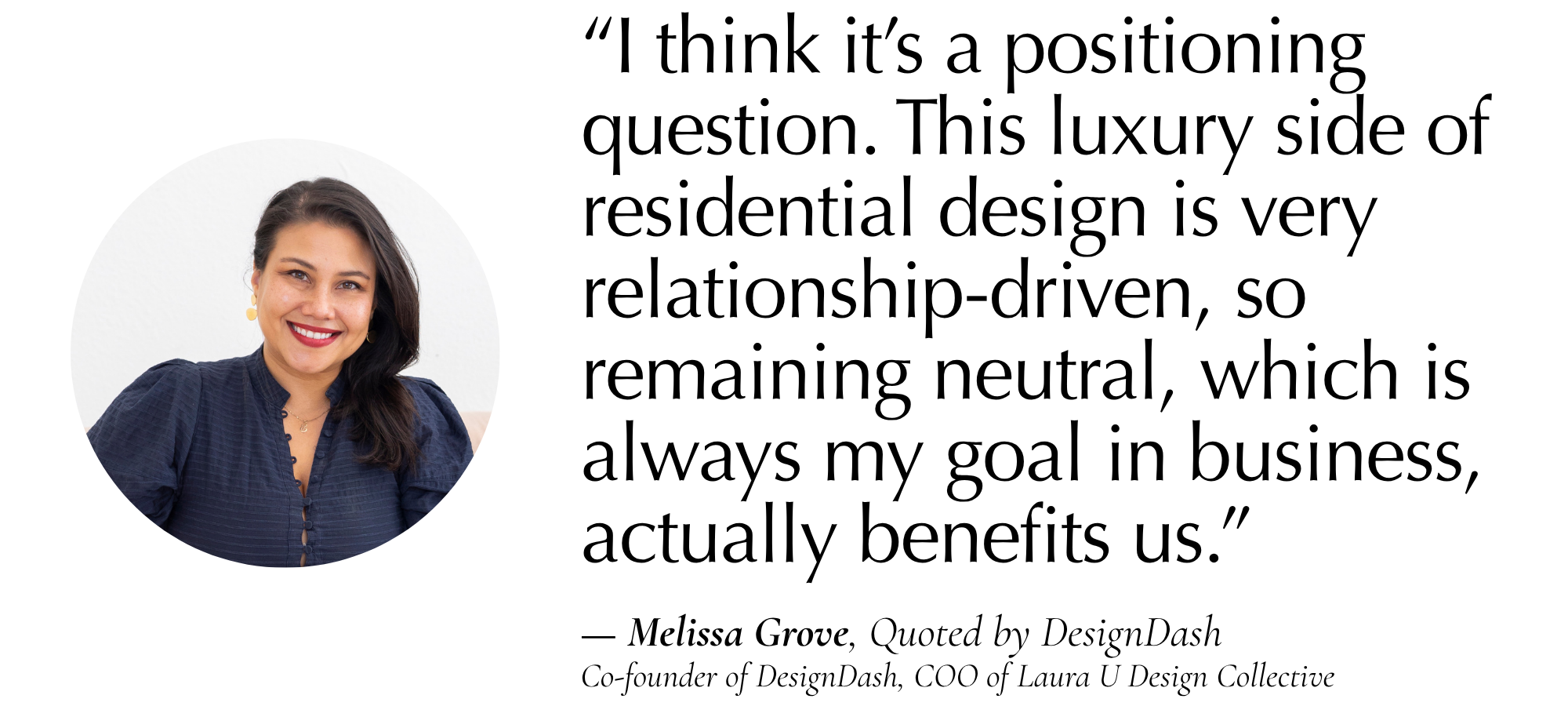
That doesn’t mean every firm should make the same choice. Melissa also points out that a more niche, emerging, or community-oriented firm might benefit from a stronger public stance. Some designers build their brand around advocacy, identity, politics, or a very specific worldview. That can attract the right clients and repel the wrong ones, which may be exactly what they want. Designers who post political content frequently may know exactly what they’re doing. They may not want clients who strongly disagree with them.
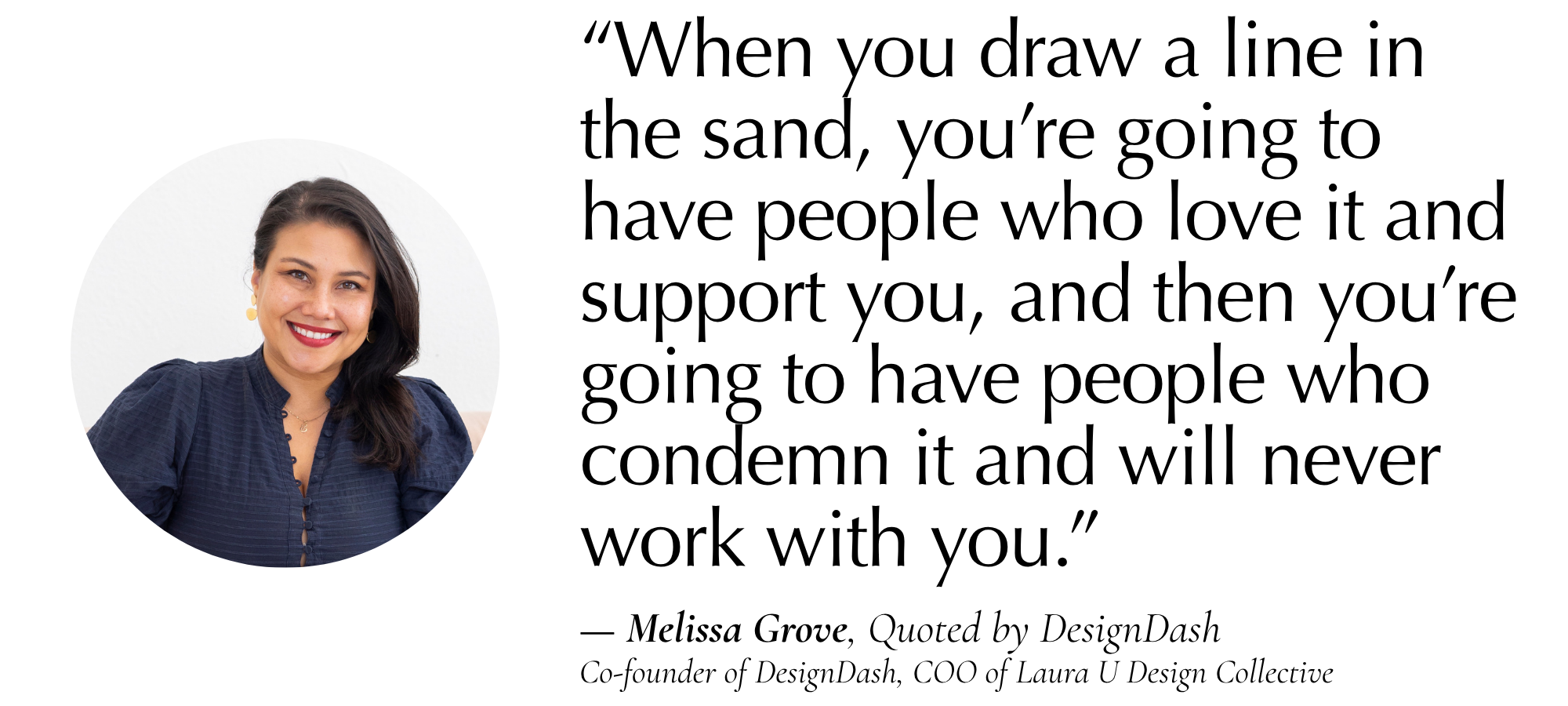
Neutrality has consequences too. It can protect client relationships, but it can also frustrate people who expect every platform to take a visible position. Laura mentions feeling pressure from people who argue that staying out of political conversation means failing to use your voice. She doesn’t agree with that expectation, especially for a business page.
The better question is what kind of business you’re running and what kind of relationship you want with your audience. A firm that works one-on-one with private residential clients may need different boundaries than a studio built around public advocacy or community engagement. Either path can work, but neither one should happen by accident. You need to make a choice.
Takeaway for Firm Owners
Decide whether neutrality supports your business, your clients, and your positioning. Don’t let a trend, comment section, or guilt-driven post make that decision for you.
Fuel your creative fire & be a part of a supportive community that values how you love to live.
subscribe to our newsletter
*please check your Spam folder for the latest DesignDash Magazine issue immediately after subscription

Final Thoughts
Laura and Melissa don’t give a universal rule for politics, social media, and business accounts because there probably isn’t one. A firm’s answer depends on its clients, its positioning, its team, and the kind of relationship it wants to have with its audience.
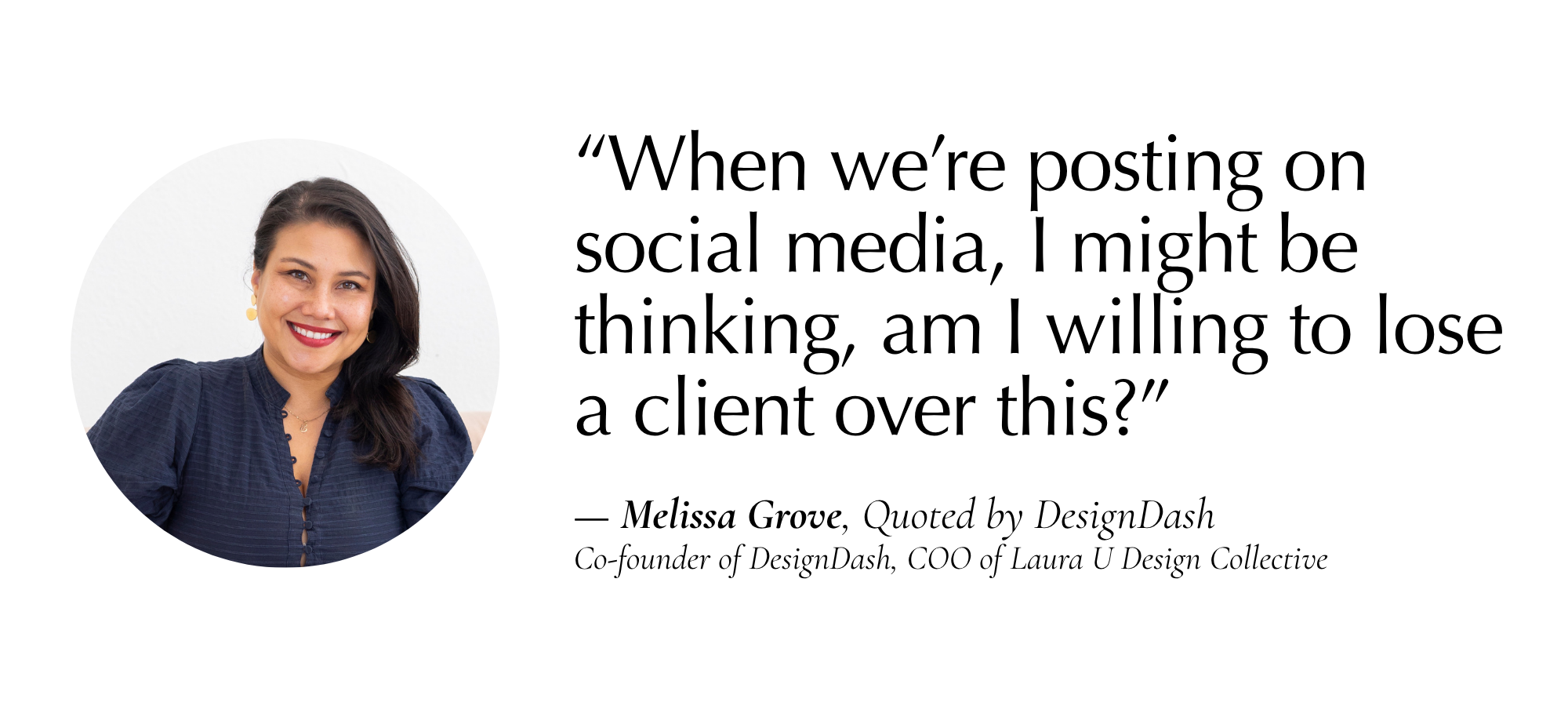
For Laura U Design Collective, that means keeping the business presence focused on the work, pausing when the moment calls for it, and allowing more personal views to live in more personal spaces. Another firm might make a different choice, especially if advocacy, identity, or community-building are central to the brand. Regardless, you need to decide before a news cycle, trend, or comment section makes the decision for you.
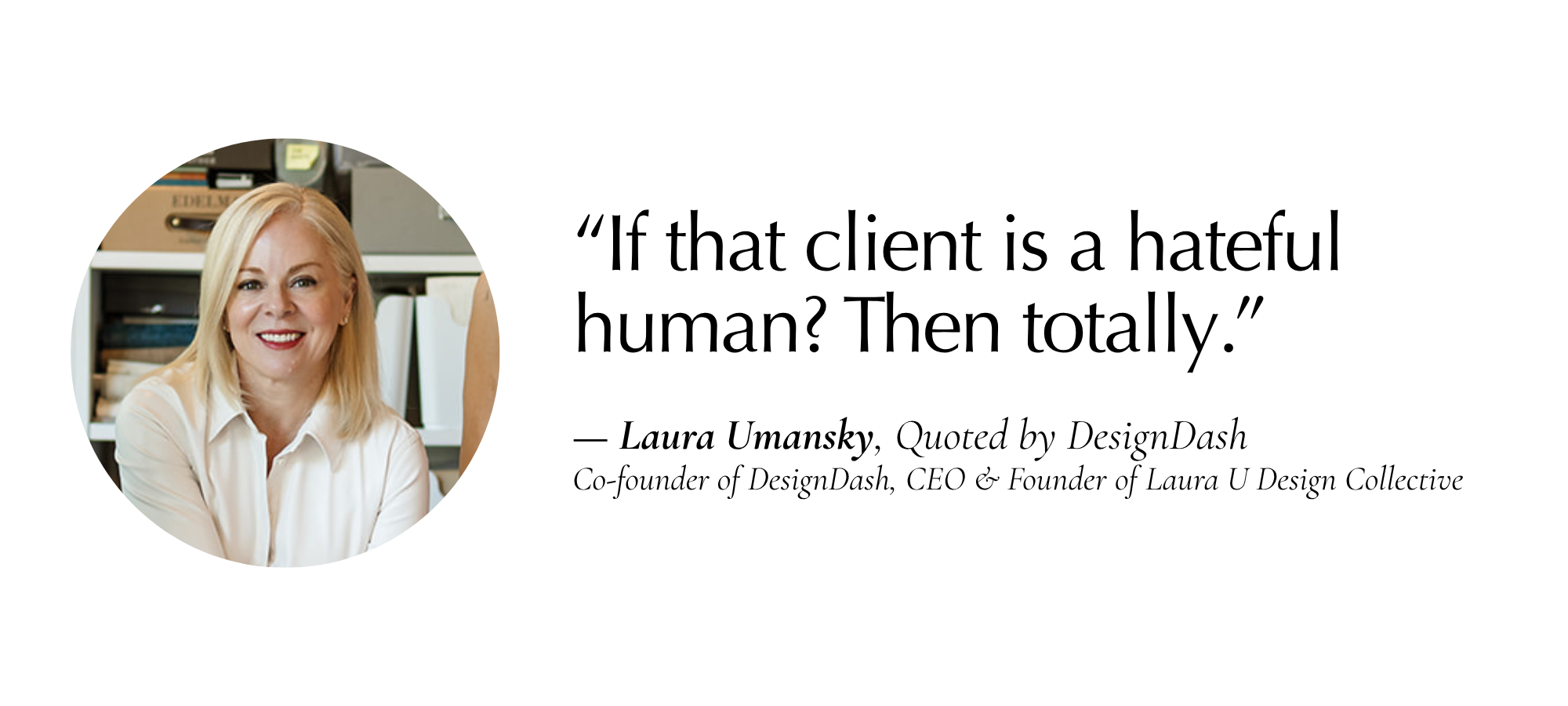
To be honest, you might be willing to lose that client! Every post doesn’t need to be cautious or neutral. Some views may be worth sharing even if they cost you an opportunity. Some clients may not be a fit in the first place. But the choice should be made with open eyes. Don’t make that decision out of guilt, pressure, or habit.
Watch the Full Episode on DesignDash
Watch the full DesignDash Podcast episode to hear Laura Umansky and Melissa Grove talk through politics, personal boundaries, client relationships, team dynamics, and what it means to manage a design firm’s voice online.
Written by the DesignDash Editorial Team
Our contributors include experienced designers, firm owners, design writers, and other industry professionals. If you’re interested in submitting your work or collaborating, please reach out to our Editor-in-Chief at editor@designdash.com.
Related Posts

Our Top Tips for Creating Seasonal Content That Resonates with Your Audience
From embracing holiday cheer to leveraging trends and personal stories

How to Choose a Studio Location as an Interior Design Firm
Choosing the right interior design studio location signals your intent


Why We Kiss at Midnight on New Year’s: All About this Endearing Tradition
The tradition of kissing at midnight on New Year's Eve, a custom embra

How Transparent Should Interior Designers Be With Clients?
Laura Umansky shares how she balances clear communication, client trus