
Is Your New Design Firm Hire the Problem, Or Are You?

 0
0
 0
0Summary
Hiring your first or second team member changes everything, and not always in the way you expect. In this episode, Laura Umansky and Melissa Grove talk through what actually happens when a new hire isn’t working out. The instinct is to blame the employee, but most of the time the issue starts with leadership. They walk through expectations, communication, workload, and trust, and show how often the problem isn’t the hire, it’s how the role is being managed.
Reflection Questions
When someone on my team is struggling, do I first look at how I set expectations and communicated the work?
Am I giving clear direction, or am I assuming someone should already know how I would do it?
Have I created an environment where my team feels comfortable asking questions and making mistakes?
Journal Prompt
Write about a time when someone on your team wasn’t meeting expectations. Start by describing what went wrong. Then rewrite the situation from your perspective as a leader. What could you have clarified, repeated, or structured differently. End by identifying one change you would make next time.
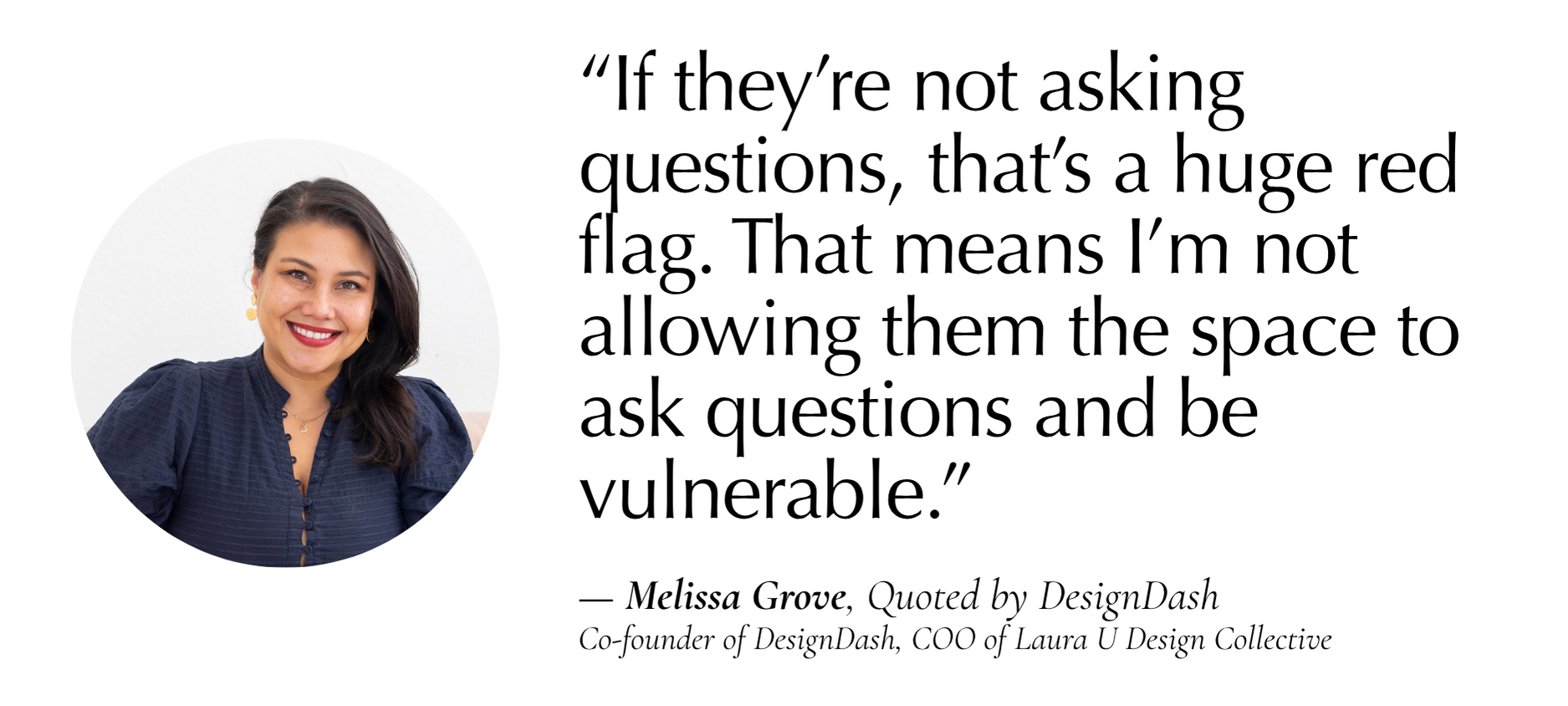
Hiring your first employee or even your second can expose problems that were much easier to ignore when you were working alone. A missed deadline, a repeated mistake, or a task done halfway can make you question your new hire even when you shouldn’t. In a recent episode of the DesignDash Podcast, hosts Laura and Melissa push listeners to examine why they automatically assume the hire is at fault. Before deciding your employee is the problem, they ask you to look at your own leadership first. Did you explain the task clearly? Did you repeat yourself enough? Did you set the expectation and then follow up on it?
Laura and Melissa explore the many daily management issues that make hiring difficult, especially when you’re building a team for the first time. They talk about vague instructions, beginner-level mistakes, missed deadlines, overwhelm, trust, and the temptation to say, “I could just do this myself.” They also talk about the other side, because sometimes the problem really is the employee, or the working relationship just isn’t going to work out.
Three Takeaways from Episode 90 of the DesignDash Podcast
#1 Most hiring problems start with leadership, not the hire
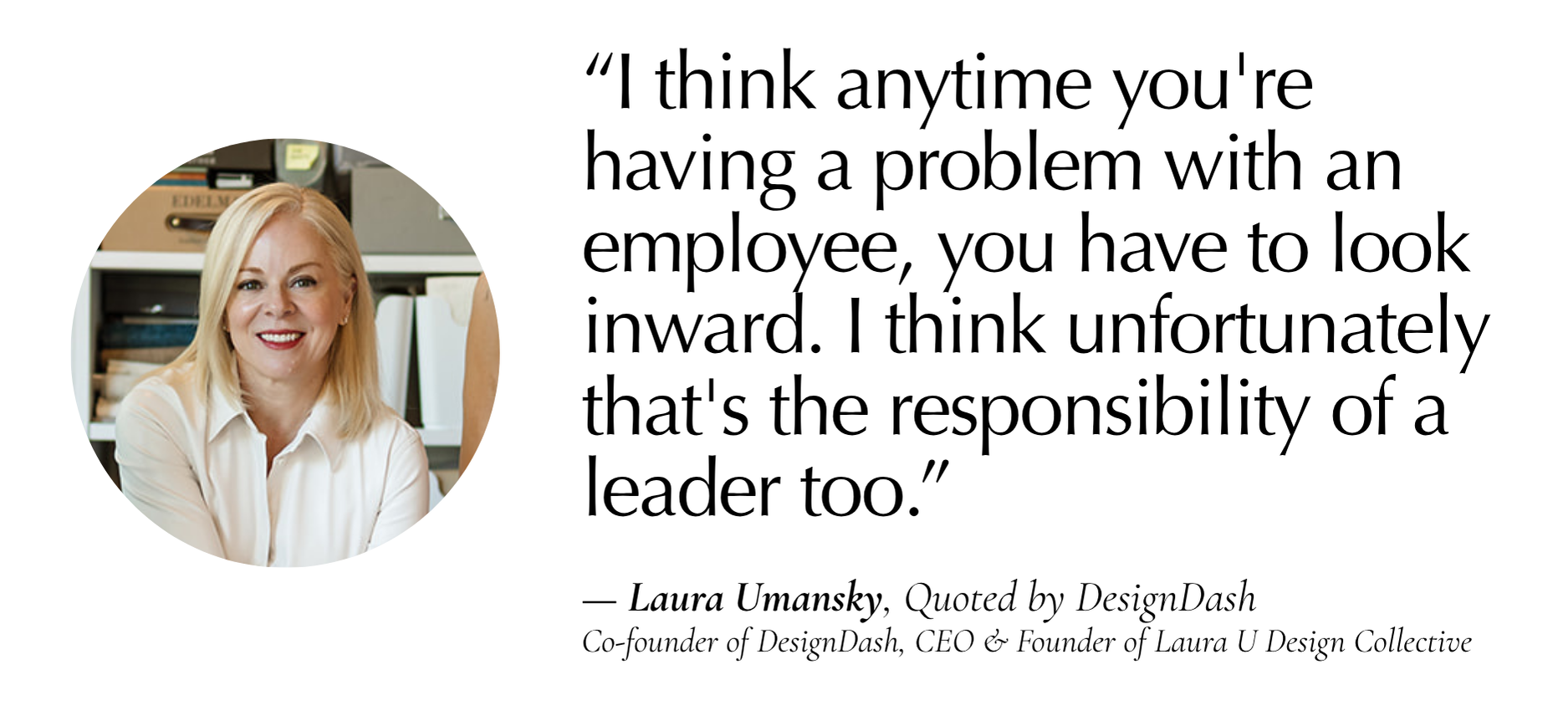
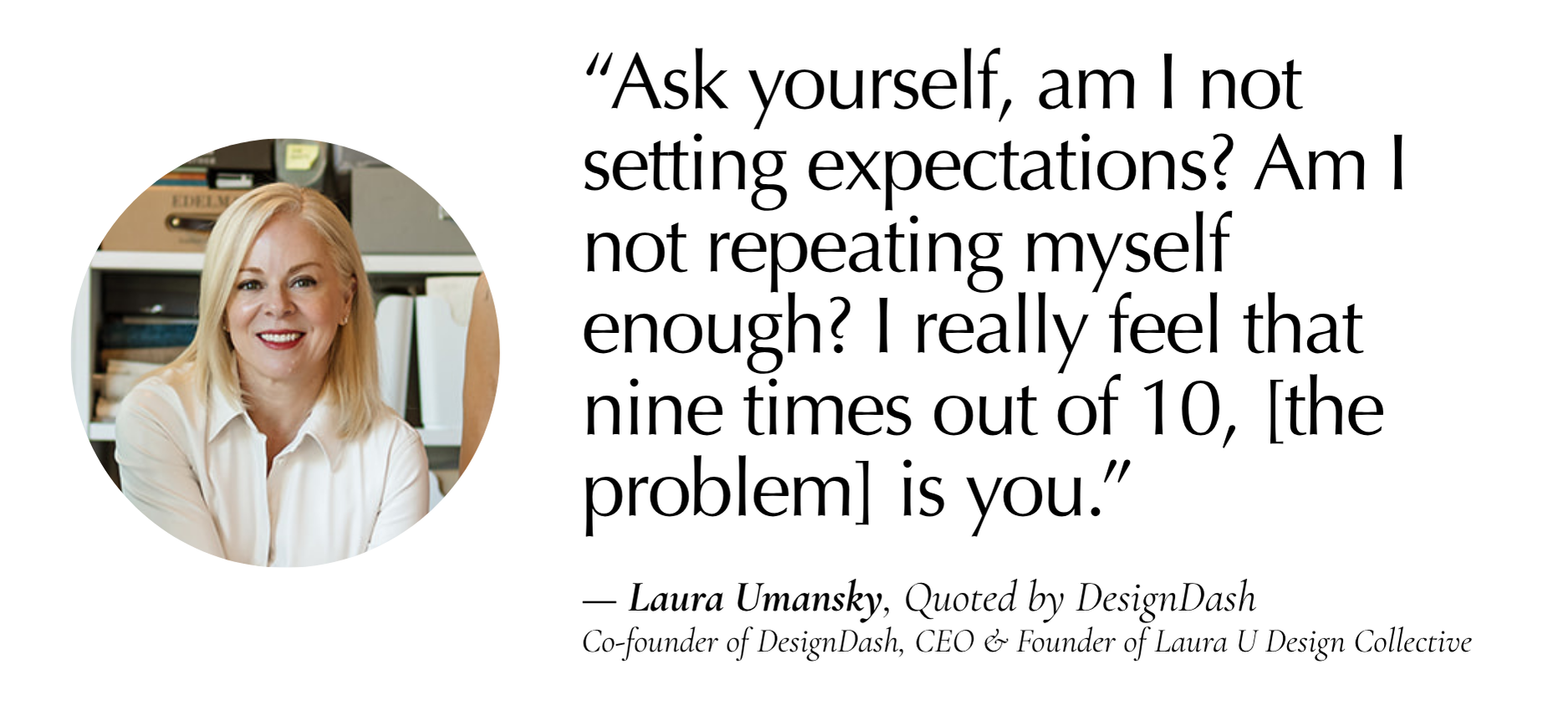
When a new hire keeps making mistakes, falling short, or missing something that seems obvious, the first instinct is usually to focus on them. Why aren’t they getting it? Why do I have to keep repeating myself? Why can’t they do this the way I would do it? Laura encourages DesignDash Podcast listeners (most of whom are firm owners) to ask different questions. What did you actually explain? How many times did you explain it? Did you set the expectation clearly, or did you assume they’d fill in the blanks the way you would?
When the role is new, that disconnect can be even more pronounced. Melissa brings that up the fact that with a new hire in a new position, you might not even know what to expect. As the firm owner, you might not even fully understand what that position entails day-to-day. If you’re hiring for a position you haven’t had before, you may not even know exactly what you’re looking for, and yet you’re still expecting someone to step in and do it well. That’s a steep curve for everyone involved. The employee is trying to meet a standard that may not be fully defined, and the owner is getting frustrated over work that was never explained clearly enough in the first place.
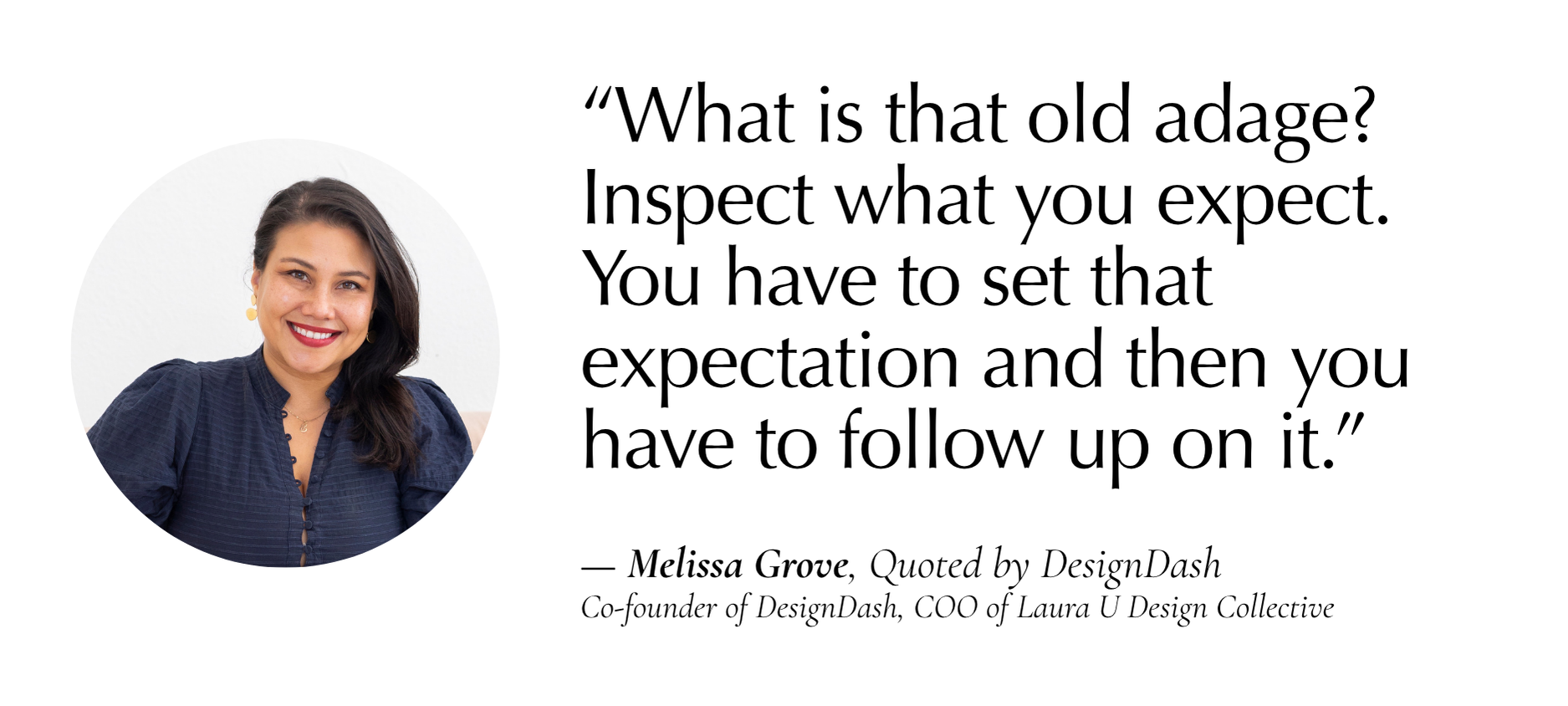
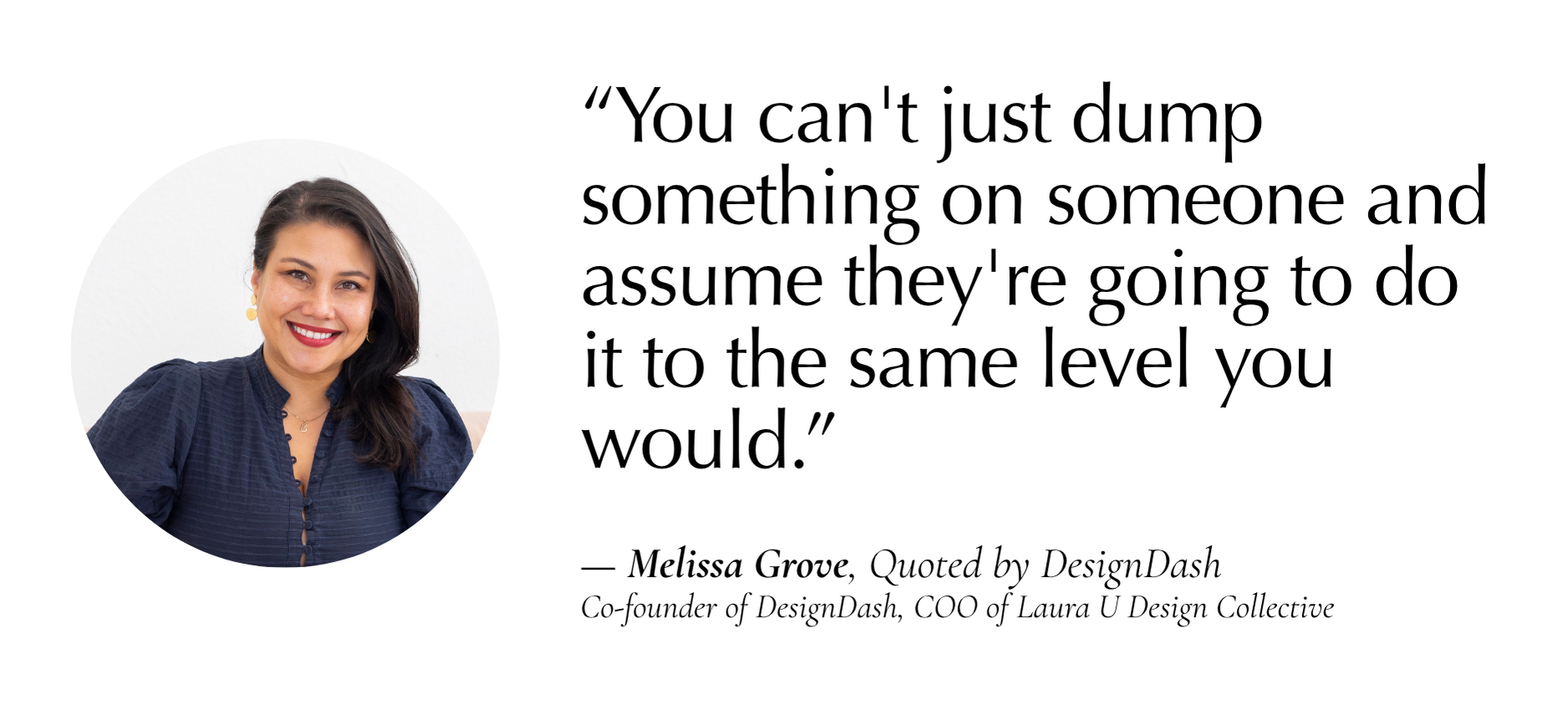
Melissa also notes that a lot of owners explain something once and think that should be enough. It usually isn’t. Someone may nod, say they understand, and still miss the point once they start doing the work. Or they understand one part of it and not the other part that actually mattered more. That’s what breeds a lot of resentment on both sides of the relationship.
There’s also the experience issue. In this industry, people learn by doing. A junior designer, or really anyone early in their career, hasn’t done most of the things you’ve already done a hundred times. That requires compassion and patience on your part. A first mistake doesn’t always tell you much about long-term fit. Sometimes it just tells you the person didn’t know what question to ask yet. Laura says that later in the episode too when she talks about costly mistakes. The person who made them often didn’t know enough to even see the risk incurred by their actions.
Fuel your creative fire & be a part of a supportive community that values how you love to live.
subscribe to our newsletter
*please check your Spam folder for the latest DesignDash Magazine issue immediately after subscription

#2 How you respond to mistakes shapes your entire team
Mistakes are part of the job, especially when someone is still learning how to think through unfamiliar situations. They will miss things. They will do something differently than you would have. They will cost you time, and sometimes money. That doesn’t automatically mean the hire was wrong. It often means they were asked to take full responsibility for something they didn’t fully understand yet (and shouldn’t have been expected to).
The reaction you and the person you’ve hired have in that moment matters more than the mistake itself. If the response is panic or anger, people will stress, back off, and lose a bit of trust. They stop asking questions. They stop taking initiative. They focus on not getting in trouble instead of doing the work well. That dynamic is very difficult to reverse. Melissa describes an error she made as an employee and how she applied it to her managerial style.
The response to her mistake didn’t erase the problem, but it changed what happened next. The focus stayed on fixing it, and the person who made the mistake stayed in a position to learn from it. That’s the big difference between someone improving and someone shutting down.
And you might think to yourself, “Well, I could’ve done this faster myself.” Sometimes that’s true. If that becomes the default response, the team will never improve and you’ll never take anything off your own plate. You’ll stay tied to everything.
#3 Sometimes it really is the employee, or the relationship just isn’t right
Of course, this doesn’t mean that you as a boss should ask employees to repeatedly step outside their job descriptions. It just means that some employees want to coast and not every problem traces back to leadership. Some issues repeat after they’ve already been addressed. Some people resist process without taking the time to understand it. Some avoid responsibility when something goes wrong. Those patterns don’t fix themselves.

There’s a difference between someone learning and someone refusing to adjust. Early mistakes are expected. Repeated behavior after clear direction is something else. The same goes for someone who wants to change how things are done before they’ve learned why those systems exist. In a design firm, most processes are there because something already went wrong once (or twice, or thrice!).
Silence can mean many different things. It can mean someone is disengaged. It can also mean they don’t feel comfortable speaking up. You have to pinpoint which is true in your specific circumstances. A missed deadline might be disorganization. It might also be overload. It might be unclear priorities. It might be someone who doesn’t know which task should take priority.
Sometimes the issue is the workload itself: too much handed off at once, no clear order, no real sense of what needs to happen first. Sometimes the issue is trust. Sometimes it’s just not a good fit. Not every working relationship improves with time, but many do.
Watch the Full Episode on DesignDash
Towards the end of the episode, Melissa comes back to the big question: is it me, or is it them? Unfortunately, we can’t tell you the answer without context. Sometimes the problem is your employee. Sometimes it is your leadership. Sometimes it is both of you, and the working relationship just is not right. But before you rush to blame the hire, Laura and Melissa make a strong case for looking inward first. Clearer expectations, better follow-up, more honest feedback, and a more realistic view of workload can solve a lot of interpersonal issues.

That doesn’t mean every difficult employee situation can or should be fixed. Some people are not a fit for your firm. Some people do not want to follow process, take accountability, or ask the questions they need to ask. Still, this episode is a good reminder that leadership problems can hide inside what looks like an employee problem. If you’re willing to examine your role in the dynamic first, you have a much better shot at figuring out what actually needs to change.
Written by the DesignDash Editorial Team
Our contributors include experienced designers, firm owners, design writers, and other industry professionals. If you’re interested in submitting your work or collaborating, please reach out to our Editor-in-Chief at editor@designdash.com.
Related Posts

These Are the Best Summer Wines to Serve at Your Warm-Weather Soirée
From light-bodied red wines to fruity rosé wines to crisp whites, the

Mark Your Calendar & Book Your Flight for Salone del Mobile 2026
Don't miss Salone del Mobile 2026 from April 21st through 26th at Fier
Three Takeaways from Our Podcast Episode on Product Margins
Interior designers should make a margin on product, separate services

Design Feature: Inside April Littmann’s Organic Modern Renovation
Look inside this organic modern Texas home designed by April Littmann

Anonymous Was a Woman: All About the Grants and Their Benefactors
The "Anonymous Was a Woman" grant program draws its name from a notabl
Chien-Shiung Wu: More Than a Nobel Prize in Nuclear Physics
Chinese-American physicist Chien-Shiung Wu played an important role in