5 Podcast Episodes About Growing Your Design Team Intentionally Not Reactively

 0
0
 0
0Summary
These five DesignDash podcast episodes explore how sustainable firms grow by resisting reactive decisions. The focus is on timing, capacity, and judgment rather than speed, visibility, or constant expansion.
Reflection Questions
Where in your firm are decisions being driven by pressure instead of actual capacity?
Which systems are working well enough that they don’t need to be changed right now?
What would waiting look like in your current season of business, and what would it protect?
Journal Prompt
Think about the last major decision you made in your firm. What information did you have, what pressure were you responding to, and how might you approach that decision differently if you slowed the timeline?
Growing a design firm can mean hiring, taking on bigger projects, opening another office, expanding into products, or changing direction entirely. The harder part is knowing when the business is actually ready for any of that.
Across these five episodes of the DesignDash Podcast, Laura Umansky, Melissa Grove, and their guests explain how they determined their firms were ready to grow. They talk about when their firms experienced growth too quickly or too early, what they waited to do, and which decisions helped them build firms that could support the work they wanted to take on.
If you’re making decisions about hiring, expansion, brand direction, or the next phase of your career, read on.
5 Podcast Episodes About Growing Your Design Firm Intentionally Not Reactively
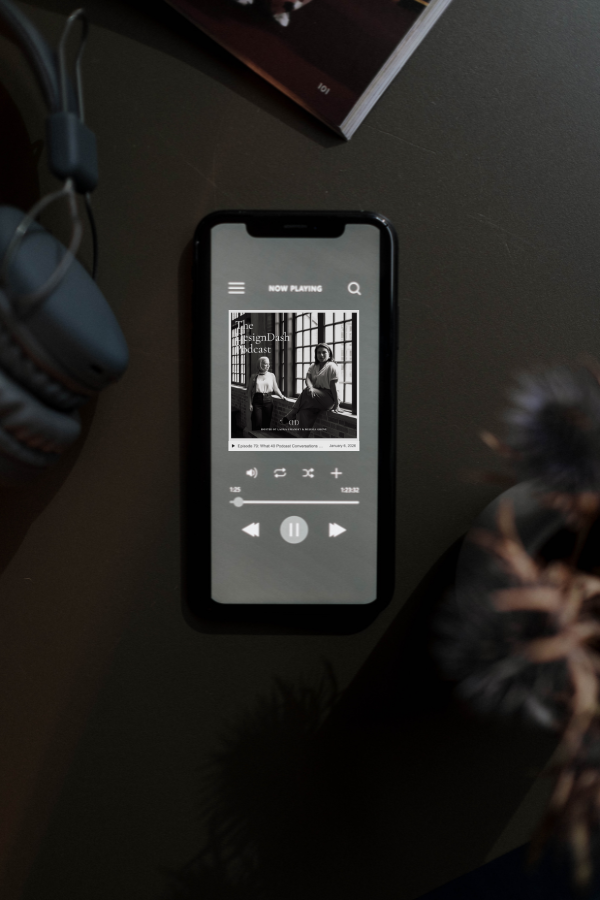
What 40 Podcast Conversations Taught Us About Business, Risk & Growth
Listen if… you’re saying yes to too much or changing things because you think a growing firm is supposed to keep adding.
After forty podcast conversations, Laura and Melissa had heard so many different versions of growth from other design firm owners. Some of our podcast guests expanded their firms too quickly. Others waited too long. Some built large teams, while others kept their firms intentionally small.
One repeating theme is that you’ll never have perfect information before making a big business decision. At some point, you have to know enough about your firm, your finances, and your own judgment to make the call anyway.
“Risk goes into having your own business… how much trust and confidence you have to have in yourself in order to make it successful.”
— Melissa Grove
Melissa also talks about saying no when a project, hire, or other opportunity doesn’t make sense. More work isn’t automatically better for the business.
“There’s a lot of power in saying no. There’s minimal power in saying yes.”
— Melissa Grove
This episode also makes a case for not changing systems just because you’re bored with them. If something already works, you don’t have to replace it every six months. Sometimes the smarter decision is to keep using it and put your attention somewhere else. We’re not trying to reinvent the wheel here, as they say.
Before you make another big change, ask yourself:
- Is there an actual problem I’m trying to solve?
- Can the firm afford this decision?
- Do we have the staff and systems to support it?
- Am I saying yes because it makes sense, or because I don’t want to miss an opportunity?
How Yates Desygn Grew One of Dallas’ Most Sought-After Design Firms
Listen to this podcast if… you’re growing fast and you want a clearer way to protect process, morale, and client trust at the same time.
Mike and Brian Yates waited years before taking on more overhead. They worked from homes and shared offices before committing to a larger studio, and they didn’t make that decision until they knew what they needed from a bigger space. Hiring was a lot harder.
“We had grown to six people and we weren’t ready for it.”
Their firm had enough work for six employees, but that didn’t mean the business itself was ready to manage six employees. During their biggest financial year, morale was at its lowest. Two employees eventually left. Instead of replacing them immediately, Mike and Brian looked at the firm’s internal structure, clarified responsibilities, and used what they learned in an exit interview to change how they were managing the team.
“We had our biggest financial year that we ever had… and [were] coming apart at the seams.”
— Mike Yates
Their client process is similarly specific. Mike and Brian explain potential problems before projects start, including budget surprises and the parts of a project clients usually find stressful. Internally, they use function charts so people know who is responsible for making which decisions.
They’re also willing to walk away when a client won’t work within that process.
“If you like our process, let’s do it [because] our most successful projects follow our process. [But] the minute we deviate from our process, it becomes a failure.”
— Brian Yates
If your revenue is climbing while your team is miserable, the answer probably isn’t another immediate hire. You might need clearer roles, better processes, or fewer commitments first.
Startup vs. Scale-Up: How to Know You’re Ready to Build a Team
Listen to this podcast if… you’re thinking about hiring but you don’t want your first few team decisions to be driven by panic, exhaustion, or a single big project.
When you first start a firm, you’re usually doing almost everything yourself. Design, bookkeeping, project management, deliveries, client emails, proposals, etc, etc. Whatever needs to happen that day is probably your responsibility.
That works until it doesn’t.
“You’re wearing every hat. You’re the designer, the bookkeeper, the project manager, the delivery person [and that’s unsustainable].”
— Melissa Grove
Laura and Melissa separate being busy from being ready to hire. A stressful month or one large project doesn’t automatically justify doling out another salary. They want owners to look at workload, billable hours, cash flow, and how consistently the firm needs additional capacity.
But of course, Laura also makes the financial case for hiring when financials support it.
“They will always make more for the business than what they cost [if you make smart hiring decisions].”
— Laura Umansky
This episode also covers what happens after you make an offer and someone takes the job. Ninety days might be enough to learn the basics, but a designer might need to work through an entire project before she truly understands how your firm works with clients, manages selections, communicates with vendors, and makes decisions during construction.
Before hiring, ask yourself:
- Is the workload consistently there?
- Can the firm afford the employee while she’s still learning?
- What work will she actually take over?
- Who’s going to train her?
- Are you prepared for the first few months to require more of your time, not less?
If your only reason for hiring is “I can’t do this anymore,” you probably need to answer those questions before posting the job. And a contractor might be more appropriate than a full-time employee!
Fuel your creative fire & be a part of a supportive community that values how you love to live.
subscribe to our newsletter
*please check your Spam folder for the latest DesignDash Magazine issue immediately after subscription

Secrets to Scaling a Design Firm with Kate O’Hara
Listen to this podcast if… you’re trying to grow beyond a single studio, but you don’t want expansion to dilute the work or turn the firm into three separate businesses under one logo.
O’Hara Interiors works across multiple cities, so Kate O’Hara has had to think about what keeps one firm recognizable when different designers are working on different projects in different places. One of the ways she thinks about that is photography.
“Every photo shoot, every project we would choose to photograph became a conversation.”
— Kate O’Hara
Deciding which projects should have professional photography forces the firm to decide what it actually wants to be known for. A client-focused firm can design in plenty of styles, but the work still needs enough consistency that the brand makes sense when somebody sees several projects together.
Kate also talks about running teams with different personalities. Some people want to say yes and solve the problem later. Others immediately start asking what could go wrong. You need both, but people also need to know who will make the final decision.
She took a similarly analytical approach when deciding how much travel she could realistically manage.
“One year I just say yes to everything and the next year I say, okay, I can handle this many trips per month.”
— Kate O’Hara
Kate’s rug business started because sourcing kept creating problems for her design firm. She built a business around solving a problem she was already dealing with. That’s a much better reason to start something than deciding you’re supposed to diversify because the firm is growing.
How Patti Carpenter Built a Meaningful Global Design Career
Listen to this podcast if… you’re considering a pivot, or you’re trying to build a career that isn’t confined to one lane, especially if you’ve been “successful” for a long time and still feel restless.
Patti Carpenter spent years in fashion and worked in senior roles at major brands before changing direction. Fast fashion was accelerating, volume was taking precedence over craft, and she didn’t want to keep building her career around that model.
“I really wasn’t a fan of the mindset of fast fashion.”
— Patti Carpenter
But she didn’t make an impulsive exit. Patti was already working with artisan organizations when an opportunity gave her a way out of fashion and into work that connected closely to craft, cultural preservation, education, and responsible production.
She also knew that seniority in one industry didn’t automatically give her the same authority in another.
“I knew I wasn’t going to come over into this other sector and be that.”
— Patti Carpenter
This shift meant learning again. She brought years of experience with her, but she didn’t assume she already understood interiors, artisan production, or every culture she was working within. Patti also distinguishes between trends and fads and talks about doing more research than whatever comes up first online.
“Don’t stop at the first page of Google.”
— Patti Carpenter
Her episode expands our definition of growth beyond hiring or revenue. Sometimes the next decision is changing what you work on, where you spend your time, or what you no longer want attached to your career.

Before You Make the Next Big Move
These five conversations deal with very different decisions, but the same questions can help before you hire, expand, open another location, start another company, or change direction:
- What problem am I actually trying to solve?
- What will this require from me and my team?
- Can the business support it financially?
- Do our current systems work at the next size?
- Am I responding to real demand or pressure I’ve put on myself?
- What happens if I wait?
You don’t have to reject growth outright in order to question the timing. Questions are always helpful.
Mike and Brian had enough work for a larger team and still learned they weren’t ready to manage one. Laura and Melissa think a hire should follow your actual financials, not one terrible month. Growth always means making more decisions, but it doesn’t mean that you have to make every one of them immediately.
Written by the DesignDash Editorial Team
Our contributors include experienced designers, firm owners, design writers, and other industry professionals. If you’re interested in submitting your work or collaborating, please reach out to our Editor-in-Chief at editor@designdash.com.
Related Posts

All About Julie Bargmann: Inaugural Winner of the Oberlander Prize
Learn about Julie Bargmann—founding principal of D.I.R.T Studio and

The Enneagram System: Pseudoscience or Valuable Insight?
In fostering self-awareness and self-development, the Enneagram can be

What on Earth is Laughter Yoga, and Does It Actually Work?
Laughter yoga could open up a world of joy, health benefits, and commu

Artists in Business: Strategies for Pricing Artwork
Pricing artwork is complicated no matter the medium, style, or platfor

Design Spotlight: &tempel’s Stunning Renovation of Historic Park Lane Copenhagen
Moody, romantic, and androgenous with sharp masculine lines and femini

What to Know About Brussels Design Week 2026 (Including Its New Name)
Brussels Design Week returns September 24th through October 4th, 2026,