Should My First Hire Be Design-Focused or Operations-Focused?

 6
6
 0
0Summary
For many firm owners, the first hire that creates the biggest impact is operational support. Bookkeeping, accounting, invoicing, scheduling, and admin tasks take up more mental space than most designers expect, and offloading them can free up creative and leadership capacity quickly. Outsourcing works well for specialized or time-bound roles, but hiring an in-house team member can provide reliability, alignment, and accountability. Firms often make costly hiring mistakes when they rush, skip role definition, and onboard without a plan.
Reflection Questions
If I had ten extra hours each week, where would I put them: design work, client leadership, or business development?
Which tasks are clogging my brain right now because I keep “meaning to get to them”?
Am I trying to hire a person, or am I trying to solve a specific operational bottleneck?
Journal Prompt
Write down the last five tasks you did that left you irritated or drained. Be honest. Now write down the last five tasks you did that felt high-value and energizing. What’s the difference? Where would a first hire reduce friction fastest, and what would that allow you to do more consistently?
When designers picture their first hire, they’re usually thinking about another designer. Someone who can help with drawings, sourcing, presentations, selections, and all the project work that keeps piling up.
But that might not be where you’re losing the most time.
Bookkeeping, invoicing, scheduling, procurement tracking, vendor follow-up, and admin can eat up a huge part of the week. You might still have plenty of design work to do, but you’re spending so much time on operations that you can’t actually do it.
In this Q&A, Laura Umansky and Melissa Grove talk about how they think through a first hire, when outsourcing makes more sense, and why rushing the process can cost you more later.
Five Questions Before Deciding on Your Next Hire
Question 1: What Are You Spending Too Much Time On?
Start with your own calendar and take a look at what you’re actually doing every week. Is it…
- Design work,
- Client meetings,
- Invoicing,
- Bookkeeping,
- Scheduling,
- Procurement tracking,
- Vendor follow-up,
- Admin, or
- Business development?
What are the proportions? If you’re spending half your week chasing invoices, updating schedules, and cleaning up admin, another designer probably won’t solve your time crunch problem.
Laura says operational support changed the way she worked.
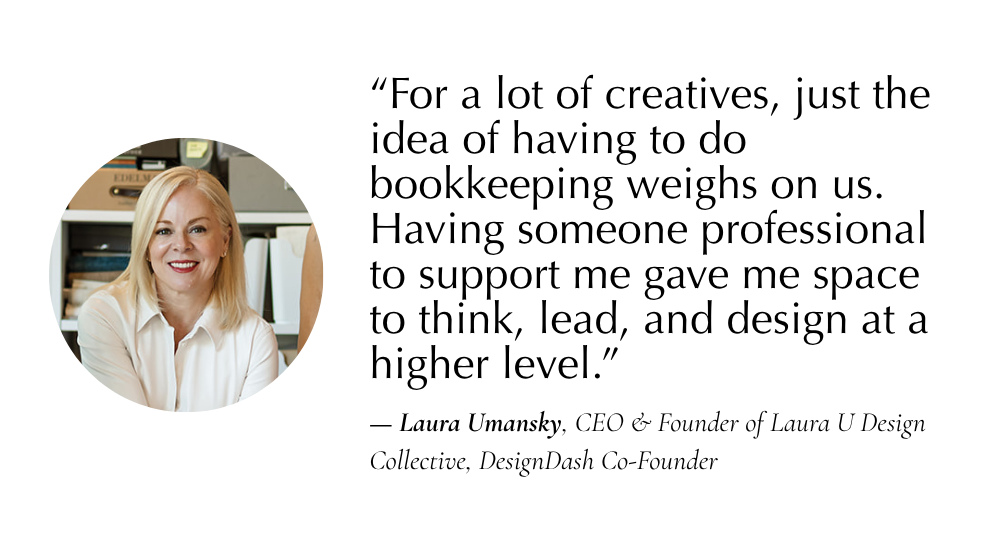
There’s the time it takes to do the task, and then there’s all the time you spend thinking about it because you know it still needs to happen. An unpaid invoice, vendor bill, or late bookkeeping task will bounce around in your head while you’re trying to review drawings or prep for a client meeting. The mental energy you spend is work, too.

Question 2: Are You Hiring Because You’re Already Overloaded?
Firm owners make bad hiring decisions when they wait too long and then rush.
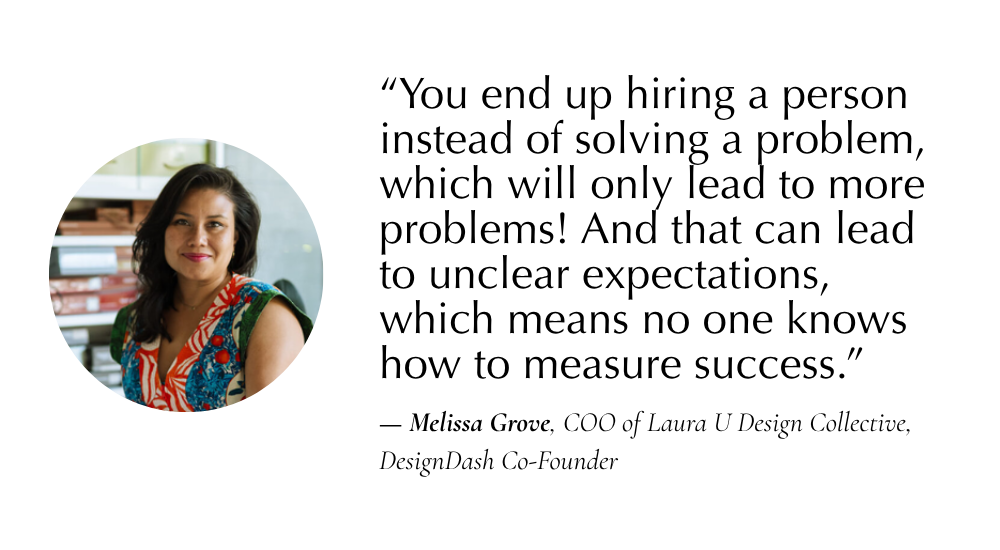
Say you’re behind on work, clients need answers, your inbox is full, and you decide you need another person IMMEDIATELY. So you write a vague job description, interview fast, and hire someone before you’ve figured out what they’re actually responsible for.
If you don’t know what the person in that role should do, your new employee won’t know either. Then she’ll start guessing, you’ll start correcting, and both of you will get frustrated.
Before you post the job, answer these questions:
- What problem am I hiring this person to solve?
- Which tasks will she own?
- Which tasks will stay with me?
- What should she be doing after 30 days?
- What should she be doing after 60 days?
- Who’s training her?
If those answers are vague, your job description probably will be too. Might be time to take a step back and reassess.
Question 3: Would Operations Help You More Than Another Designer?
A lot of firm owners assume the first hire should be design-focused because design is what clients see, but Laura wishes she’d delegated several operational tasks earlier.
Operations support can make sense if you’re constantly dealing with:
- Late bookkeeping
- Invoices that aren’t going out on time
- Scheduling
- Procurement updates
- Vendor coordination
- Administrative follow-up
- Project paperwork
If those tasks are taking over all your time, another designer won’t make a difference. And if you hire a junior designer while operations are still all messed up, you might add more work to your own schedule because now you’re training, reviewing, answering questions, and correcting work too.
Fuel your creative fire & be a part of a supportive community that values how you love to live.
subscribe to our newsletter
*please check your Spam folder for the latest DesignDash Magazine issue immediately after subscription

Question 4: Do You Need an Employee Yet?
You might need help without needing a full-time employee. Melissa likes outsourcing (meaning working with an agency or a contractor) for work that’s specialized, limited, or inconsistent.
Bookkeeping, tax work, drafting, or other specialized tasks can often go to contractors. Anything you can’t justify a full-time salary for might need a contractor. Anything you don’t need an integrated, on-site person for might suit a contractor.
An employee makes more sense when you need someone working inside the firm every day, learning how your team operates and what the culture’s like. This is especially true if the person will communicate with clients, coordinate deadlines, work with vendors regularly, or make decisions that affect the client experience.
Ask yourself:
- Do I need this person every week?
- Does the workload justify a salary?
- Does she need to work our hours?
- Will she communicate directly with clients or vendors?
- Does she need to know our internal systems really well?
- Could I outsource this for the next six months instead?
You might decide to outsource first and hire later.
Question 5: Is Design Work Actually the Bottleneck?
Last but not least, look at what’s breaking down RIGHT NOW.
If invoices are late, bookkeeping is behind, schedules are messy, procurement tracking is slipping off course, and admin is taking over your week, operations support probably makes a lot more sense.
If the business side is working well but you’re turning down good projects because you can’t stay on top of the design and other client-facing work, then you probably need another designer.
But before you hire, figure out…
- What’s taking up too much of my time?
- What work is falling behind?
- What work only I can do?
- What could someone else take over?
- Do I need more design capacity?
- Do I need better operational support?
- Could a contractor solve this first?
Your first hire should make your week better in a very specific way. If you can’t identify what that is, wait and reassess.
Related Posts
10 Professional Development Platforms for Creative Women
From fostering community to propelling careers, the following platform

We’re Back! Here’s Our High Point Market 2024 Roundup
At High Point Market April 2024, we peeped the latest trends, explored

How to Use Testimonials for Local SEO on Your Design Website
LIKE 0 LEAVE COMMENT 0 5 min read Summary Sure, testimonials are compl

Values-Based Budgeting: Designing a Financial Life That Reflects Your True Priorities
Learn how value-based budgeting can help you align your finances with