
How Do I Stop Spending So Much Time On Low-Value Tasks as a Firm Owner?

 2
2
 0
0Summary
As design firms grow, owners can become trapped in operational maintenance instead of leadership work. The problem usually isn’t workload but misaligned responsibility, unclear systems, and hiring that adds design capacity instead of removing administrative friction. By identifying bottlenecks, delegating intentionally, building decision-making systems, and protecting leadership time, firm owners can return their focus to strategy, profitability, and long-term growth.
Reflection Questions
Which recurring tasks in my week truly require my expertise, and which ones continue to sit on my plate out of habit?
Where does work slow down in my firm because someone is waiting specifically for me to respond or decide?
If I stepped away for one week, which processes would stall completely and what does that reveal about ownership inside my team?
Journal Prompt
Think through a typical workday from start to finish. Write down every task you handled and mark each one as either leadership, creative direction, or operational maintenance. Then ask yourself: If my firm doubled in size tomorrow, which of these tasks could I realistically continue doing, and which ones would have to belong to someone else? Describe what your role would look like if your time reflected your highest value work.
This question recently dominated a DesignDash Community poll, and we completely understand why. A firm owner realizes she is spending entire days answering emails, coordinating logistics, chasing invoices, or fixing small problems that seem absolutely endless. This work is necessary, yet by the end of the week, nothing meaningful has moved forward. Projects continue, clients are satisfied, but the owner is oddly absent from the parts of the business that require their leadership. Instead, they’re stuck in the weeds.
Of course, this firm owner finds herself more concerned about being mired in low-value tasks after her business takes off. As her studio gets busier, revenue increases, and the team expands, the principal suddenly feels more like an administrator than a designer, strategist, or even “the boss”. Her instinct might be to stay later, work longer, and push through the burnout looming over her, but that doesn’t really solve the problem. The problem is that her time and skills are not being utilized properly; she’s losing money by not allocating tasks appropriately. She needs to reassess how responsibility, systems, and decision-making are structured within her firm.
Which brings us to our question: How do I fix the fact that way too much of my time is spent on low-value tasks? Let’s get into it.

What “Low-Value” Work Actually Means
Low-value work is often misunderstood. The phrase sounds dismissive, as though the tasks themselves lack importance, but that couldn’t be further from the truth. If they weren’t important, you wouldn’t dedicate so much of your time to them. Orders need tracking. Vendors need prompt responses. Files must be organized and invoices sent. A design firm cannot operate without those activities; they’re key to your ongoing success! But those might be $30, $40, or $50/hour tasks while your design work is billed at $300/hour.
The issue here is authorship. Some tasks require the judgment, reputation, or authority of the principal. Others require attention and consistency but not senior expertise. When the owner handles both of these categories interchangeably, her calendar fills with operational maintenance instead of leadership decisions. The business keeps running, but she’s less and less available to lead when needed.
Many firm owners hesitate to delegate because they built the processes themselves. They know the vendors, understand the tone clients expect, and can resolve issues quickly. Speed and accuracy can be the justification here. But over time, that “efficiency” traps them in work that prevents the firm from evolving beyond its current scale, especially because there is no way that you (the firm owner) are as good at these “low-value” tasks as you are at what you’ve trained to do.
Why Owners Keep Stacking Hats
Many of us take pride in the fact that we “wear many hats.” To do so says a lot about our stamina and “stick-to-it-iveness” when we’re first starting out. Unfortunately, that’s not a sustainable way to lead a design firm.
At first, doing everything feels like the responsible thing. A growing firm creates unpredictability, and stepping in personally reduces risk; it also seems to limit the need for outside help, which can be costly. Training someone else seems slower and more expensive than “doing it yourself”. Explaining context takes effort and correction. Fixing a small mistake made by a new hire can feel so much worse than preventing it altogether.
There’s also the familiarity of these tasks. Administrative work usually has a clear start-stop: you answer a client email, submit your statement of information, respond to a vendor, mail a check, etc. The day feels productive even if larger, more significant decisions remain wholly untouched. Strategic work doesn’t usually provide that same immediate satisfaction. Pricing models, hiring plans, or operational restructuring involve ambiguity and “ideating” instead of clean-cut steps. Progress is harder to measure, so owners might postpone it and return to tasks that can be checked off their lists.
Another issue is that many processes the firm depends on live entirely in the owner’s head. Without written workflows or defined ownership, delegation is almost guaranteed to be inconsistent. Team members wait for direction because expectations were never formalized. The principal then steps back in, but, in doing so, reinforces the idea that they are needed for every decision, every stage.
Fuel your creative fire & be a part of a supportive community that values how you love to live.
subscribe to our newsletter
*please check your Spam folder for the latest DesignDash Magazine issue immediately after subscription

How to Stop Spending Your Time on Low-Value Work
Fixing this problem almost never means working harder. Instead, it means intentionally redistributing responsibility. We understand that this is stressful. Doing so means rethinking how authority, trust, and workflow move through your firm. It means giving up control in certain circumstances, and that’s scary!
The following steps reflect patterns we see repeatedly inside the DesignDash Community, along with ideas discussed across multiple podcast conversations about profitability, hiring, and firm operations. We hope they help you take back some of your time so you can pour it into leadership!
Step 1: Identify Where You Are Personally the Bottleneck
Most firm owners don’t realize just how many processes depend entirely on them until they try to step away for a week. Vendor communication is a good example of this. The principal answers procurement questions because they know the history of the project and have good relationships with those vendors.
They approve substitutions because they understand the design intent. They follow up on delays because clients seem to prefer updates directly from them. Each of these little decisions makes sense on its own, but together, they create a workflow that cannot move proceed without the owner’s involvement. And that is incredibly unsustainable.
Look closely at your calendar for a typical week. Where are projects waiting specifically for you? Not for a simple nod of approval or checkmark on a list, but for your email, your confirmation, your reassurance.
That’s the bottleneck in your firm’s operations.
Ownership vs. Participation
There’s a difference between participating in a process and owning it. Many principals accidentally and eventually own absolutely everything. They’re still copied on every vendor thread, every scheduling exchange, every logistics update. Even when team members initiate tasks, the owner is their unofficial safety net.
Teams notice this and respond to it in kind. If leadership always steps in, staff hesitate to act independently. Decision-making slows, and the owner’s workload expands again. But remember, you’re stepping back, not disappearing. Selective involvement is your goal here. Decide where your judgment is needed and where your presence is simply habitual. Dedicate time to the former, not the latter.
Step 2: Separate Revenue Work from Maintenance Work
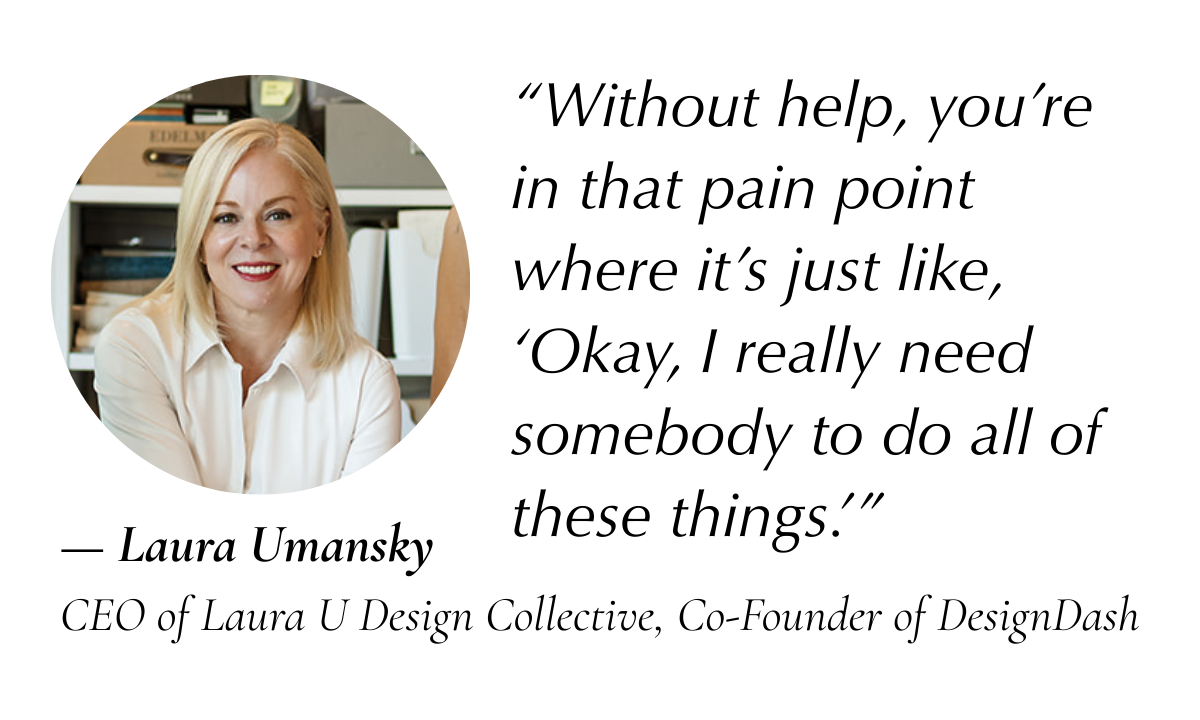
Once you identify where you’re the bottleneck, the next step is understanding why those tasks accumulated in the first place. Many owners never formally distinguish between work that generates revenue and work that maintains projects that are already in the pipeline. Both categories are necessary, but they don’t bear the same economic weight inside a firm.
Revenue-generating work often relies on the principal’s judgment and reputation or that of their leadership team (Marketing Lead, Senior Designer, etc.). Client acquisition conversations, scope definition, pricing decisions, creative direction, and high-level problem solving all fall into this category. These elements influence whether projects move forward and whether the firm operates profitably. When owners spend limited hours on this work, growth slows even if the studio feels busy, because you’re focusing on now instead of looking ahead.
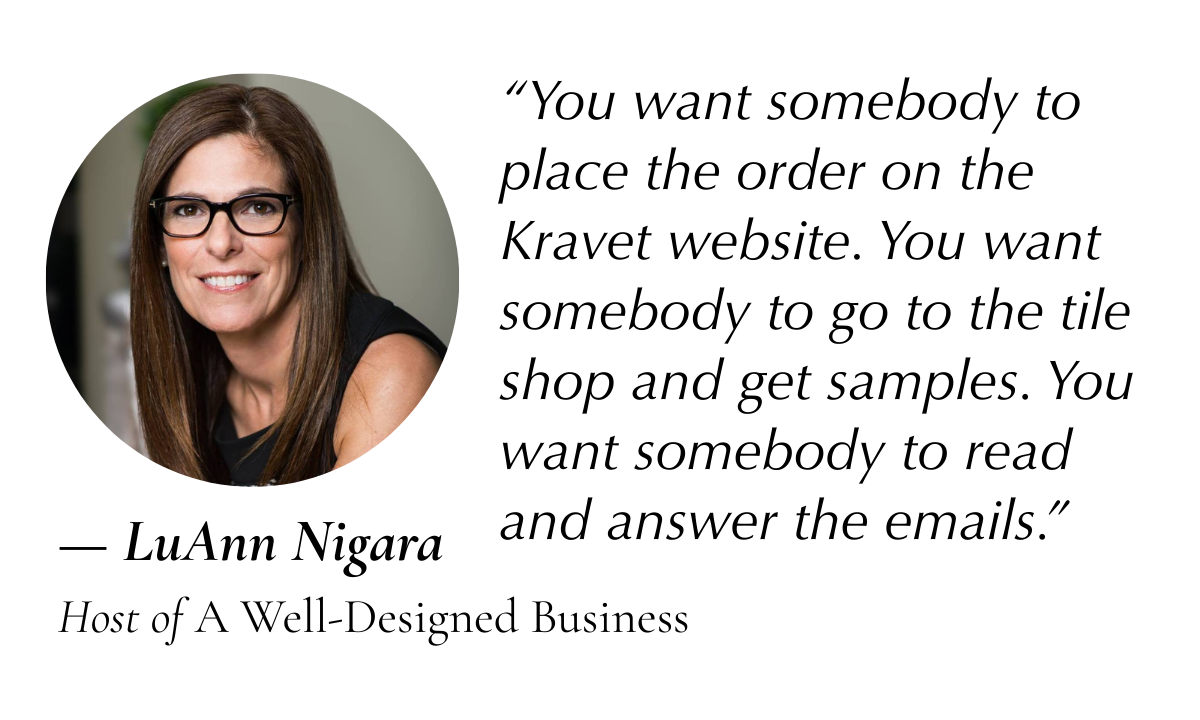
Maintenance work keeps projects on task day-to-day. That means tracking orders, coordinating deliveries, confirming specifications, responding to routine vendor questions, or organizing documentation. Projects would stall without these tasks. Still, these responsibilities rarely require senior leadership involvement. When principals and leadership teams perform both types of work interchangeably, operational maintenance expands until it fills the entire week and pushes actual leadership off your to-do list.
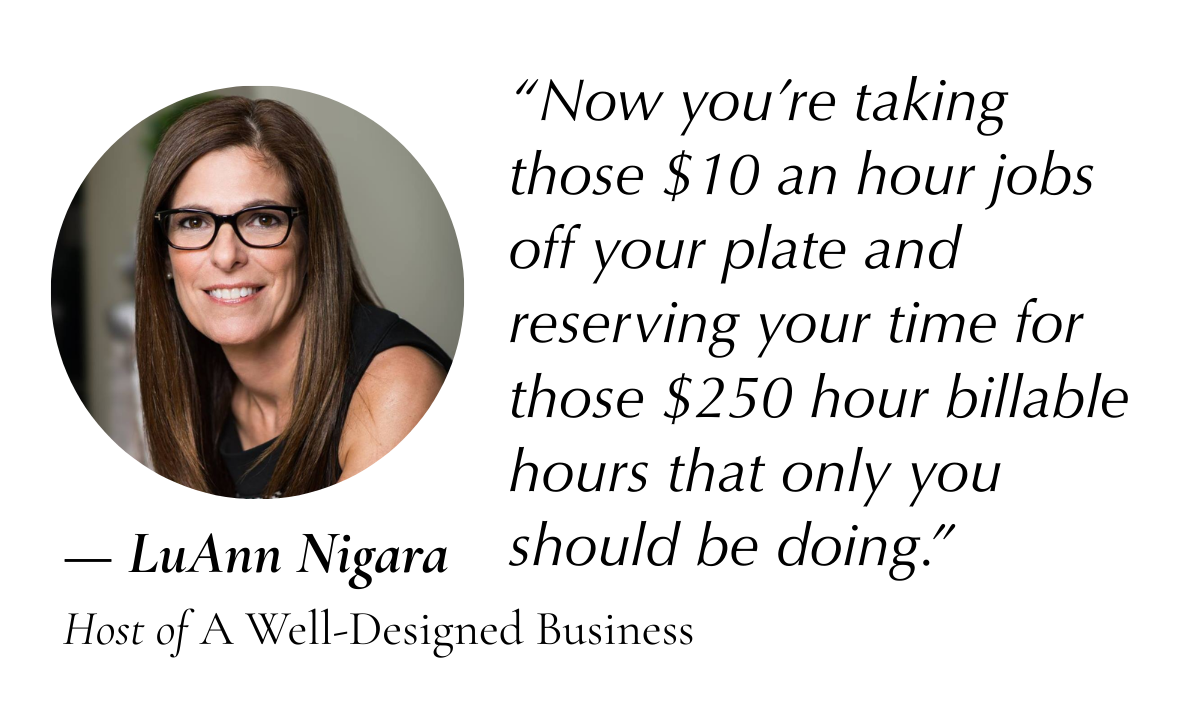
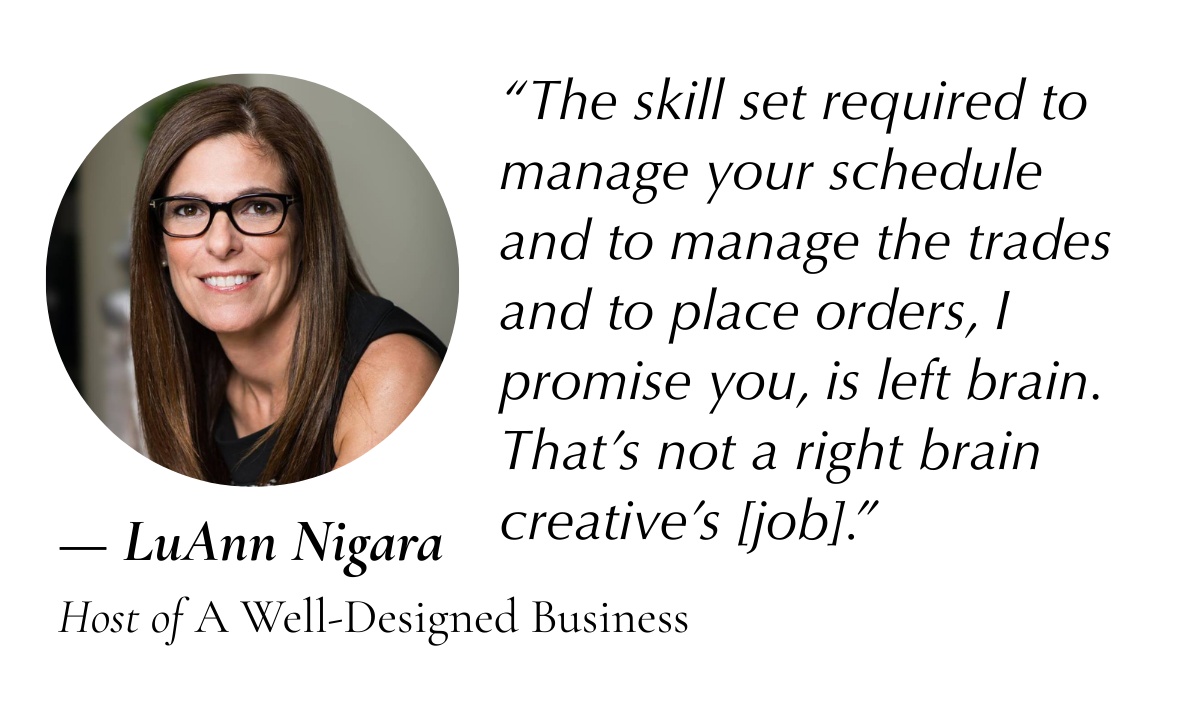
LuAnn Nigara discusses this on the DesignDash Podcast. Early hires should remove lower-value operational responsibilities so owners can concentrate on higher-value decisions that only they can make. You might feel a bit uncomfortable assigning monetary value to tasks and putting yourself “above” those lower-value tasks. But in reality, a principal billing at several hundred dollars per hour cannot sustainably spend large portions of the day completing tasks that someone else could execute reliably with training.
Why Urgent Tasks Win Every Time
Maintenance work has cut and dry deadlines: a shipment needs confirmation today, a vendor requests clarification before placing an order, a client asks for a quick update. These tasks are continuously, and responding promptly feels responsible. Strategic work rarely has that same urgency, so it moves further down the list.
Over time, urgency trains owners to prioritize responsiveness over actual leadership. Your inbox dictates the day’s agenda and weeks pass productively on paper, while decisions about hiring, pricing, or long-term planning receive only fragmented attention. The firm functions, but direction feels reactive instead of deliberate.
Step 3: Hire to Remove Friction, Not to Add More Design Capacity
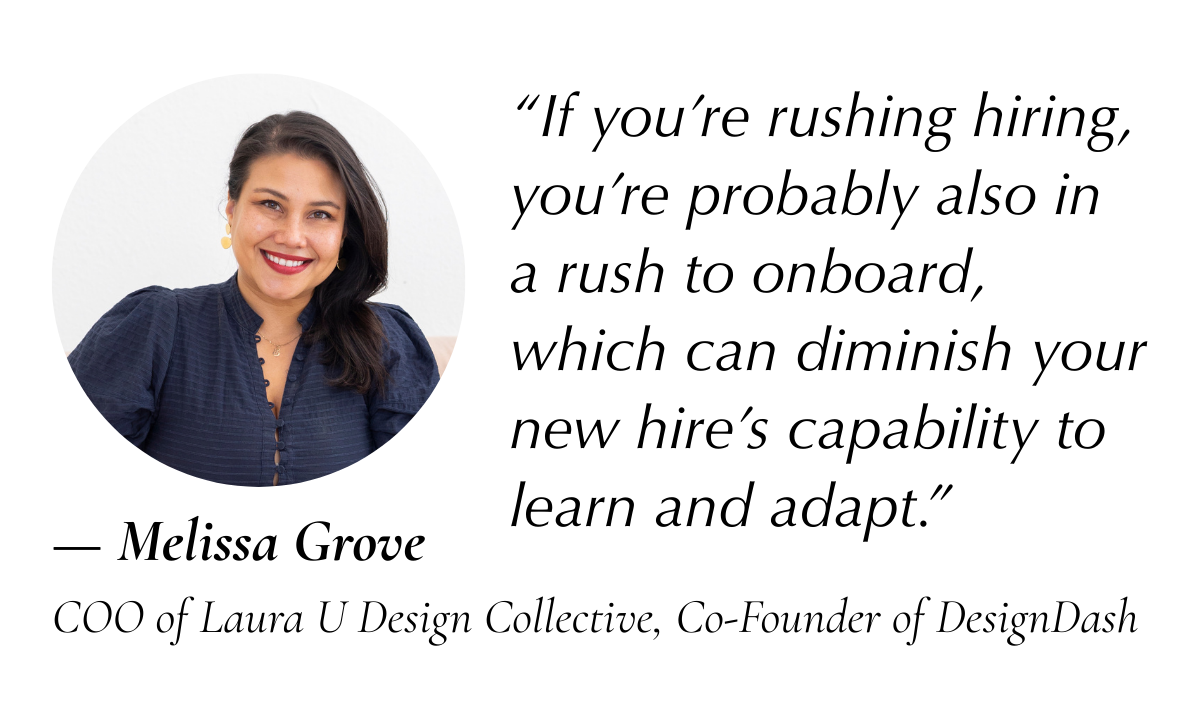
When workload increases, you might assume that the solution is to hire another designer. More designers will certainly deliver you some relief, right? Not necessarily. In reality, additional creative staff often generate additional coordination, additional communication, and additional questions that still route back to the owner. And as we discussed in our article “Should My First Hire Be Design-Focused or Operations-Focused?,” creative vision isn’t where your firm is likely lacking.
The early operational strain inside a growing studio rarely comes from a lack of design ideas but from logistics. Scheduling, procurement tracking, vendor follow-ups, and documentation management interrupt leadership work throughout the day. Hiring another designer does not limit those interruptions. It can actually multiply them.
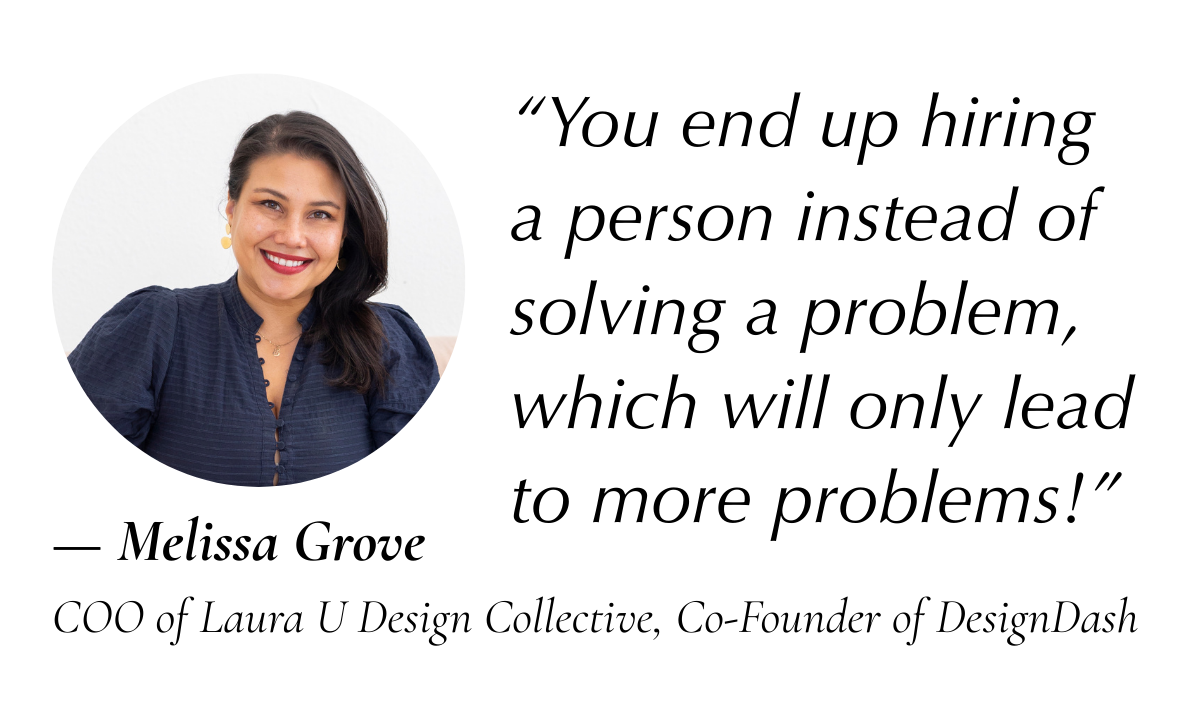
Looking at your firm through a different hiring lens can help you clarify priorities. Instead of asking, “Which designer will help us take on more projects?” ask, “Which responsibilities repeatedly pull me away from leadership decisions?” The answer to that question is usually administrative or operational rather than creative. A studio coordinator or procurement manager stabilizes workflow by absorbing recurring tasks that fragment the owner’s attention.
Though you might worry about clients balking at a lack of direct communication from you, they typically adapt to this structure quite quickly. It’s common. And clear communication matters more than who sends each email. When team members manage defined responsibilities confidently, clients experience continuity and clarity rather than confusion.
Remember: Delegation Feels Inefficient Before It Works
Training someone else always takes longer at the beginning; that’s normal. You explain context that seems so obvious to you. You review the new hire’s work closely. Occasionally, you correct mistakes you would have avoided yourself. Many owners interpret this phase as proof delegation failed or that they never needed this other person in the first place.
What’s actually happening here is skill transfer. Once knowledge moves out of the owner’s head and into the team, interruptions decrease and decisions travel faster through the firm. That bottleneck disappears. This temporary slowdown from training a new hire creates sustainable, long-term capacity. Without that transition, the owner is responsible for every moving part indefinitely.
Delegation requires patience now and discipline later.

Step 4: Build Systems That Allow Decisions to Move Forward
Hiring alone can’t solve your operational overload if processes depend entirely on memory. Many studios operate through informal knowledge accumulated over years of projects. The owner knows how proposals are structured, which vendors require additional follow-up, and how to handle exceptions when timelines stretch on. Team members rely on that knowledge even when roles appear delegated, so if you’re the one with all the insights, they will repeatedly come to you.
This creates confusion that looks kind of like teamwork and deference to leadership. Staff wait for confirmation because expectations are unclear. The owner steps in to keep progress moving. Responsibility sneakily returns to the same person who was trying to step back in the first place.
Documenting workflows practically eliminates this dependence. Documentation doesn’t require complicated manuals; just start with recurring decisions. Who communicates delays? When does a designer escalate a problem? Which approvals require principal involvement? Writing these steps down will reveal the inconsistencies that were invisible when everything lived informally inside your own brain.
Authority Must Match Responsibility
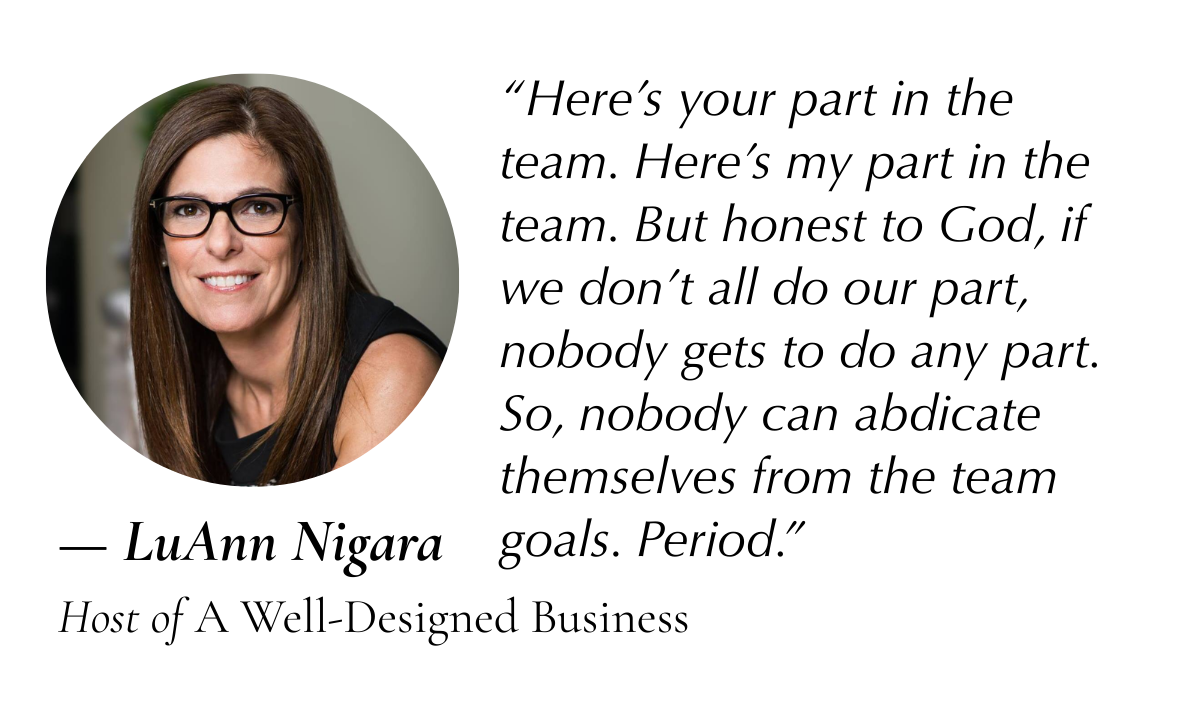
Delegation fails when responsibility transfers to someone else but authority does not. A team member managing procurement cannot operate effectively if every substitution requires approval. Projects slow, frustration builds, and the owner resumes control simply to keep momentum.
Clear thresholds solve this problem. Define which decisions belong to each role and when escalation is appropriate. Once authority aligns with responsibility, team members act with confidence instead of hesitation. The owner participates strategically instead of supervising continuously.
Step 5: Protect Leadership Time Before Operations Fill It Again
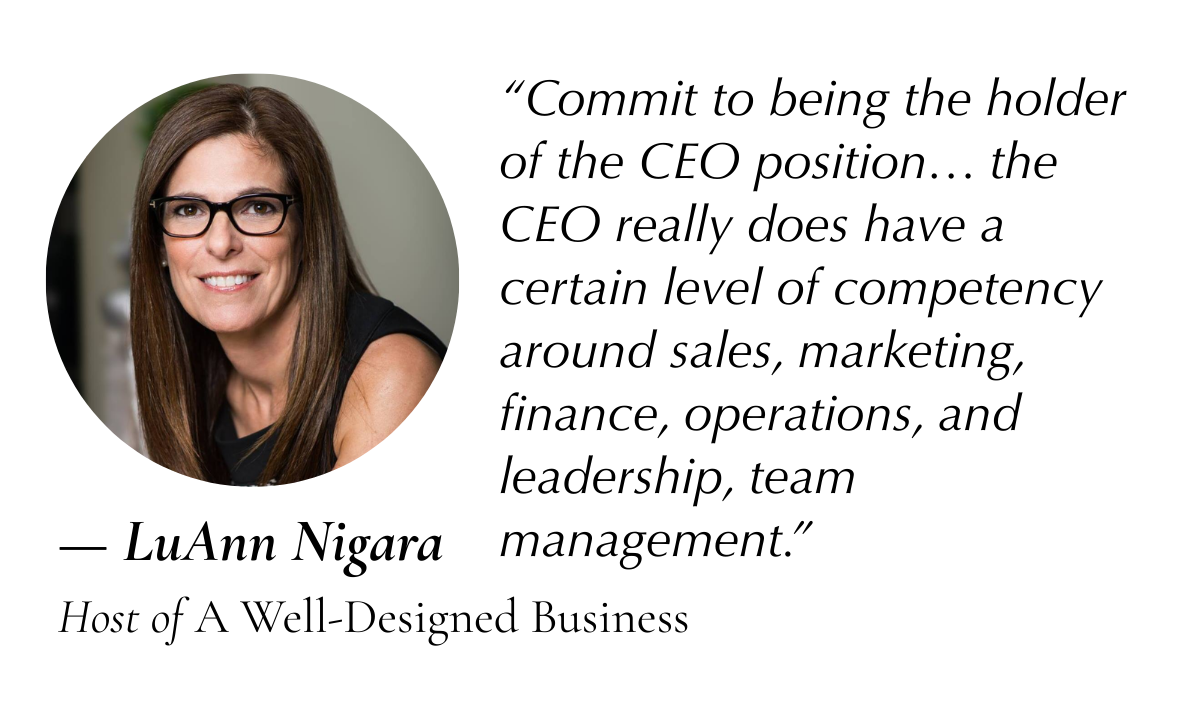
Even after responsibilities redistribute successfully, many owners slide back into operational work because leadership time lacks structure. And we all know that open calendar space invites interruption. A quick vendor call turns into a scheduling discussion. A small clarification turns into a design revision conversation. By late afternoon, the day looks identical to one before you started delegating to your team.
Leadership requires intentional scheduling. Block time for planning, financial review, hiring conversations, or creative direction and treat those appointments with the same seriousness as client meetings. Without defined boundaries, operational needs expand to occupy every available hour.
This shift often feels uncomfortable. Owners who built their firms through responsiveness may worry they appear less accessible. In practice, clearer structure improves communication because responses arrive through the appropriate team member rather than bottlenecking at the top.
Leadership Work Never Feels “Urgent”
Operational tasks produce visible progress. Leadership work produces delayed results. Adjusting pricing today might improve profitability months later. Hiring decisions influence workload long after onboarding ends. Because outcomes are not immediate, owners may underestimate their importance.
Protecting leadership time requires trusting long-term impact over short-term completion. The firm never needs the owner everywhere at once, but it does need her focused where her experience, expertise, and insight actually changes outcomes.
A Final Thought for Firm Owners
Design firm owners often start their studios to shape creative work and build something lasting. Over time, success introduces complexity that pulls attention elsewhere. Administrative overload signals that the business needs refinement instead of more and more effort on your part. Don’t stretch yourself so thin that you snap!
When responsibilities align with expertise, your energy and excitement will come back. Projects will proceed more smoothly. Decisions will feel less reactive. Your firm will look the way you intended it to, even if other people are making decisions on your behalf.
This is how a design firm succeeds: delegation, task ownership, and a great leader at the helm.
Written by the DesignDash Editorial Team
Our contributors include experienced designers, firm owners, design writers, and other industry professionals. If you’re interested in submitting your work or collaborating, please reach out to our Editor-in-Chief at editor@designdash.com.
Related Posts

Here’s How to Get Comfortable with Uncertainty as a Firm Owner
Learn how to handle uncertainty around hiring, payroll, marketing, cas

Selling an Interior Design Business: A Comprehensive Guide
LIKE 0 LEAVE COMMENT 0 10 min read Summary Reflection Questions Journa

How Do I Vet New Vendors for My Interior Design Firm?
Vet new vendors by assessing track records, testing responsiveness, an

Business Strategies for Interior Designers
LIKE 0 LEAVE COMMENT 0 9 min read Summary Reflection Questions Journal