



Are You Rewarding the Right People in Your Firm?

 0
 0
Summary
Reflection Questions
Journal Prompt
At the end of the year, some contributions stick out. One designer brought in a new whole-home client. Someone else sold a huge furnishings package. Your senior designer managed the biggest project on the firm’s calendar and billed more hours than anyone else on the team.
Those accomplishments absolutely deserve attention. But what about the project manager who caught a major ordering error before anything shipped? Or the junior designer whose specifications were so thorough that the senior designer barely had to review them? Maybe one employee spent a lot of time training a new hire, while another kept an anxious client happy through eight months of construction and somehow prevented every minor problem from turning into a Friday-afternoon emergency.
These contributions aren’t as easily defined in terms of money (or even clients) brought in to your firm, which also makes them easier to overlook when you’re deciding who deserves a raise, bonus, promotion, better project, or simply more recognition. But before you reward the people who had the most obvious wins this year, take a closer look at which employees actually made your firm better at the things you’ve said you care about.

Five Questions to Ask Before You Decide Who Had the Best Year
#1 What Behavior Does Your Compensation Plan Encourage?
Suppose you give designers a commission on whatever they sell, which makes sense on paper. If someone brings more money into the firm, she makes more money too, and presumably she has a great incentive to keep selling.
Now imagine she has a choice between spending two hours following up with a prospective client who could turn into a large furnishings project or spending those same two hours helping with a freight claim on someone else’s project. One could increase her commission. The other is annoying, nonbillable work that she might perceive as helping another employee more than herself. Which one is she more likely to choose?
Gail Doby writes about almost exactly this situation in her Business of Home column, Should you pay your staff designers a commission?.
The design firm Doby describes paid designers commissions on top of their hourly compensation. The owner wanted people to sell more, and the plan gave them a very clear reason to do that. But suddenly nobody was particularly excited about team meetings, training, market visits, freight claims, networking, or project administration because none of those things increased a commission check. Designers also started competing for the projects with the biggest sales potential, and Doby says some specified more expensive products in ways that hurt client trust.
The employees were doing exactly what their compensation plan encouraged them to do.
Look at your own plan the same way. If bonuses depend almost entirely on personal sales, employees have a reason to protect their own sales opportunities. If billable hours are heavily rewarded but mentoring isn’t considered at all, someone who spends five hours helping a junior designer could look less productive than the person who kept all five hours for her own projects.
Your incentive plan doesn’t need to reward every single thing equally. But it should make sense alongside the work you actually need people to do.
#2 Are You Only Noticing the Accomplishments With an Obvious Number Attached?
Revenue is easy to measure and track. So are billable hours, project profit, furniture sales, and new clients. Those numbers are important parts of performance conversations, especially when someone’s job has a direct connection to them.
Other contributions take a little more thought.
Maybe your project manager caught three pricing errors before proposals went to clients. Your procurement coordinator found a shipping mistake before a custom dining table went to the wrong receiving warehouse. A designer noticed that the tile elevation didn’t work with the plumbing rough-in and corrected it before the wall was built.
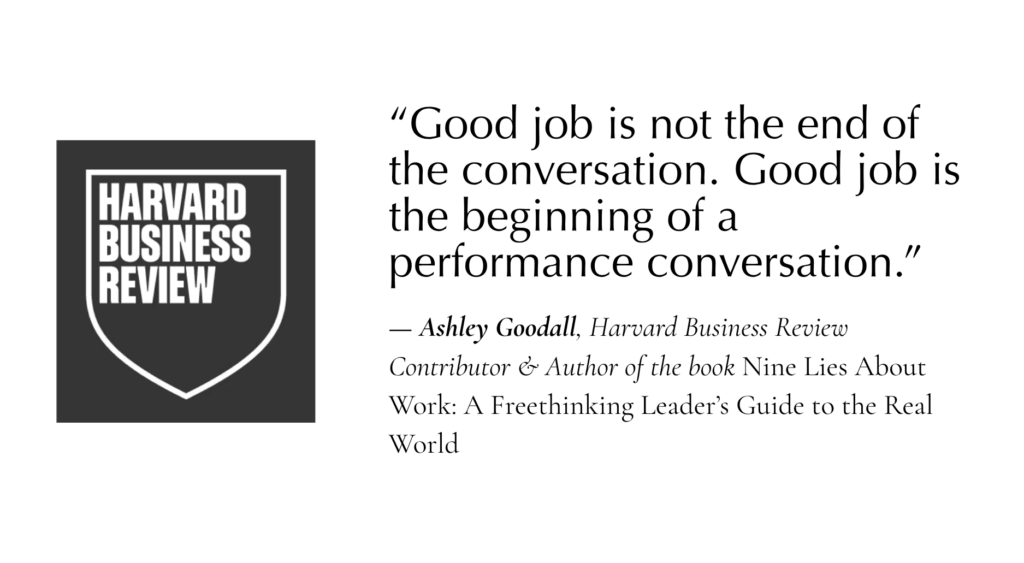
None of those employees brought in a new client that day, but they could have saved your firm a LOT of money and aggravation. Ashley Goodall and Marcus Buckingham talk about this in an episode of the Harvard Business Review IdeaCast called What Managers Get Wrong About Feedback.
Goodall’s point is partly about what happens when managers spend too much of a review correcting weaknesses. Fewer mistakes are obviously good, but that still doesn’t tell you what someone is especially good at or why you keep trusting her with certain work.
Think about the people you rely on when a project starts getting difficult. Who can take a complicated site meeting and come back with a clear list of decisions? Whose specifications can you trust without checking every line? Who is particularly good with a nervous client? Who can train a new employee without making her afraid to ask another question?
Those contributions belong in a performance review too. If you only look at sales, billable hours, and mistakes, you’re going to miss a pretty large portion of what makes someone valuable to your firm.
#3 Are You Rewarding the Values You Keep Talking About?
Many firms have core values on the website, in an employee handbook, or somewhere in the annual planning deck. That part is easy enough. The real test comes when you’re deciding who gets promoted, who receives a bigger bonus, or whose performance needs tweaking.
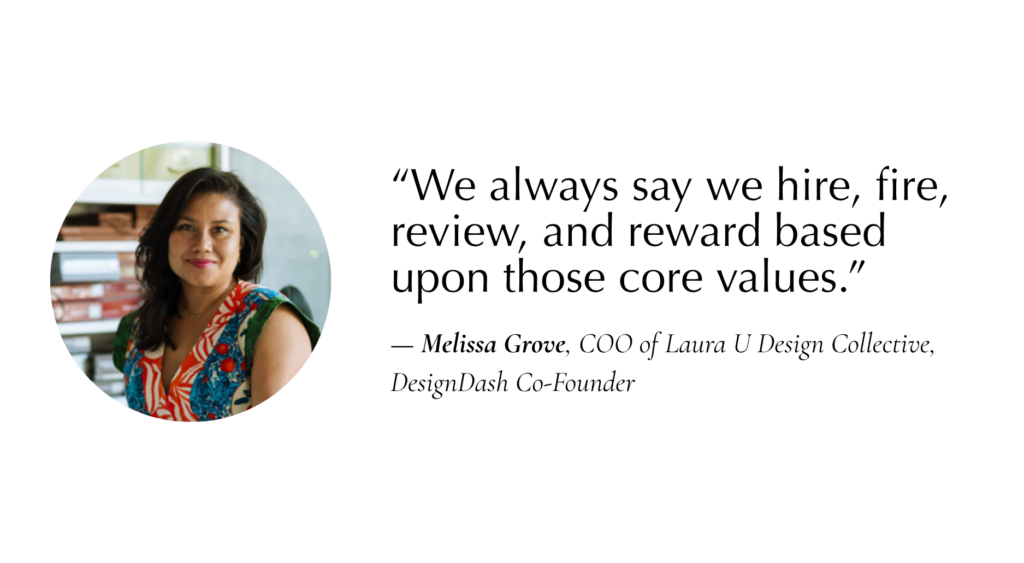
At Laura U Design Collective, Laura and Melissa talk about the firm’s values regularly with the leadership team, including whether those values still reflect how they want to work. In Episode 5, Authenticity in the Workplace, Melissa connects them directly to personnel decisions.
If exceptional client service is one of your values, who actually delivered it this year? Don’t only think about the person clients naturally LOVE because she’s charming in presentations. Think about the designer who answered questions when the project was frustrating, kept expectations realistic, documented decisions carefully, and helped a client get through months of construction without losing her mind.
If collaboration is important, who makes everyone else’s job easier? If learning is one of your values, did anyone improve a process, learn a new technical skill, take a class, or teach something useful to the rest of the team?
Now compare those values with what you actually reward. If you tell everyone you run a collaborative firm but bonuses are based almost entirely on individual sales, employees are going to notice. The same is true if client experience is supposedly central to the business, but the people receiving the most recognition are always the ones who sell the most product.
Your stated values and your personnel decisions don’t need to match perfectly every single time. But they should at least look like they belong to the same firm.
#4 Are You Expecting Everyone to Be Great at the Same Things?
Interior design firms need people who are good at VERY different parts of their jobs.
Someone might be phenomenal in a client presentation and have no interest whatsoever in managing people. Another designer could be technically meticulous and much happier working through drawings than making small talk at a networking event. You could have one employee who knows exactly how to calm a nervous homeowner and another who can look at a proposal for ten seconds and find the number that’s wrong.
You probably don’t want to evaluate all four people according to exactly the same idea of what a star employee looks like.
That doesn’t mean people get a pass on parts of their jobs they simply aren’t doing. A senior designer still has responsibilities attached to the position. If she consistently misses deadlines or struggles badly with client communication, being brilliant at sourcing doesn’t cancel that out.
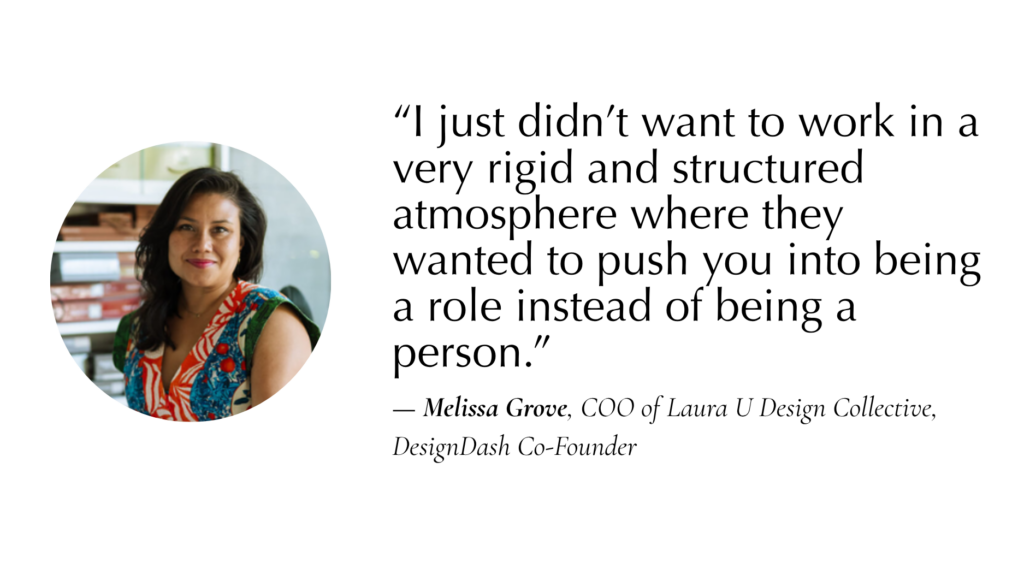
But you don’t need to turn every employee into the same person either. If your strongest technical designer has zero interest in becoming the firm’s next rainmaker, maybe that’s completely fine. You could already have plenty of business-development talent and desperately need someone who can manage complicated documentation without giving you heart palpitations.
The same goes for promotion. Management isn’t automatically the next best step for every talented designer. Some people want to lead a team. Others want to get REALLY good at design. Both can be valuable career paths if your firm has room for them.
Raises, promotions, better projects, and recognition should reflect what someone contributes, not how closely her talents resemble yours.
#5 Could You Explain Exactly Why You’re Rewarding Someone?
Imagine telling your team that one employee is receiving a substantial raise because she “had a great year.” Okay. What made it great?
If you can’t explain the decision much more specifically, your employees probably won’t know what excellent performance looks like in your firm either.
You don’t need a ridiculous 47-point scorecard, but you probably want to look at several parts of someone’s job instead of grabbing the easiest number. Project profitability could be one. Client experience might be another. Teamwork, accuracy, business development, training, project administration, technical growth, and how someone responded when a project went sideways could all deserve attention depending on the role.
Those categories don’t need to be identical for everyone. Your procurement coordinator and senior designer have different jobs, so evaluating them according to exactly the same criteria wouldn’t make much sense. What you CAN do is connect each person’s responsibilities to what the firm needs from that position.
And when you recognize someone, be specific. “You did a great job this year” is fine. “You took over two difficult projects, got both back on schedule, and both clients specifically mentioned how much they trusted you” tells the employee what she actually did well.
The same applies when the recognition comes with money. If someone receives a raise, bonus, promotion, or more responsibility, she should know what she did that led to it. That gives her a much better idea of what you value and what you’d like to see from her again.
Take a Second Look at Who Made Your Firm Better This Year
The person who brought in your biggest client could absolutely deserve the largest bonus. Your top salesperson might have had an extraordinary year, and your most senior designer could have earned every bit of a promotion.
But before you make those decisions, look at the rest of their work too.
Who protected project margins? Who kept difficult clients happy? Who taught other employees? Who caught expensive mistakes before they became VERY expensive mistakes? Who improved a process everybody uses? Who made good decisions when you weren’t there? And who consistently worked in a way that actually reflects the values you keep talking about?
You might end up rewarding exactly the same people you already had in mind. Or you might realize that someone else has been doing excellent work all year without bringing in the biggest client, billing the most hours, or talking about it very much.
If you want your team to understand what good work looks like in your firm, make sure the people doing it know you noticed.
Written by the DesignDash Editorial Team
Our contributors include experienced designers, firm owners, design writers, and other industry professionals. If you’re interested in submitting your work or collaborating, please reach out to our Editor-in-Chief at editor@designdash.com.
Related Posts

It’s International Caps Lock Day, So Here’s a History of the Keyboard.
While we celebrate International Caps Lock Day—a parody holiday—le

Artists in Business: Professional Organizations for Fine Art Photographers
Photography associations are far more than mere clubs. They are vital

Tips for Connecting with New Neighbors
Cultivating positive relationships with neighbors can contribute to a
The Mid-Career Switch: How to Become a Medical Illustrator
Medical illustration is a specialized field that combines artistic ski

Mindfulness in the Workplace: How to Elevate Your Experience and Honor Others
By being more mindful at work, you create an environment where every t

Harvest Festival: How 7 Cultures Around the World Celebrate the Season
Here's how cultures around the world celebrate the harvest season, fro

POST COMMENT
You must be logged in to post a comment.