



Will You Enter 2027 With the Same Type of Clients Who Drained You in 2026?

 0
 0
Summary
Reflection Questions
Journal Prompt
It’s now November, the year’s almost over, and while a few projects will continue into 2027, you have eleven months of data to analyze. You might not know how much profit you made, if you topped your revenue goal, or how many orders your firm placed, but we’re willing to bet good money you know exactly which clients you NEVER want to work with again.
Whether you had five projects or fifteen, you know who your best client was and who your worst client was. But do you know why? And do you have the strength to say no if that kind of client knocks on your proverbial door in 2027?
Maybe you do. Maybe you even saw it coming. Maybe the budget conversation was difficult from the beginning. Maybe the client wanted a timeline you knew was unrealistic. Maybe she complained about the last designer she hired. Maybe one spouse wanted to hire your firm and the other clearly thought paying an interior designer was ridiculous.
You took that project anyway because you thought you had good enough reasons to. Sometimes you just really need the work. Sometimes the project is too interesting to pass up. Sometimes you think you can make a difficult situation work.
But now? Now you know how it actually went. Let’s make sure that doesn’t happen again.

Five Questions to Ask Before You Say Yes to Another Client Like That
#1 Would You Take That Project Again?
Start with the projects that took up most of your calendar this year and imagine that essentially the same inquiry landed in your inbox tomorrow. Same scope, similar budget, same type of client, and probably many of the same headaches. Would you take it?
Don’t answer based on the revenue number alone because a “big” project can be deceiving. Maybe it brought a lot of money into your firm, but your team spent way more time on it than you expected. Maybe the client needed constant attention, your designers cut hours they should have billed, or the furnishings margins were nowhere near what you planned. Melissa talked about doing this review at Laura U Design Collective in Episode 67 of the DesignDash Podcast.
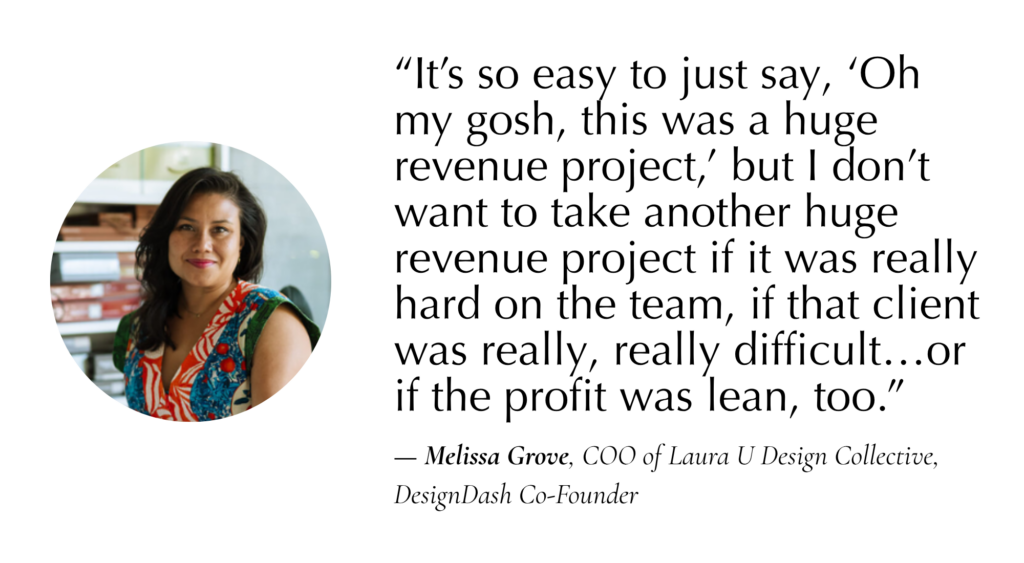
Melissa says Laura U Design Collective also looks at furniture margins, whether the team was cutting a lot of billing time, how easy the client was to work with, and whether the project was actually enjoyable. As she puts it, “Your biggest project isn’t always the best one.”
Now compare that project with the one you’d take again without hesitating. Maybe the client trusted your recommendations, had the budget to purchase the furnishings, made decisions without asking for another 12 options, paid on time, and treated your team like people she actually wanted to work with.
Laura has a very simple final test for this whole exercise: “Did it make money, and would I want another one like it?”
If the answer to one of those questions is no, figure out why before you go looking for another project that looks exactly like it.

#2 What Did You Know Before You Said Yes?
Think about your worst project again and go all the way back to the consultation. What popped out to you before you even signed the contract? What red flags did you see that you later ignored?
Maybe the client wanted everything faster than your process allows. Maybe she started negotiating your fee before she understood the scope. Maybe she texted you constantly. Maybe she told you that her last two designers were awful and somehow both of them were entirely to blame. Or maybe there was nothing THAT dramatic, but you walked away from the first meeting with a slightly bad feeling and talked yourself out of it.
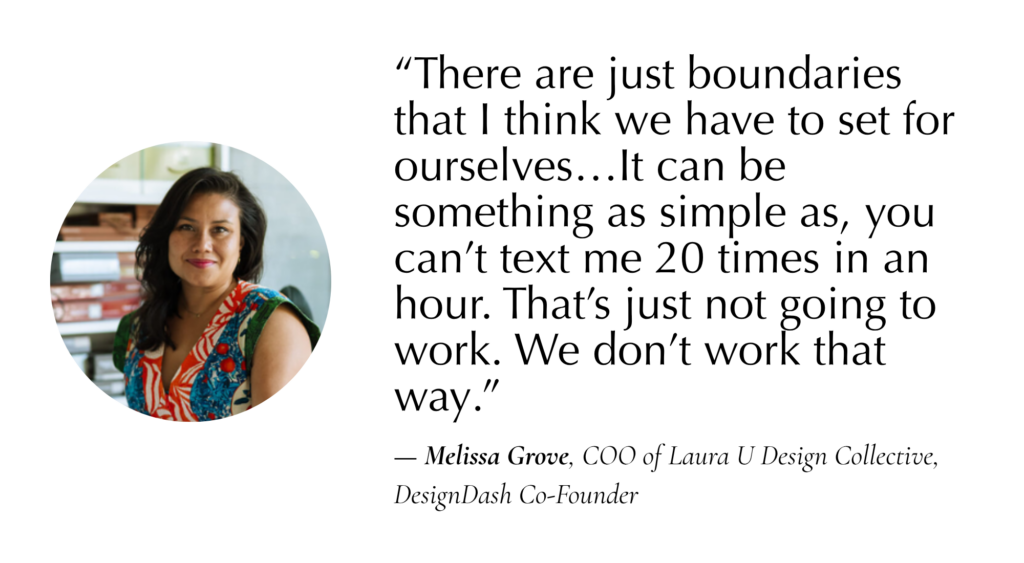
She also talks about clients who hire Laura U on an hourly basis and later want to switch to a fixed fee. They’ve tried it, and according to Melissa, it “never goes well.” Your version might be completely different. Maybe you’ve learned not to take clients who want to purchase everything themselves. Maybe you know that a five-month renovation timeline will make your whole team crazy. Maybe the phrase “We’re really easy, we just know exactly what we want” now sends a small chill down your spine.
Whatever you learned, write it down. You don’t need another 18-month project to confirm something 2026 already taught you.
#3 Did the Client Actually Have Enough Money to Finish the Project?
Okay, say a client hires your firm for a full renovation AND furnishings. You spend months working through floor plans, cabinetry, tile, plumbing, lighting, construction meetings, site visits, and hundreds of decisions. Then you finally get to the furnishings and discover that most of the budget is gone.
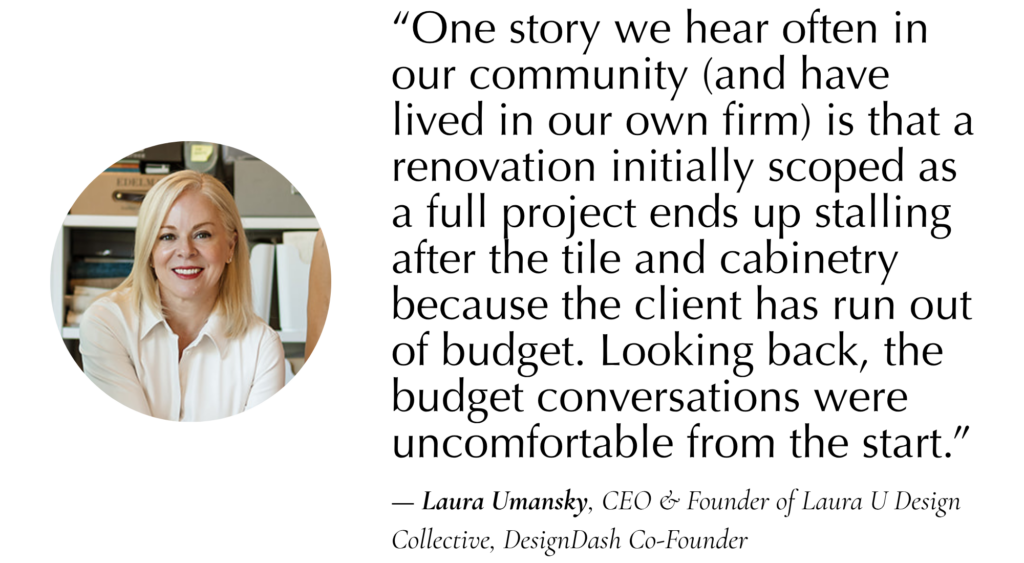
Suddenly, that gorgeous custom sofa is going to wait. Then, window treatments are pushed into “phase two,” and art you’d already talked to a gallery about is something the client will “get to eventually”. A huge chunk of the furnishings scope you expected when you took the project has disappeared. Meanwhile, your firm already did months of renovation work.
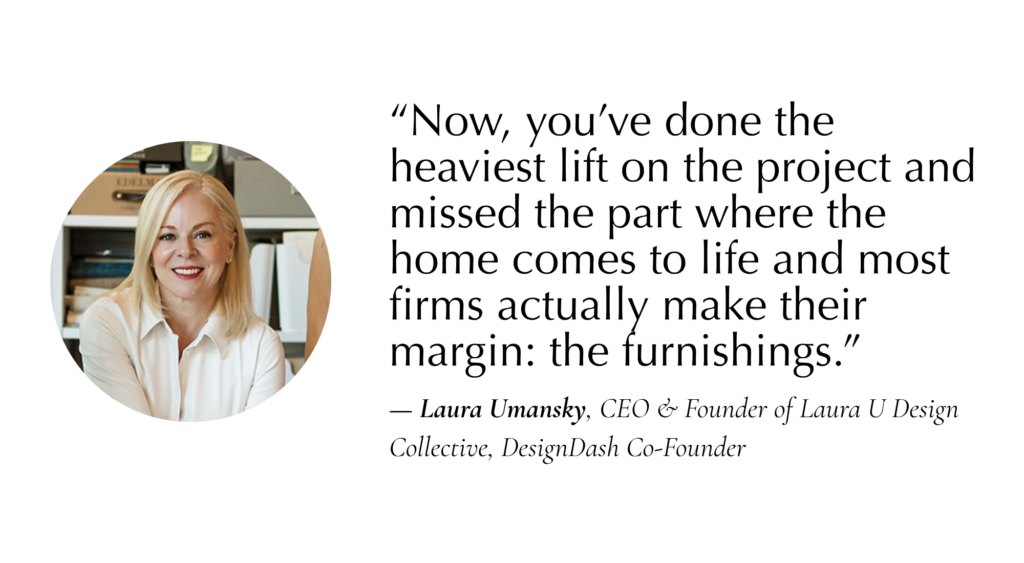
If you had a project like that this year, go back to the original numbers. How much did you expect the client to spend on furnishings? How much did she actually spend? Did you price the renovation work knowing that procurement revenue would come later?
Maybe your firm is perfectly happy doing renovation-only work. Fine. Price the project as renovation-only work from day one. But if your business model depends on substantial furnishings and procurement, you need to know early whether the client can actually afford to finish the house she says she wants.
#4 Was the Client Demanding, or Did She Just Not Respect Your Firm?
A demanding client can still be a GREAT client. Laura actually loves working with discerning clients who have high standards, know what they want, and expect excellent work. Laura U Design Collective takes on complicated residential projects, so nobody there is expecting every client to sit back and say, “Whatever you think!” for two years.

Maybe your best client this year asked a lot of questions. Maybe she wanted everything perfect. Maybe she expected fast answers and paid very close attention to what was happening with her money. None of that necessarily made her difficult if she listened to your answers, respected your time, and trusted your team to do the work she hired you to do.
Go back through the clients who took the most time this year and look at where those hours went. A complicated renovation might legitimately need a ton of senior-level attention. A client who added rooms or changed the scope should take more time, especially if she paid for it.
But if your project manager spent hours writing and rewriting emails because everyone was worried about how the client would react, that’s different. If every presentation needed another presentation, every invoice created a debate, and every boundary turned into a negotiation, THAT’S the information you want to remember.
Laura and Melissa talk in Episode 103 about one client contacting the team 17 times in about 20 minutes. Their verdict: “It’s just not sustainable.” Neither is building your 2027 calendar around clients who need that much of everybody’s attention.
Fuel your creative fire & be a part of a supportive community that values how you love to live.
subscribe to our newsletter
*please check your Spam folder for the latest DesignDash Magazine issue immediately after subscription

#5 What Did Your Best Clients Have in Common?
Now think about the client you’d just love to clone.
Maybe she made decisions quickly. Maybe she had an appropriate budget from the beginning. Maybe she loved design but wasn’t trying to do your job for you. Maybe she trusted you enough to say yes to something interesting instead of asking you to make every room look exactly like the inspiration photo she sent.
And maybe she was simply kind to your team. That counts for an awful lot when you’re going to spend the next year or two working together. When Laura and Melissa reflect on which clients they enjoyed, which projects were profitable, how those clients found the studio, how they made decisions, and whether they trusted Laura U’s guidance. One of the characteristics Melissa uses to describe an ideal Laura U client is somebody who loves design and is creative herself, “but really trusts our guidance and values what we do.”
That’s Laura U’s client. Who’s yours?
And don’t assume the answer has to stay the same forever. Melissa talks in Episode 67 about a DesignDash community member who was still trying to attract the kind of client that had helped her build her business four years earlier. The problem was that she didn’t really want those projects anymore. After an hour of talking it through, they landed on a completely different client.
Look at your best clients from this year and figure out what they actually had in common. Maybe they came through the same builder. Maybe they had already worked with a designer. Maybe they had followed you on Instagram for years and understood your work before they ever called.
Once you know who those people are, you can spend a lot more of 2027 trying to find THEM instead of saying yes to whoever happens to inquire first.
Don’t Make Yourself Learn the Same Lesson Twice
You’re going to take another imperfect client at some point. Everybody does, including Laura and Melissa. As Melissa says, “You’re not taking ideal clients on every time. We’re still a business. This is the real world.”
But there’s a big difference between a client who surprises you six months into a project and one who starts waving the exact same red flags you ignored last year.
You spent 2026 learning which clients make money for your firm, which ones your team enjoys working with, which ones have enough budget to finish the job, and which ones spend the entire project questioning your fees, your process, and your judgment. Take it from Melissa and Laura; “You don’t want to build your business on clients you don’t want.”
You already know who you don’t want. Make it harder for those clients to get a yes from you in 2027.
Written by the DesignDash Editorial Team
Our contributors include experienced designers, firm owners, design writers, and other industry professionals. If you’re interested in submitting your work or collaborating, please reach out to our Editor-in-Chief at editor@designdash.com.
Related Posts

It’s Not You; It’s Me: How to Reject a Potential Design Project
Rejecting a potential interior design client can be uncomfortable for

Bookkeeping for Interior Designers Who Manage Their Own Firms
Simplify bookkeeping for your interior design business. Discover tips

Deal with the Dander! These Are the Best Vacuum Cleaners for Pet Hair
Looking for the best vacuums for pet hair? Check out our top picks des


Is It Unethical to Charge More for Work You Hate Doing?
Is it unethical to charge more for certain parts of an interior design

DesignDash Guide: How to Safely Store Off-Season Clothing
From separating certain fibers to choosing the right containers, here'

POST COMMENT
You must be logged in to post a comment.