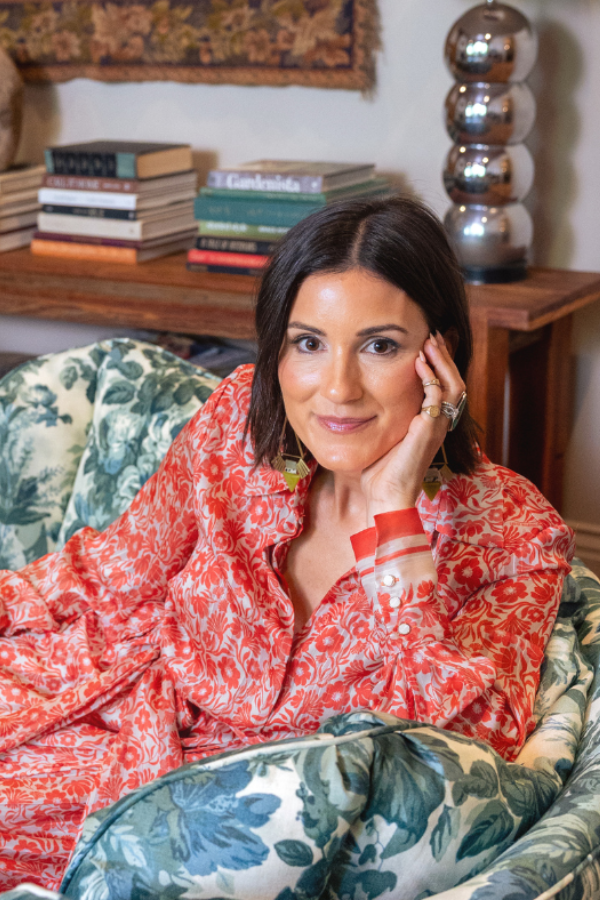
5 Lessons From How Callie Blanks Built a Design Firm Her Way

 0
0
 0
0Summary
Callie Blanks built her firm by using the experience she already had, treating the business seriously from the beginning, and investing early in the pieces that helped clients trust her. Professional photography gave even small projects a longer life, Instagram introduced her to most of her clients, and time tracking gave her the data she needed to price larger work with more confidence. As the firm grew, she outsourced technical work, improved her systems through DesignDash, and eventually opened a studio and showroom that fit the business she wanted to build.
Reflection Questions
What experience, skills, or past work are you overlooking because they didn’t come from a traditional interior design role?
Which investment would make the biggest difference in how prospective clients see your firm right now: photography, marketing, stronger systems, technical support, or another hire?
Where are you still estimating from instinct when tracking your time, project costs, or workload could give you a clearer answer?
Journal Prompt
Think about the last year of your business and identify three decisions that helped you grow, even if they seemed small at the time. Write down what prompted each decision, what it cost you in time or money, and what changed afterward. Then identify one part of the business that feels harder than it should right now. What information, system, outside expertise, or investment would help you make the next decision with more confidence?
Callie Blanks started Callie Blanks Interiors with years of hands-on renovation experience, a business degree, four years in digital marketing, and an audience that had already been following her work online. She and her husband had renovated several houses together, including the Houston A-frame that later became one of the first professionally photographed projects in her portfolio. People watched that renovation unfold online and started asking Callie to help with their own homes.
She formally launched the firm in 2022. About two weeks later, she announced that she was pregnant with her fourth child. She was also relatively new to Houston and had very few local connections, so much of her early business development happened online.
Callie has now been part of the DesignDash community for two years. Her firm has a three-person team and works from a studio and showroom in Houston. On the DesignDash podcast, she talked with Laura Umansky and Melissa Grove about the decisions that helped her build the business, from photographing small early projects to tracking her time on a much larger one.
5 Lessons From How Callie Blanks Built a Design Business Her Own Way
#1 Use the Experience You Already Have
Callie and her husband Brad married when they were 21 and bought a foreclosed townhouse in Dallas for $42,000. They completed most of the renovation themselves. Callie had grown up around practical, hands-on work, and Brad had grown up farming and ranching, so they were comfortable learning as they went.
They sold the townhouse after two years and bought another property in Abilene. By then, they had a new baby and lived in a renovated garage apartment while working on the main house. Callie also had a close friend who was an interior designer and helped her learn more about professional standards, spatial planning, and the decisions designers make during a renovation.
Callie could see her own design thinking developing with each house. When the family moved to Houston in 2020, they bought the A-frame and completed another full renovation. She documented the project online from beginning to end.
The A-frame eventually became part of her portfolio. By then, Callie had already spent years making selections, working through construction problems, and learning what happens on site during a renovation.
She Knew Which Technical Skills She Needed Help With
Callie is careful when she talks about entering the industry without an interior design degree. She has a lot of respect for the technical education designers receive in school and talks openly about the skills she had to learn through other routes.
Drafting was one area where Callie brought in outside help early on in the firn’s life. Her designer friend had shown her what strong professional drawings and client deliverables looked like, so Callie knew what needed to be produced even when someone else handled the drafting.
That gave Callie room to keep developing her own skills while bringing experienced people into the parts of a project where she needed assistance or outside expertise.

#2 Treat Your Business Like a Business From the Beginning
Callie studied business and spent four years working in digital marketing before staying home with her children. Brad is a CPA, and Callie describes him as much more comfortable with numbers than she is. As the design firm grew, the two of them started building workflows and talking through the business at home.
Brad focused on process, numbers, and organization while Callie handled the design work. She jokes that she learned what a Gantt chart was because of him. Callie’s own background made marketing much more familiar. Before Laura knew her through DesignDash, she had already found Callie’s work online.
Callie gave prospective clients a clear picture of the firm from the outset. She documented projects, invested in photography, built an online presence, and paid attention to how the business presented itself.
She Outsourced Early
Drafting was outsourced because Callie knew the technical work needed to be done well and she didn’t necessarily have the background for that. Social media support came early too. Callie continued recording her own stories and talking directly to followers, while someone else helped keep professional project photography posting consistently.
Contract work gave her flexibility while the project load fluctuated. She could bring people in when the work was there and keep staffing relatively light during slower periods. Eventually, the volume grew enough that Callie started thinking about a more permanent addition to the team. She remembers calling Laura when she was overwhelmed and wanted help determining whether the workload actually supported a hire. If you’re having similar difficulties in your firm, stay tuned for upcoming info sessions about the Community, in which we also lead attendees through workshops like “Find Your Best Hire.”
#3 Invest in Photography and Let People See You
Callie describes the firm’s growth as gradual. Small projects gave her experience, and professional photography gave those projects a much longer life.
During that first year, her family wasn’t depending on Callie’s design income, so she could put much of what she earned back into the business. She’s clear that other designers can have very different financial circumstances. In her case, income from a smaller room project could help pay for the photography she wanted for her portfolio.
A bathroom, living room, or project in her own house still gave a prospective client a chance to see Callie’s point of view. The photographs were material for the website, Instagram, and future conversations with clients.
She Got on Camera, Too
Callie regularly spoke directly to her Instagram audience. She talked about what she was working on, explained design decisions, discussed problems she was solving, and shared sources from her own house.
This was especially valuable in Houston because Callie had arrived without a large local network. She estimates that about 90 percent of her projects now come through Instagram. Laura remembers looking at Callie’s account back in the beginning of her business and assuming the firm was much larger than it was. Callie presented a very well-rounded social media presence: professional photographs gave followers finished work to review, while her videos showed how she thought and talked about design.
Fuel your creative fire & be a part of a supportive community that values how you love to live.
subscribe to our newsletter
*please check your Spam folder for the latest DesignDash Magazine issue immediately after subscription

#4 Track Your Time and Use the Numbers
One of Callie’s biggest early projects came through Instagram. The inquiry was so far beyond the scale of her previous work that she initially wondered whether it was legitimate. She left the message in her inbox for around ten days, researched the property, and realized the person contacting her really was the owner. But then she had to figure out the fee. Callie asked Laura to help her estimate the number of hours the project would take.
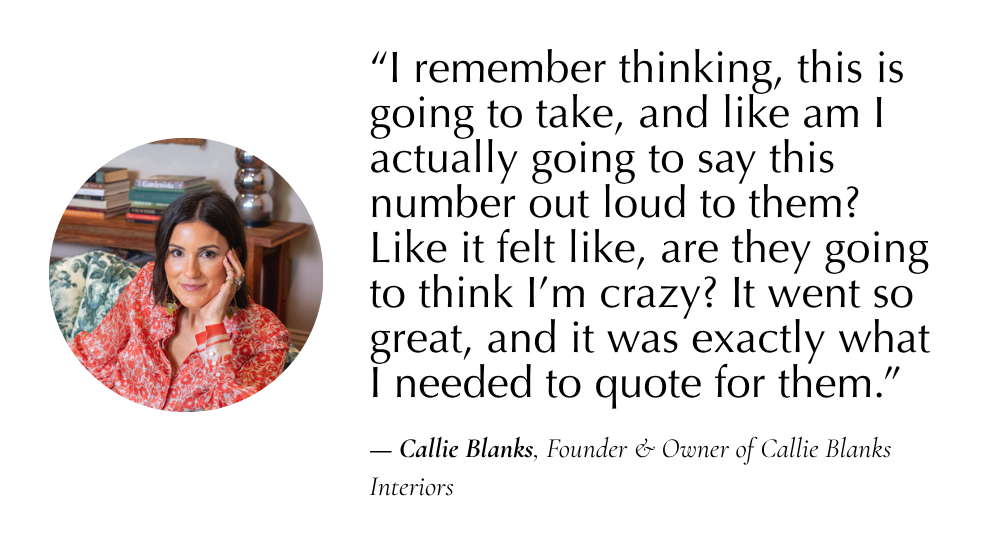
She tracked her time throughout the project and later compared the actual hours with the estimate. The project confirmed how much time a scope of that size could consume. Callie now had data from her own work that she could use when another large project came along. As many of our readers will already know, the team at DesignDash (and Laura U Design Collective, for that matter) is very passionate about hourly billing. It ensures everyone is paid for the work they do at the rate they should charge. No one is blindsided; all billing is very transparent.
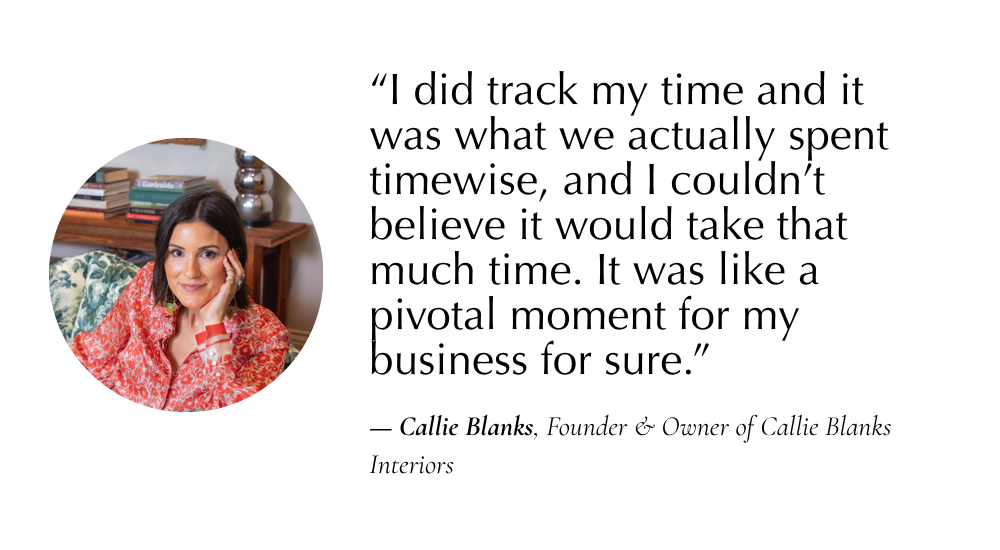
Having Someone Check the Number Helped
But even a well-calculated fee can be intimidating when it’s much larger than anything you’ve presented before, which is why a peer community is so important. Laura and Melissa both talk about having another person who can review the scope and confirm that the estimate makes sense. Callie had that through DesignDash while she was developing the larger proposal. She was also using the community to improve the systems that produced those calculations.
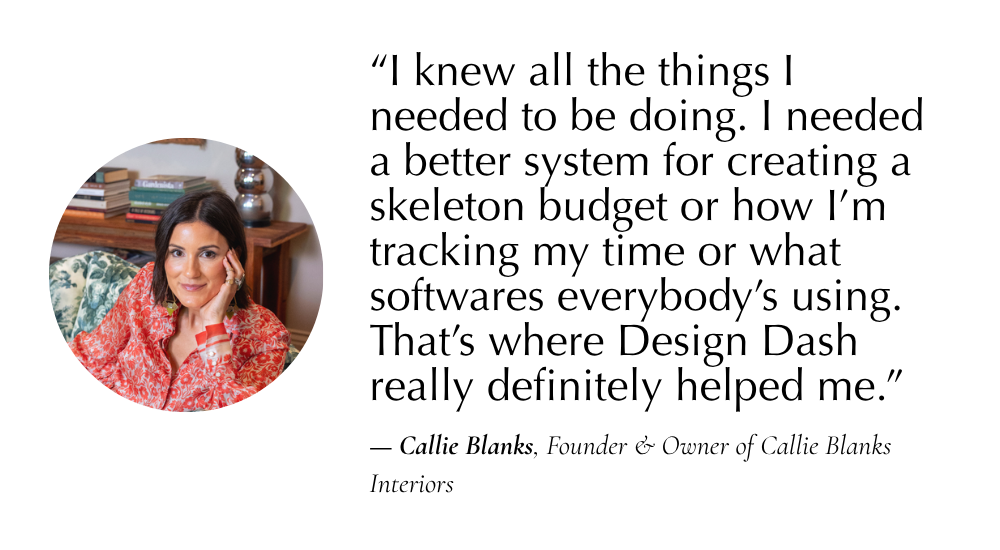
A better time-tracking process gave Callie a clearer record of what resources each project consumed. Over time, those records could inform her estimates instead of making her reconstruct the workload from memory.
#5 Build the Business You Actually Want to Run
When Melissa asks Callie about the moments that changed her firm fundamentally, Callie initially has trouble identifying a single one, and that’s the reality for most businesses. That big Instagram project was important, but the firm grew through a series of projects and decisions over several years.
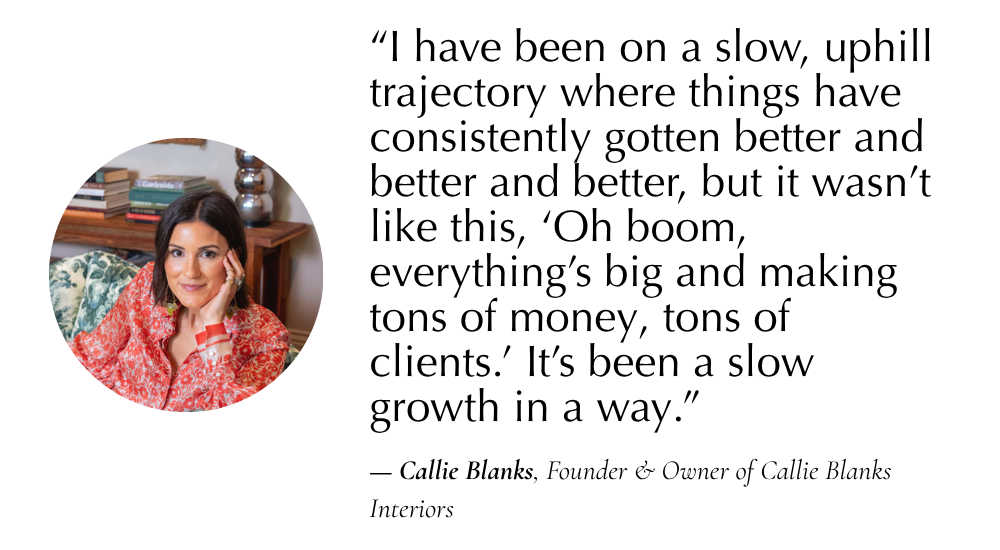
Callie says she’s grateful for the pace because she had time to learn from each project before taking on more. A small group of clients became a larger group, and previous projects helped bring in future ones. Photography helped build the portfolio. Instagram introduced the firm to new clients. Time tracking improved pricing. Contract support helped with drafting and marketing, and better systems supported a larger project docket.

Her Showroom Was a Business Decision and a Passion Project
Callie had wanted a shop for years. Even in business school, she repeatedly wrote class business plans around coffee shops. When an 1,100-square-foot space opened in Houston’s Memorial area, she had one week to decide whether she wanted it. She already understood that the retail part of the space would have financial limitations.
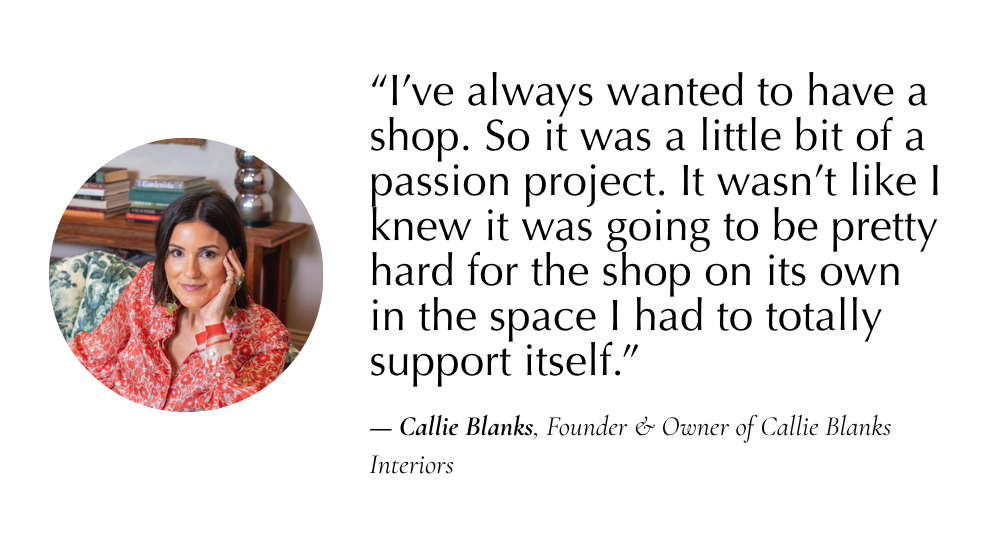
This space now serves several purposes. Callie and her two team members office there, while the front functions as a showroom and retail area where customers can order furniture. She keeps the inventory relatively limited, which reduces the upfront investment and simplifies some of the accounting.
The storefront also gives people in the neighborhood a place to encounter Callie’s work in person. They can see the furniture and objects she selects, talk with her, and decide whether they connect with her approach before discussing a larger design project.
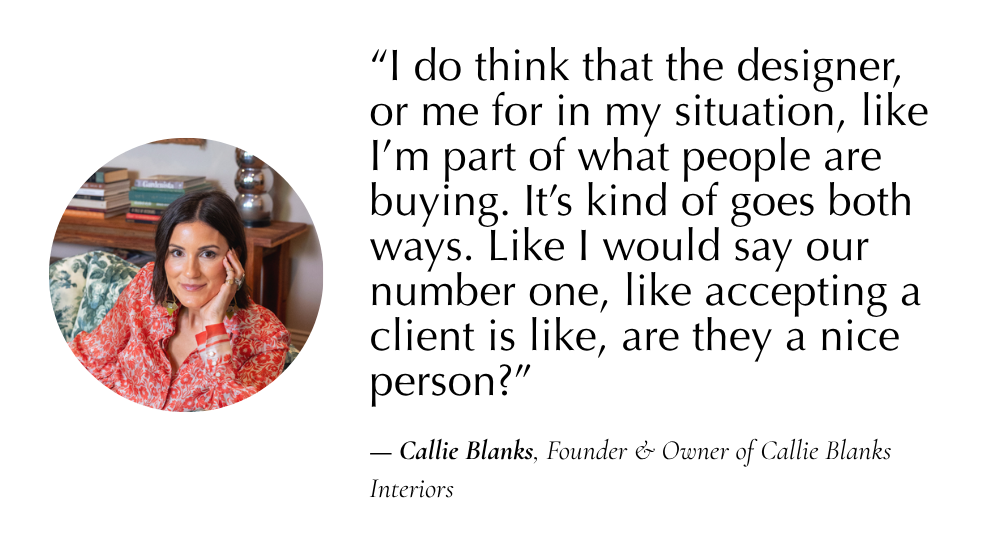
Callie wants clients who will be gracious with her team, and she wants the same standard to apply in the other direction. Meeting someone in the showroom gives both sides another chance to understand the working relationship before beginning a long project.
The lease came about during a month when Callie and Brad were also moving their family within Houston. They signed the studio lease, sold their house, and bought another one within roughly three weeks. Brad is more cautious financially, so Callie remembers his willingness to take the risk with her as a meaningful vote of confidence.
Callie still gets most of her projects through Instagram. She still talks to followers herself, and professional photography continues to give her finished work a place in the portfolio. The team, systems, and showroom have developed around those earlier decisions as the business has grown.
Watch Callie’s Full Interview with DesignDash
Watch Callie’s full interview below and stay tuned for her project feature in the upcoming Fall/Winter issue of DesignDash Magazine.
Written by the DesignDash Editorial Team
Our contributors include experienced designers, firm owners, design writers, and other industry professionals. If you’re interested in submitting your work or collaborating, please reach out to our Editor-in-Chief at editor@designdash.com.
Related Posts
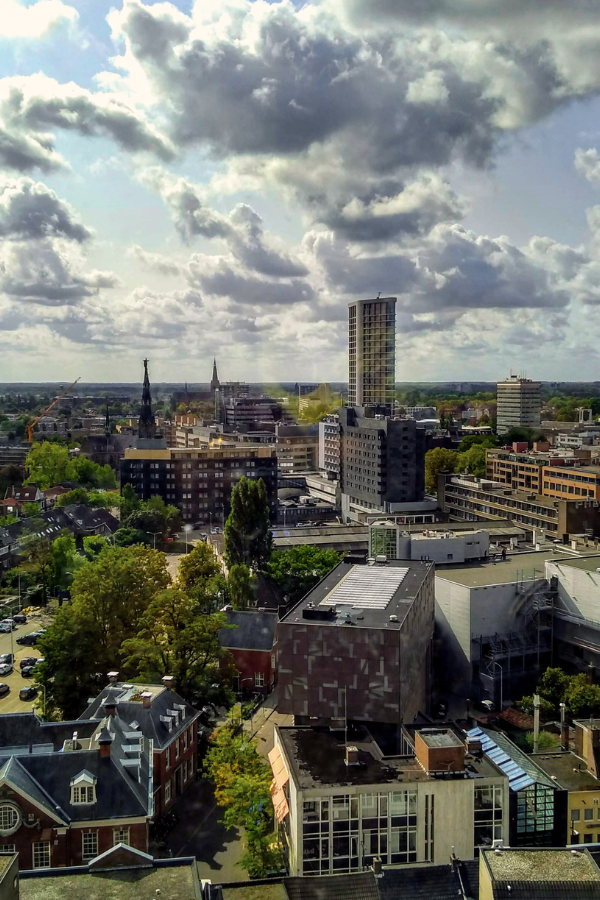
Dutch Design Week 2025: Interior Design’s Best & Brightest Return to Eindhoven
Dutch Design Week returns to Eindhoven from October 18–26, 2025, cel


Body and Brain: Is Working from Bed Bad for You?
Is working from bed bad for you? Unfortunately, yes, but here's how to
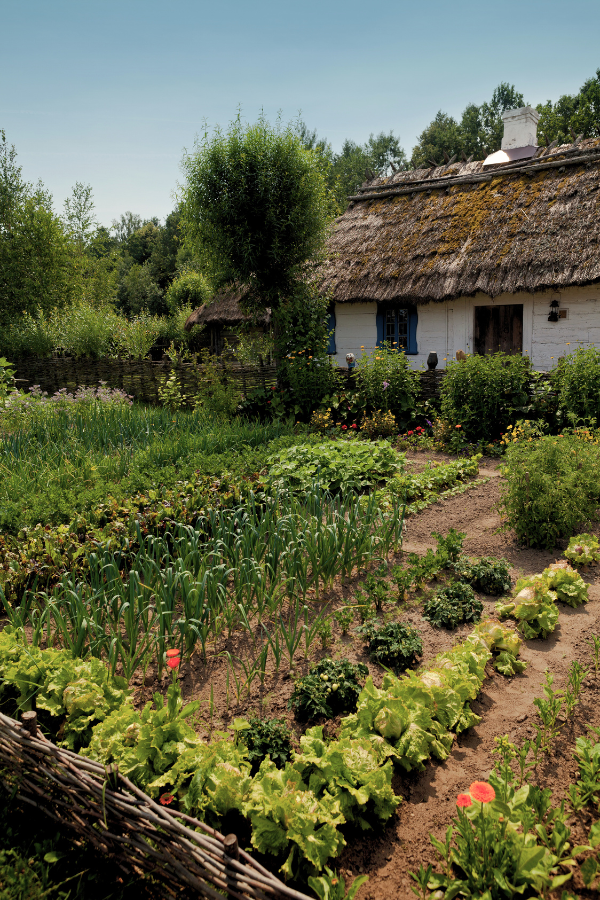
From Cloughjordan to Crystal Waters: Eco-Villages Around the World
Eco villages—sometimes called "intentional communities"—are scatte
Are Those Vintage and Antique Light Fixtures Safe? Here’s How to Know
Learn about identifying outdated wiring, spotting hazards, and consult

Hyper Independence as a Female Creative Entrepreneur: How to Collaborate and Thrive
While independence is a valued trait in entrepreneurship, toxic indepe