



The Biggest Mistake You Can Make in Your 2027 Business Plan

 0
 0
Summary
Reflection Questions
Journal Prompt
(Not to fully give it away in our intro, but the biggest mistake you can make in your 2027 business plan is assuming that more work means more money.)
It’s now the very end of October, and by this late date in 2026, you probably have a decent sense of what you want from 2027. You might want to cross a revenue threshold you’ve been chasing for a few years, hire another senior designer, or stop turning away whole-home projects because your calendar’s too full. These are perfectly reasonable goals, but before you add more projects to next year’s plan, look at what it actually cost your firm to produce this year’s revenue.
A big project can be excellent for your business, especially when the design fees are right and there’s a lot of procurement attached to it. But big projects can also mean months of senior-level coordination, more purchasing work, and a payroll decision you weren’t planning to make. If the only way to service three additional projects is to hire another designer, those projects have to cover a lot more than your new employee’s salary.
And THIS is the mistake we want you to avoid as you plan for 2027. More work CAN make you more money, but only when the pricing, margins, project mix, staffing, and timing of the revenue all make sense together. Before you decide how much more work your firm should take next year, spend some time figuring out which work is actually worth taking on.

Five Questions to Ask Before You Add More Work to 2027
#1 How Much Profit Do You Actually Want to Make?
Let’s use easy numbers. If your firm does $1 million in revenue this year and ends with $100,000 in net profit, you’re working with a 10% net margin. If your goal is to make $200,000 in profit next year and nothing else changes, another $100,000 in revenue isn’t going to do it. At that same margin, you’d need roughly $2 million in revenue to put $200,000 on the bottom line.
Doubling revenue next year could mean a much larger team, considerably more purchasing, and a LOT more work. But before you commit yourself to producing all of that, make sure doubling revenue is actually the financial problem you need to solve.
Laura U Design Collective uses a Profit First approach when budgeting, which means Laura Umansky and Melissa Grove start with the amount of profit they want the firm to make and work backward from there.
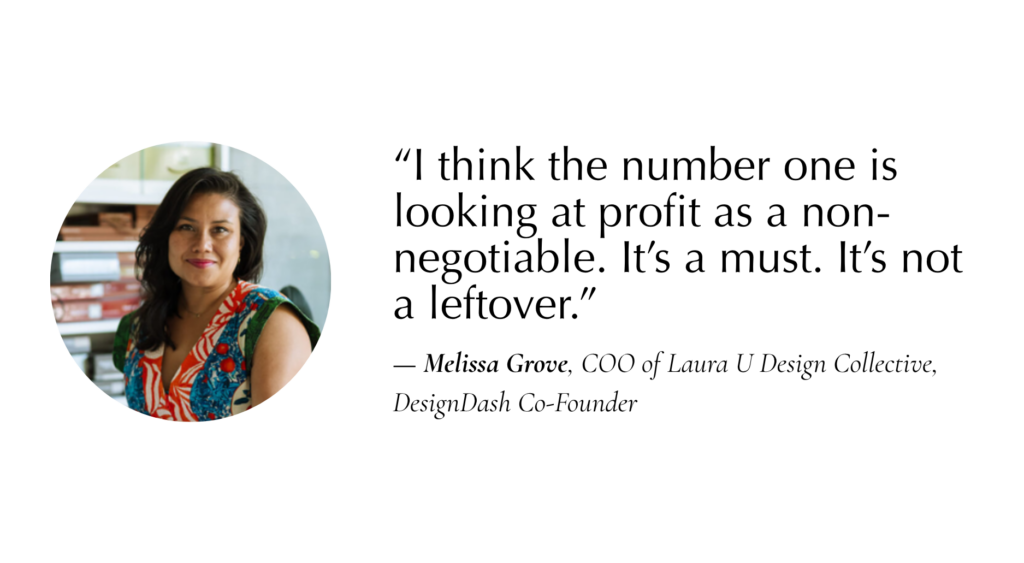
Once you know the profit number, you can start testing different ways of reaching it. A $1.2 million firm at a 10% net margin produces $120,000 in profit. The same $1.2 million at 15% produces $180,000. That’s a $60,000 difference without adding a dollar to the revenue goal.
Maybe your 2027 plan DOES need significantly more revenue. But pricing, project mix, margins, and expenses deserve a place in the conversation before you decide the answer is simply more clients.
#2 Which of This Year’s Projects Would You Happily Do Again?
If your plan projects four more projects next year, which four projects from 2026 would you want to repeat?
Two projects can bring in similar design fees and ask completely different things of your team. One client approves selections quickly, purchases most of the furnishings through your firm, and stays reasonably close to the hours you anticipated. Another wants additional options in half the rooms, revisits decisions repeatedly, adds meetings, and needs enough construction coordination that your senior designer spends weeks doing work nobody anticipated when you wrote the proposal.
Both clients paid you. Only one might belong in your plan for MORE growth. Gail Doby, co-founder of Pearl Collective, wrote about this problem for Business of Home after years of working with interior designers on the financial side of their firms.
One designer Doby worked with was primarily taking $5,000 projects and netting only about $275 from each one. Doby advised her to triple her project minimum. That minimum eventually increased to nearly $50,000, and the designer was making more money with considerably less stress.
Go back through your own projects and compare more than the fee on the proposal. Look at actual design hours, procurement revenue, senior-level involvement, revisions, construction coordination, travel, installation time, and anything the firm ended up absorbing instead of billing.
You might find that smaller furnishing projects are fantastic for your firm because they move quickly and include healthy purchasing. Or you might discover that they need almost as much principal and senior designer involvement as a project three times their size. Your renovations could be extremely profitable, while another project type consistently runs well past the hours you planned.
If your 2027 business plan says you need 18 projects, make sure you actually want 18 projects that look like the ones you used to arrive at that number.
Fuel your creative fire & be a part of a supportive community that values how you love to live.
subscribe to our newsletter
*please check your Spam folder for the latest DesignDash Magazine issue immediately after subscription

#3 Can You Make More From the Work You’re Already Doing?
After looking at your projects, you might discover that your firm already has enough clients. You just need to charge those clients more for the work you do. Melissa Houston, a CPA who writes about small-business finance for Forbes, recommends looking at pricing, supplier costs, habitual discounts, overhead, procurement, and operational efficiency before assuming another customer is the answer.
Houston points out that thin margins don’t improve just because you sell more. In fact, additional volume can magnify the problem if pricing is weak or direct costs are too high. She recommends identifying underpriced services, eliminating automatic discounts, renegotiating supplier agreements, improving procurement processes, and looking closely at expenses that have accumulated as the business has grown.
There are so many ways to apply this to interior design. Maybe construction coordination has grown into a much larger part of your projects, but the design fee hasn’t changed. Maybe you’re absorbing too many revisions. Procurement volume might be excellent while your compensation for ordering, tracking, claims, freight, receiving, and installation hasn’t kept pace with the amount of staff time involved.
Even a small improvement can add up when you apply it across the work you’re already doing. If your firm produces $1 million in furnishings revenue next year and you improve the gross margin on those sales by three percentage points, that’s another $30,000 in gross profit before overhead without finding another client.
Laura and Melissa also talk in Episode 56 about how much project mix affects growth at LUDC. Design billing is an important revenue stream, but furnishings account for a substantial part of the firm’s business.
A better project could mean a larger design fee, stronger procurement potential, a scope your team already knows how to service efficiently, or a client who trusts the process and doesn’t add another round of selections every Thursday afternoon.
If your calendar was already packed in 2026, see how much more money the RIGHT version of that calendar could make before you decide 2027 needs five more clients.
#4 What Will Those Additional Projects Do to Payroll?
Now let’s say more projects really ARE part of the plan. The pipeline is strong, you’re turning away work you genuinely want, and there’s enough demand to justify growing the firm.
Who’s going to do all of it?
In Episode 96 of the DesignDash Podcast, Laura and Melissa were dealing with almost exactly that question at LUDC. Another potentially excellent project was coming in while the existing teams were already full. LUDC typically manages around 14 projects at a time, with senior and junior designers paired into pods, so they can look across the master project list and see how much work each team has before accepting another large engagement.
The firm could put the new client on a wait list, rearrange work if another project was entering a slower construction period, refer the project, put Laura back into a larger design role, or hire. That last option makes sense only if the need extends beyond one exciting client.
If your revenue goal depends on another senior designer, put the hiring plan right next to the revenue plan. Salary is only part of the expense. You’ll also have payroll taxes, benefits if you provide them, another software seat, equipment, training, and time from whoever will manage and review that employee’s work.
Then look beyond the projects that prompted the hire. If one enormous renovation goes into a long construction lull six months after your new senior designer starts, what else will she be working on? Is the pipeline strong enough to support the position through the natural ups and downs of multi-year projects?
Also make sure you’re hiring for the actual problem. More projects don’t automatically mean another designer. If procurement is already buried, another designer sends even MORE orders through an overloaded department. If every drawing set is waiting for principal approval, adding junior production capacity gives the principal more work to review.
If the only way your 2027 revenue goal works is with people you haven’t hired yet, that’s okay. Just make sure the cost of those people is already IN the plan.
#5 When Will the Money From Those Projects Actually Come In?
One of the trickier parts of planning an interior design firm’s upcoming year is that January 1 doesn’t reset your projects. You could spend most of 2027 working on a major renovation that won’t reach its big furnishings orders until 2028, while a project you signed LAST year could account for some of your largest procurement revenue next spring.
That’s completely normal for a business where a whole-home project can take two or three years. Design billing might continue steadily through documentation and construction while the really large purchasing months are still far down the road. Another project could be finishing construction just as the year begins, which means a large amount of furnishings revenue is coming much sooner. Laura and Melissa have seen exactly that pattern at LUDC, as you’ve probably seen in your firm.
The following year can look dramatically different when several of those projects enter procurement and installation near the same time. Laura and Melissa also point out that hourly design billing gives LUDC steadier monthly revenue while furnishings payments arrive in larger chunks around purchasing and installation.
Go through the big projects you expect to work on next year and estimate where each one will be by quarter. Which projects will still be in design in March? Which ones should be deep into construction? Which are likely to start purchasing in the summer? Which installations are already penciled in for fall?
Then do the same thing with the money. Estimate the design billing you expect during those phases and when larger procurement payments are likely to happen. Don’t put the entire value of a two-year project into 2027 simply because the client signs next year.
This exercise also helps with staffing. Three projects deep in construction can create a very different workload from three projects preparing for presentations, drawing packages, and major selections at the same time. “We have 12 active projects” only tells you so much. You need to know what those 12 projects will actually be asking from your team throughout the year.
Make Sure a Bigger 2027 Is Actually Better
You can absolutely decide that you want a larger firm next year. You can hire, take more projects, increase purchasing volume, and set a much higher revenue target. Plenty of firms should. But you should know what those decisions are supposed to do for you financially.
By late October, you already have a LOT of information to work with. You know which projects took more time than expected, which ones generated strong procurement revenue, where the team was stretched too thin, and which fees probably need another look. You also know whether you’re consistently turning away great projects because nobody can take them or whether one unusually busy stretch made the firm seem fuller than it really was.
Use those numbers to decide what kind of growth actually makes sense. Your plan could call for more projects, but it might point instead to larger scopes, a higher minimum, better margins, stronger procurement compensation, another employee, or a different mix of clients entirely.
If 2027 is going to ask more of you and your team, make sure the business is paying all of you more for it.
Don’t Miss More of Melissa and Laura’s Advice on the Pod!
If this article has you rethinking your 2027 plan, we’d recommend watching both Episode 56, Profit First: Why You’re Not Keeping More of What You Earn and Episode 96, Your Pipeline Is Full. The Project Is Perfect. Pick One. Episode 56 is especially helpful if you need to rethink the relationship between revenue, profit, margins, and what you can actually afford to spend or reinvest in the firm, while Episode 96 tackles the capacity side of the equation and what to do when great work keeps coming in but your team is already full.
Watch them together before you finalize 2027 because one helps you decide how much money your work needs to generate, and the other helps you decide how much work your firm can realistically take on.
Written by the DesignDash Editorial Team
Our contributors include experienced designers, firm owners, design writers, and other industry professionals. If you’re interested in submitting your work or collaborating, please reach out to our Editor-in-Chief at editor@designdash.com.
Related Posts

Gothic Interior Design: Transforming Spaces with Timeless Elegance
LIKE 0 LEAVE COMMENT 0 11 min read Summary Reflection Questions Journa

Creating Passive Income for Interior Designers
LIKE 0 LEAVE COMMENT 0 11 min read Summary Reflection Questions Journa
What Is Gustavian Interior Design, And Is It Still Relevant Today?
Georgian interior design's light palettes, balanced proportions, and r

Why Do We Give Chocolate on Valentine’s Day? Thank the Victorians!
From the Aztecs' ceremonial use to its transformation into a symbol of
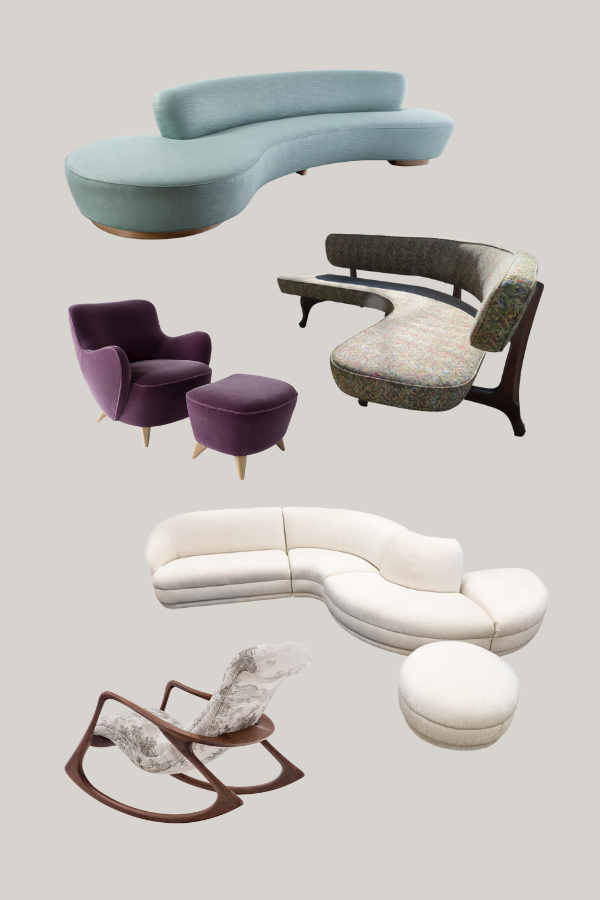
Five Vladimir Kagan Designs That Still Shape Modern Interiors
Learn more about 5 iconic designs that reveal why Kagan's timeless app

7 Real-World Secrets to Scaling a Design Firm (Without Losing Your Soul)
Learn how iconic designer Kate O’Hara of O’Hara Interiors scaled h

POST COMMENT
You must be logged in to post a comment.