
Too Busy for Your Ideal Client? Three Ways to Manage Capacity

 0
0
 0
0Summary
What should you do when an ideal client reaches out and your firm is already at capacity? In this episode of the DesignDash Podcast, Laura Umansky and Melissa Grove discuss waitlists, project forecasting, workload management, and hiring decisions. Their conversation explores how firms can evaluate opportunities thoughtfully instead of reacting impulsively when exciting projects pop up.
Reflection Questions
If your ideal client contacted you tomorrow, would you realistically have the capacity to take on their project?
How does your firm currently determine whether it has room for additional work?
What factors would justify hiring a new team member versus placing a client on a waitlist?
Journal Prompt
Think about the last project you wanted to accept but couldn’t. What made it appealing? Was it the client, the budget, the scope, the location, or the portfolio potential? Looking back, would your decision have changed if you had more visibility into your team’s workload and future capacity?
As firm owners, most of us have spent years trying to attract ideal clients. We refine our portfolios, strengthen their marketing, improve our processes, and develop expertise within specific project types. Then one day, the phone rings and the exact client we’ve been hoping to attract wants to work with us!
But opportunity doesn’t usually knock when you’re perfectly primed to take advantage of it.
A dream project can create just as much uncertainty as a poor-fit one. Existing clients still need attention. Team members already have deadlines. Installations for other projects are already scheduled. The excitement of a great opportunity can quickly give way to a more practical question: can my firm actually deliver the level of service that client deserves?
In a recent DesignDash Podcast episode, Laura Umansky and Melissa Grove discussed how they evaluate these situations. Their conversation touched on waitlists, workload forecasting, hiring decisions, and the systems firms need to make informed choices when opportunities arise.
Three Takeaways from Our DesignDash Podcast Episode on Managing Capacity
#1 A Waitlist Is Often Better Than a Rushed Yes
Many designers worry that asking a prospective client to wait means losing the project entirely. That’s understandable. Most firm owners spend years trying to attract ideal clients, so the idea of delaying a start date can feel risky. This concept is called “loss aversion” in psychology, a term coined by Daniel Kahneman and Amos Tversky in their work on behavioral economics.
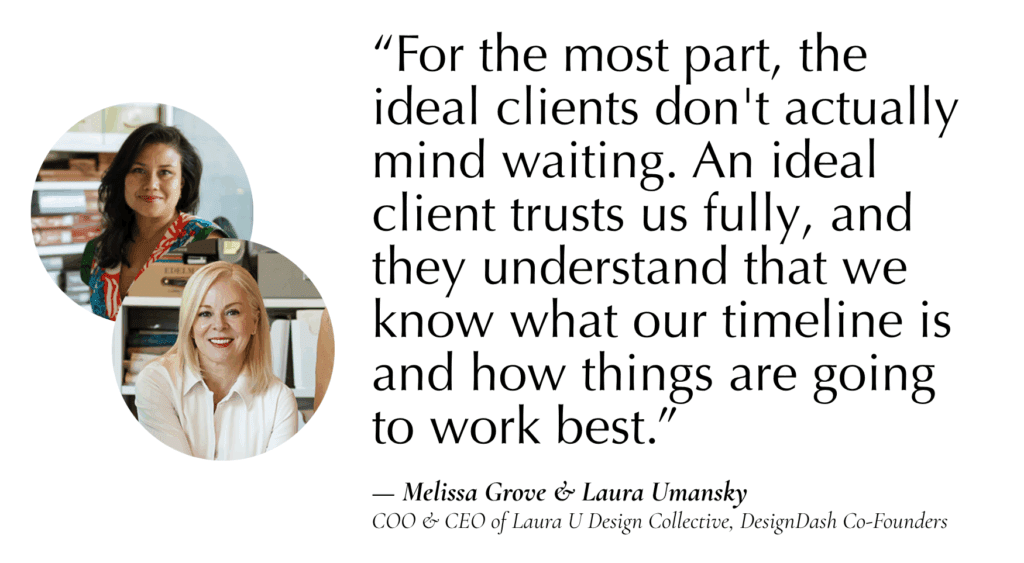
The reality is that ideal clients are often looking for a particular designer rather than the first available designer. They’ve researched the firm’s work, connected with its portfolio, and decided they want that specific expertise. A short wait period might be far less important than you think.
A waitlist also protects the experience of existing clients. Every new project affects the firm’s workload, and taking on work too quickly can create problems for people who have already signed contracts and committed to the process. The question isn’t simply whether a firm can win the project but whether the firm can deliver the level of service that attracted the client in the first place.
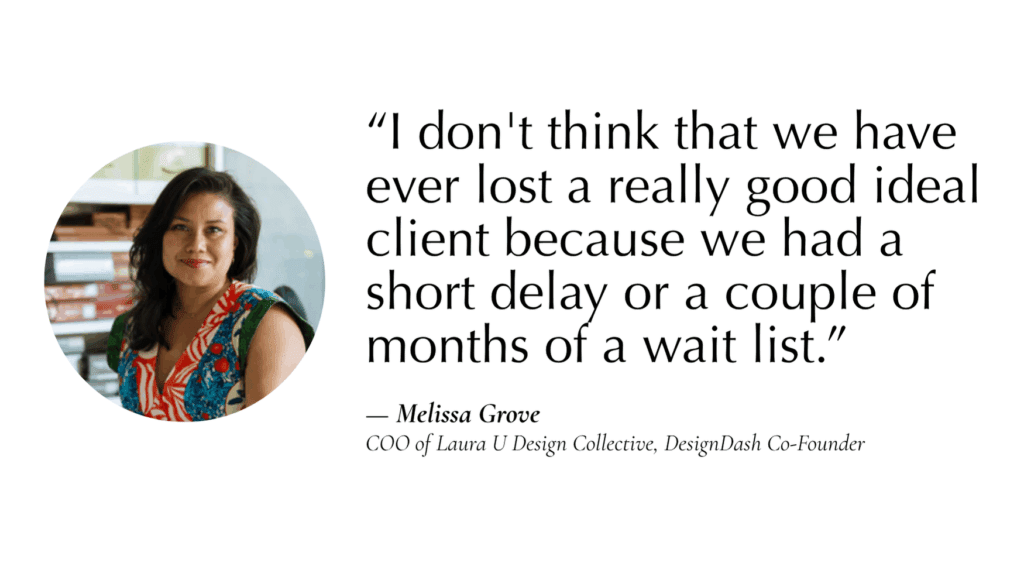
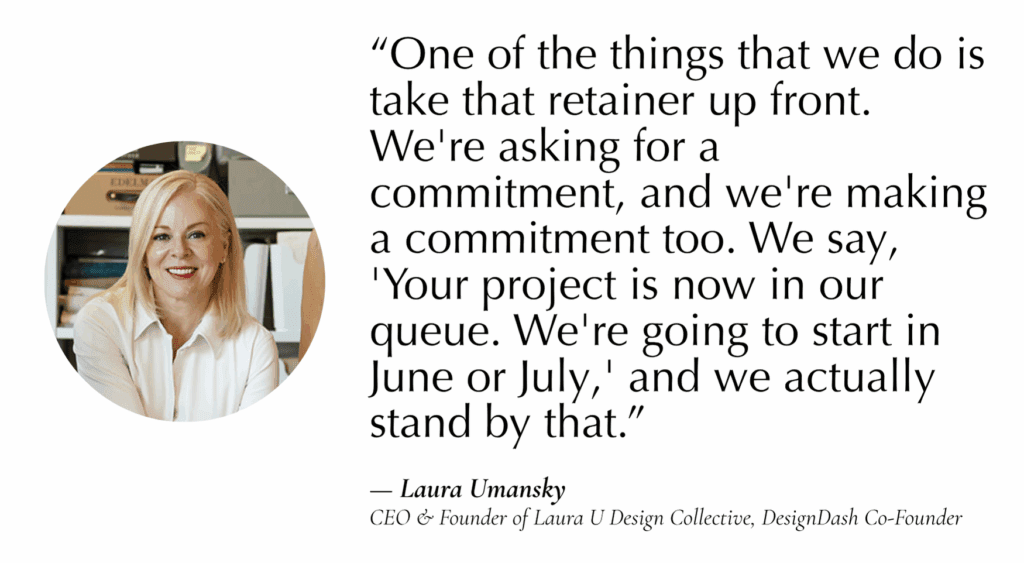
Of course, a waitlist only works when it’s supported by clear communication. Clients need to understand when work will begin, what happens between now and then, and whether the firm is committed to the proposed timeline. A vague promise to “get started eventually” is very different from a defined place in the queue.
Many firms avoid waitlists because they’re worried about appearing unavailable. In practice, though, a carefully managed waitlist (not something you set and forget) can communicate that the firm has a process, understands its capacity, and isn’t willing to compromise the quality of its work simply to start sooner.
Laura and Melissa also discussed a project that sat on their waitlist before eventually expanding into something much larger than originally anticipated. The additional time allowed the clients to think more carefully about their goals and the scope of work they wanted to pursue. Sometimes patience creates opportunities that wouldn’t have existed if the project had started immediately.
#2 Capacity Decisions Require Real Data Instead of Shoddy Guesswork
As firm owners, we tend to answer capacity questions based on how overwhelmed our team feels that week. The problem is that project workloads fluctuate constantly. A team that seems completely overloaded during a presentation week might have significantly more availability a month later when that phase is over. Without a system for tracking workload across the entire firm, leadership can end up making decisions based on temporary pressure rather than long-term reality.

Many firms rely heavily on instinct when evaluating workload. Calendars look full. Everyone seems busy. Deadlines are approaching. Under those conditions, you might assume there’s no room for another project.
The challenge is that “busy” and “at capacity” aren’t necessarily the same thing. Different projects require different levels of attention at different stages. Design development, procurement, construction administration, and installation all place different demands on a team. Looking at the business as a whole often reveals opportunities that aren’t visible from day to day.
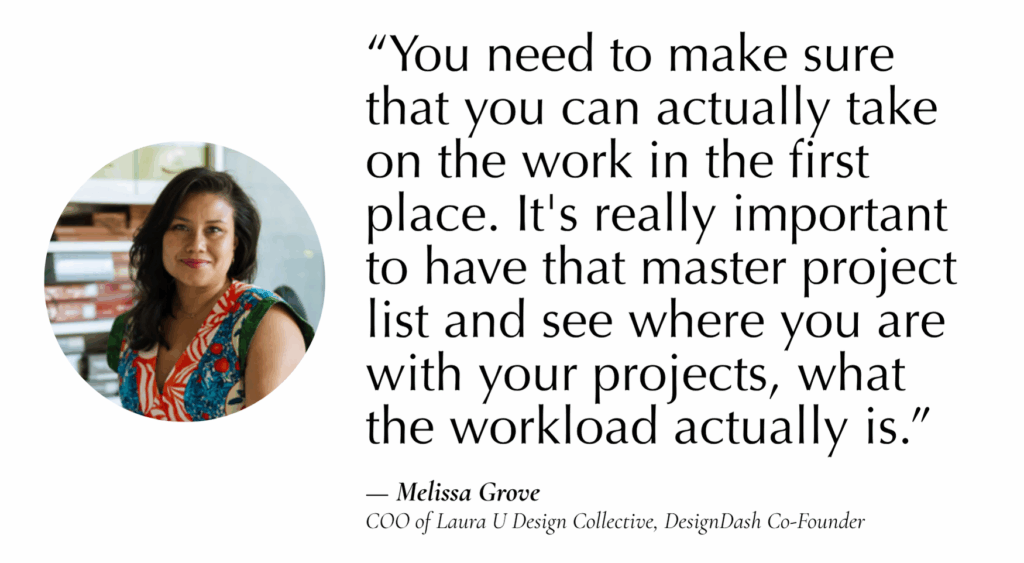
Visibility produces better decisions. Instead of relying on assumptions, firm owners can evaluate staffing, timelines, and future commitments using actual information. This makes it easier to identify bottlenecks, forecast availability, and determine whether a project truly fits within the firm’s workload.
At Laura U Design Collective, that visibility comes from a structured project management system that empowers leadership to understand workload across the entire organization rather than relying on anecdotal reports from individual team members.
One of the benefits of tracking capacity closely is that assumptions can be tested against reality. A schedule that initially looks completely full might contain more flexibility than expected once project phases, deadlines, and staffing allocations are reviewed more carefully.
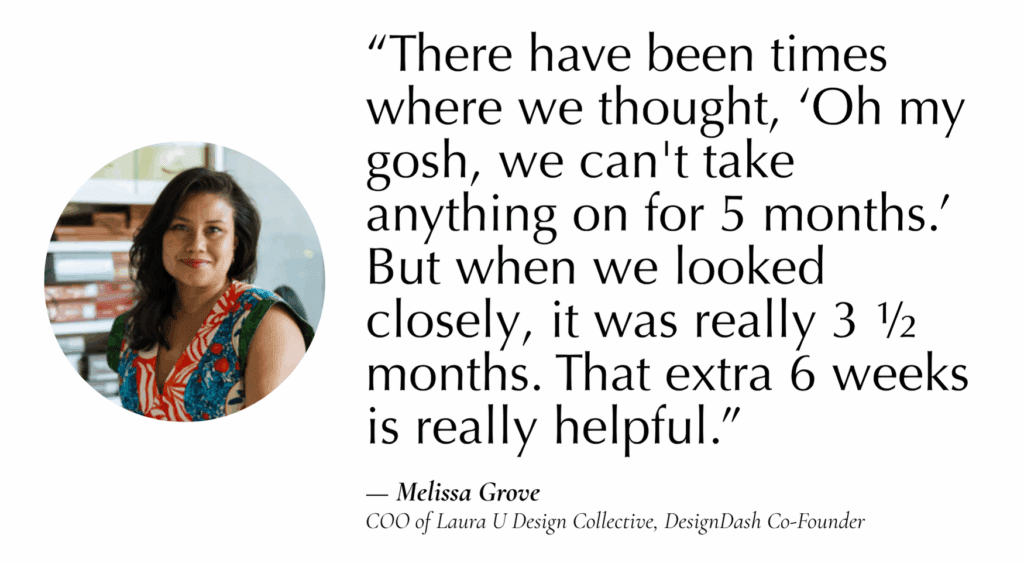
Six weeks might not sound like much, but it can completely change a firm’s options. A project that initially appears impossible to accommodate can suddenly become realistic when leadership has a more accurate understanding of future capacity.
#3 The Right Project Can Justify Growth But Not Panic Hiring
At some point, every firm owner encounters a project that’s impossible to ignore. Maybe it’s a dream client. Maybe it’s the largest project the firm has ever been offered. Maybe it aligns perfectly with long-term business goals. Those opportunities naturally lead to another question: should the firm grow in order to accommodate them?
Growth can create tremendous opportunities, but hiring is rarely a decision that affects only one project. New team members require training, mentorship, systems, and ongoing support. A hiring decision made to solve an immediate problem can have consequences long after that project is complete.
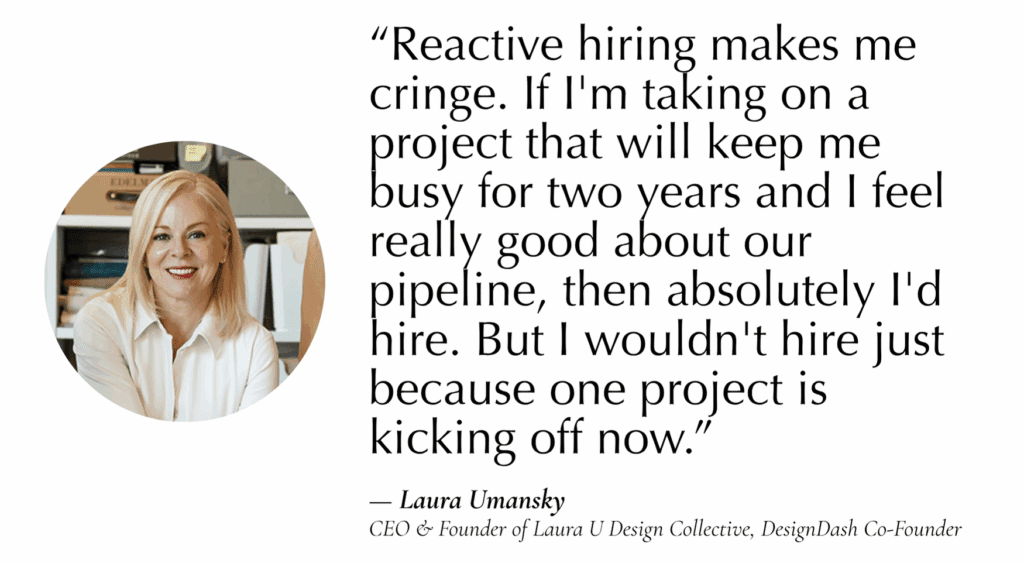
Don’t forget; you’re not hiring solely for today’s projects and today’s problems. You are making decisions that affect future staffing levels, profitability, and company culture. A great project can absolutely reveal that it’s time to expand, but one exciting opportunity doesn’t automatically justify a long-term commitment.
Instead, owners need to evaluate the broader context surrounding that opportunity. What does the pipeline look like? Is demand consistent? Are similar projects continuing to pop up? Is growth aligned with the firm’s goals?
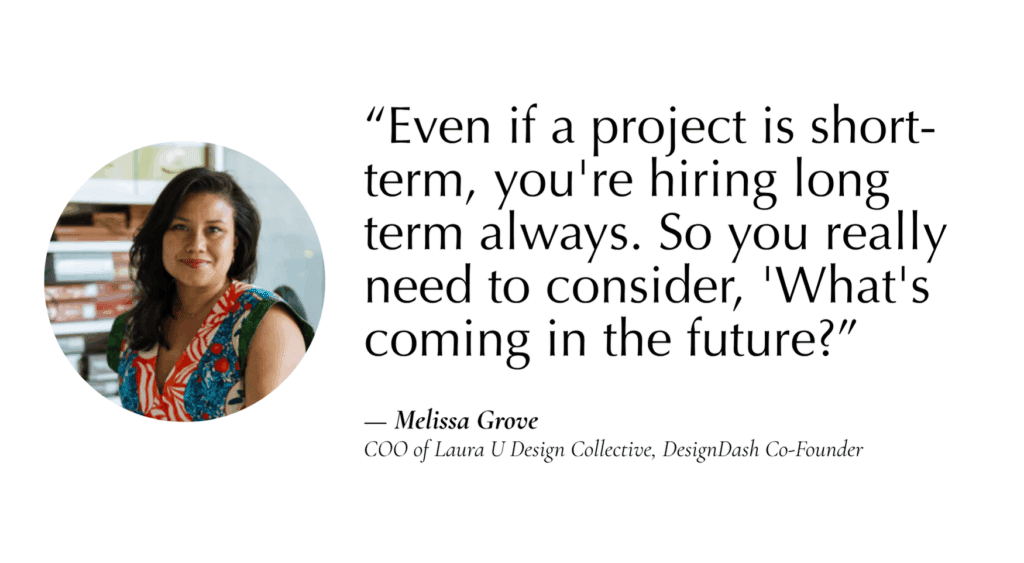
That long-term perspective can prevent firms from making decisions based solely on excitement. Growth tends to be most successful when it’s supported by a sustained pattern of demand rather than a single exceptional opportunity.
At the same time, consistently pushing projects into the future can become a signal of its own. If a firm is repeatedly attracting strong opportunities but doesn’t have the capacity to pursue them, leadership might need to consider whether the business has outgrown its current structure.

Growth is neither good nor bad necessarily. The challenge is understanding when growth is strategic and when it’s simply reactive.
Final Thoughts
Every firm owner hopes to attract ideal clients, but what do you do after your reputation has started to grab those perfect PNCs?
Saying yes immediately isn’t always the best answer. Sometimes a waitlist creates a better experience for both the client and the firm. Sometimes a closer look at the workload reveals capacity that initially seemed unavailable. Sometimes a remarkable project reveals that the business has reached a point where additional hiring makes sense.
Fuel your creative fire & be a part of a supportive community that values how you love to live.
subscribe to our newsletter
*please check your Spam folder for the latest DesignDash Magazine issue immediately after subscription

Throughout the conversation, Laura and Melissa keep circling the same point: capacity decisions are way easier to make when firms understand their workload, trust their systems, and have confidence in the process they’ve built.
Written by the DesignDash Editorial Team
Our contributors include experienced designers, firm owners, design writers, and other industry professionals. If you’re interested in submitting your work or collaborating, please reach out to our Editor-in-Chief at editor@designdash.com.
Related Posts

Engaging Special Needs Toys for Differently-Abled Children
This guide empowers creative moms to find special needs toys that fost

Where Can I Study Interior Design in Chicago?
Including Columbia College Chicago, the School of the Art Institute of

The Pros and Cons of Participating in Group Exhibitions or Joining an Art Collective
Group exhibitions and art collectives serve as pivotal platforms for t

A Collection of the Most Iconic Painted Ceilings of All Time
This collection highlights the most iconic painted ceilings from aroun

The Surprising Application of Dry Ice Blasting Technology in Historic Preservation
Unlike conventional cleaning methods, dry ice blasting is non-abrasive

The Best Hotels in Napa for Your Next Wine Country Weekend
Who doesn't love world-class wineries and rolling hills? From the Four