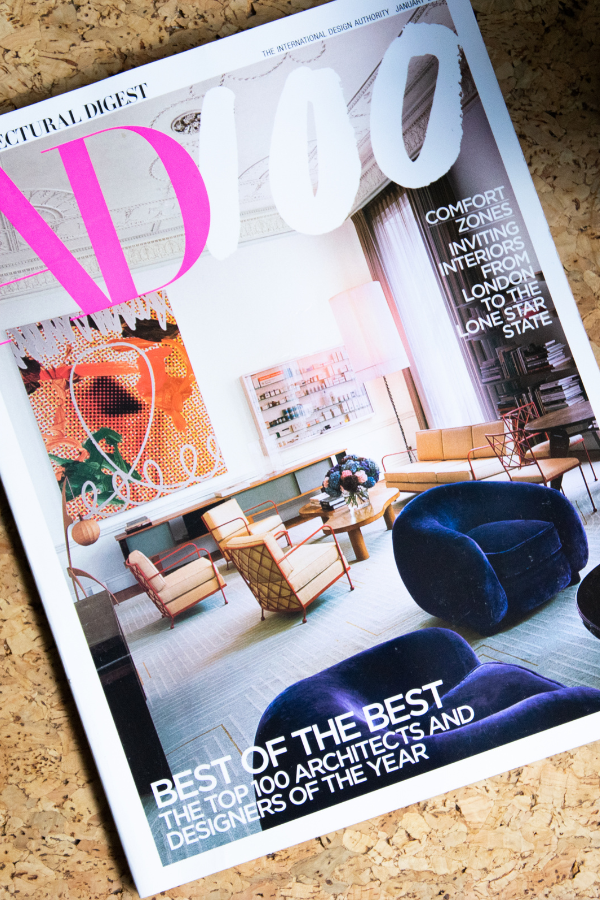
Are Pay-to-Play Industry Publications Like AD PRO Worth the Money?

 0
0
 0
0Summary
Paid directories, profiles, memberships, and advertorials can add credibility, but Laura wouldn’t count on them as dependable lead sources. They make more sense once your firm has the budget to treat them as brand-building and a plan for using the affiliation across your own marketing. Earlier on, she’d put the money toward strong photography, an editorial-quality website, networking, and referral relationships.
Reflection Questions
Which of your paid memberships, directories, or profiles are prospective clients actually likely to encounter while researching your firm?
After paying for an affiliation, what are you doing with it beyond maintaining the listing?
If you redirected that same budget toward photography, your website, or relationship-building, where would you get more mileage over the next year?
Journal Prompt
Pull up every paid directory, membership, sponsored profile, and advertorial your firm currently funds. Write down what each one costs, why you originally purchased it, whether you’ve traced any inquiries back to it, and how you’ve used the affiliation elsewhere. Then look at the total spend and ask where you’d put that money today if you were starting from scratch.
Designers are usually much more aware of industry directories, memberships, awards, and paid editorial programs than their clients are. We know which names have cachet inside the industry, which lists people want to make, and which affiliations will be excitedly added to firm bios and press pages.
A client hiring an interior designer might know Architectural Digest pretty well yet still have no idea what having an AD PRO membership actually means. We interviewed Laura Umansky, CEO and founder of Laura U Design Collective and co-founder of DesignDash, about that gap between client perception and professional expectations. Her take is that these memberships can have value, but designers sometimes expect the wrong thing from them.
That doesn’t mean a client ignores the credential when they see it on your site; nor does it mean they won’t come across your featured page on AD Pro, and nor does it mean they won’t catch an article you contribute to on the site. But most clients won’t take notice unless they already know your name, have looked at your portfolio, or have heard about you through someone they trust. Then, that feature or profile might push them over the edge. Odds are, it won’t draw them in.
Do Clients Actually Care About Paid Profiles and Directories?
A prospective client might spend a lot of time researching your firm before they make that first call (or even submit a contact form). They’ll look through projects, read your bio, check press, and probably search your name elsewhere online. If a respected publication has included your firm in a directory or professional membership, they might notice that too. Laura sees the credential as part of that research rather than a common starting point.
That applies to AD PRO and similar pubs. A paid designer directory, regional “best of” profile, sponsored editorial page, or membership attached to a recognizable publication might give a prospective client another reason to trust what they’re already seeing. The publication’s name can help, especially if the client recognizes it.
They Might Give Your Firm a Credibility Boost
We asked Laura whether these placements help more with credibility or lead generation; you probably already know her answer, which was:
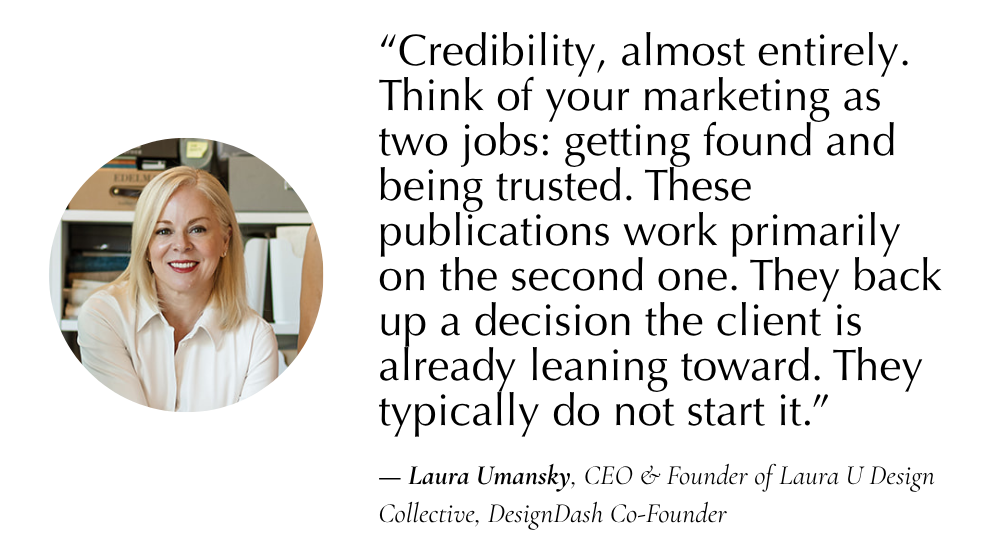
If you purchase a directory placement expecting five inquiries this year, you might be disappointed. If you’re paying because you want another respected industry name associated with the firm, that’s a bit more sensical.
The credential can also matter to editors, architects, builders, vendors, and other designers who understand exactly what the publication or membership represents. Your clients might only register that your firm has been recognized by a familiar name, but sometimes that’s enough.
Have Paid Placements Ever Produced a Client?
Laura hasn’t traced a client directly to a professional resource like AD PRO. There could be clients who saw the profile during their research and never mentioned it. That’s difficult to know unless someone tells you exactly how they found the firm. But Laura can’t point to a project that began because a client discovered Laura U Design Collective in an industry directory.
If direct attribution is important to you, that should factor into your budget. A paid listing can support the firm’s reputation without giving you a satisfying answer when you ask how many inquiries came from it.
Fuel your creative fire & be a part of a supportive community that values how you love to live.
subscribe to our newsletter
*please check your Spam folder for the latest DesignDash Magazine issue immediately after subscription

But Advertorials Have!
Laura can trace one client to a paid advertorial in a local magazine. The client tore out the page and kept it for three years before contacting Laura U Design Collective about her project. “It was a very long lead time, but an excellent client!”
Three years is far longer than most firms would wait before deciding whether a placement worked. If Laura had reviewed that advertorial six months later, she probably wouldn’t have credited it with a client.
The audience was different too. A local magazine put the firm directly in front of homeowners in the market. An industry directory might reach designers and press more heavily, along with clients who are already searching pretty deliberately. If you’re comparing paid opportunities, it’s worth looking beyond the publication name and thinking about who actually reads that particular section, directory, or issue.
What Else Comes With the Affiliation?
A paid membership or profile doesn’t have to exist only on the publication’s website. Laura sees quite a bit of value in bringing the affiliation back into the firm’s own marketing.
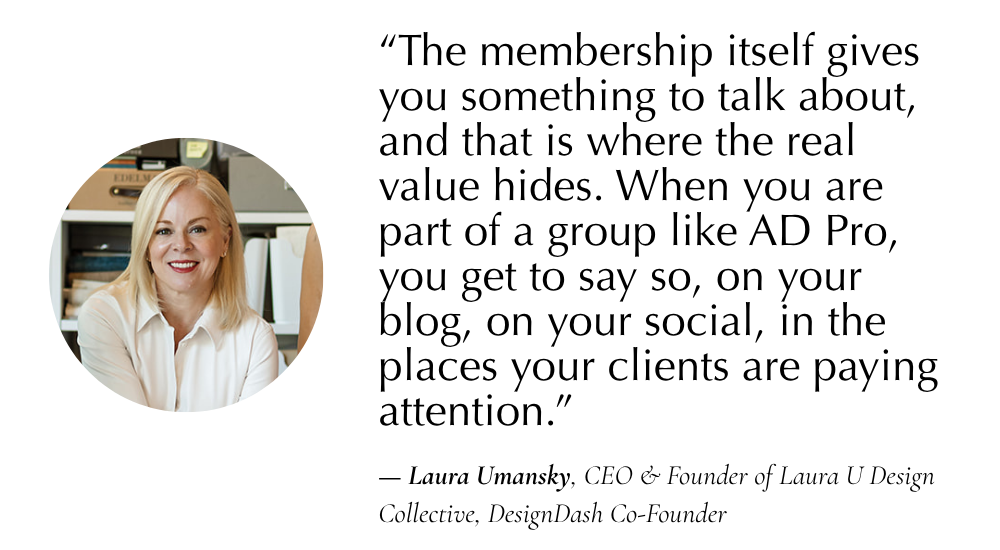
The same idea applies to other paid opportunities. If your firm is included in a respected local directory, add it to your press page. If you participate in an industry membership that includes events or editorial contributions, you might have material for your newsletter or social channels. If a sponsored profile is well produced, you can direct prospective clients to it when it adds context they won’t find on your own site.
Your clients are already spending time on your website and social accounts. They might never search the publication’s directory themselves, but they can still encounter the affiliation through you.
A Listing by Itself Is Pretty Passive
Before paying, look at what’s included beyond the profile. Are there editorial opportunities? Events you’d actually attend? Networking with people you want to know? Can you contribute expertise to articles? Will your team have reasons to reference the affiliation during the year?
If the answer is basically that your logo and bio will live on a directory page, you have a much narrower asset. That could still be worth paying for, but you should know what you’re buying.

When Does Paying for This Make Sense?
Laura thinks these expenses make more sense once the firm has enough revenue to stop expecting every marketing line item to generate a traceable inquiry.
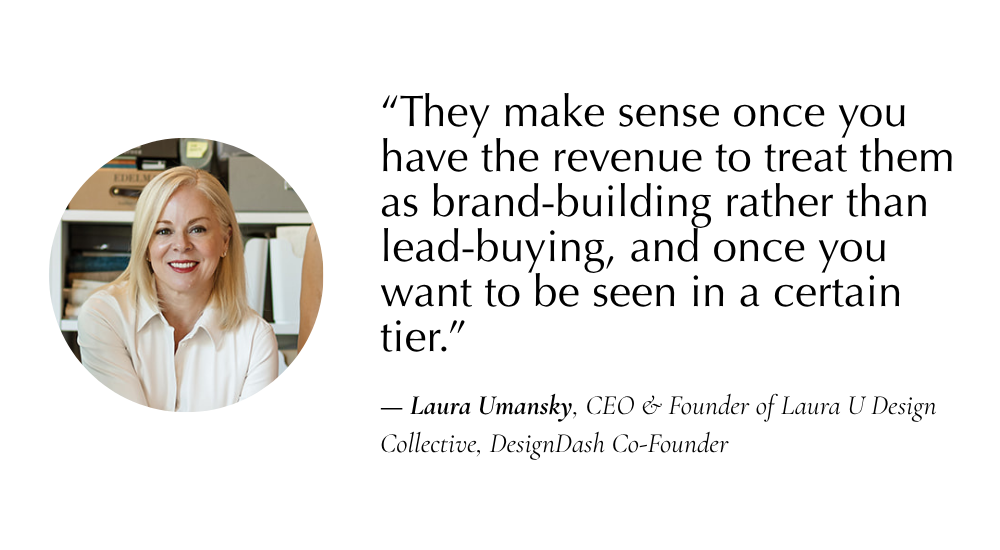
At that point, you might already have professional photography, a strong website, repeat referrals, good relationships in your market, and enough completed work to support regular press submissions. A paid industry affiliation can join those other pieces without having to produce the next project on its own. Laura is more cautious when the firm is still watching every marketing dollar closely.
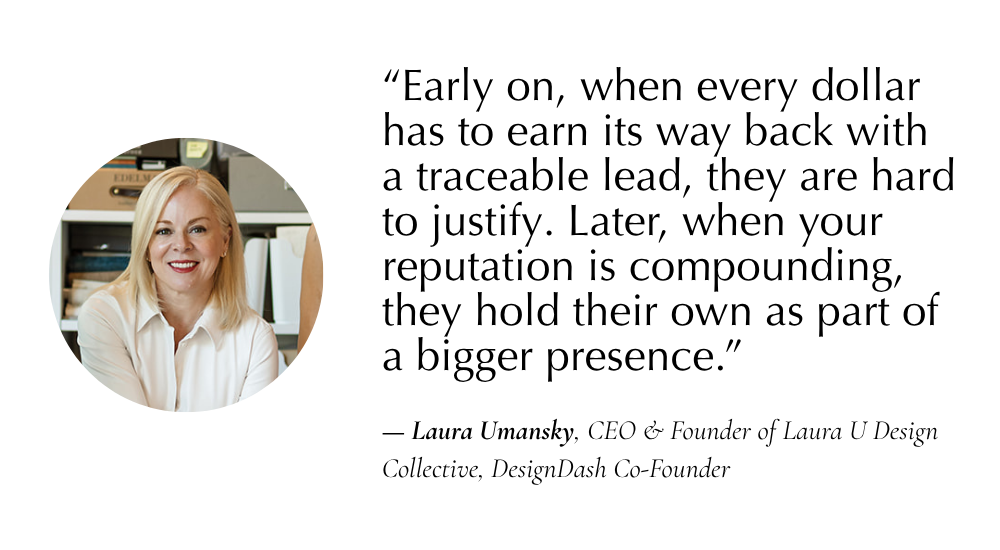
A newer firm might get much more immediate mileage from photographing a strong project or rebuilding a website that no longer represents the work. If purchasing a directory profile means putting either of those things off, Laura would look closely at the tradeoff.
But Photography and Your Website Come First
When we asked Laura where she’d invest the same budget, she started with the things prospective clients already spend time with: photography, the website, networking, and referrals.
A single shoot might provide the lead image on your homepage, material for several project pages, press submissions, dozens of social posts, award entries, a newsletter feature, and imagery you use when pitching future clients. There’s a lot you can do with those files after the photographer delivers them.
The website gives clients somewhere to examine the work once they’ve heard your name. If the photographs aren’t strong or the site hasn’t been updated in several years, Laura would address those before paying for another industry credential.

Referrals and Local Relationships Still Count for a Lot
Laura also puts focused, meaningful time into relationships with people who can introduce the firm to the right client. That might include previous clients, architects, builders, realtors, vendors, and other professionals working around luxury residential projects.
Those introductions are especially valuable because the person making the recommendation can speak to more than the finished photographs. They can talk about how the firm communicates, how it handles a complicated project, and whether they’d work with the team again.
Paid profiles can support the reputation those relationships create, but they’re much less likely to replace them.
So, Are Pay-to-Play Publications Worth It?
Laura’s experience doesn’t support treating paid industry directories as a dependable source of direct client inquiries. She does see value in the credibility, press association, content opportunities, and industry recognition that can come with them.
That same logic can apply to another respected directory, membership, sponsored profile, or advertorial, but the value will depend on the audience and what you do after publication. A local advertorial might put you directly in front of homeowners. An industry membership might help more with press and professional recognition. A paid profile could give a client another page to read once they’re already researching you.
If you have the budget and know how you’ll use the affiliation, it can make sense. If you’re hoping the listing itself will start filling the inquiry form, Laura’s experience suggests putting that expectation aside before you sign the contract.
Written by the DesignDash Editorial Team
Our contributors include experienced designers, firm owners, design writers, and other industry professionals. If you’re interested in submitting your work or collaborating, please reach out to our Editor-in-Chief at editor@designdash.com.
Related Posts
Pioneering Female Archaeologists and Their Contributions
From Kathleen Kenyon to Marija Gimbutas, learn about the female archae

How to Find a New Hobby You Love as an Adult
Looking to find a new hobby as an adult? Reconnect with your passions,

The Best Digital Drawing Tablets for Professional Artists
Explore thirteen of the absolute best digital drawing tablets on the m

Beauty Myths Debunked: Does Waxing Cause Wrinkles?
Let's consider an enduring beauty myth: does waxing cause wrinkles? Re

The Joy of Missing Out: How to Embrace JOMO and Reclaim Your Time
The Joy of Missing Out (JOMO) can help you reclaim your time! Learn ho

Why Your Firm’s Contact Page Might Be Hurting Your SEO (and How to Fix It)
Here's how to fix the issues with your interior design firm website's