Three Takeaways from Episode 98: How to Get New Design Clients Fast

 0
0
 0
0Summary
If your pipeline needs a boost, your first instinct might be to spend more on marketing. Laura Umansky and Melissa Grove suggest a different approach. In this episode of the DesignDash Podcast, they discuss the business development activities that can generate new design clients relatively quickly, explain why relationship-building consistently outperforms passive marketing in the short term, and distinguish between strategies that build brand awareness and those that actually bring projects through the door.
Reflection Questions
If you needed a new project within the next month, where would you begin looking for it?
Which referral partners have you spoken with during the past six months?
How often do you intentionally reconnect with former clients after a project is complete?
Are your current marketing efforts designed to generate immediate inquiries or build long-term brand awareness?
Which business development activities have consistently produced your best clients?
Journal Prompt
Think about the last three clients your firm signed. How did each one first learn about your business? Looking back, which of your marketing and relationship-building efforts actually influenced their decision to hire you?
We tend to assume that finding new clients starts with marketing. If your design firm needs more work, you increase your visibility: post more frequently on social media, buy another advertisement, sponsor an event, join another organization, or refresh your website.
Those activities certainly have value, but they don’t all accomplish the same goal. Some strengthen your firm’s reputation over time; AKA, the “long game”. Others create opportunities to meet PNCs (potential new clients) now. Knowing the difference can save both time and marketing dollars, particularly if your pipeline needs a boost sooner rather than later.
Laura Umansky and Melissa Grove explain how to get new clients when you need them throughout this episode of the DesignDash Podcast. Their advice focuses less on finding completely new audiences and more on reconnecting with people who already know your work or introducing yourself to professionals who already serve your ideal clients. We all want to end the year strong, and a big part of that is nurturing a healthy pipeline.
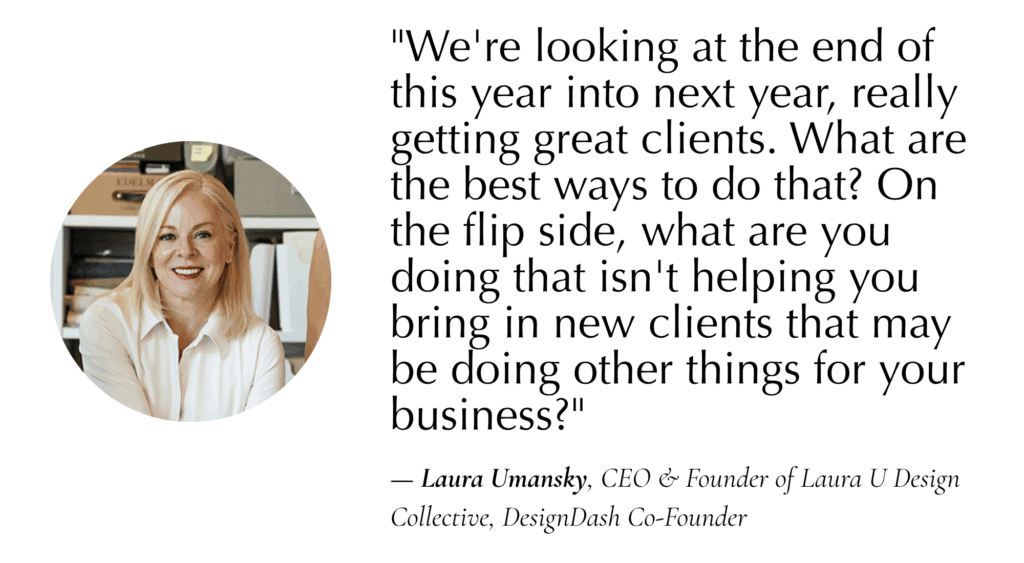
Their conversation also challenges a common assumption about business development. Activities that strengthen your brand aren’t necessarily the same ones that generate immediate projects. Both deserve to be part of your marketing strategy, but each buoys your business on its own timeline. Realizing this is key to spending your biz dev time more intentionally, especially when you’re actively trying to fill your PNC pipeline.
Three Takeaways from Episode 98 of the DesignDash Podcast
#1 Your Next Client Probably Already Knows Someone You Know
When designers need new projects quickly, it’s tempting to spend time trying to reach entirely new audiences. That might mean investing in advertising, posting more frequently on social media, or experimenting with another marketing platform. Those activities certainly have a place in a firm’s overall business development strategy, but they take time (sometimes months or years) to produce meaningful results.
Melissa Grove recommends looking much closer to home. Builders, architects, real estate professionals, landscape architects, and other members of your professional network are already talking to homeowners who may be planning renovations or new construction. Former clients are doing the same thing through conversations with friends, neighbors, coworkers, and family members. Instead of introducing yourself to thousands of strangers, you can reconnect with people who already understand the quality of your work or who regularly encounter potential design clients.
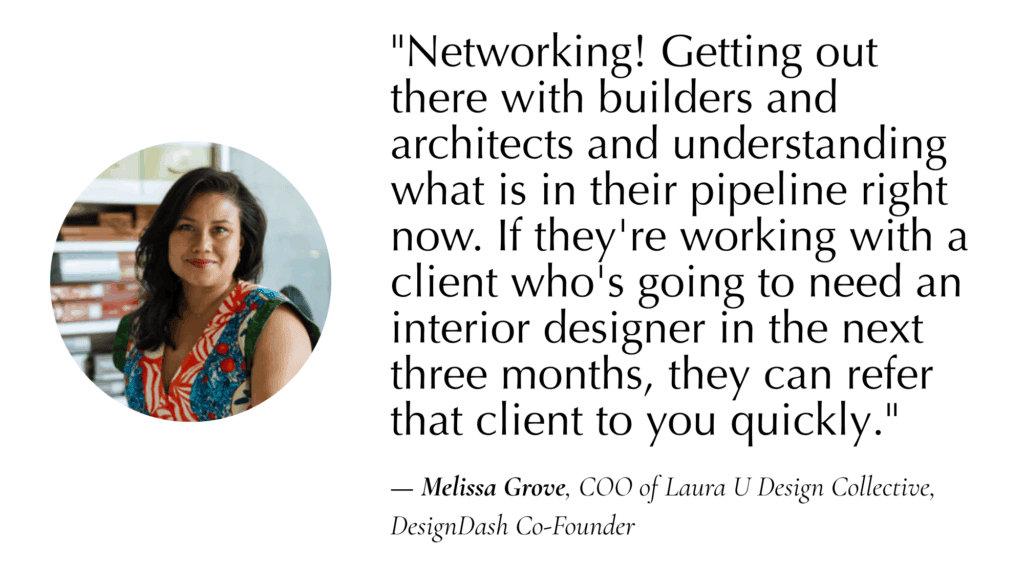
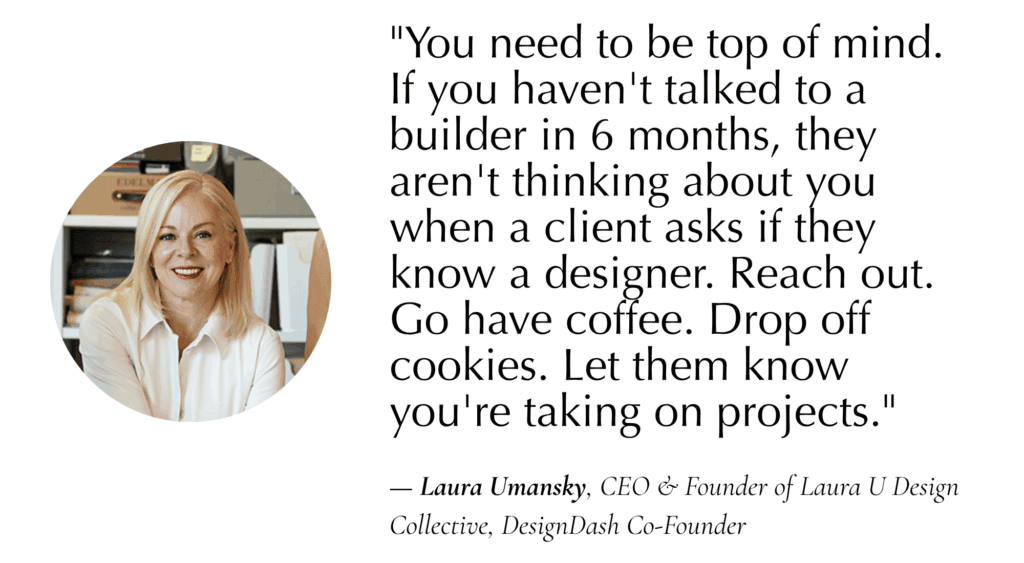
These outreach attempts don’t have to be super elaborate. Laura discusses creating a builder outreach campaign that simply reminds referral partners your firm is accepting new projects. A handwritten note, a quick coffee meeting, dropping off cookies at an office, or sending a thoughtful email update about your firm’s availability all accomplish the same objective. They put your name back into someone’s mind before the next referral opportunity pops up.
Your Former Clients Are Still Part of Your Marketing Strategy
Business development doesn’t end when a project wraps up. Clients who enjoyed working with your firm can become some of your strongest advocates, but capturing a referral from them usually requires a gentle reminder that your business continues to grow. Staying in touch keeps those relationships active without making every interaction feel like an over-eager sales pitch.
Melissa shares a story about hosting an anniversary celebration for former clients and professional partners. The event wasn’t designed around immediate sales, so it felt more organic and meaningful instead of exclusively promotional. It created another opportunity for people to reconnect with the firm, meet one another, and remember the experience of working together.
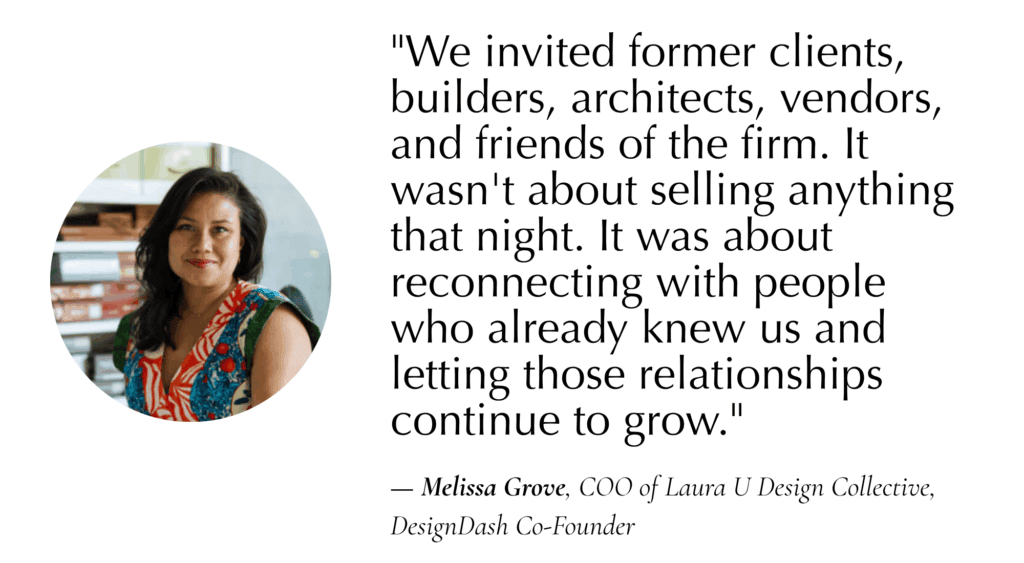
Laura encourages designers to be equally intentional about letting former clients know when they’re accepting new work. Many people assume a successful design firm is already fully booked, so they don’t think to recommend it unless they’re reminded or a friend specifically asks them for a referral.
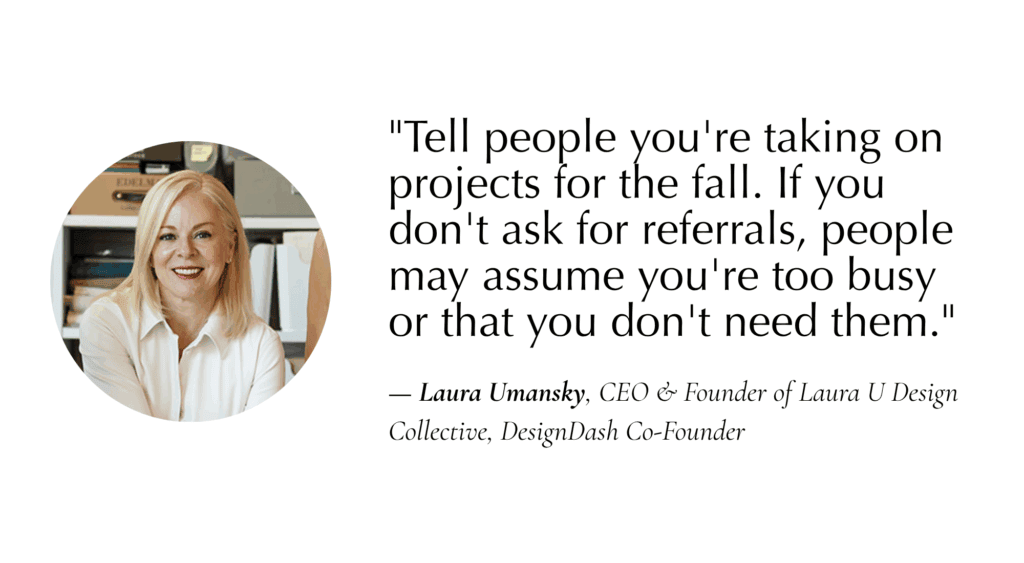
Reaching out to people who already know your firm doesn’t guarantee an immediate project, but it does place your business back into conversations adjacent to your work (architecture, contracting, staging, real estate development, etc.). Those conversations usually produce introductions much faster than waiting for someone to discover your work through advertising or social media alone.
Fuel your creative fire & be a part of a supportive community that values how you love to live.
subscribe to our newsletter
*please check your Spam folder for the latest DesignDash Magazine issue immediately after subscription

#2 Brand Building and Client Acquisition Aren’t the Same Thing
Not every marketing activity should be measured by how many inquiries it generates the following week. Some investments are designed to strengthen your reputation over time. Others are intended to generate conversations with PNCs almost immediately. Both have value, but they serve different purposes.
It’s especially critical that you know the difference when marketing budgets and business development hours are limited. If your firm needs projects now, you should probably spend more time meeting with builders, reconnecting with former clients, and asking for referrals than planning a brand campaign. If your pipeline is healthy, you have the freedom to invest in opportunities that may not produce a single client this quarter but could expand your visibility over the next several years.
Brand Partnerships Expand Your Reach
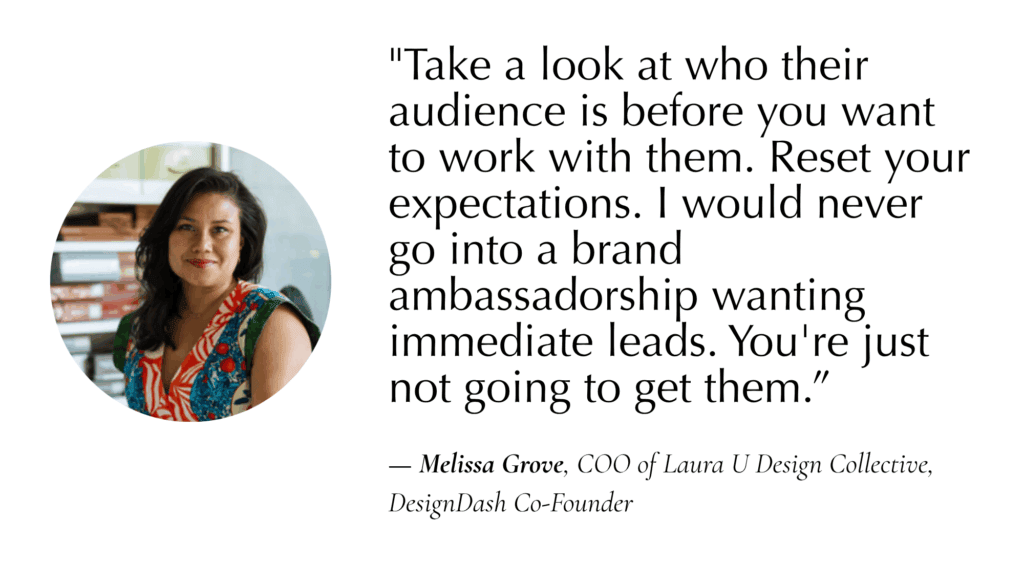
Laura and Melissa discussed brand ambassadorships in this episode (not something we typically touch on here at DesignDash) because they’re often misunderstood. Designers sometimes enter those partnerships expecting immediate client inquiries, only to discover that the audience they’re reaching isn’t actively hiring an interior designer. Melissa encourages firm owners to adjust their expectations before entering those relationships (if they choose to enter such relationships at all).
Those opportunities can still have tremendous value. Professional photography, industry relationships, speaking engagements, vendor introductions, and shared marketing assets all help reinforce a stronger brand. They just produce results on a different timeline than asking a builder to coffee or reconnecting with a past client who already knows your firm.
Showhouses Build Your Portfolio, Too
Showhouses fall into the same category. They’re exciting creative opportunities, but designers should think carefully about what they’re hoping to gain before committing the time and expense. Laura admits she has a complicated relationship with showhouses because they demand a significant investment from participating firms.
Melissa doesn’t dismiss showhouses because they don’t immediately produce clients. Instead, she encourages designers to think about everything else they create while participating. Your showhouse is pure content, possibly YEARS of content. Photography, process videos, vendor relationships, media coverage, and portfolio images that will serve your business in so many different capacities.
Thinking about marketing this way helps designers evaluate opportunities more realistically. A showhouse might never produce a project directly, but it can generate photography for your portfolio, deepen relationships with vendors, introduce your firm to local media, and provide months of content for future marketing. Those outcomes have real business value. They’re simply different from adding another project to next month’s pipeline.
#3 Make It Easy for People to Find and Talk to You
As firm owners, we spend a lot of time thinking about visibility, but visibility only matters if it leads to productive conversations. Put simply, people need opportunities to interact with your firm. Sometimes that’s through a builder or architect. Sometimes it’s an event. Sometimes it’s a storefront. The format matters less than the opportunity to build a relationship.
Not every firm wants a retail location, and many successful designers never open one. Even so, Laura believes a physical space creates opportunities you just can’t get online. It gives prospective clients a place to walk in, ask questions, attend events, and familiarize themselves with your firm’s work even if they won’t be ready to hire a designer for a while.
But You Don’t Need a Storefront to Build Community
A storefront is only one way to create those opportunities. Melissa points out that designers can host events almost anywhere. Partner with a local gallery. Work with a vendor showroom. Invite builders, architects, former clients, and other professionals to an evening gathering. Give people a reason to spend time with your firm outside the context of an active project.

Those events don’t need to revolve around selling design services. In fact, they’re often more successful when they don’t. Conversations happen naturally when people are already enjoying themselves, reconnecting with colleagues, or meeting someone new through a mutual contact. Business opps will follow.
Laura believes those opportunities become another extension of your firm’s marketing because they allow people to experience your brand in person rather than simply seeing it online. The common thread running through all three takeaways is that designers don’t necessarily need another marketing platform or another social media strategy when they’re trying to grow their pipeline.
More often, they need to reconnect with the people who already know their work, spend time where future clients and referral partners already gather, and understand which business development activities are designed to produce projects now versus strengthen the firm’s reputation over time.
Listen to the Full Episode
Episode 98 covers a lot more than we could fit into a single article, including Laura and Melissa’s candid discussion about print advertising, builder outreach campaigns, brand ambassadorships, storefronts, showhouses, and the business development strategies they use at LUDC.
If you’re looking for practical conversations about growing an interior design business, it’s well worth listening to the full episode. While you’re there, explore the rest of the DesignDash Podcast library for more discussions on pricing, contracts, procurement, marketing, hiring, leadership, and the day-to-day realities of running a successful design firm.
Written by the DesignDash Editorial Team
Our contributors include experienced designers, firm owners, design writers, and other industry professionals. If you’re interested in submitting your work or collaborating, please reach out to our Editor-in-Chief at editor@designdash.com.
Related Posts

The Symbolism of Sunflowers: Happiness, Vitality, Loyalty
From Indigenous North America to their use in European art and modern
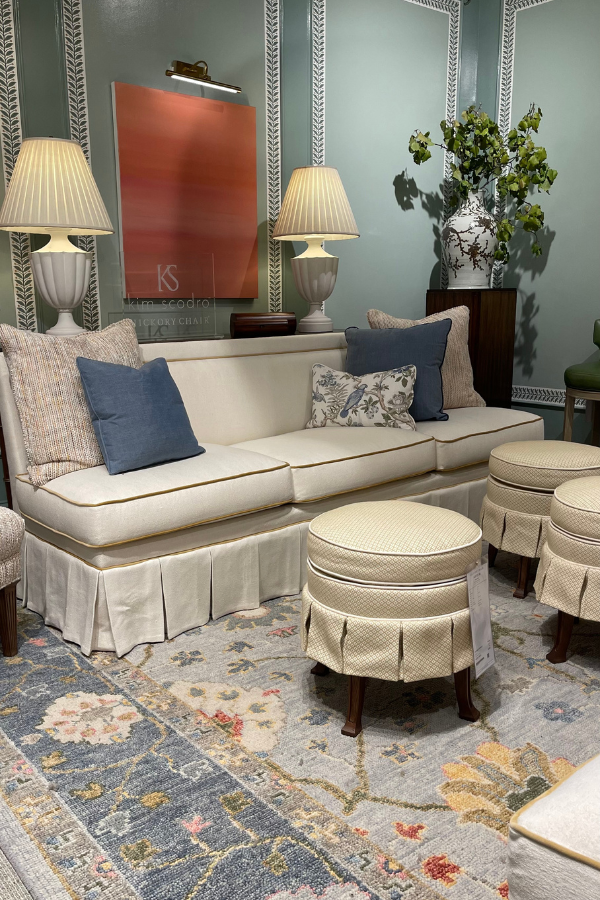
Looking Back on October 2025 High Point Market Trends
This article recaps Fall 2025 High Point Market and highlights the key

From Africa to Asia to Oceania: New Year’s Traditions Around the World
Curious about New Year's traditions around the world? From Brazil to E

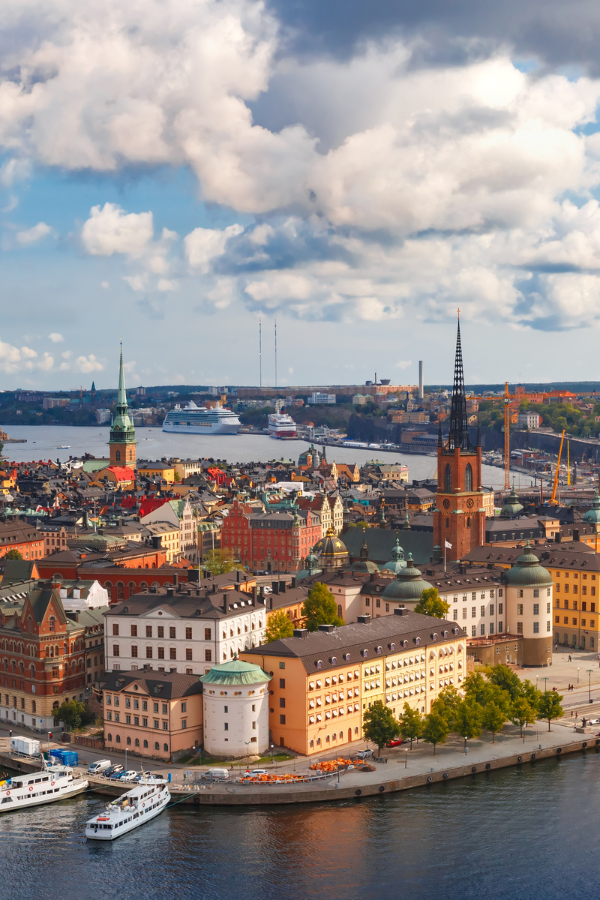
Stockholm Furniture Fair 2026 Cancellation Announced
Stockholm Furniture Fair and Stockholm Design Week are canceled for 20
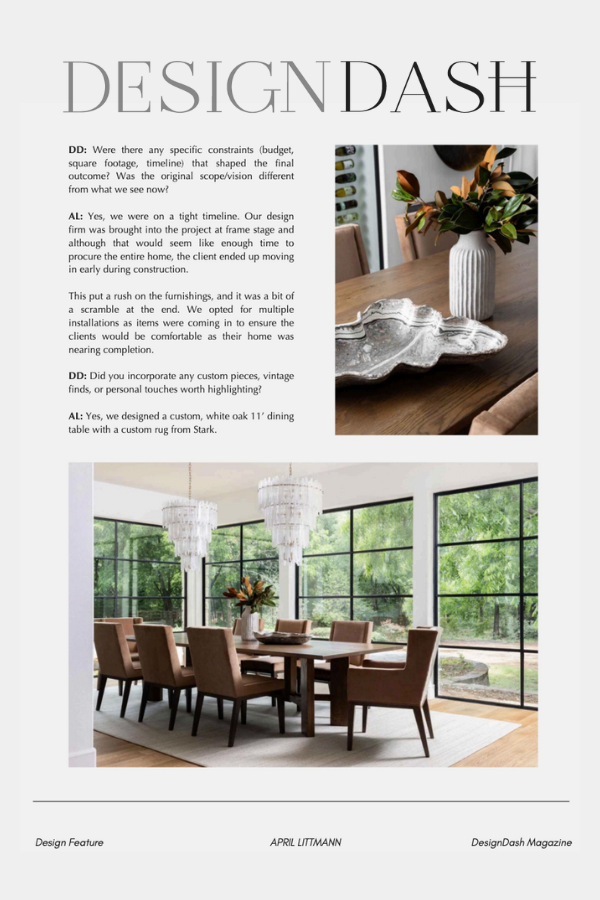
Call for Project Features in Fall & Winter 2025 Issues of DesignDash Magazine
DesignDash is now accepting project feature submissions for our upcomi