
What Is a Preferred Vendor Clause, and Do You Need It in Contracts?

 0
0
 0
0Summary
A preferred vendor clause explains whether an interior designer is obligated to source, purchase, coordinate, or manage products from vendors with whom the firm has no prior relationship. For design firms that handle procurement, this clause can help manage risk, protect profitability, and establish expectations before a client requests products from unfamiliar suppliers.
Reflection Questions
Do you currently allow clients to request products from vendors your firm has never worked with before?
How much time does your team spend researching, vetting, and coordinating unfamiliar vendors?
Does your contract explain what happens if a client wants to purchase from a source outside your firm’s established network?
Journal Prompt
Think about the last time a client requested a product from a vendor you had never worked with before. How much time did your team spend reviewing lead times, requesting samples, setting up accounts, coordinating freight, tracking shipments, or resolving issues? Did that additional work affect the profitability or timeline of the project?
Welcome back to our series exploring clauses interior designers should consider including in client contracts to protect themselves and their firms. Today, we’ll discuss preferred vendor clauses, which help define whether a designer is required to work with vendors, manufacturers, artisans, retailers, workrooms, and suppliers outside the firm’s established network. As always, we recommend speaking with a licensed attorney before making significant changes to any legal agreement. This article is not legal advice, nor should it replace professional legal counsel.
What Is a Preferred Vendor Clause?
A preferred vendor clause is a section of a contract that gives a designer discretion over which vendors, suppliers, manufacturers, and procurement partners are used during a project. Depending on how the clause is written, it may allow the designer to decline certain vendors entirely, require additional review before working with unfamiliar companies, or limit the designer’s responsibility when a client requests products from outside the firm’s approved sources.
Most established design firms spend years building relationships with vendors they trust. Those relationships develop through hundreds of orders, freight claims, lead-time updates, installation issues, warranty requests, and customer service interactions. Over time, designers learn which companies communicate clearly, which manufacturers consistently deliver quality products, and which vendors respond quickly when problems arise. A preferred vendor clause acknowledges that those relationships have value and allows the firm to incorporate that knowledge into its procurement process.
Interior designers are often hired because they know where to source products and who to source them from. The ability to navigate a network of trusted vendors is part of the expertise clients pay for. While clients naturally focus on the appearance of a product, designers also evaluate the company behind it. Both considerations affect the success of a project.
Why Do Designers Include Preferred Vendor Clauses?
Interior design projects involve much more than selecting beautiful products. Every specification introduces another company into the project. That company may have its own ordering procedures, payment requirements, lead times, freight policies, receiving instructions, customer service systems, and warranty limitations. The designer often becomes the person responsible for coordinating all of those moving parts.

Clients don’t always see that side of the procurement process. A client might discover a lighting company on Instagram, find a dining table through an online retailer, or hear about a furniture maker from a friend. The product might be wonderful. Before recommending that source, however, a designer likely needs to research lead times, review shipping policies, verify trade procedures, request samples, evaluate communication practices, and determine whether the company can reliably support the project.
That due diligence takes a lot of time. It also introduces uncertainty. If the vendor provides inaccurate information, misses deadlines, ships damaged goods, disappears after payment, or struggles with customer service, the designer often finds herself managing the consequences. A preferred vendor clause helps establish expectations before those situations arise and mistakes are made.
What Happens When a Client Requests a New Vendor?
Many of us have had clients who want to work with vendors they’ve seen on Instagram or elsewhere online. Clients discover products everywhere; it’s part of the inspiration mining process. They attend home tours, browse social media, save screenshots, visit local shops, and follow design influencers. It’s completely understandable that a client might fall in love with a product and ask why the designer can’t simply incorporate it into the project.
The challenge is that every unfamiliar vendor introduces a new set of questions. Can inventory be verified? Are lead times accurate? Is there a trade representative available? How are freight claims handled? What happens if the product arrives damaged? Are replacement parts available? Does the company communicate consistently throughout the ordering process?
Many of us are willing to consider new vendors. In fact, some of the most valuable vendor relationships begin because a designer takes a chance on a company they haven’t worked with before. The issue is whether the firm has the time, information, and contractual framework necessary to evaluate that vendor properly before introducing additional risk into the project.
Sean Low addressed this concept in a Business of Home article when he said…
“The object is to never say no, and instead always find a way to say yes—but on your terms.”
Low’s perspective reflects how many successful design firms approach procurement. The goal isn’t to reject every unfamiliar source but to establish a process that allows the designer to evaluate opportunities while still protecting the project, the client experience, and the firm’s operational resources.
Fuel your creative fire & be a part of a supportive community that values how you love to live.
subscribe to our newsletter
*please check your Spam folder for the latest DesignDash Magazine issue immediately after subscription

Why Vendor Relationships Are Essential to the Success of a Project
A designer who has worked with the same upholstery vendor for years probably knows how frequently inventory updates occur, how freight is quoted, who handles damage claims, and how replacement parts are ordered. The designer likely knows whether lead times tend to be accurate and whether communication remains consistent after payment has been submitted. That knowledge allows the designer to set realistic expectations for clients and anticipate potential challenges before they become larger problems.
Vendor relationships also create efficiency. When a designer knows who to call, how orders are processed, and what information is needed, procurement tends to move more smoothly. That efficiency can save significant time over the course of a project. It also allows designers to spend more energy on design rather than troubleshooting avoidable administrative issues.
This is especially important for firms managing large amounts of procurement. A project may involve furniture, lighting, plumbing fixtures, hardware, rugs, art, drapery, wallcoverings, and custom millwork. If every category introduces multiple unfamiliar vendors, the amount of coordination required can increase dramatically.

Is Letting a Client Pick a Vendor the Same Thing as Shopping With Them?
Not exactly. A preferred vendor clause addresses procurement responsibility. Shopping with clients is a process question. The two topics often overlap because clients may discover products while shopping, touring showrooms, or browsing retail environments. However, they are not the same thing.
Many designers prefer to curate options rather than expose clients to every possible product in the marketplace. That approach often helps clients make decisions more confidently because the designer has already filtered options based on scale, budget, performance, lead times, and compatibility with the overall design concept.
Heather Weisz and Lisa Hynes of HW Interiors discussed this in a Business of Home article. Here they are quoted by Haley Chouinard:
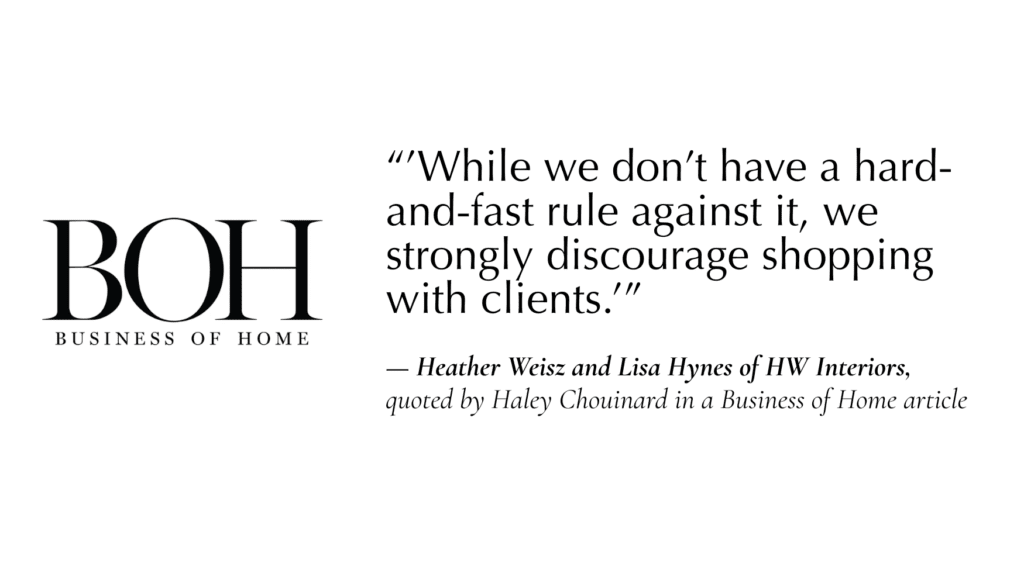
Many firms behave the same way. Clients hire designers partly because there are so many options available. Curating those options is often part of the value a designer provides. A preferred vendor clause can support that process by clarifying how sourcing decisions will be handled and which procurement relationships the firm is willing to manage.
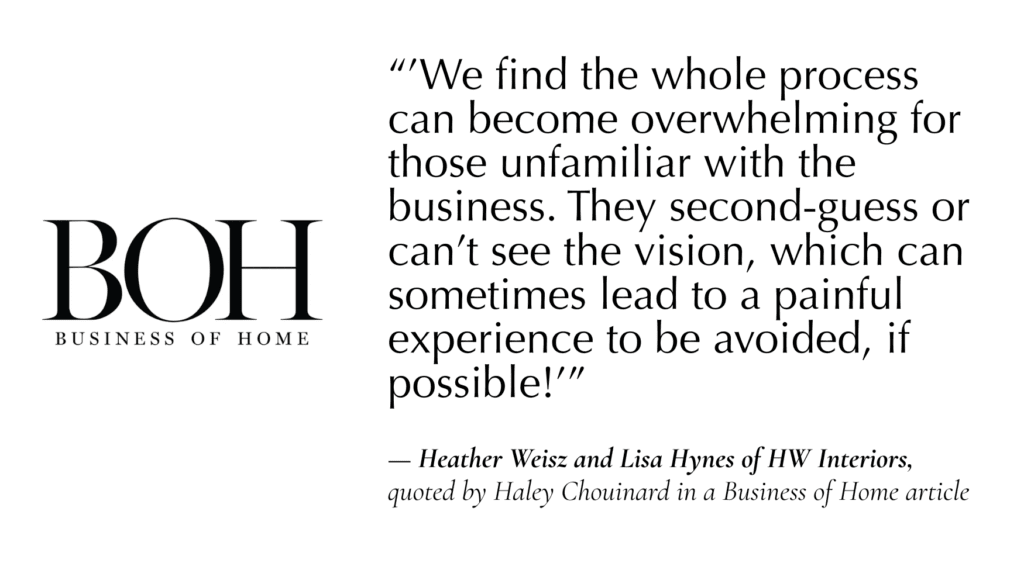
What Happens When Things Go Wrong?
Most procurement problems won’t start with catastrophic failures that undo the entire project in one fell swoop. More often, you’ll see missing information, delayed communication, inaccurate lead times, or unexpected freight complications. A shipment comes in damaged. A finish differs substantially from the approved sample. A product is discontinued after specification. A replacement part takes months to arrive.
When problems like these occur, clients generally expect the designer to help coordinate a solution. That expectation is natural; why would a client hire a design firm if they didn’t want to step back and let your team take the lead? The designer is often the central point of communication throughout the project. They take on risk and responsibility, so they should have control, too.
Sean Low highlighted the importance of that responsibility when he wrote:
“Regardless… you need to control the purchase, storage and ultimate installation of the goods.”
The more control a designer has over procurement, the easier it is to manage problems when they occur. A trusted vendor relationship doesn’t guarantee perfection, but it often provides clearer communication channels, established procedures, and a stronger foundation for resolving issues efficiently.
Can Designers Legally Restrict Vendor Choices?
The answer depends on how the contract is written and how the firm’s services are structured. Some firms reserve complete discretion over vendor selection. Others allow exceptions under specific circumstances. Some require clients to purchase directly if they insist on using an unfamiliar vendor. Others charge additional fees to account for the extra administrative work involved.
Because contract law varies by jurisdiction, designers should consult qualified legal counsel when drafting or revising this language. An attorney can help ensure that the clause aligns with the firm’s business model and complies with applicable laws in the state where the firm operates.
The important thing is clarity. Clients should understand how vendor requests will be evaluated before products are specified, ordered, or installed. Clear expectations reduce confusion and make it easier for everyone to understand their responsibilities throughout the procurement process.

Final Thoughts on Preferred Vendor Clauses
A preferred vendor clause helps define procurement expectations before products are specified, ordered, received, or installed. Designers spend years learning which vendors communicate well, which companies provide accurate lead times, which manufacturers stand behind their products, and which suppliers create unnecessary complications. Those relationships have operational value, and many firms choose to protect them through their contracts.
Clients often focus on the product itself. Designers evaluate the product and the company behind it. Inventory accuracy, freight coordination, communication, lead times, quality control, and claims support all affect the success of a project. A preferred vendor clause acknowledges that reality and gives firms a framework for managing procurement in a way that supports both the client experience and the long-term health of the business.
Written by the DesignDash Editorial Team
Our contributors include experienced designers, firm owners, design writers, and other industry professionals. If you’re interested in submitting your work or collaborating, please reach out to our Editor-in-Chief at editor@designdash.com.
Related Posts

Helping Kids Understand Money: Fun and Practical Ways to Teach Financial Literacy
Help your kids develop financial literacy with these fun, age-appropri

5 Signs You Need Help in Your Firm That Have Nothing to Do With Being Busy
Being overwhelmed with work isn’t the only reason to hire. Here are

Our Top Tips for Creating Seasonal Content That Resonates with Your Audience
From embracing holiday cheer to leveraging trends and personal stories

Authenticity in the Workplace: Are You Your True Self at Work?
As we discuss the value, complexity, and appropriate timing of authent

How to Become a Jeweler: Career Tips for Aspiring Designers
If you're a creative with meticulous attention to detail and a desire

Day 5: DesignDash Focus & Flex Challenge
Thanks for sticking with us! It's Day Five of the Focus and Flex Chall