
5 Keys to Building a Trust-Based Culture at Your Design Firm

 0
0
 0
0Summary
A trust-based culture develops through repeated decisions about hiring, accountability, communication, leadership, and team expectations. At Laura U Design Collective, Laura Umansky and Melissa Grove return to core values when reviewing performance, discuss mistakes openly, distinguish privacy from inauthenticity, and give leaders room to question whether the firm’s stated values still represent the company. These practices provide five practical ways design firm owners can build greater trust within their own teams.
Reflection Questions
When was the last time one of your core values actually changed a hiring, promotion, client, or staffing decision? Would your team be able to point to examples without you explaining them first?
Think about the last mistake someone brought to your attention. What happened in the conversation immediately afterward? Did you ask questions, get defensive, start solving the problem, or focus first on who caused it?
When you’re worried about cash flow, staffing, a difficult client, or a project problem, how do you decide what your team actually needs to know? Where do you draw the line between transparency and passing your own anxiety down the org chart?
Who on your team is comfortable telling you that you’re wrong? More specifically, when was the last time someone disagreed with you and changed your mind?
Journal Prompt
Think about the last time an employee told you something you didn’t particularly want to hear. Maybe they made a mistake, disagreed with a decision, questioned a process, asked for help earlier than you thought they should need it, or told you they were unhappy with something happening at the firm. Write down what they said and what you said back. Try to remember the actual conversation rather than rewriting yourself into a better version of it afterward.
Then look at what happened next. Did you change anything? Did you bring the issue up again? Did the employee continue coming to you with problems, or did you hear less from them afterward? You don’t necessarily need to decide whether you handled the conversation well or badly. The more interesting question is what your response probably taught that person about telling you difficult things in the future.
Interior design firms depend heavily on collaboration. Designers manage work between team members, coordinate with architects and builders, manage significant client budgets, respond to critique, and correct errors that can affect schedules and costs. Good systems help, but employees also need confidence that they can raise a concern, admit a mistake, disagree with a decision, or ask for help without creating a larger interpersonal problem.
In one of our very first DesignDash podcast conversations, Laura Umansky and Melissa Grove discussed authenticity at work and the responsibilities that come with leadership. Their discussion repeatedly returned to trust and what that means in the workplace. Melissa eventually questioned whether authenticity can be encouraged at all if employees interpret it as another expectation they must perform. Laura’s response focused on building enough trust that people can make mistakes and continue working together.
Below are five keys to creating a trust-based culture at your own firm.
5 Keys to Building a Trust-Based Culture at Your Design Firm
#1 Always Use Core Values to Make Actual Decisions
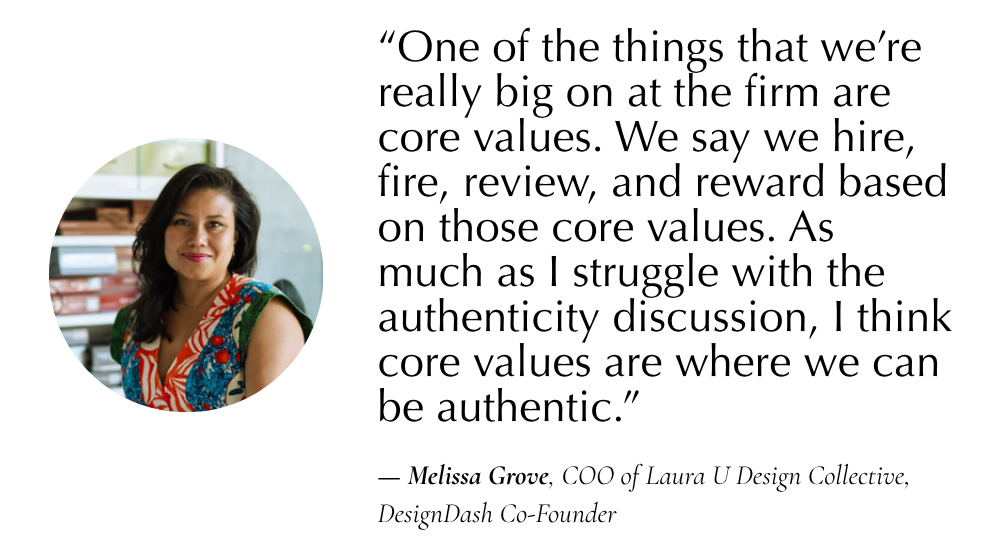
Core values have more credibility when employees can see where they affect hiring, performance reviews, promotions, recognition, and termination. Laura U Design Collective uses its values in each of those areas. Melissa describes the firm’s standard succinctly: they “hire, fire, review, and reward” according to the values the company has established.
The leadership team also reviews those values quarterly. They ask whether the language still represents the company and whether individual leaders continue to agree with it. A value can therefore be questioned rather than treated as permanent corporate language.
Employees Shouldn’t Have to Pretend They Agree
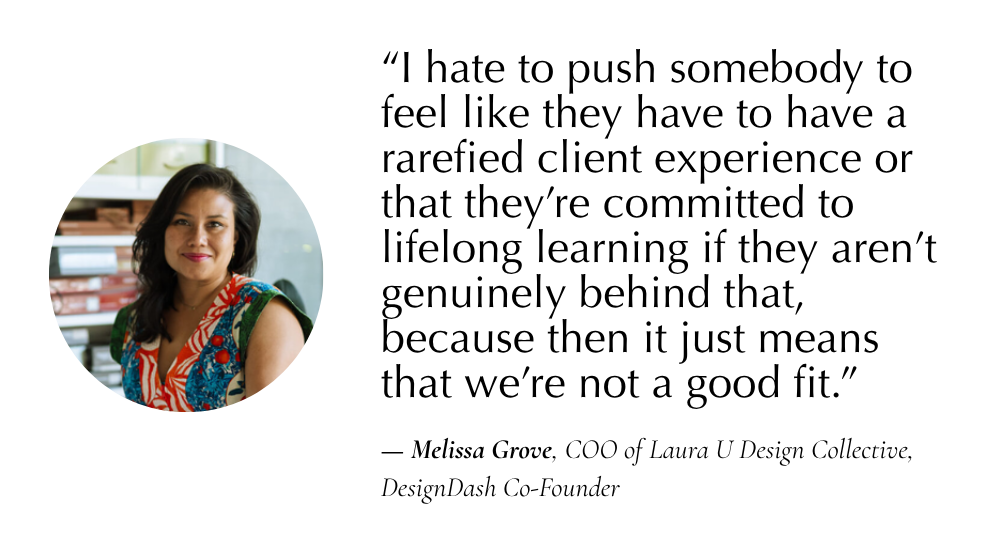
Melissa also raises an important limitation. She doesn’t want an employee claiming commitment to lifelong learning or a rarefied client experience simply because those ideas are company values. Genuine disagreement can indicate that the person and the firm have different professional priorities.
This distinction applies a stricter definition to the oft-thrown-about “culture fit” phrase. Employees don’t need identical personalities, interests, or communication styles, but we all need to agree on professional standards in order to work together successfully.
#2 Make Mistakes Discussable
A team learns how safe it is to admit an error by watching what happens after someone makes one. Melissa describes a practice at Laura U Design Collective called sunshining mistakes, which she credits to Ted Lasso. Someone explains what went wrong, how the problem was corrected or why it wasn’t, and what the team can learn from it.
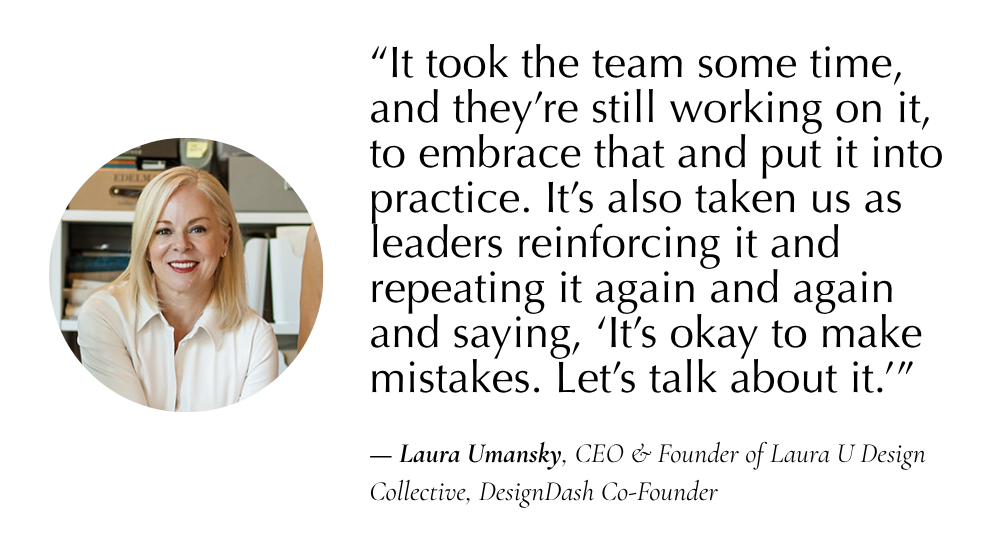
Laura notes that this required repetition in order to be effective. Employees needed evidence that leadership meant what it said when it said it. The team heard repeatedly that mistakes could be discussed and corrected without turning every error into a referendum on someone’s competence.
Leaders Need to Admit Their Own Errors
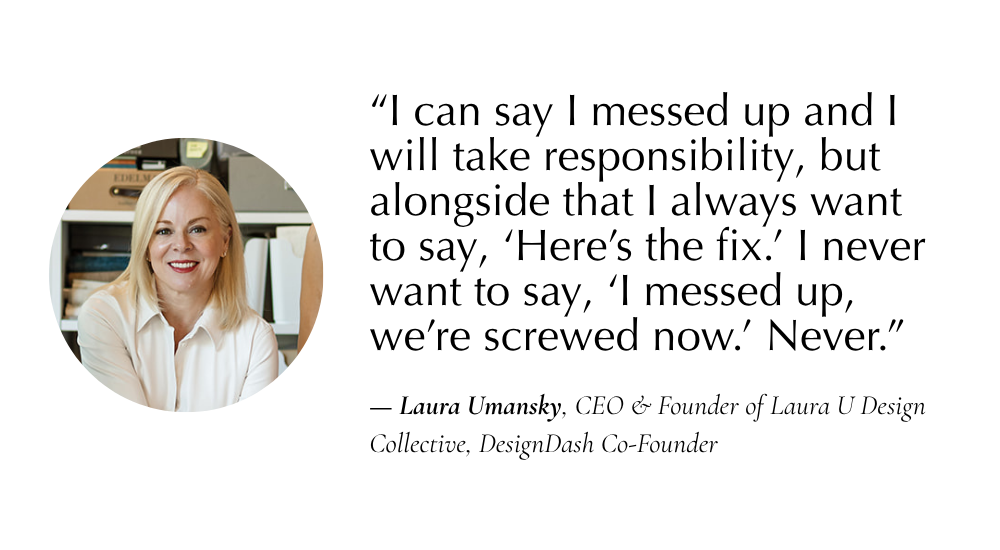
Laura applies the same standard to herself. She is willing to acknowledge a mistake, but she also wants to explain how she plans to address it. Accountability doesn’t mean you have to transfer panic to the rest of your team.

#3 Respect the Difference Between Authenticity and Disclosure
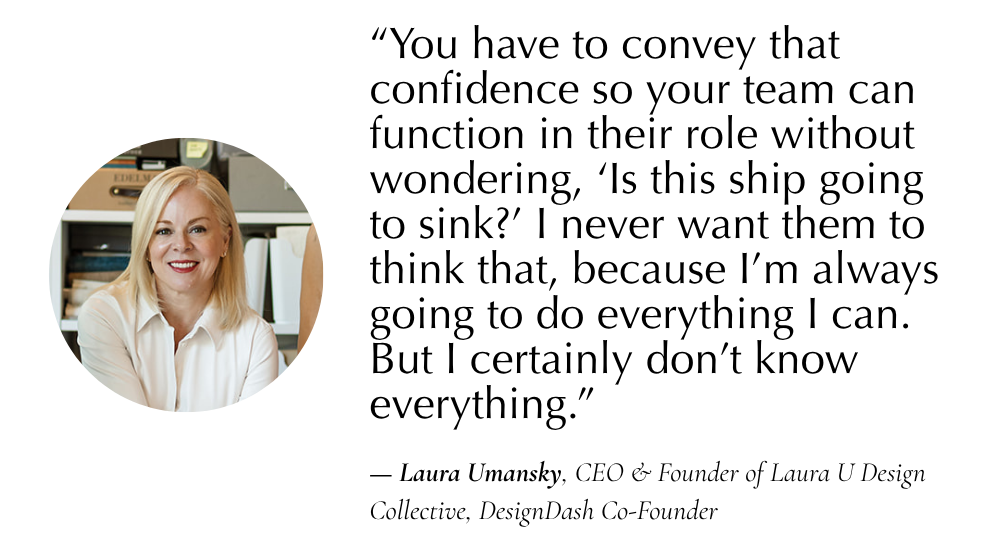
Mutual trust doesn’t mean that your employees have to share every part of their private lives or that you have to do the same. Melissa discusses her earlier belief that being authentic meant she had to act like the same person in every single context, which absolutely no one actually does. She later reconsidered that assumption. A professional role can reflect one part of a person without invalidating the others.
That principle is particularly relevant when companies encourage employees to “bring their whole selves to work.” A colleague can be candid, dependable, and engaged while keeping family relationships, finances, health concerns, or other personal information private.
You Don’t Need a Manufactured Personality to Be a Professional
Of course, interior design is a bit more complicated because the industry places considerable attention on image, travel, restaurants, fashion, art, and lifestyle. We’re also managing client relationships, which depend on personality and relatability in many ways.
But Melissa questions the assumption that a designer needs to act the same way their clients do in order to be taken seriously. A firm can establish expectations for client service, communication, presentation, and professional conduct without prescribing the cultural interests or personality of every employee.
#4 Communicate Confidence Without Pretending You Know Everything
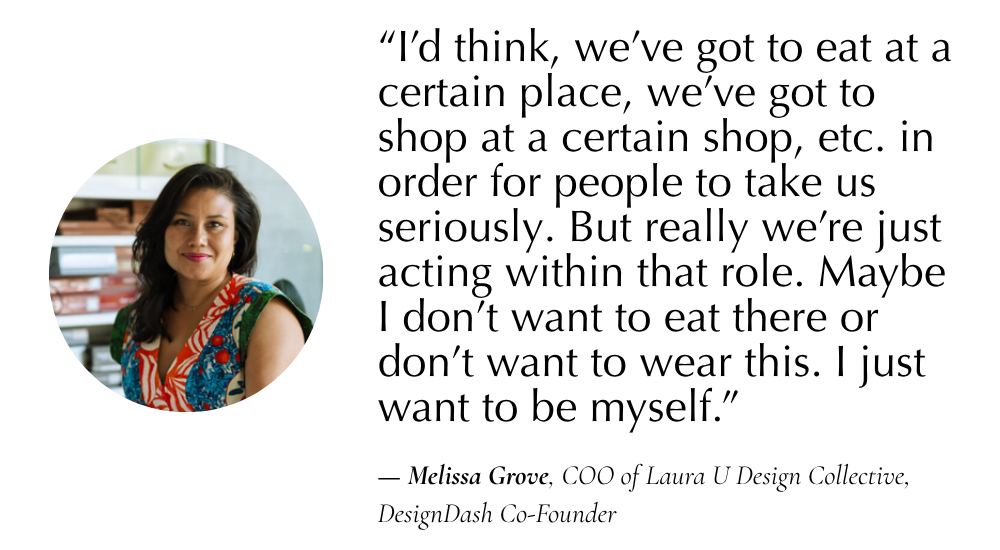
Firm leaders typically know about financial, staffing, client, and project problems before the rest of the team does, although that’s not always the case. Regardless, employees need accurate information, but they don’t need to hear about every unresolved fear the owner has, similarly to how our clients don’t need to know every time we communicate with a vendor or discuss alternatives internally.
Laura notes that she wants to be approachable and develop genuine relationships with her team, while also communicating enough confidence that employees can concentrate on their own responsibilities. The impact you, as the leader, have on team psychology is enormous. Managing your fears and keeping indecision private as you work through it is part of leadership, even if you really want to turn to another designer and pour your heart out.
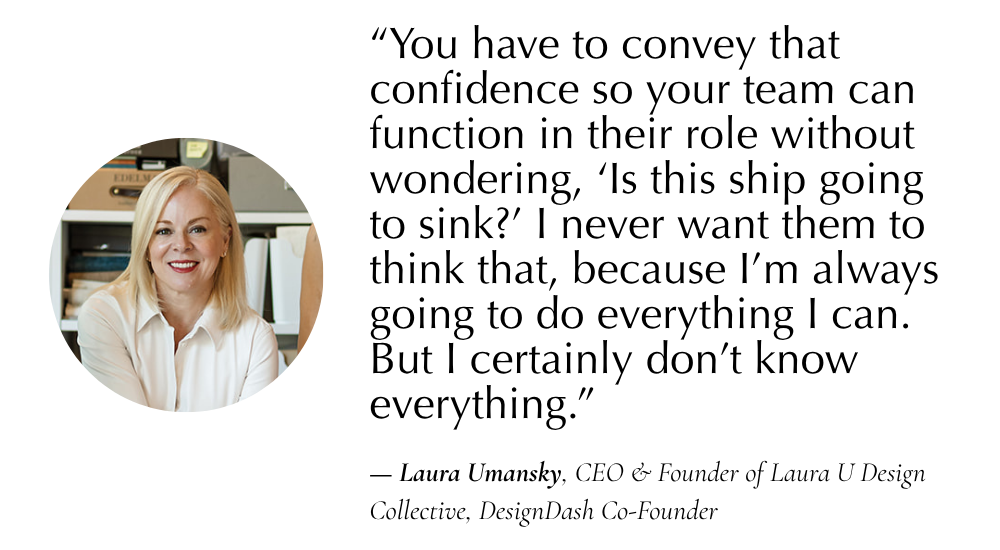
Laura and Melissa also have different communication styles. Melissa prefers more directness when there’s a problem. Laura is more inclined to acknowledge the problem and immediately discuss how the team will address it. Neither approach means you have to provide false certainty through obfuscation OR overshare to the point you make everyone uncomfortable.
Fuel your creative fire & be a part of a supportive community that values how you love to live.
subscribe to our newsletter
*please check your Spam folder for the latest DesignDash Magazine issue immediately after subscription

#5 Make Room for Disagreement
A company can’t claim to value candor if disagreement with the founder is consistently penalized. Employees need opportunities to question processes, raise concerns about workload, challenge an assumption, or suggest that a company policy needs reconsideration.
Laura U Design Collective creates one formal opportunity through its quarterly core-values review. Leaders are asked whether the values still represent the company and whether they personally agree with them. Someone can say that a value no longer describes the firm and explain why.
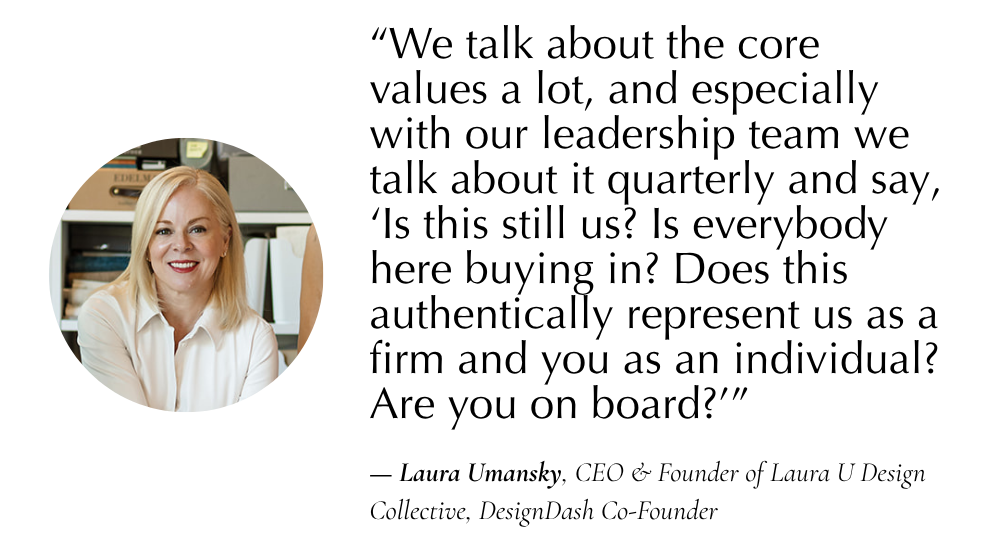
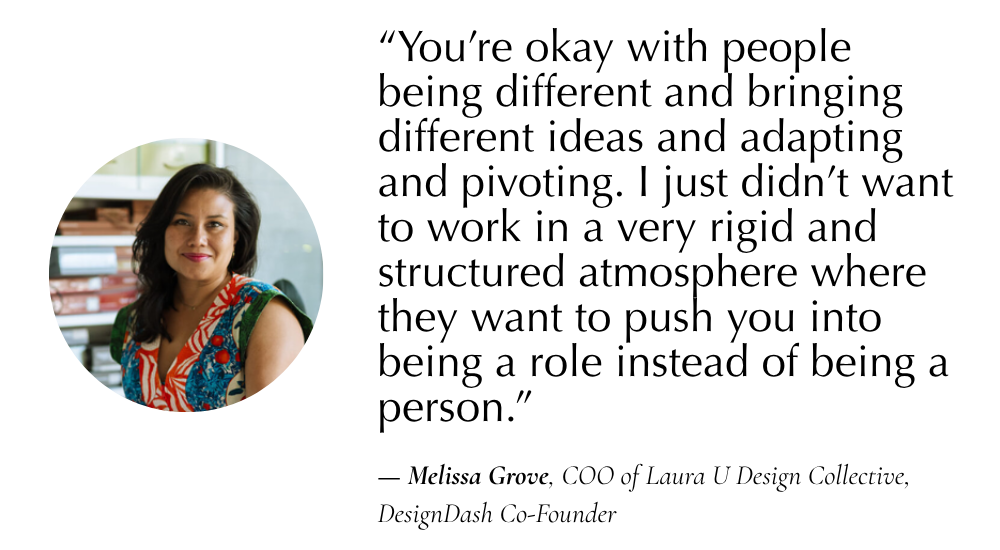
Melissa connects this openness to her own experience working with Laura. She values an environment where people can bring different ideas and adapt rather than being pushed into a predetermined role.

Final Thoughts
A trust-based culture will not eliminate mistakes, disagreements, or poor fits, but it will help everyone else understand each other better. Core values will establish shared expectations. Open discussion of mistakes will make accountability less punitive. Respect for privacy will give employees control over personal boundaries while allowing them to relate to others. Leaders can then communicate confidence without claiming certainty, and regular opportunities for disagreement reduce the pressure to simply agree with the person who owns the company.
Trust develops through repeated interactions and consistent leadership. At DesignDash, we don’t know that you can force authenticity. We think that’s basically the antithesis to being authentic. But what you can do to encourage authenticity is build trust, and I think that just takes time.
Written by the DesignDash Editorial Team
Our contributors include experienced designers, firm owners, design writers, and other industry professionals. If you’re interested in submitting your work or collaborating, please reach out to our Editor-in-Chief at editor@designdash.com.
Related Posts

What’s a Third-Party Liability Clause, and Does Your Contract Need It?
Who is responsible when a vendor makes a mistake? Learn how third-part

How to Start a Gratitude Journal in November and Make It a Year-Round Habit
By starting a gratitude journal this Fall, you can nurture a powerful,

What to Know About Cersaie 2026 in Bologna
Cersaie 2026 returns to Bologna September 21st through 25th with ceram

Venice Architecture Biennale 2025: Intelligence, Imagination & Interdependence
Curated by Carlo Ratti, the Venice Architecture Biennale 2025 explores
Too Busy for Your Ideal Client? Three Ways to Manage Capacity
Learn how interior design firms can manage capacity, evaluate waitlist

The Biggest Hiring Myth Holding Interior Designers Back
Think you need every process documented before hiring? Think again. He